 Today's article is a G-Shockers Collaboration Project. With G-Lide as main theme, articles will appear on several G-Shock weblogs. It started with an article of Phillipe C I read about his GLS-5600V, where he wrote that he wanted to write an article about his white GLX-5600. Since I had this article in the pipeline, I thought it would be great to post a G-Lide article together. Dave (SG G-Shock) and Riley (My G-Shock) were immediately enthousiast when I asked, as were two guest writers of 50 Gs, Topher and Anonimous for Now.
 A very special thanks go out to the guest writers of today.
Other collaboration articles can be found here:
SG-G-Shock
Watch Blog Spin
My G-Shock #1
My G-Shock #2
Guest Post by Topher
 G-Lide is one of the oldest and longest running series in the G-Shock line. In Japan the first models, the were called X-Treme. Therefore it is possible to have two same models, with a different name printed on it.
 Actually I prefer the name G-Lide. The words Extreme is used pretty much in all kind of advertising ways from sports to shaving blades. And would Glide not be more appropriate for shaving.
 It started with the DW-002S and the DW-6900S, both surfing models, released May 1996. These X-Treme models were also released outside Japan. I have an overseas DW-6900S, which has no reference to any series. Though the looks of the popular DW-003S G-Lide's is already present.
 The November 1996 released DW-003X models of the X-Treme series (one of my beloved models), were also released overseas, but then as basic models.
 The DW-6900X, also released in that month, was released in Europe as a G-Lide. The silver version was a popular model, which could be often seen in street fashion back then.
 The G-Lide series were designed to be adopted by board sports enthusiasts. Hence the name, boards glide, on wheels, through snow and over water. There you have the main targets Casio is aiming on with these series. skateboarding, snowboarding and surfing.
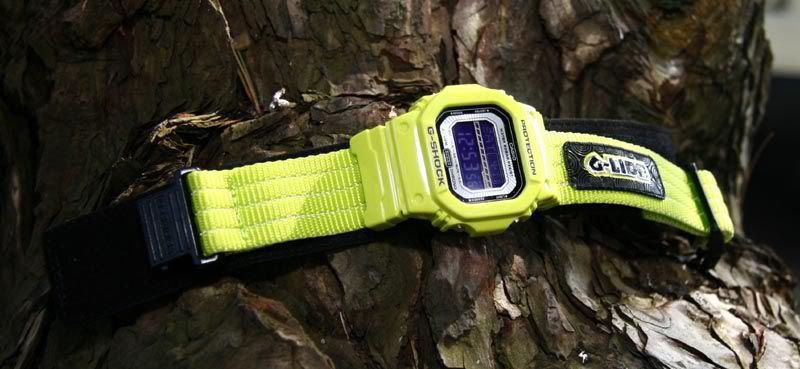
 Snowboard and skateboard models were often released with double Velcro straps, while surf models have resin straps, sometimes with modifications to allow faster drying.
 Actually double Velcro straps had not been used for a while. I was happy to see it used again on the new GLS-5600V models.
 Actually double Velcro straps had not been used for a while. I was happy to see it used on the new GLS-5600V models.
 Casio does not only aim with these models on board riders, also special events and pro-sporters are sponsored.
Some big events sponsored by G-Shock are Air + Style, US Open Surfing and the Triple Crown at the North Shore of Maui.
Some sponsored pro-sporters are: Ed Templeton (Toy Factory), Jeremy Klein (Hook Ups), Caia Koopman, Erica Hosseini and Terje Haakonsen.
 In the beginning G-Lide models were often based on existing G-Shock models, though since the release of the DWX-100 models in 1998 a lot of G-Lides are released based on unique models. For instance the GL-150 series were quite unique shaped.If basic models (more precise the case) are used, they often get a different module. Surfing models often have a Tidegraph or a thermometer.
 The last 5 years G-Lide models were more or less based on cases of the DW-6900, G-2300 and DW-5600. For the GL-7500 you could ask if the G-7500 was the basic model. In my opinion the G-7500 looks already like a watersports watch.
 Since the release of the GL-7500 in 2005 it has been a little silent on the G-Lide front. Therefore I was glad Casio picked up this line in May 2008 with the GLX-5600. In good G-Lide tradition, Casio came in November with a Snowboard version, the today featured GLS-5600V.
 Soon (May 2009) Casio will release a 2009 series G-Lide models, which in my opinion look very good. I am specially interested in the GLX-5500 models. I love to see a snowboard version of this one too (preferred with double Velcro strap, of course).
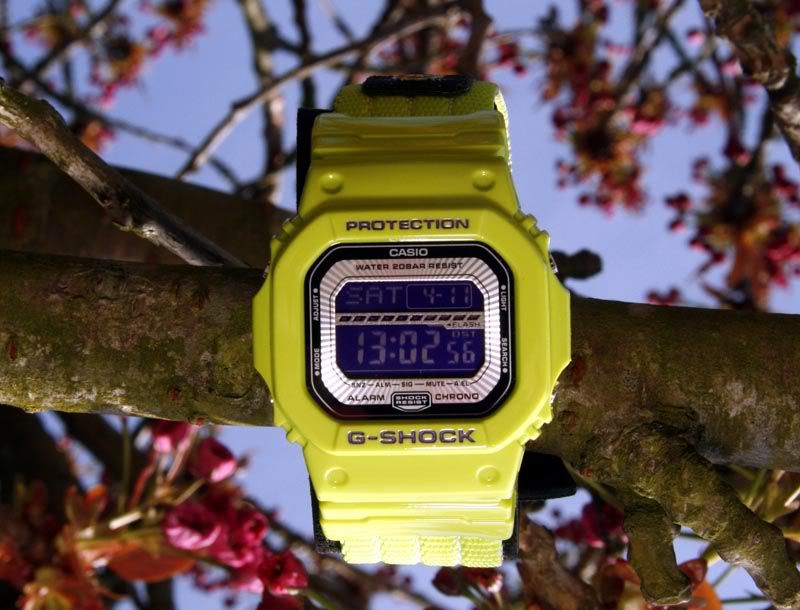 Enough history, back to the model of today, the November 2008 GLS-5600V models. Though based on the classic DW-5600E, apart from the case, this watch looks completely different from it's basic brother.
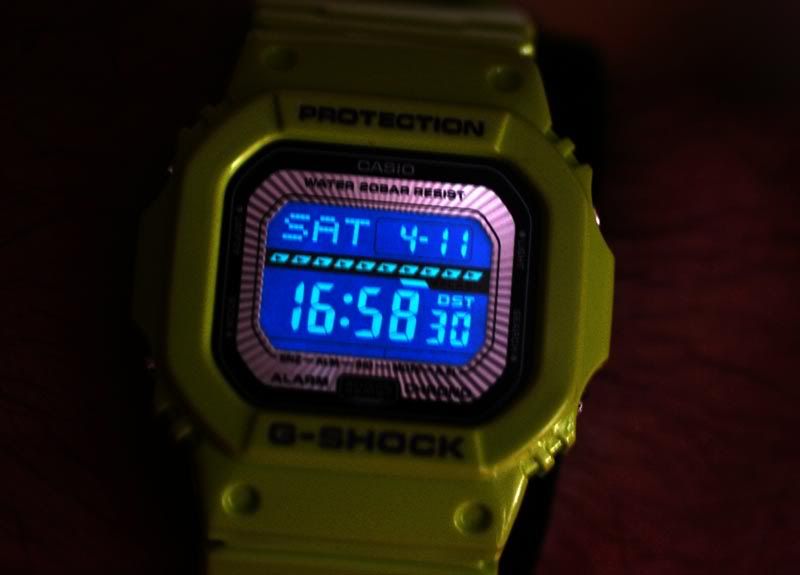
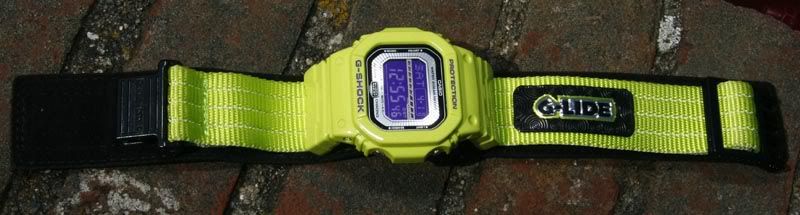
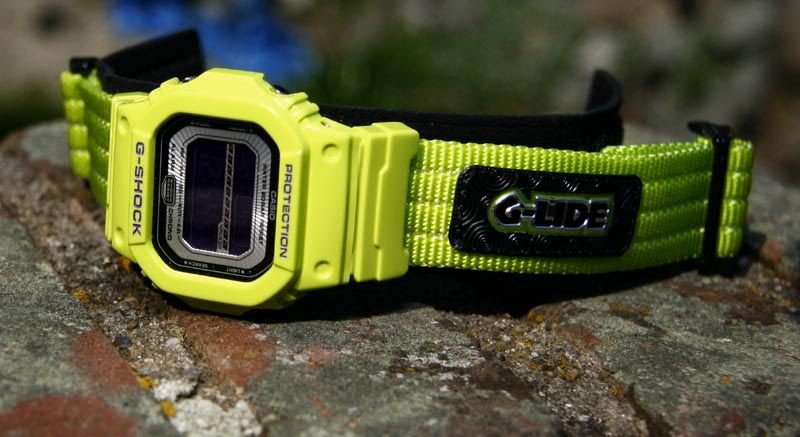
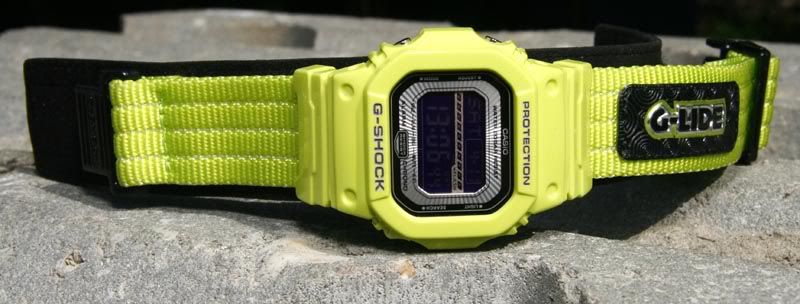
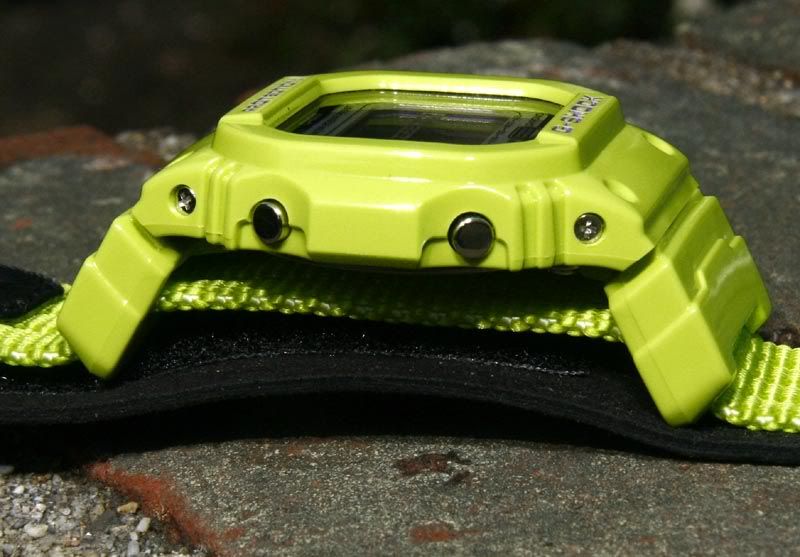
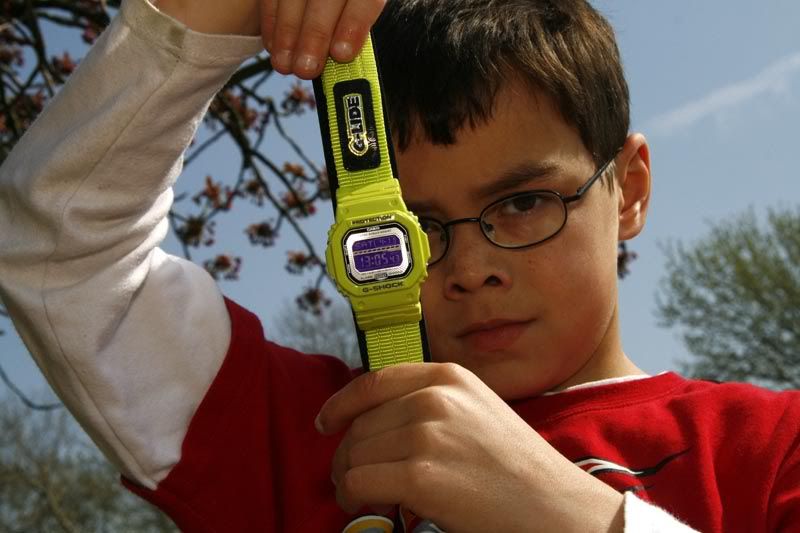
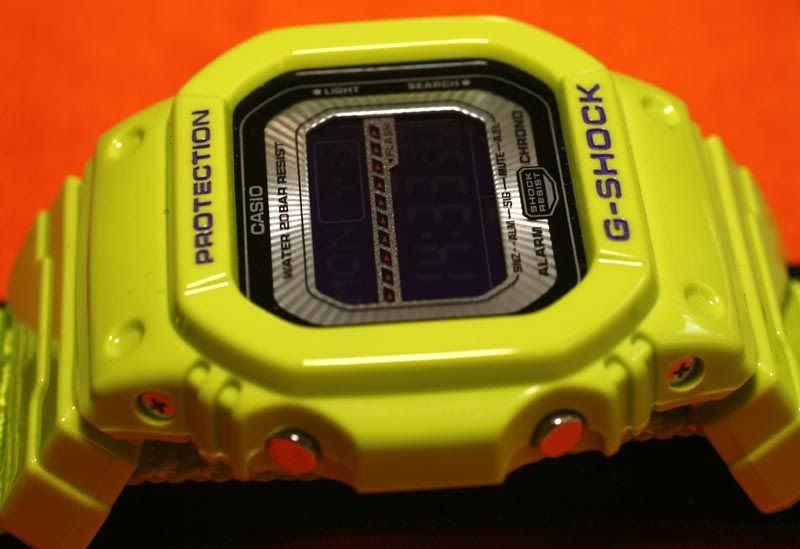
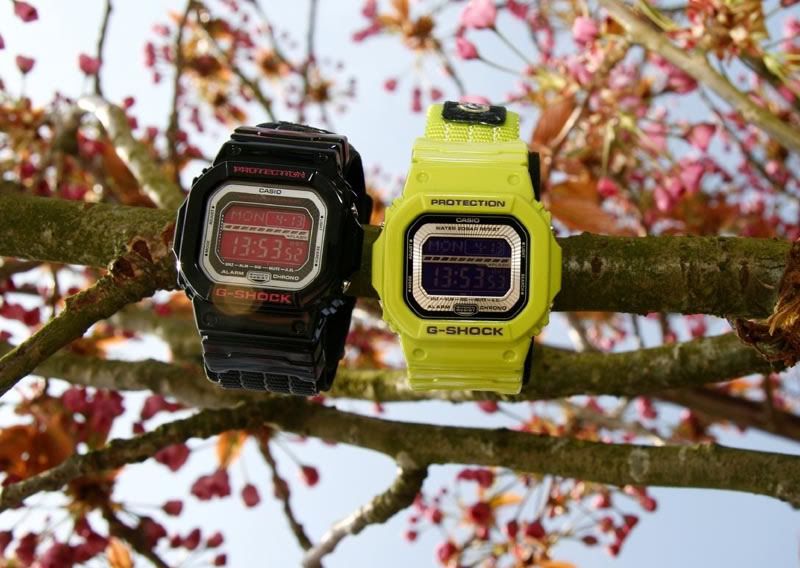
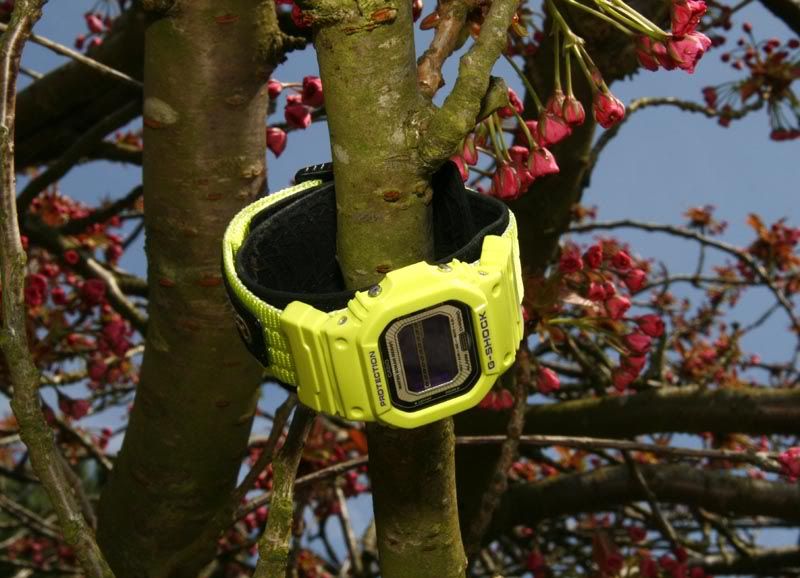 These series come in three color combinations. While the white/black model looks already striking, it falls in the shadow of it's black/pink and lime green/purple brothers. I own the black/pink model (2x) and the lime green/purple model(2x).
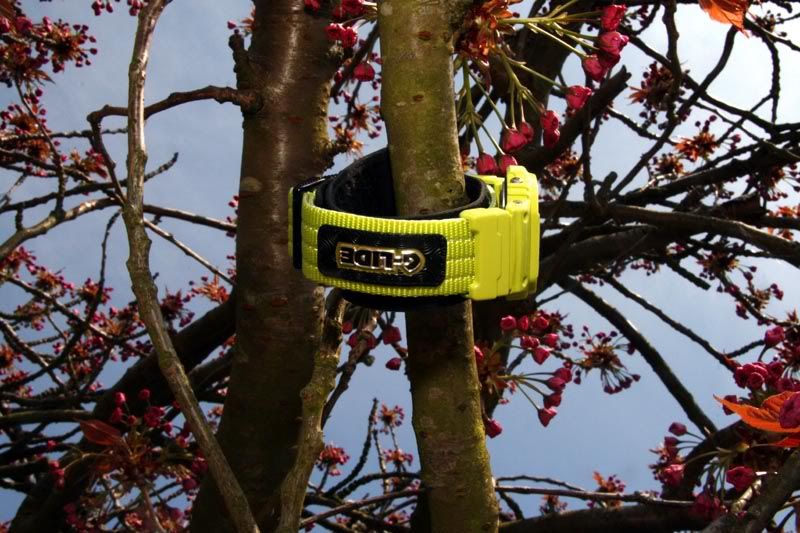 The shade of green on this watch is hard to describe. The color is not fluorescent yellow, though it sometimes look like that on photo's. Fluorescent yellow is hard to capture on photo's, since fluorescent objects are light sources from themselves. I think it's color can be best described as very intense light green. Though I didn't correct for color on the series photo's I shot for this article, I think they are pretty much representative.
 As I am very happily satisfied with these models I probably will try to complete this series in my collection with the white/black model in the future.
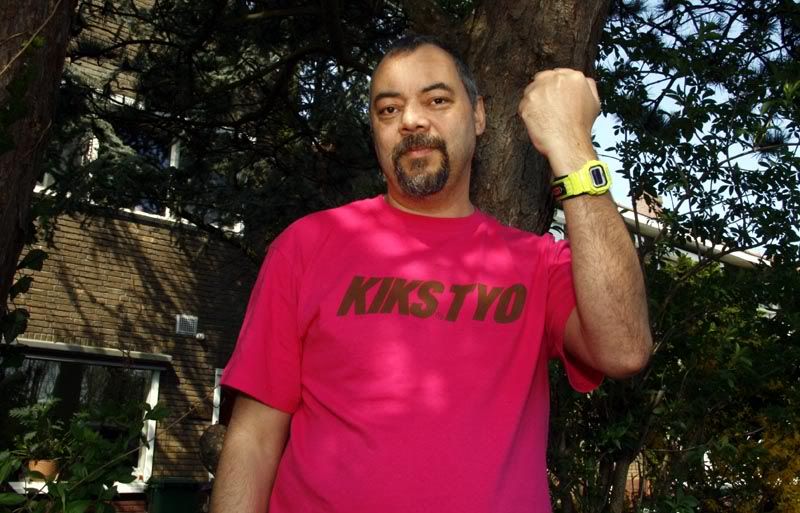 These G-Lide models are also very nice priced. You can find the for around $79.- (€60.-) shipped. That's actually a very good price considered the official retail price 13500 yen ( $135.-, €102.-).
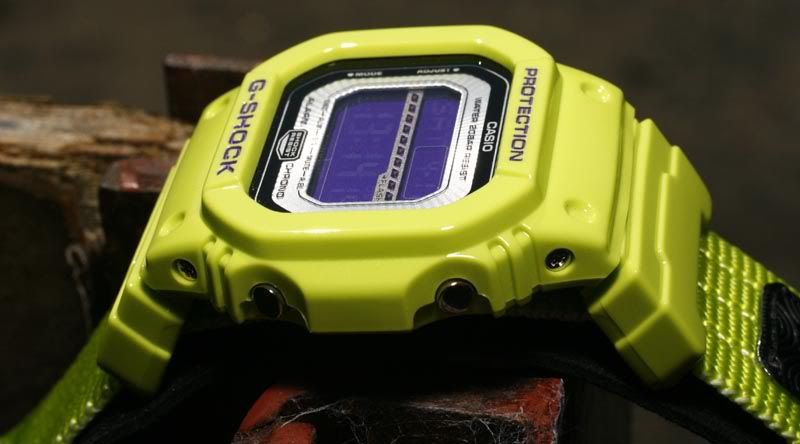
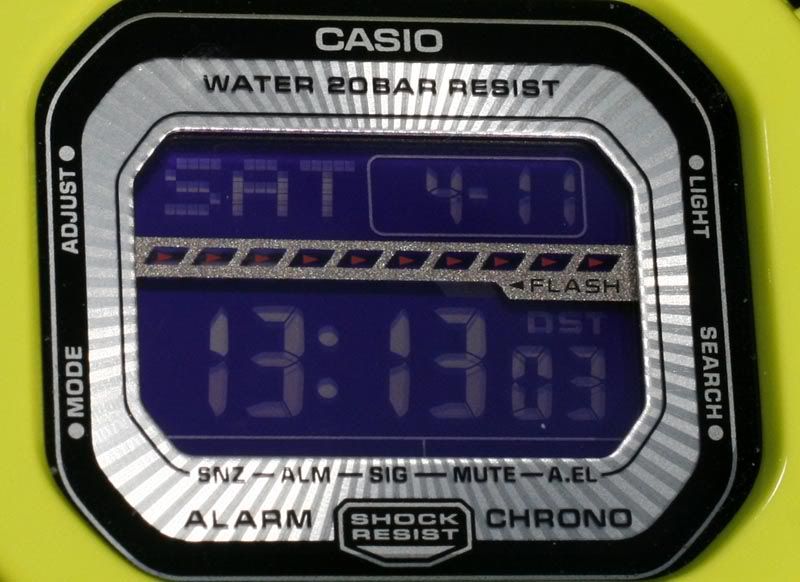
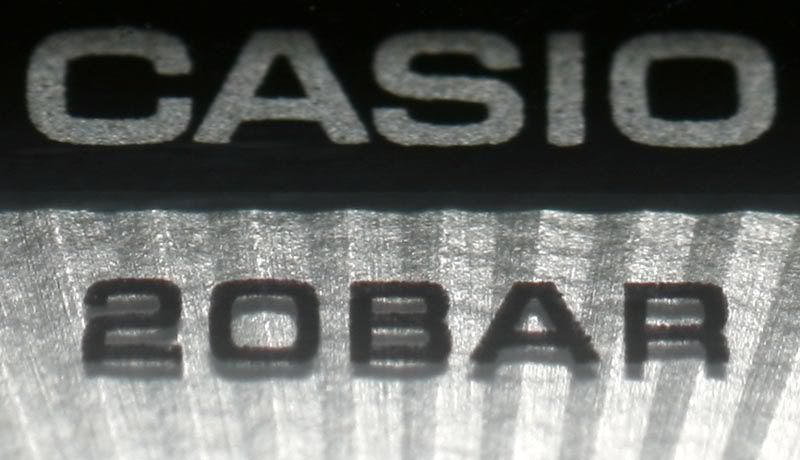
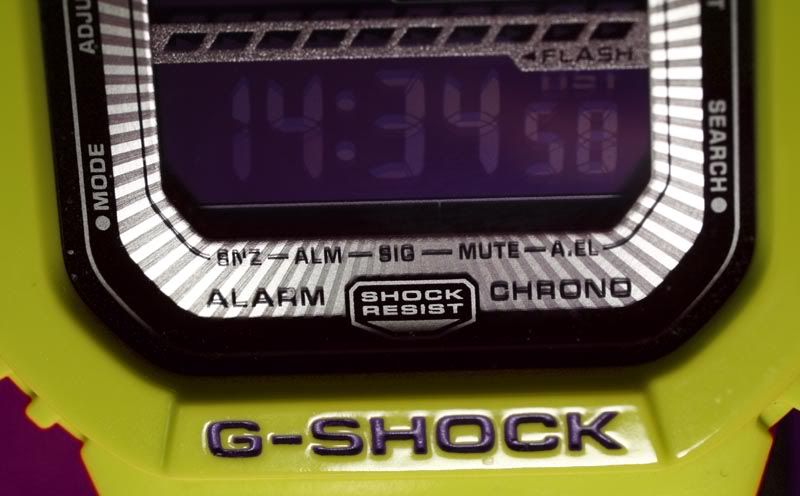
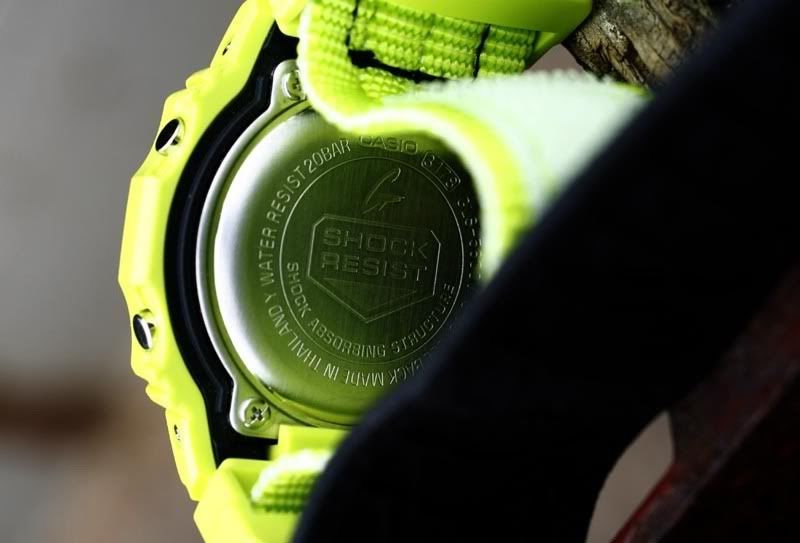 Most appearing is obviously the etched metallic area around the display. When watched in different angles, light seems to walk around the display.
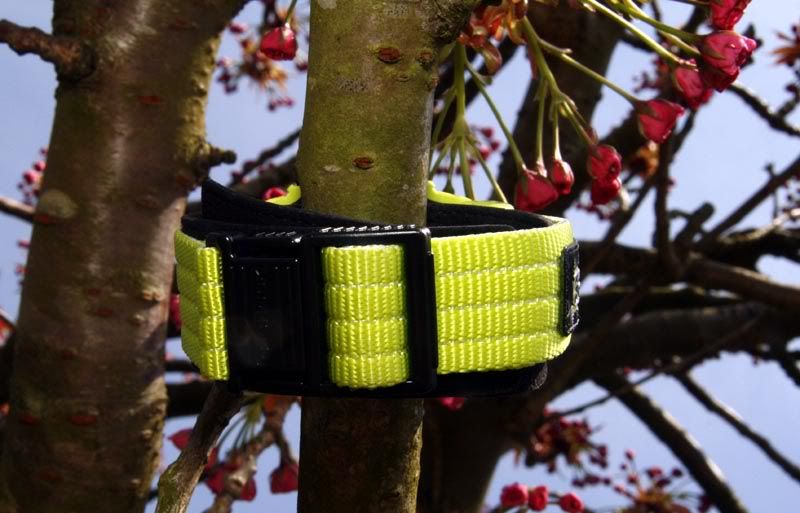
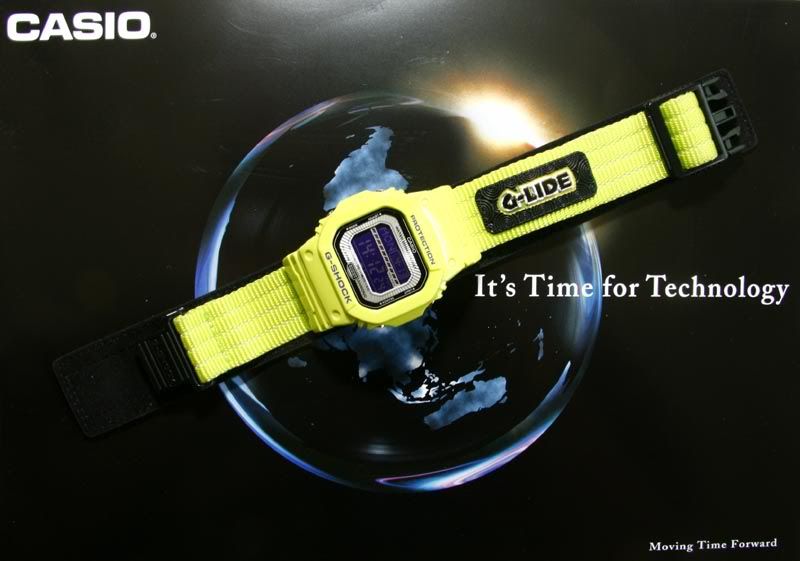
 Like I wrote above, the GLS-5600V has a double Velcro strap. It seems a different variation strap from the ones I know. The upper part is made of a thick synthetic fabric. It looks like the strap of my Street Arts, but there the upper strap wasn't as hydrophobic as this one.
 I think this new fabric allows the strap it to dry quickly when wet. The fabric seems to have a very open structure. So if you enter the après ski after your snowboard adventure, you don’t have to worry about a wet strap around your arm, caused by melting snow.
 The under part of this strap is also unique. I think I have seen a similar fabric before on my Lovers Collection 1998, but this fabric looks like a better breathing upgrade.
 This part of the strap (the part that touches the skin) feels and looks a bit like felt, compressed with very high pressure. Though it feels like very strong material, it also feels soft when touched. I think the tire like structure (with a beautiful G logo stamped in it) has the purpose to make the strap comfortable (breathing) and fixed on your wrist.
 I never have seen this kind of strap before. It looks like Casio has successfully tried hard to innovate new fabrics to make these straps both comfortable and hygienic, pushing these type of straps type to a higher level.
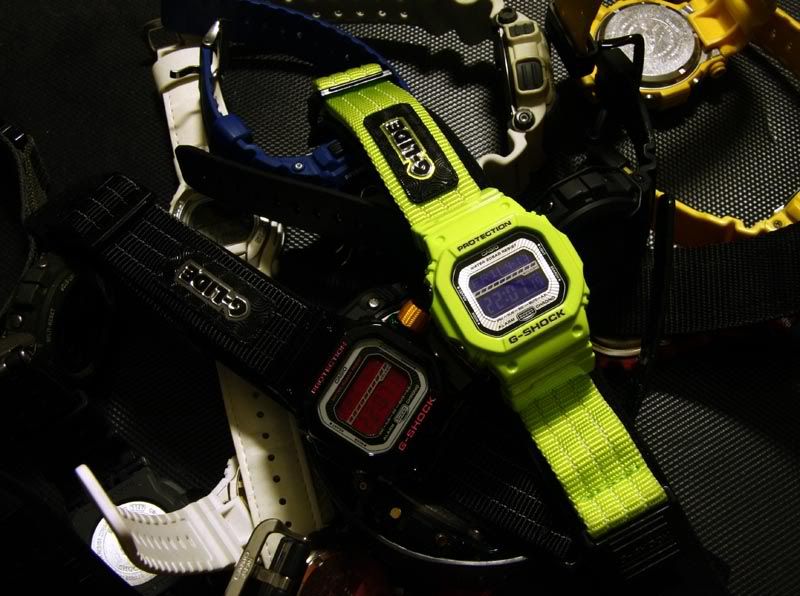 I hope Casio will use more of these straps in the future. I'm also pretty curious how these bands will do in hot summer conditions (though these are snowboard models of course).
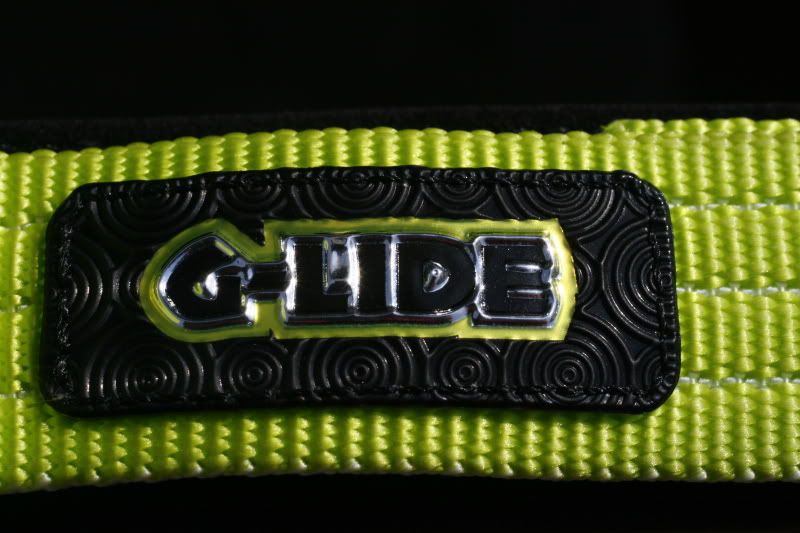 Very nice is also the patch on the strap. It's a kind of rubber resin that has the name of the series written on it with shiny silver letters. The patch itself has a structure of circles on it.
 Though the presence of these silver letters and metallic rim around the display might suggest different, the watch does not appear to be blingy in my opinion.
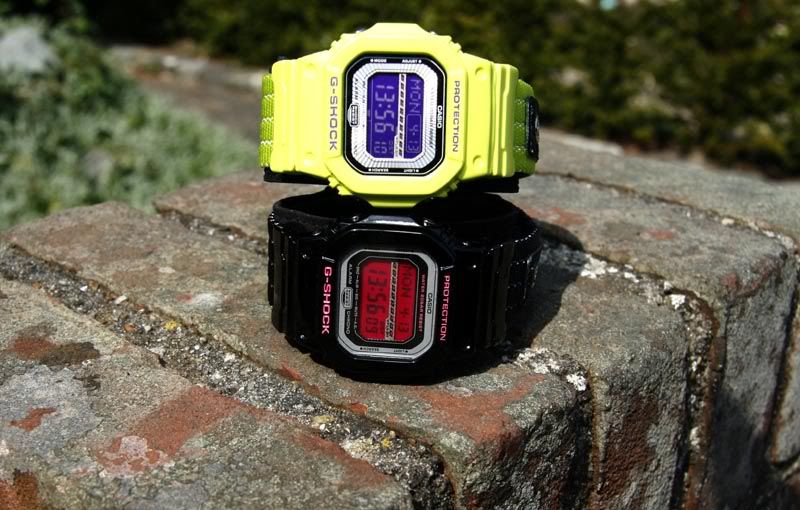 So we have now only talked about appearance, lets take a look under the hood. The LCD of my green G-Lide looks under most light conditions black, but a closer look with bright light reveal that actually a purple liquid crystal is used. It matches nice with the purple lettering on the case. The black version has a "Deep Cerise" liquid crystal display. I expect that the white version has the "common" negative display.
 The display in Time mode, does what it must do. Besides time, it displays day, date and month, just in case you lost track of time. Time keeping is based on the bias of UTC (GMT). This is pretty handy. The watch is in the factory set to UTC+9 (Japan), so if you set the watch to your time zone and if needed apply DST (Summer Time), the watch will give approximately the right time already.
 A nice surprise is the presence of 2 stopwatches. The first stopwatch function has the possibility of a 5 seconds countdown, toggled on and off by pressing the ADJUST button. (Edit:) Not only there are two stopwatches on board, but they can measure times up to 1000 hours too (thank you Joakim!).
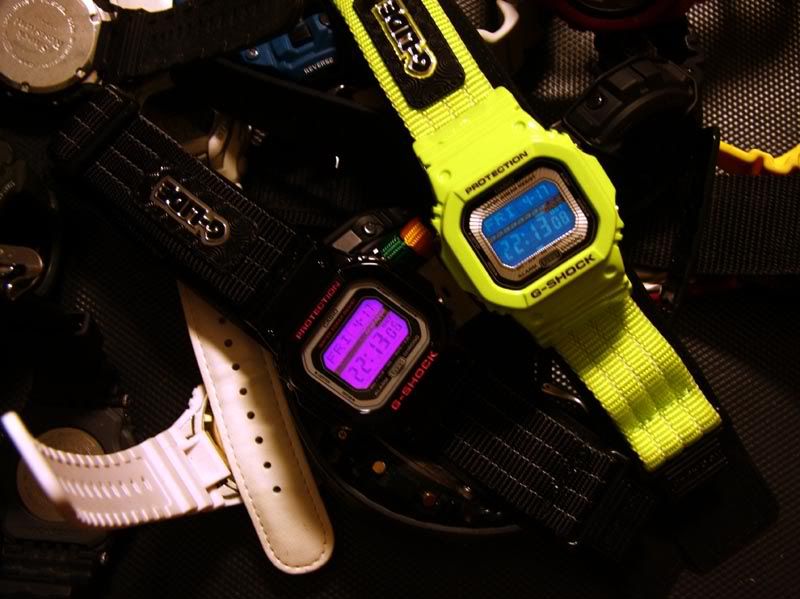 The watch has a 24h countdown timer with facilitative repeat function. Since a lot of G-Lide models, specially surf models, only have a 60 minutes countdown timer, this is a big plus on this model.
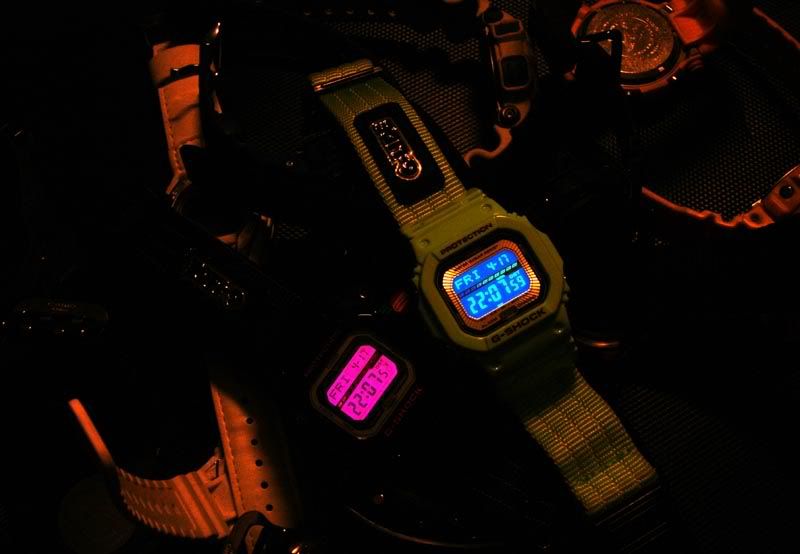 The GLS-5600V has 5 alarms (one is a snooze alarm) and of course the hourly chime. To bring more joy at night, you can toggle Flash mode. Every time an alarm sound is made, the EL lights up.
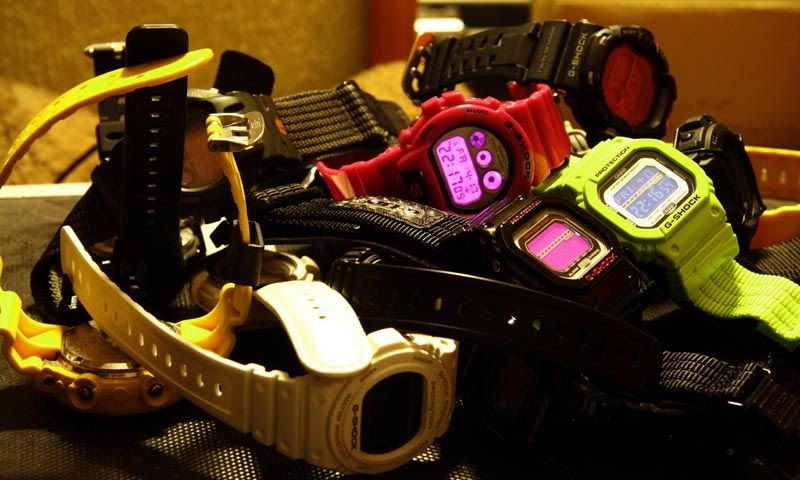 A nice surprise on this watch is that also a World Time function is present. I am always a bit biased about this function on a G-Shock. Daylight Saving Time (Summer Time) has to be set by hand, since they do not apply in every location in different timezones. Also DST starts and ends on different dates on different timezones. In Australia there is even a time zone where the southern half have DST, while the northern part don't use DST.
 Well, the fact I can write quite a story about this model, indicates that these cheerful model must be something special. I think it's a small miracle that you can get this watch for such a good price.