With asymmetric G-Shocks you immediately think about the more sporty resin models. Best known is of course the Frogman, but there were also the Lungman and the DWX-100 series known to be asymmetric.
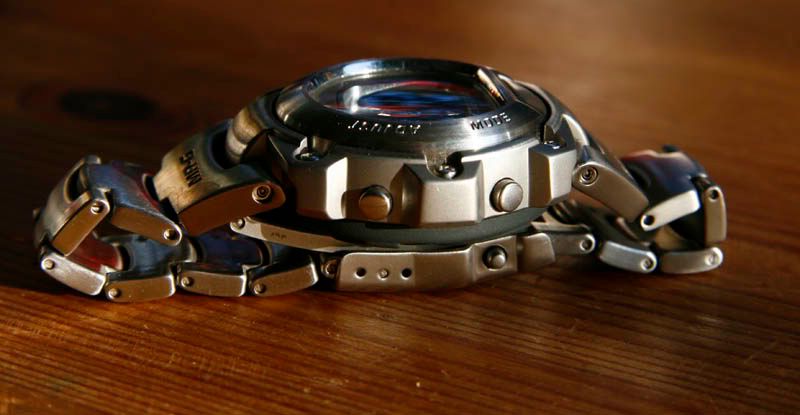 With asymmetric models you probably do not immediately think about elegance. Often beauty is synonym for symmetry. The MRG-1000-7, in Germany also known as Ocean Liner, proves the contrary.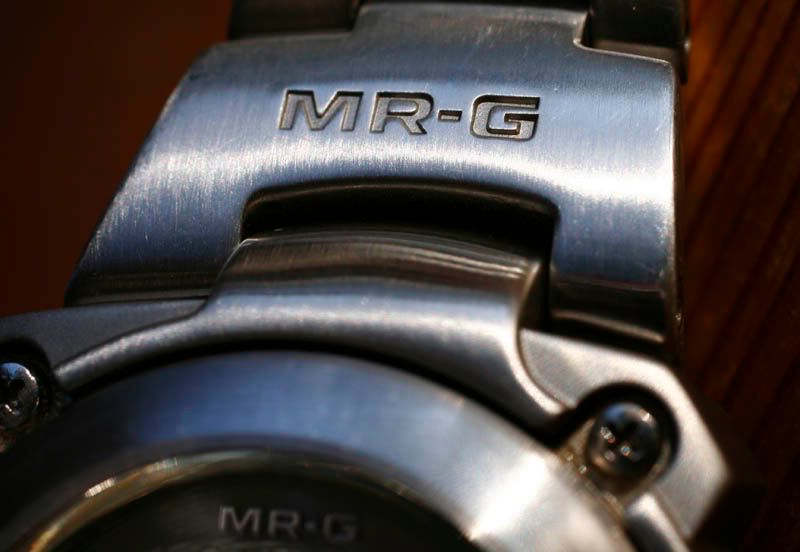
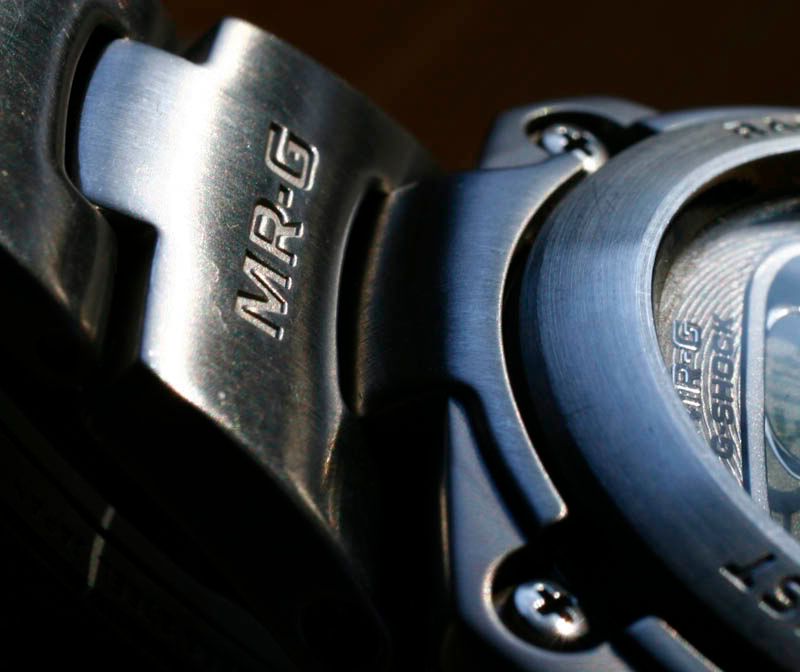 When I was not collecting very long, I was visiting a former dancer in the discotheque where I worked. I presented him a new CD of my band, because he was a fan of us. While listening some tracks we started about watches. He always wore nice watches and he noticed my G-Shock. He told me:”If I would buy a G-Shock, that would be a MR-G”. That made me curious, since I didn’t know about these models yet. Curious as I am, I started searching for MR-G. I found out these were “metal G-Shocks” and that they were pretty pricey, even used. This made me more curious.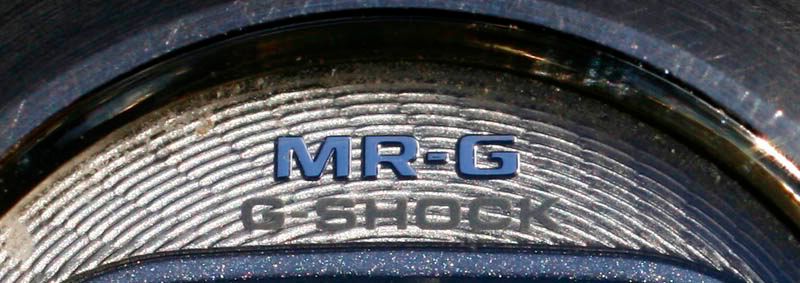
 Nowadays I have corrected the vision of metal G-Shocks. While most of the 90’s MR-G models indeed have a stainless steel or titanium body, bezel and bracelet, the first MR-G models had a steel case, covered with a resin bezel and attached to resin straps. There was also a model released with a leather strap.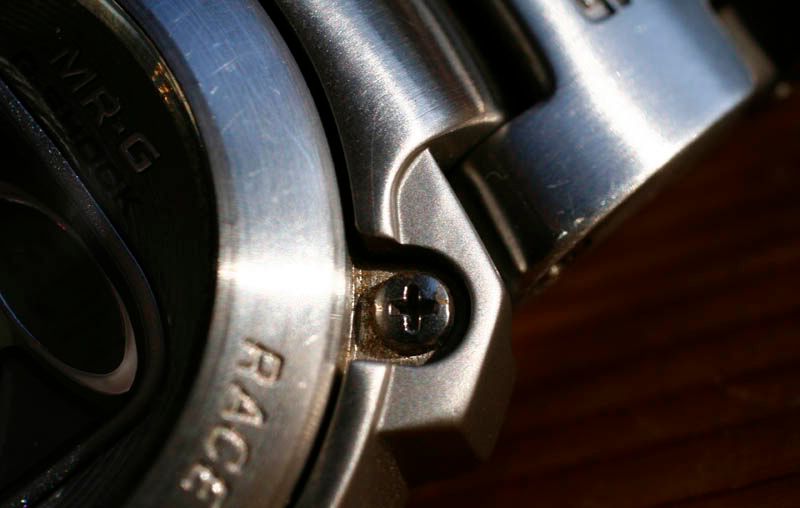
 I won this Tactician in an eBay auction somewhere August 2002. At that time there was a German eBay seller, called “Diamant Dodekaeder´. I had bought and won many watches from him, unfortunately he is not active anymore on eBay. The price was for me very high, those days. The end price was €145.-. It was back in 2002 quite a sum of money. At that moment it was the most expensive watch I bought.
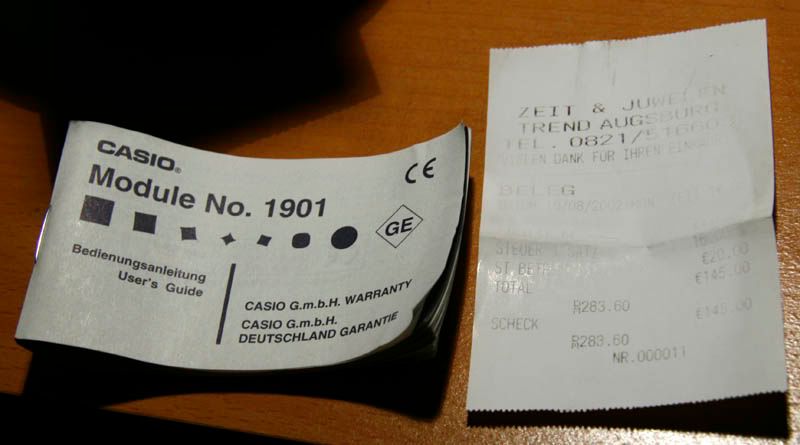 Actually it was a very good price. I got a MR-G catalog later, where this model had a suggested retail price of DM849.- (now €425.-). In contrary with the Netherlands, where the SRP is also the listed shop price, prices were often a little lower in Germany, but I think you wouldn’t have found this model for sale under DM600 in the shops there. In Japan the SRP was at the release, in November 1998, with ¥50000 (€375.-) a little cheaper.
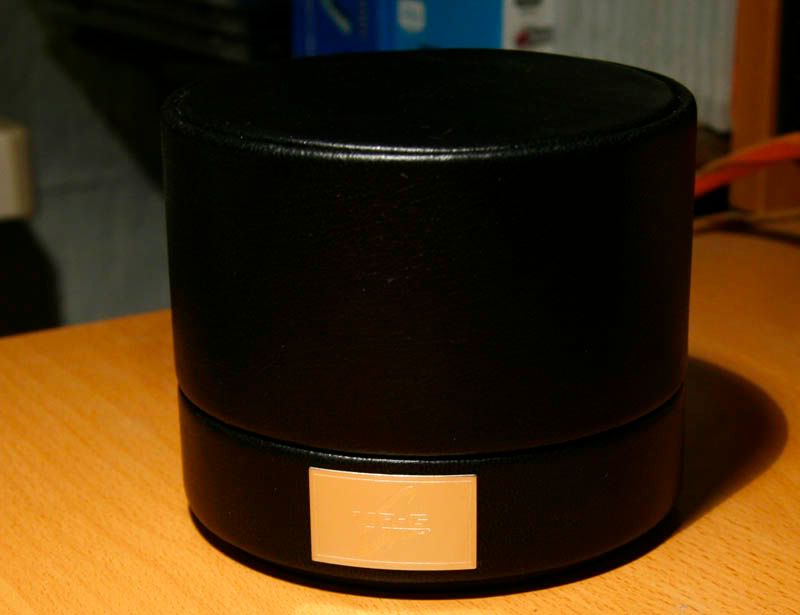
 When the box arrived I was pretty surprised. It came in a cardboard box, with in it a leather covered cylindrical box. A small metal plate shows proud the name of the series, MR-G. Only the package tells “I hold an expensive watch”. It was a real surprise when I opened the box. With all these resin watches, I wasn’t used to the shiny blingy watches.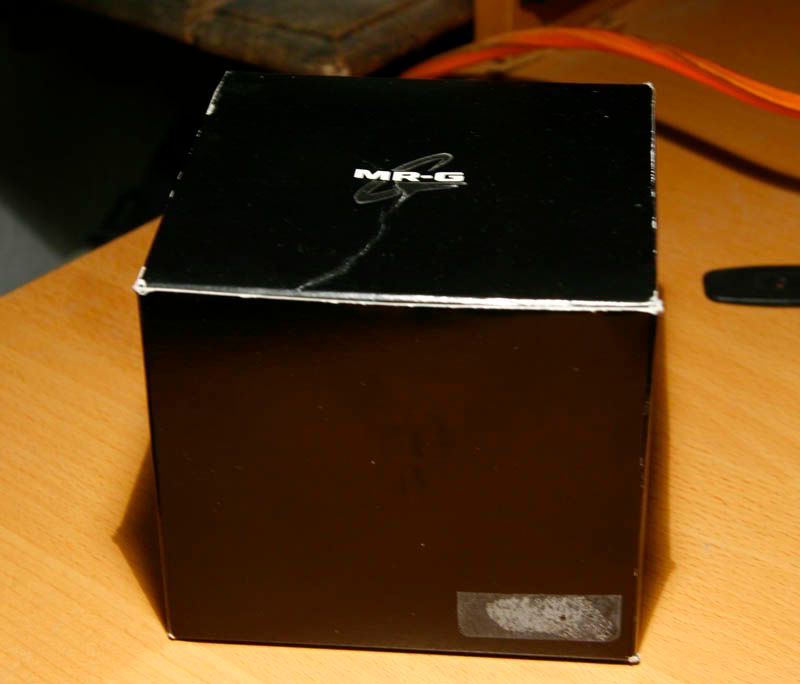
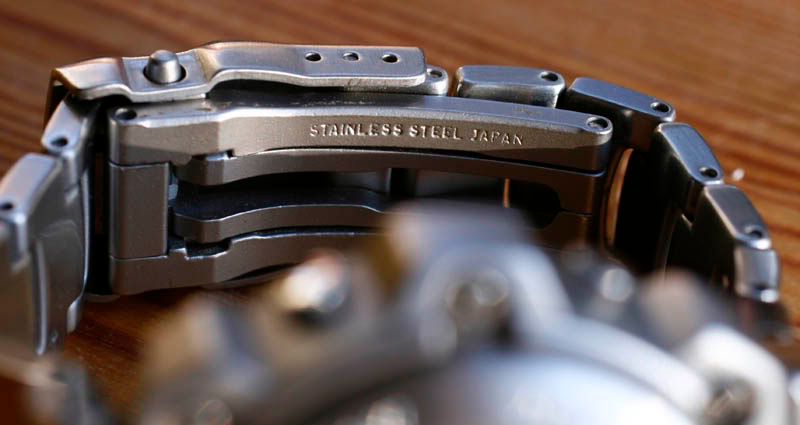
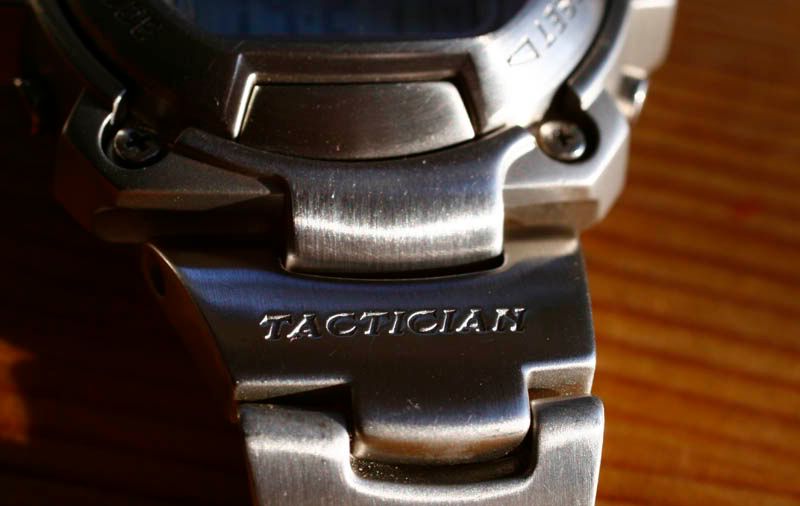
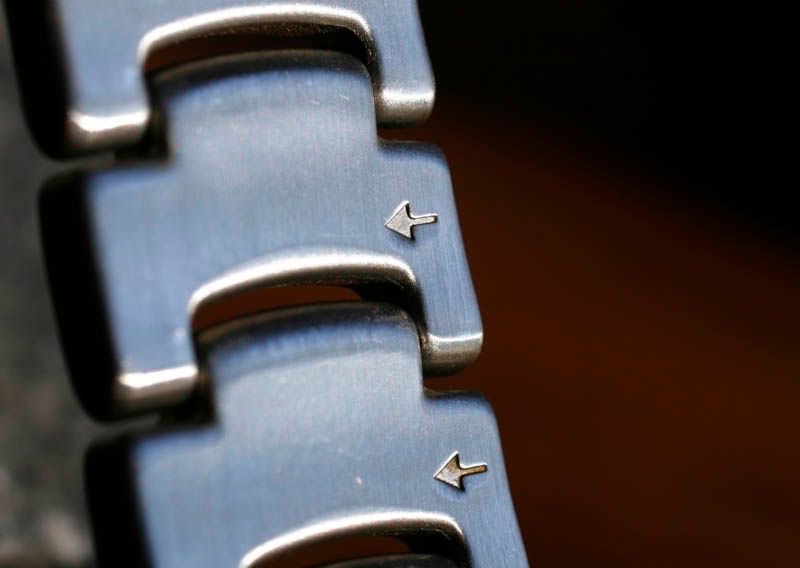
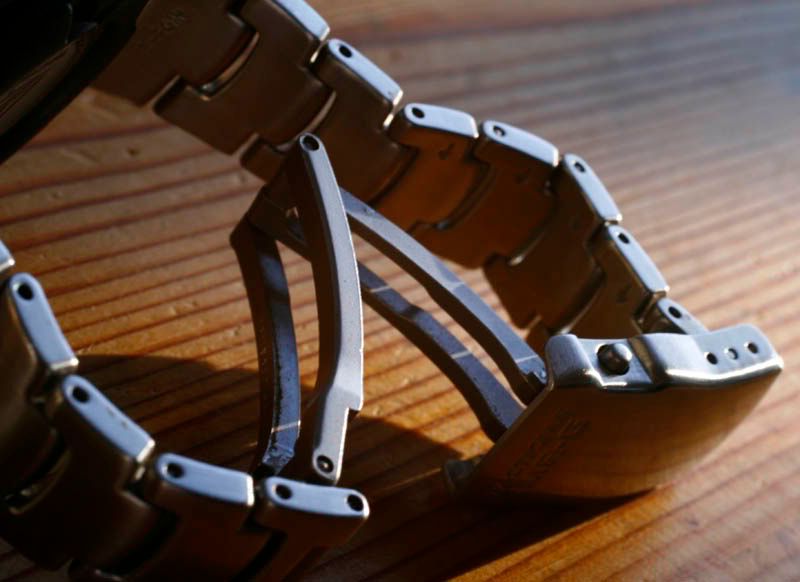
 While I got used to the bigger G-Shocks, like the Gausman, Mudman classic model) and the Raysman, the size of the Tactician disappointed me a little. The watch was quite heavy, no wonder with a solid link bracelet, but rather small for a G-Shock.
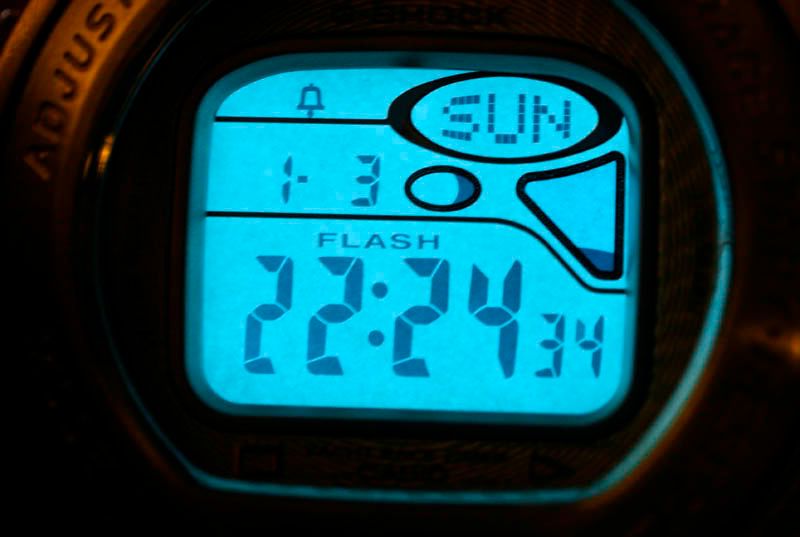
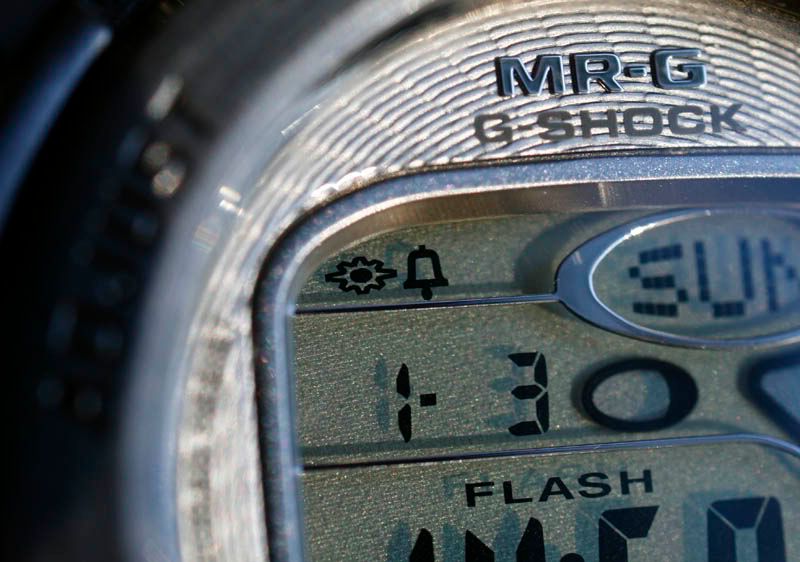
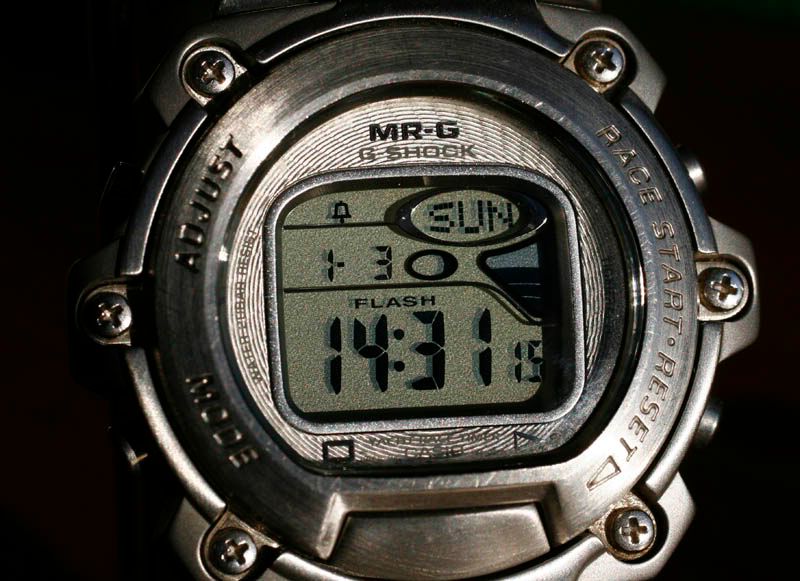 Still the watch looks fantastic. The EL backlight shows a very beautiful light turquoise glow. When illuminated, the display looks very crisp and clear. If you activate the FLASH function, the EL flashes when the alarm sounds. The watch also has an Auto-Illumination function. When activated, the light turns on when the watch is tilted over approximately 40 degrees (about the angle you use to read time). This function switches off automatically in about 3 hours, to save the battery.
 The asymmetry returns in the digital display. The sub-displays are more or less organic formed instead of the usual rectangles and circles. Very unusual on a G-Shock watch.
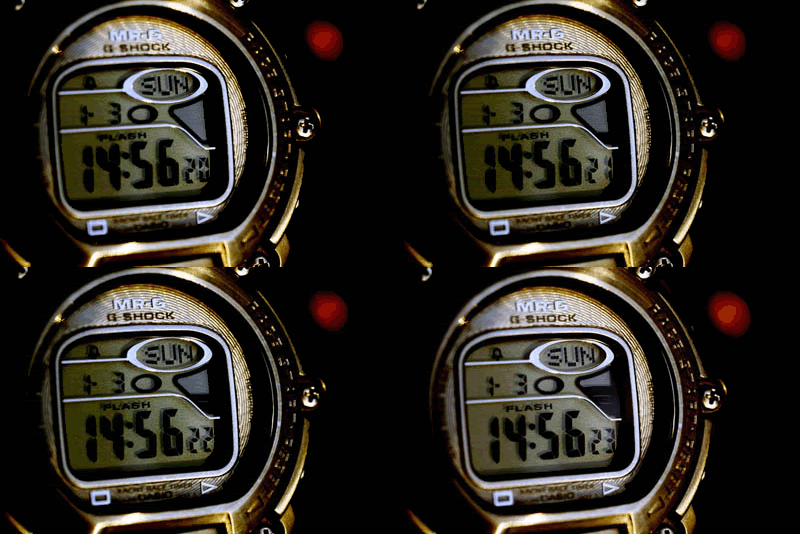 One of the first thing you notice on this watch is the Tidegraph display. In contrary to other tidegraphs, this one is animated and the animation shows the height of the tide. If the tide goes up, the animation starts at the bottom and adds lines to the current height. If the tide is falling, the tide starts with the current height, while the lines disappear from top to bottom.
 This was my first watch with a Tidegraph function, so I had a lot to figure out to make it work. The tide is caused mainly by the moon, but the high tide is always later than the pass-over of the moon. This can be minutes or hours. On the US East Coast the delay is even so long, that it appears the High Tide is just before the moon passes over. This is probably caused the enormous landmass of Northern America.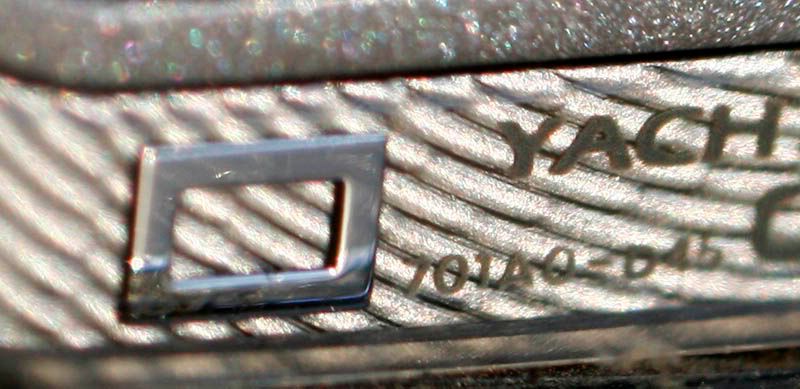
 With a newspaper and a tide table I can calculate the delay of the tide where I live. This delay is called the “Lunitidal Interval”. Since I didn’t know the website “Time and Date” with their sophisticated world clock data and also didn’t have a cool iPhone with a Tides app, it took me quite some time to figure out the calculation.
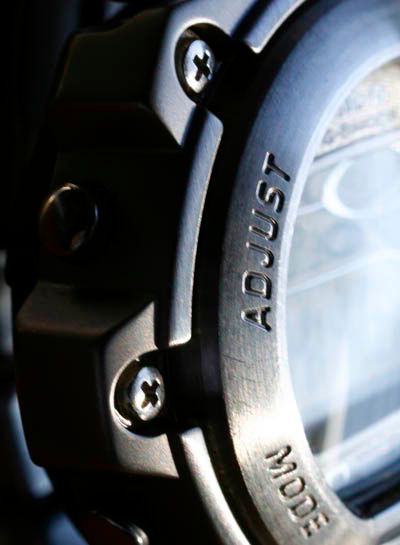 Since it’s pretty hard to find out yourself how to set this watch, if you don’t have a manual (manual 1901 is not available anymore on-line), I will explain how to get at the Tidegrapgh programming sequence. From normal timekeeping press Mode one time (lower left button). Then press Adjust. The time shows 6:00 on my watch (default), while the hours are flashing. You can enter a time here in whole hours to see the phase of the tide at that time, but we are not interested in that at the moment. Press the mode button. You can enter the year now, press the Mode button again and you can input your timezone compared to GMT. While pressing the Mode button again, you enter the mode where you can input the latitude and longitude. You can change the data with the upper and lower right buttons. If you have input your correct location (to the whole degree) you press the Mode button again. Now you can enter the Lunitidal Interval. Press Adjust to return to the normal modes of the watch.
 If you have input all data correct, the watch can show you the following data: current tide or the tide at a time at a date, moon in highest position (Moon Up), Moon in lowest position (Moon Down), Sun Rise and Sun Set. I pretty much miss the last two data on the newer G-Shocks with Tidegraph function. You can scroll al this data in the Tide mode, while using the lower left button to scroll.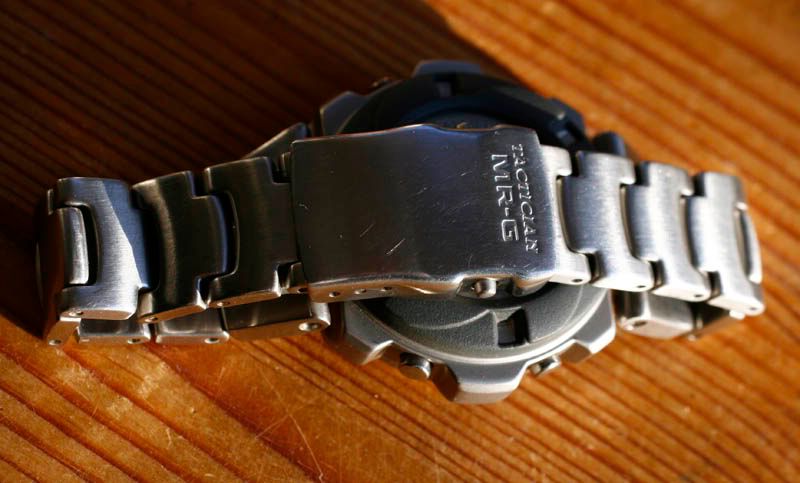
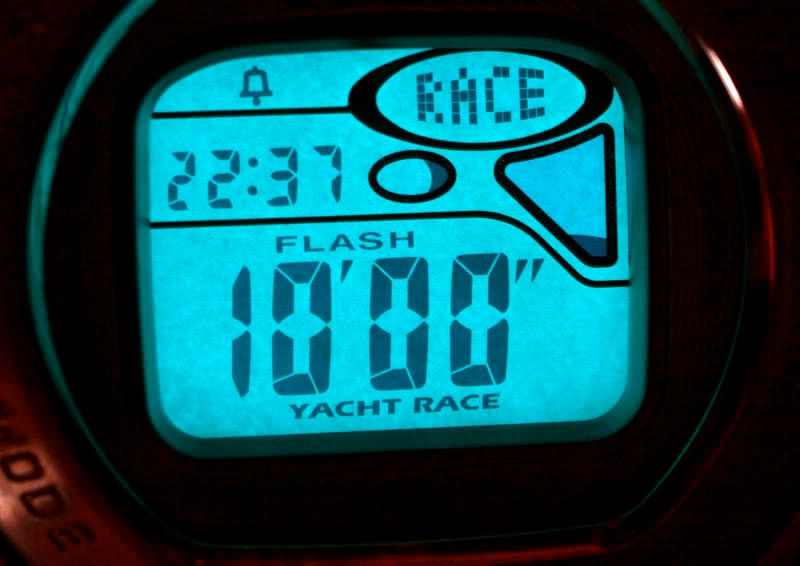
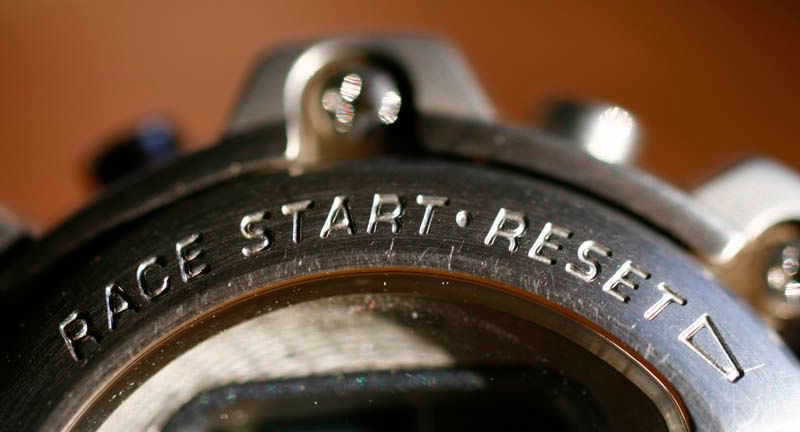
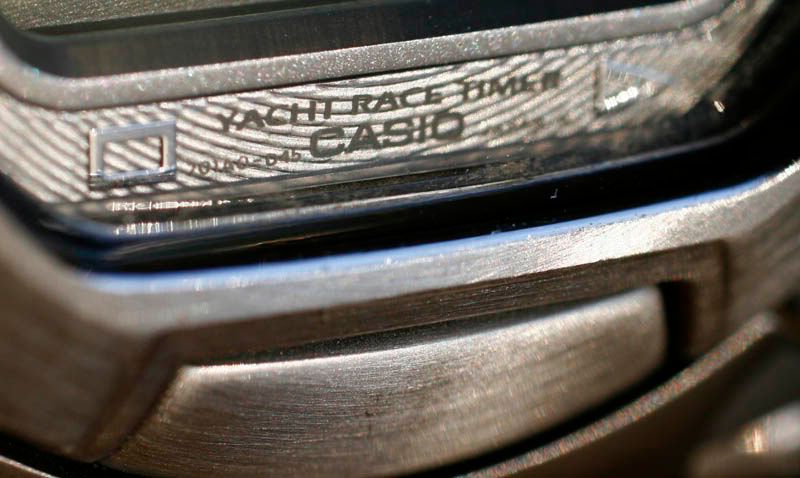
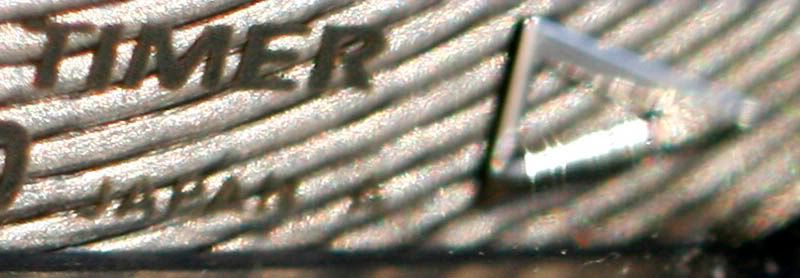
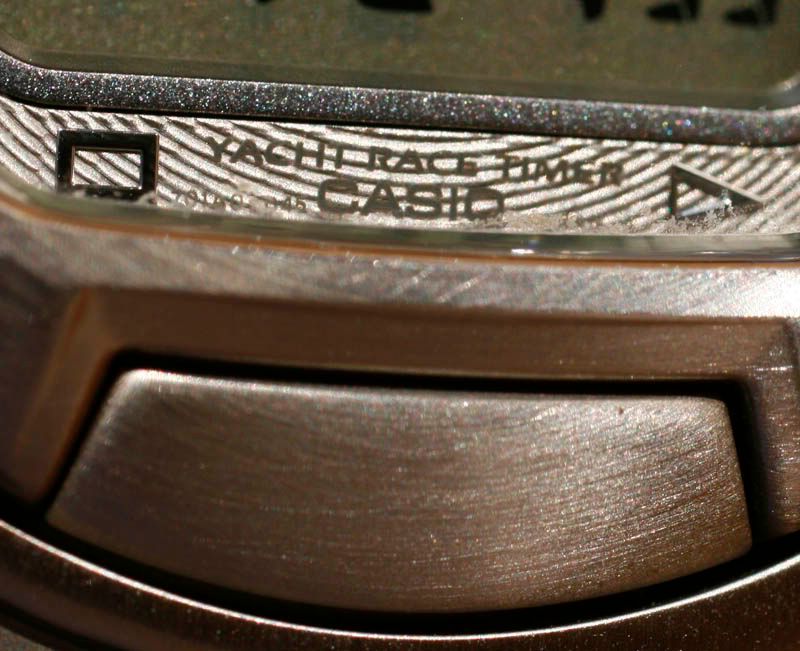
 While scrolling thought the functions on the Tactician, you’ll probably won’t find the Race Timer and Countdown timer. It’s a bit hidden. You need to press the Mode button for about 3 seconds. The Race timer is a bit sophisticated Countdown timer. The countdown timers give sound signals when they approach the target time and auto-repeat (I didn’t manage to get them off).
 While the Free Timer (normal Countdown Timer) only repeats one target time (from 1 to 60 minutes), the Race timer alternates between the target time and 5 minutes. I don’t know much about yacht racing, but it seems to be the time interval between two stages. It is the time you have to enter your ideal start position.
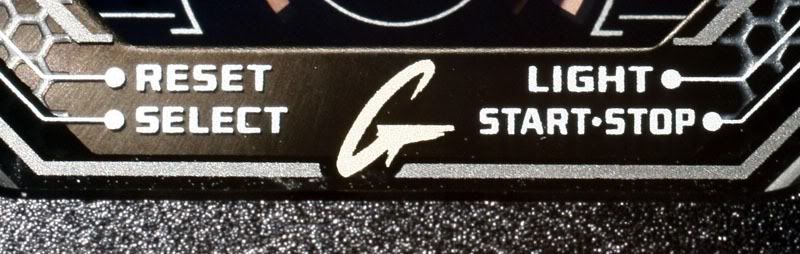
 While the light button now acts as a start-stop button, the upper right button now is the light button. If the timer is stopped (hold the start-stop button for three seconds) you can switch between Free Timer and Race Timer. If your target time is reached too soon, press the start-stop button and the timer will start again (or in Race Timer the next target time begins). With a little practice you probably learn to work with this timer. To exit the timer mode, just push the Mode button again for three seconds.
 In theory this Yacht Race Timer function sounds pretty good, but there is a down side. The alarm notifications are not loud. Actually all MR-G models I have, have soft alarms. Actually I think the alarm, which is a piezoelectric speaker located at the inside of the back, is muted by the thick case and back.
 Now, imagine that you use the watch at a yacht race. For a god race you need good wind, say about 5 to 6 Beaufort (which is pretty common here). Sails are clapping, crew is yelling commands. This year’s coastal marathon was run with about 6 to 7 Beaufort. At a certain moment the coordination centre tried to contact me. Since I was prepared to these weather conditions, I had in ear headphones with silicon seals, so I could hear the coordinator clear above the sound of the stormy wind and the sea. The coordinator was not able to hear me. All they heard was wind, no matter how hard I yelled. In other words you’ll need a pretty loud alarm, if you really want to use a yacht race timer for yacht racing.
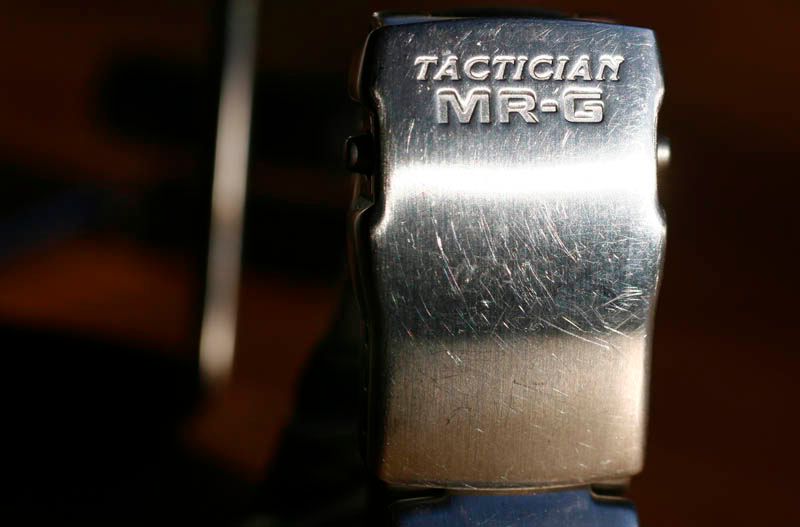 On the other hand, the modest alarm sound fits with the elegant MR-G design. These MR-G watches are not like the bright, eye-catching, resin models. This problem with the dim alarm sound does actually not apply on the MRG-120 and MRG-121 models. These models simply do not have an alarm function.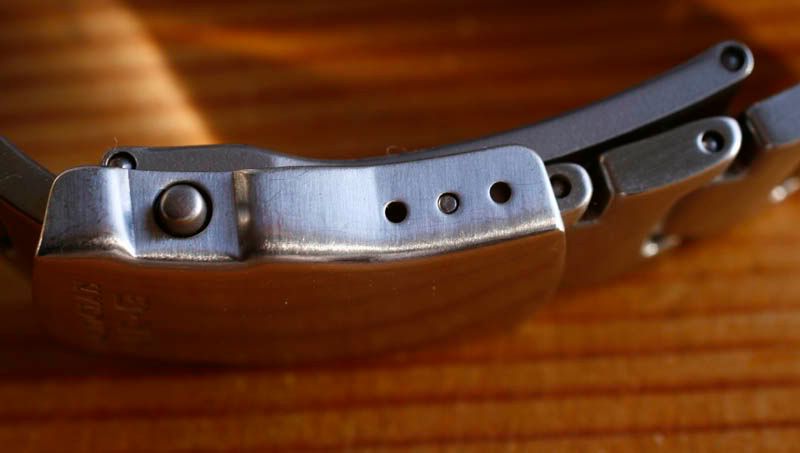
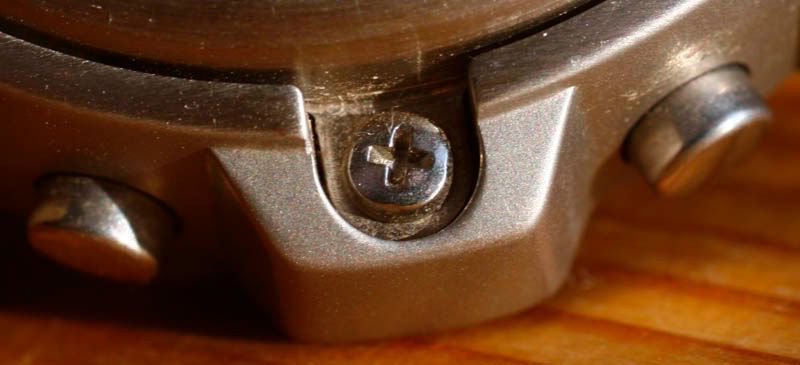
Although the case of the Tactician is pretty small, the case looks solid like a vault. The front looks removable, it is hold to the case with 6 screws. I never tried if it was cosmetic or real, but it looks pretty tough. The domed crystal is very clear and adds to the solid look. The back is a so called screw-back. A rubber ring covers the back on the outside. It is not only to make wearing the metal watch more comfortable, it also acts as a shock absorber.
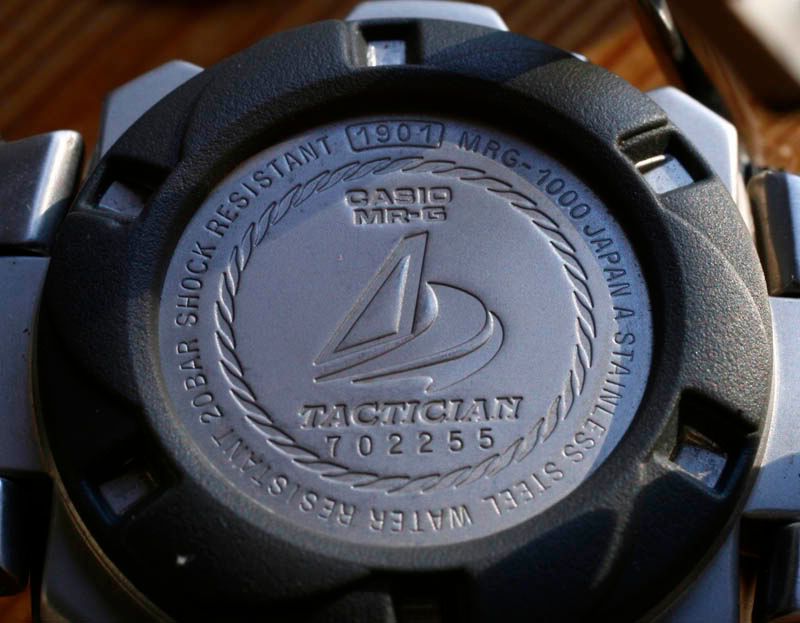
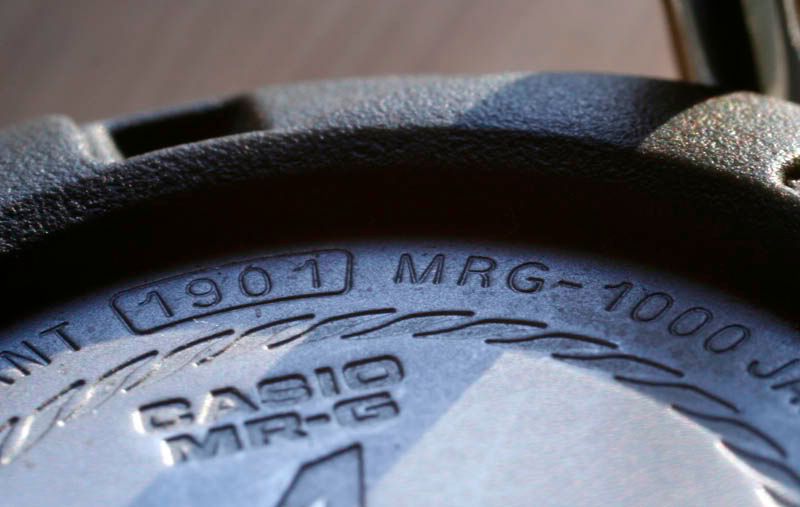 All MR-G models released until 2001 have a serial number stamped on the back. It seems Casio left this serial number system with the Final Frogman. The new MR-G and Frogman models don’t have these serial numbers. Newer G-Shocks do have a small series of numbers and letters printed on the back. I guess this the production run (batch) number. A stylistic sailboat is etched on the back, with the Tactician logo.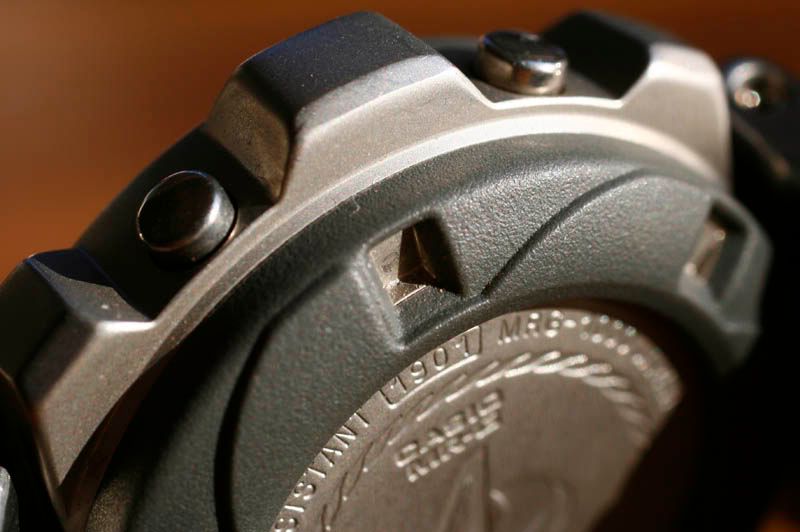
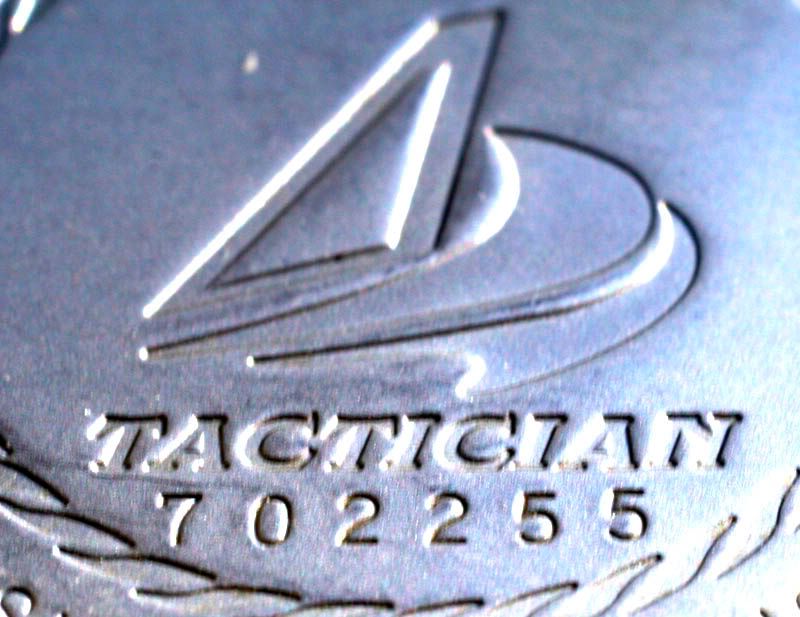 The serial number of my Tactician tells it was assembled in October 1997, actually one year before the first official Tactician release, the Nikkon Cup model (October 1998). It might have been that this MR-G model was released earlier in Europe.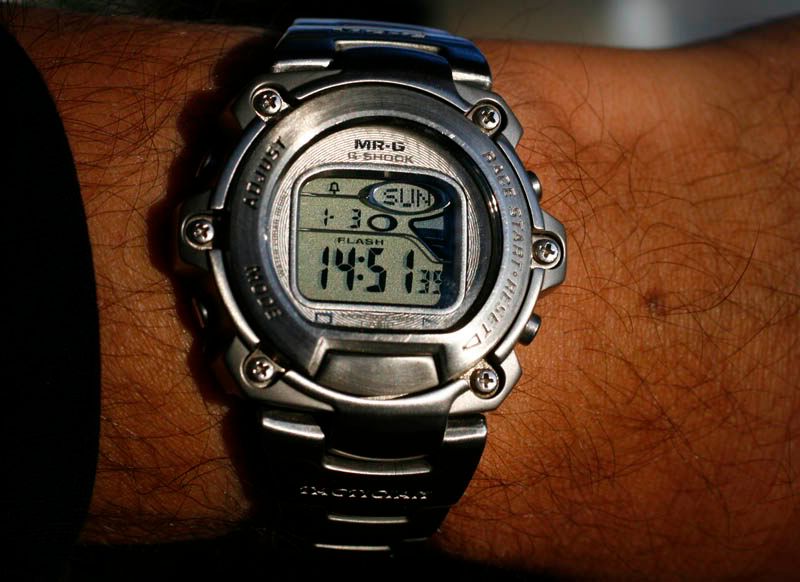
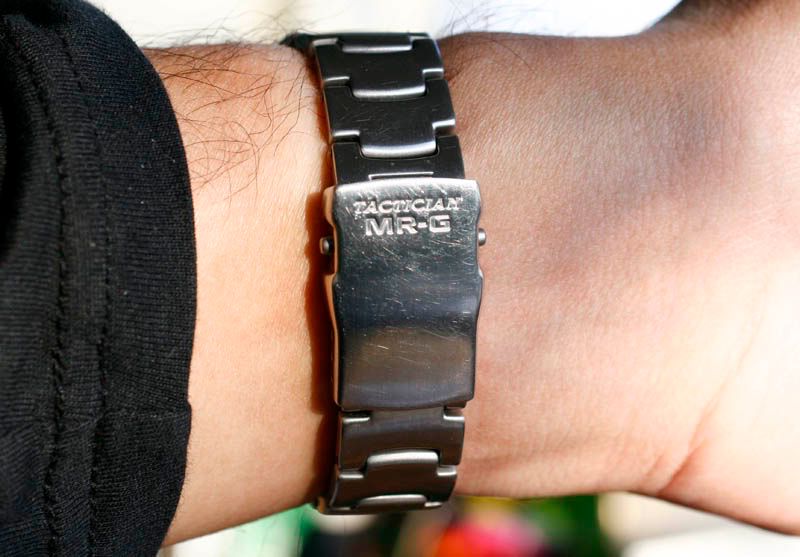 In summary, you get a whole lot of watch with this Tactician. Although it’s smaller size, it looks and feels like a very tough watch. Though the retail price was back then about the price you pay for a new MT-G or Giez nowadays, I think back in 1998 it was a huge price tag, maybe compares now with the “cheaper” new MR-G models (starting from 75000 yen). The organic display lay-out, the good looking Tidegraph function and the overall appearance of the watch, make this a beauty in my collection. The softer alarm sounds may not be a problem for me, though not really functional at sea. No problem for me, I paid a very good price for it, though I didn’t maybe realize that back then.