I think everybody has been shocked by the terrible images of Japan during the earthquake and the following tsunami. I know some people living in Japan and I recently have been there, so you can imagine my mind was with my friends there and not with writing a new 50 Gs article. Luckily many people I know have reported they are safe, including people from Utsunomiya and Niigata (where a severe aftershock took place early Saturday morning). Of course my thoughts are with the Japanese people and specially the people who are lost or have lost their loved ones.
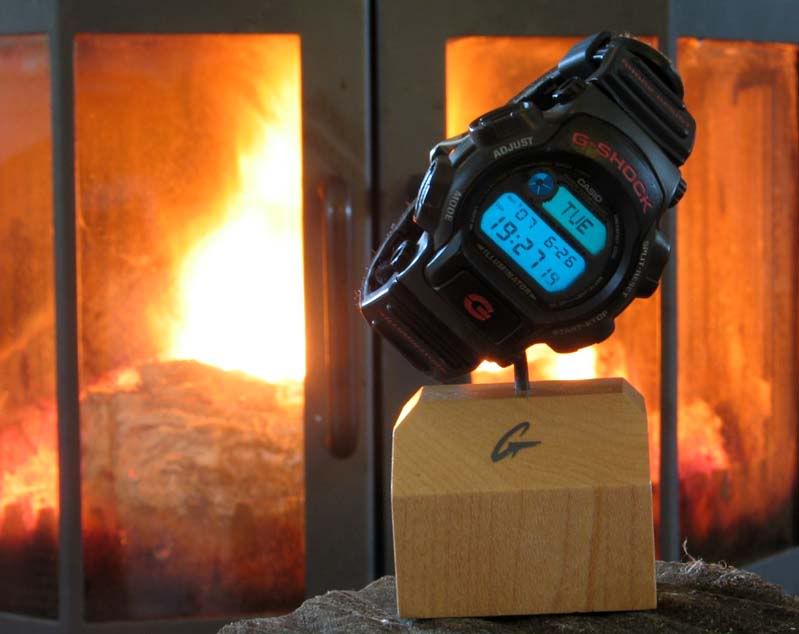
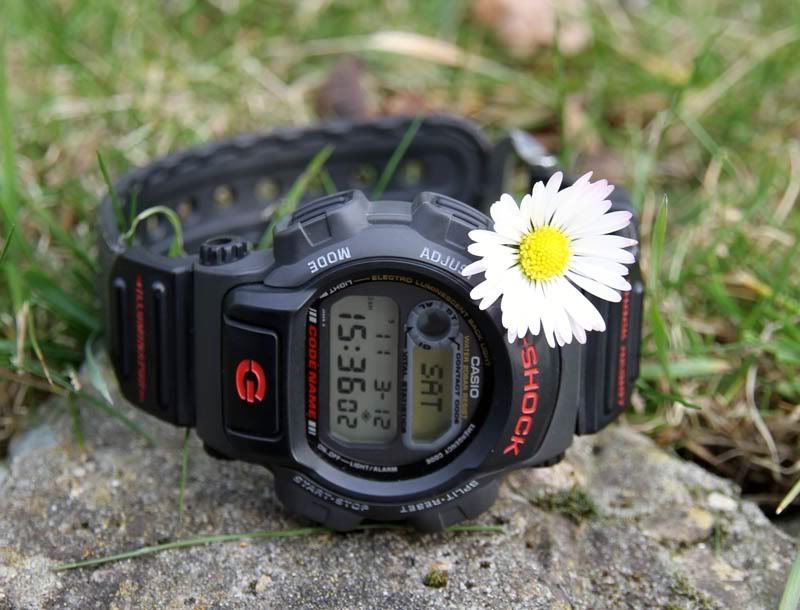
My first intention is to write a smaller article than usual, but I’ll see where it ends. Today’s G-Shock is the DW-8500B-1 Codename.
The DW-8500 Codename is a member of the Master of G series. It is a bit strange name for a models from this series, because all other models end with man in their name. The DW-8500 was released in November 1995 in Japan.
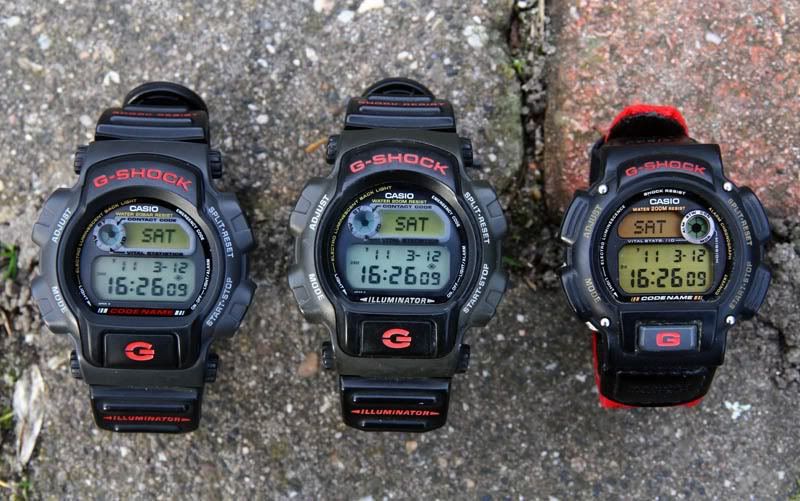
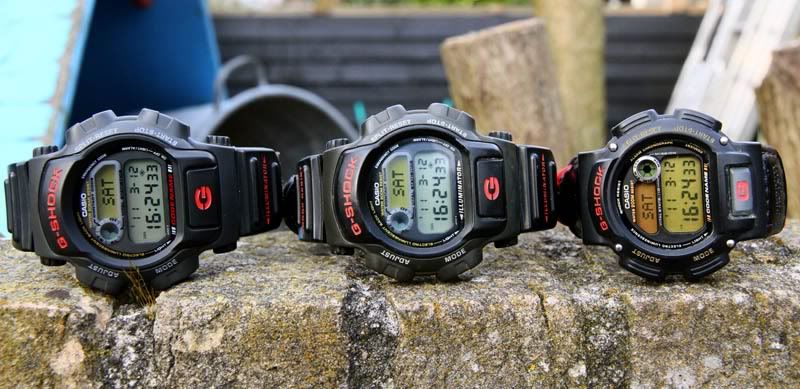
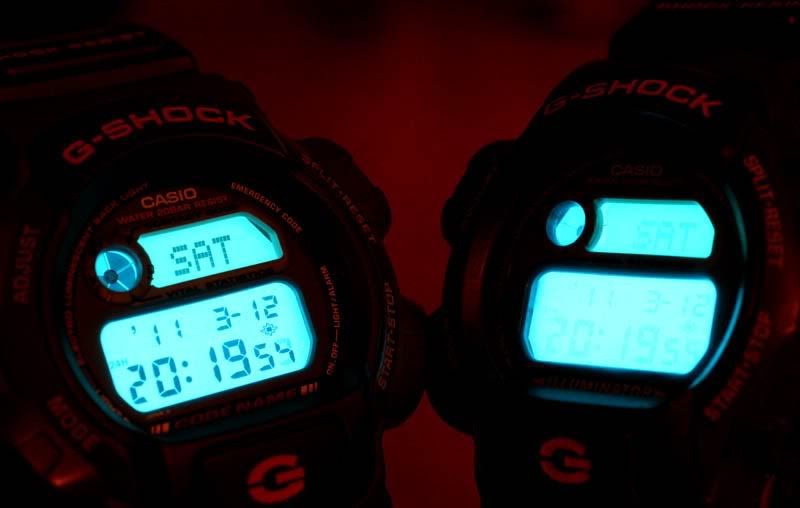
Left to right: DW-8500 Japan Domestic version, DW-8500 Overseas version and the DW-8800 Codename Cipher.
It got an update pretty quick after its release, as the more common and better known DW-8800 Codename Cipher was released exactly a year later.
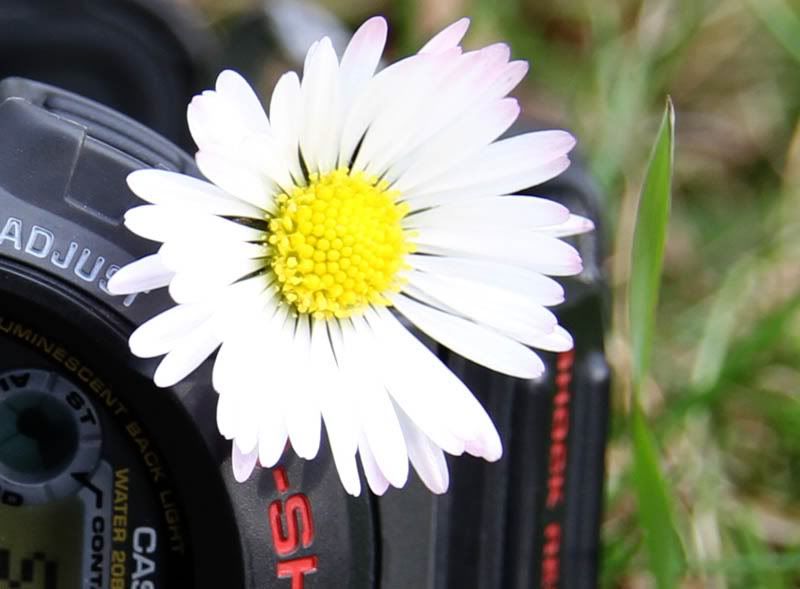
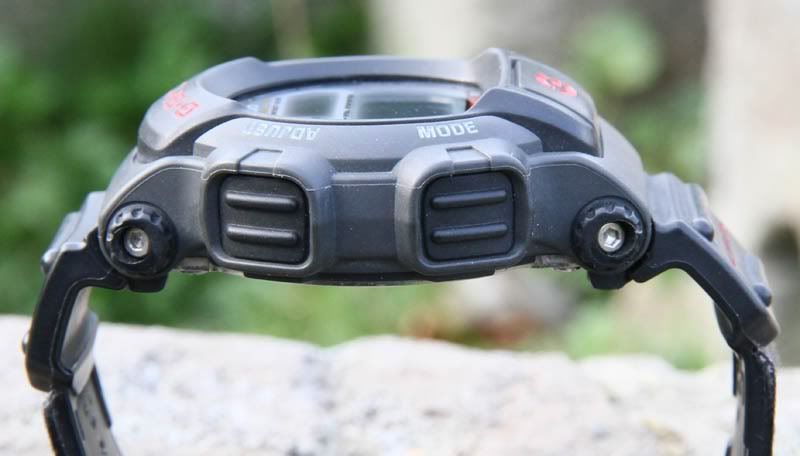
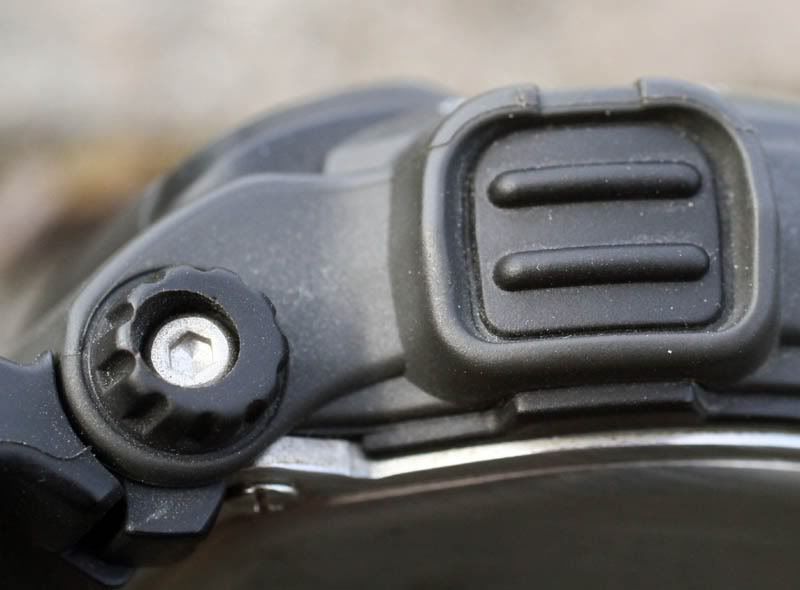
If you have read my 9th G-Shock article on 50 Gs well last week, you might notice that the DW-8500 was released at the same time as the DW-8400 Mudman was released. The Mudman and Codename have quite a similar look. They both have the same bezel and probably have the same case under it. This means that the DW-8500 is also Mud Resistant.
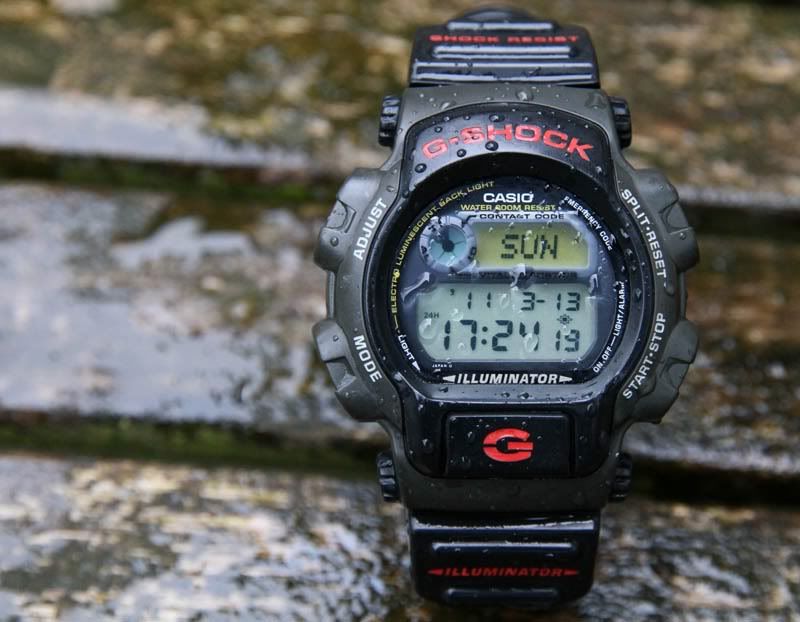
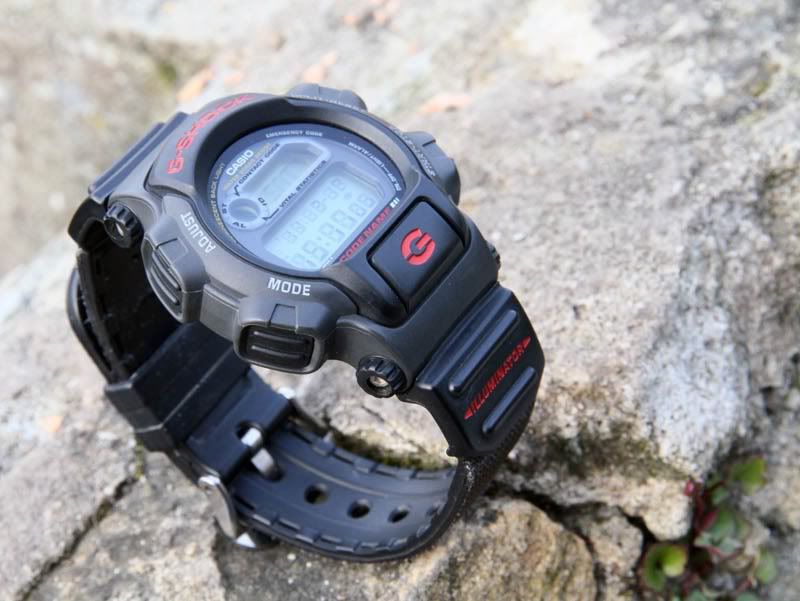
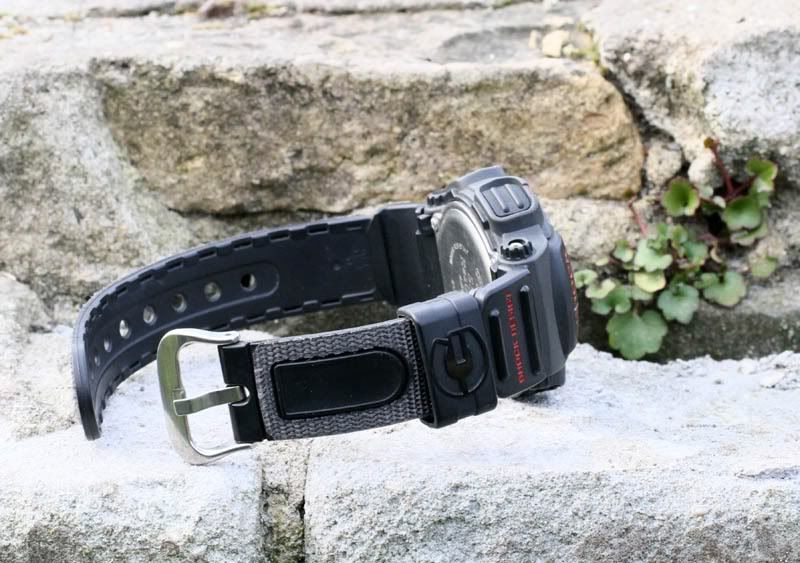
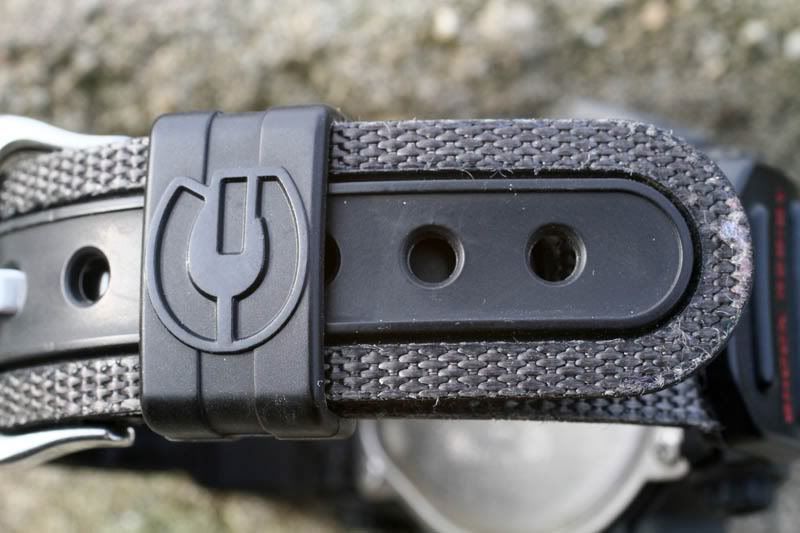
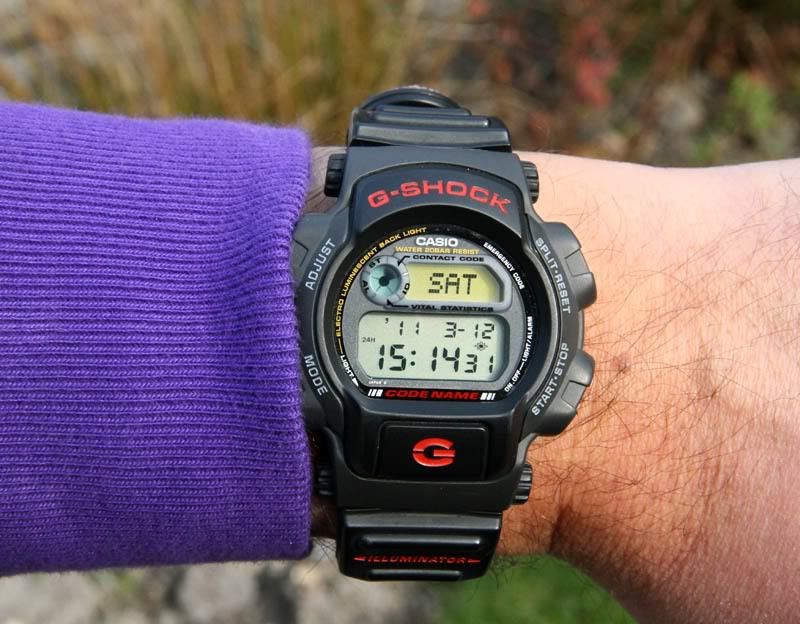
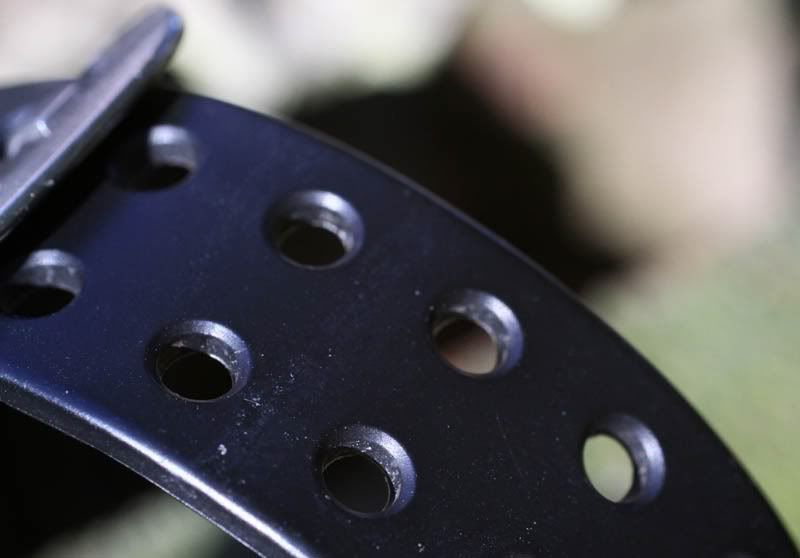
From there you find differences on both models. The strap of the Codename is different from most G-Shocks. The top layer seems to be a kind of woven fabric. The fabric is left out in the middle, where the holes of the buckle are. Also on the buckle side a part in the middle is left out. This gives the strap a kind of two tone look, although in this case both the fabric as the resin are black. Pretty cool is that the upper display has another background color than the lower display.


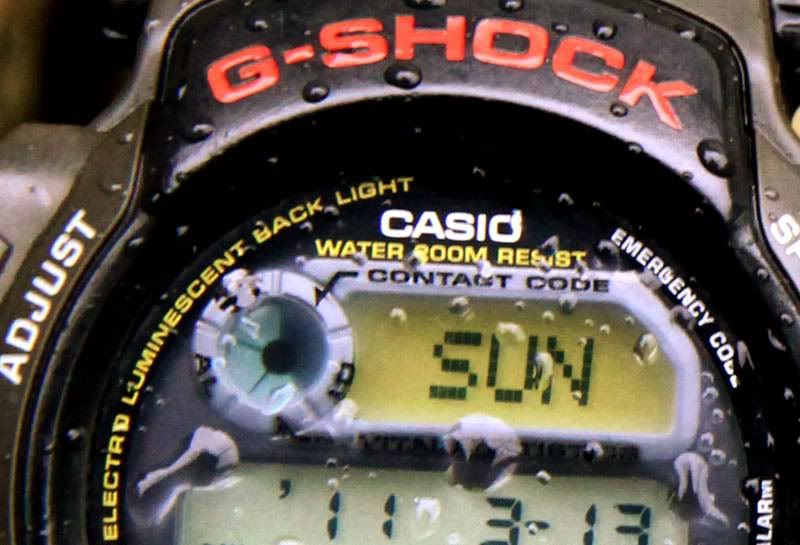
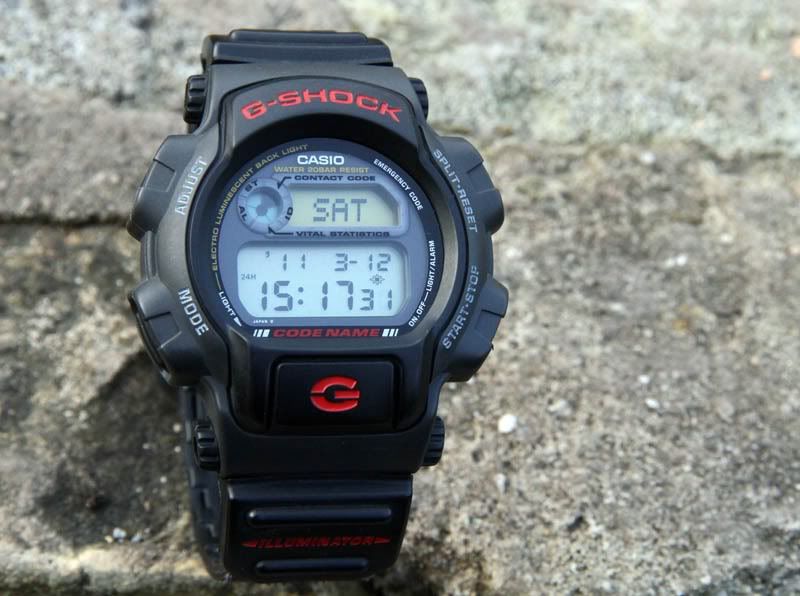
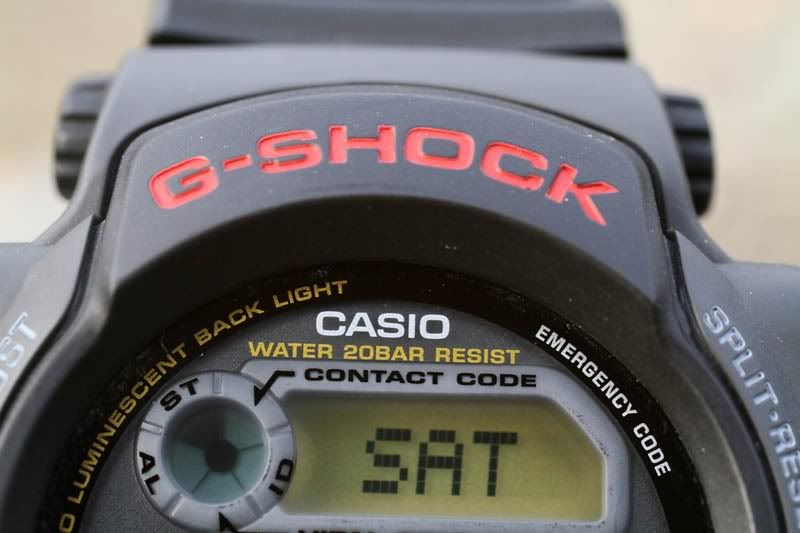
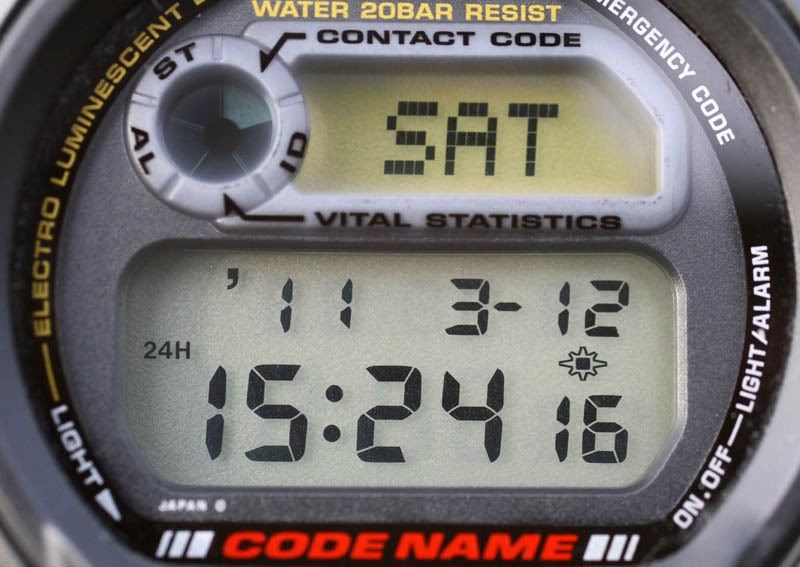
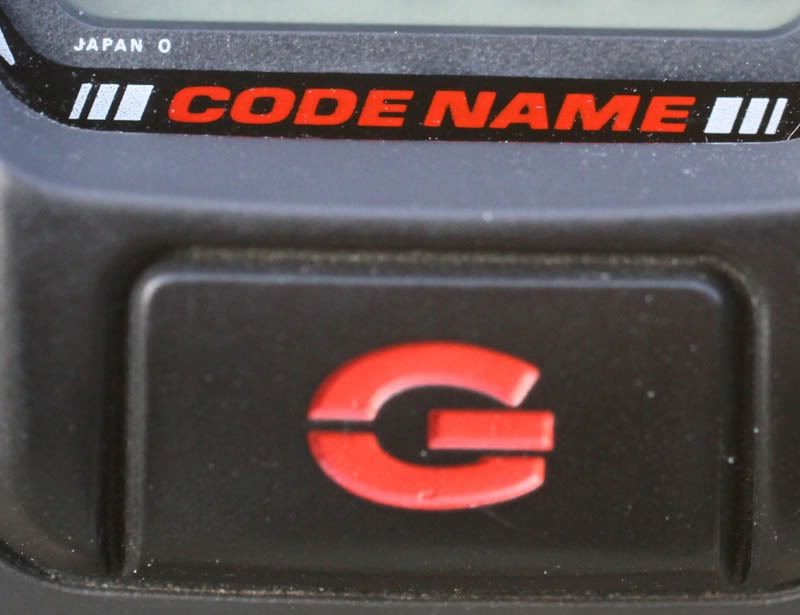
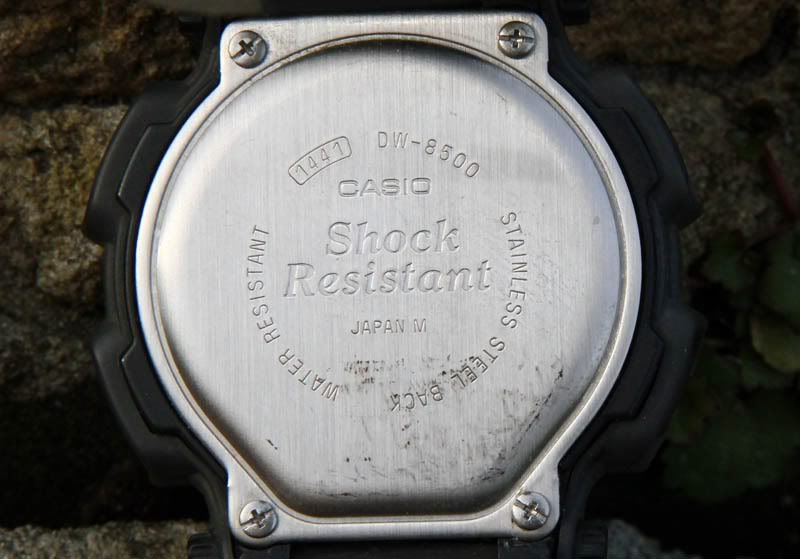
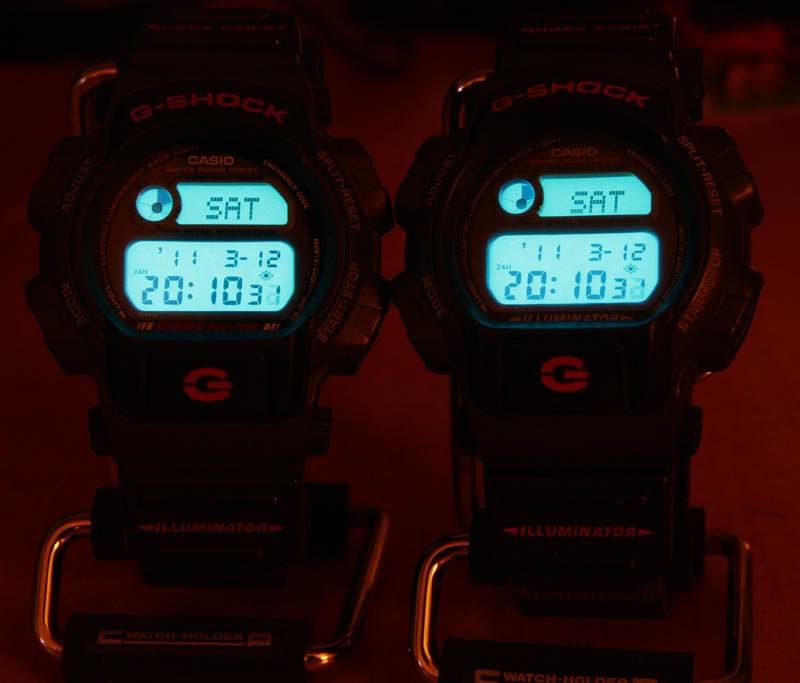
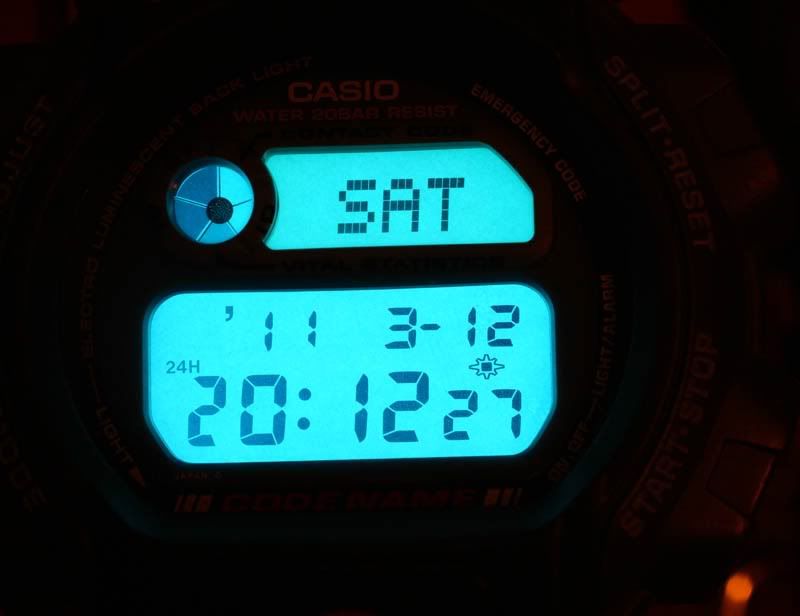
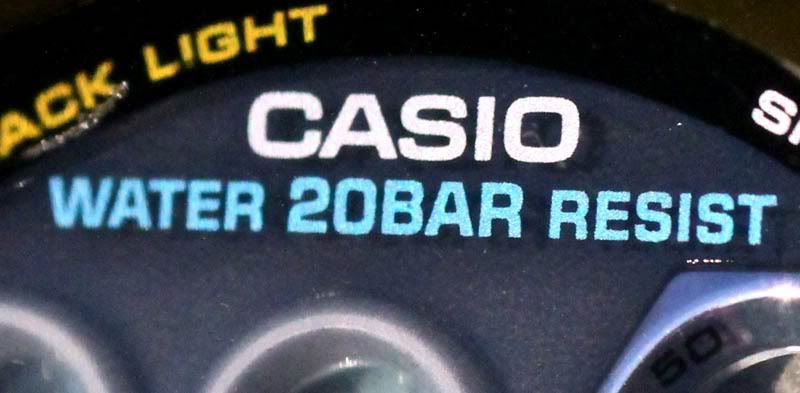
I happen to have two versions of this model. The original Japanese release and an overseas model. The differences are as usual. In the Japanese model, the name CODENAME is written under the display and the water resistance is 20 BAR. The overseas model has ILLUMINATOR written under the display and the water resistance is 200M. You might think they were made at different times and/or different factories, but both models are made at JAPAN M and both displays show JAPAN O very small on the lower left side of the face.
Actually I have 2 of this Codename version by accident. In January 2007 I bought a bunch of watches from a good friend in Chicago. One of these was this Codename, although I probably was more interested in other watches. Since I kept this watch along with a gold version of the Mudman, I think that was the main watch I bought. Anyway, I totally forgot I had this black Codename (to be complete, I have also bought a red version of this model many years ago).
In June my friend in Chicago had again some watches for sale. I was very much interested in the black DW-8500 Codename. I was very happy when it arrived and had put it aside in the box where I had put the other watches that I bought earlier in January. When I took it out for a photo session, I noticed the box didn’t contain one, but two DW-8500’s. I couldn’t be much happier, especially when I found out they were both different versions of the same model.
Considering the Dive Timer of the Frogman is a kind of modified Stopwatch function and the Mudman is a kind of DW-6900 with a Mud Resist casing, the Codename was the first model in the Master of G line that had real special functions. You might think that the Codename is a kind of spy watch, but after learning
the manual (module 1441) well, you’ll notice this models can display emergency codes.
These Emergency codes are visible when the upper right button is pressed. The six most important emergency codes and their explanation scroll through the upper (Date-) display when activated. The codes are from taken ”The Convention on International Civil Aviation, Annex 12, Sixth Edition, Amendments 11 (Search & Rescue)”. The purpose of the codes is that they are displayed on the ground, so that it’s clearly visible for rescue aircrafts. So if you have booked tickets for Oceanic Airlines, Flight 815, it might become handy to strap on your DW-8500 Codename. You might need it in the near future.
If you are really interested in this Amendments, in the newest edition it’s Annex 12 “Search and Rescue” and Annex 13: “Aircraft Accident and Incident Investigation” (containing Amendment 11 “Search & Rescue”). They cost respectively $20.- and $47.- when ordered on-line at the
International Civil Aviation Organization (ICAO). You can buy the paper version for a much reasonable price at local authorizes publishers (I can even order them here in The Netherlands).
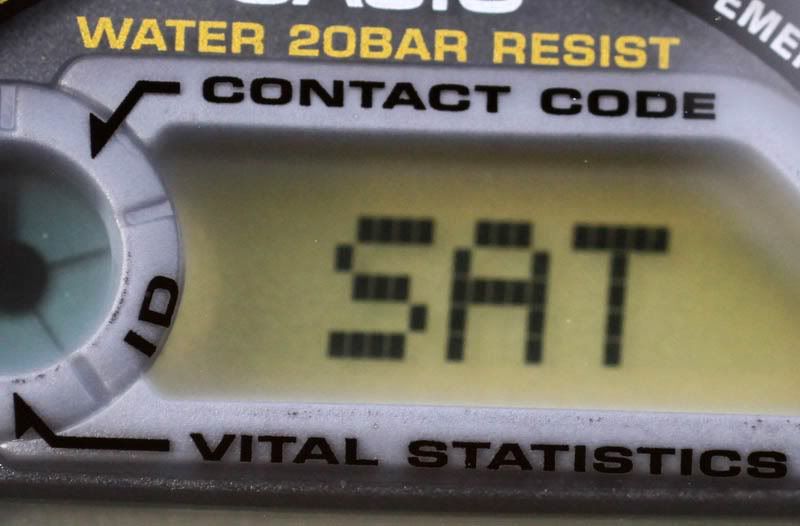
The Codename has a “Contact Mode” and an “ID Mode”. These modes share a memory of 20 data sets. In Contact Mode you can input 8 characters in the name area (Day display) and 12 numbers in the number area (time display). The input of characters and numbers works a bit like setting time. If you are going to use this feature I hope you only need Katakana as text, else it might be possible that you have to scroll through a lot of characters. In total 98 different character can be chosen (the characters luckily can be scrolled forward and reversed). With the Mud Resist structure it’s not very easy to input data to the memories as the buttons are quite much harder to push than a normal G-Shock with normal buttons.
The Contact Mode is of course the same as the Tele Memo mode, found on many G-Shocks around the end 90’s and begin ‘00’s. It’s like a personal telephone book.
The ID mode is pretty similar to the Contact Mode. There are already three built in ID Modes: PASSPORT, LICENCE and CREDIT. Not sure if it is wise to store your credit card number in your watch though. The input procedure is the same as the Contact Mode.

In 2011 the Contact Mode and ID Mode are totally obsolete. In the past 15 years mobile telephones are even common in the most remote parts of the world and the current phones are more like pocket computers which are capable of much more than you could wish on a early ‘90s computer (let go the amount of memory on a single smart phone nowadays). Back in 1995 however could be a handy feature. I remember back in 2001 I had some telephone number programmed in a Tele Memo, just in case. Now you don’t even know telephone number anymore. Just save under a name and scroll through your contacts to find your contacts again, even with facultative additional address, birth date, e-mail addresses and websites. How did we ever survive in the early 90’s?


Next mode you’ll find on the Codename is the “Vital Statistics” mode. In this mode you can input your name, birth date and blood type (AB0 and Rhesus) . I think the idea is very good, but if it works in real, I’ll have my doubts. If I would be hit by a car, wearing this watch, I doubt that medical emergency workers would look at my watch and say: “Hey, here are his Vital Statistics”, but hey, if you don’t input your data, it will be missed for sure. Just in case, my blood type is 0 neg. The ideal donor.
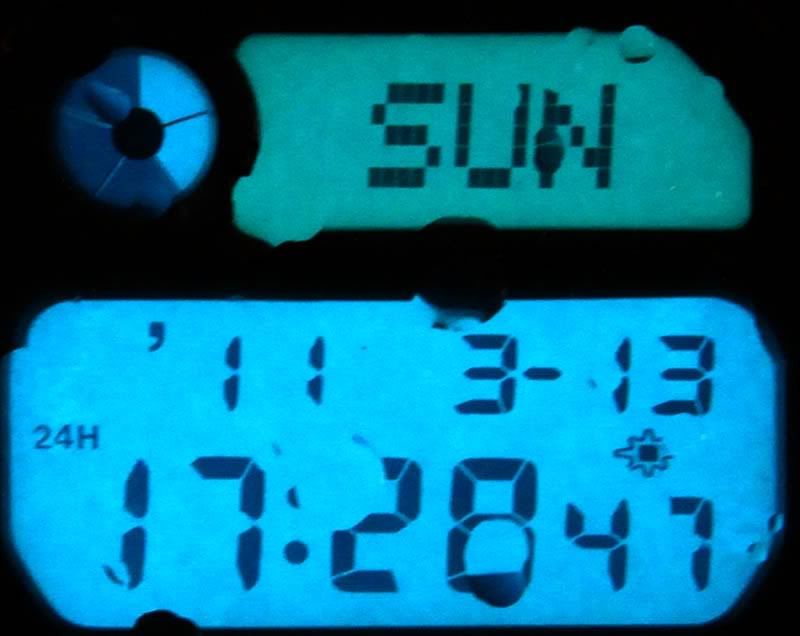
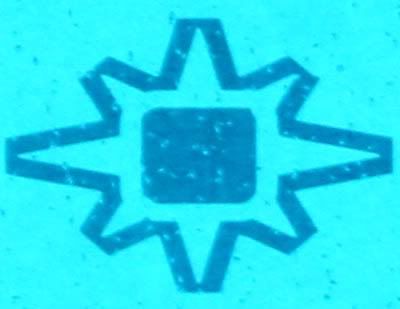
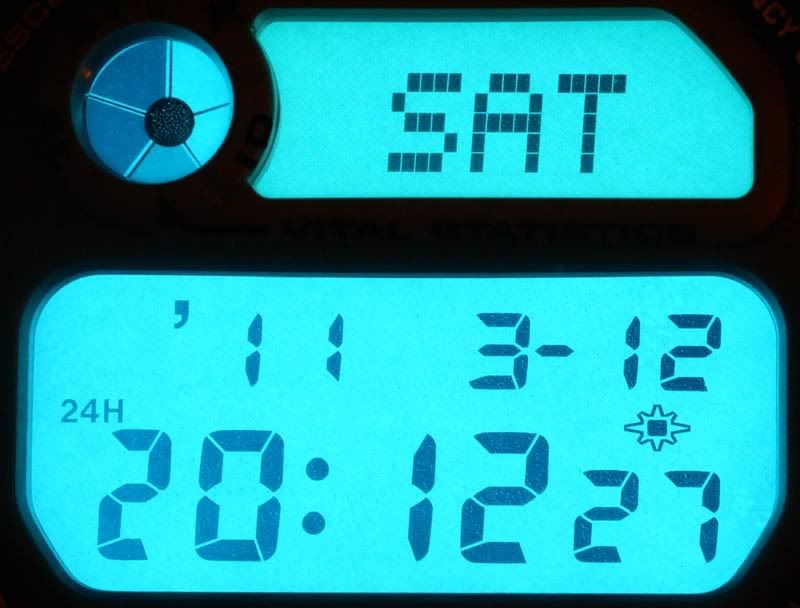
Further the Codename has a simple Alarm Function and a 24 hour Stopwatch function. The Codename has a “Backlight Alarm” that can be toggled on and off. Off course the Backlight Alarm is normally called “Flash Function”, but like the Contact Code, “The Names have been changed to protect the Innocent”. When activated, the backlight flashes when an alarm sound is produced (except when scrolling through the modes) and a small star like symbol (photo below) appears in the display.
A hidden feature on this watch is the “Display Mode”. This mode is sometimes used as the watch is on display in a shop window. When activated, press MODE button for about three seconds until it beeps, the Emergency Codes scroll in the top display, instead of showing the day. It looks cool, but in this mode you can’t scroll through the watch’s other functions. Therefore you have to leave Display Mode by pressing the Mode button again for about 3 seconds.
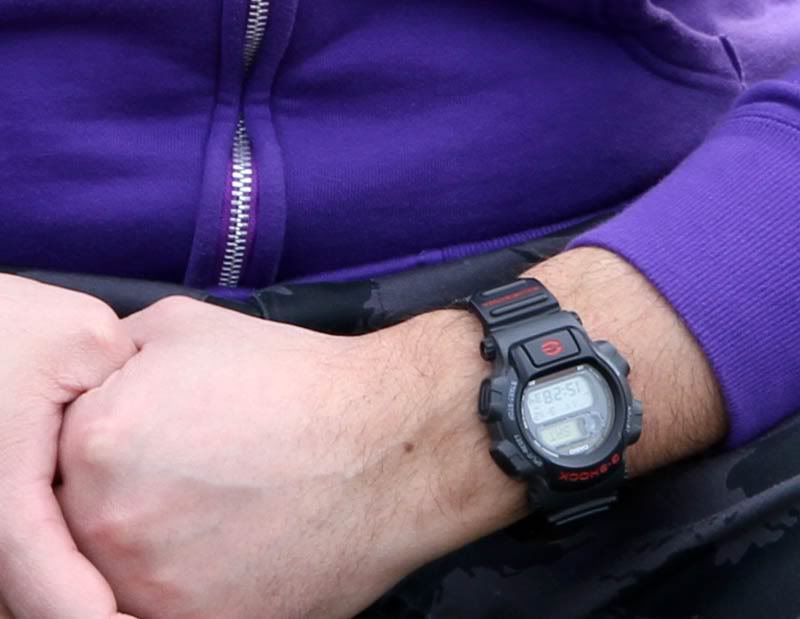
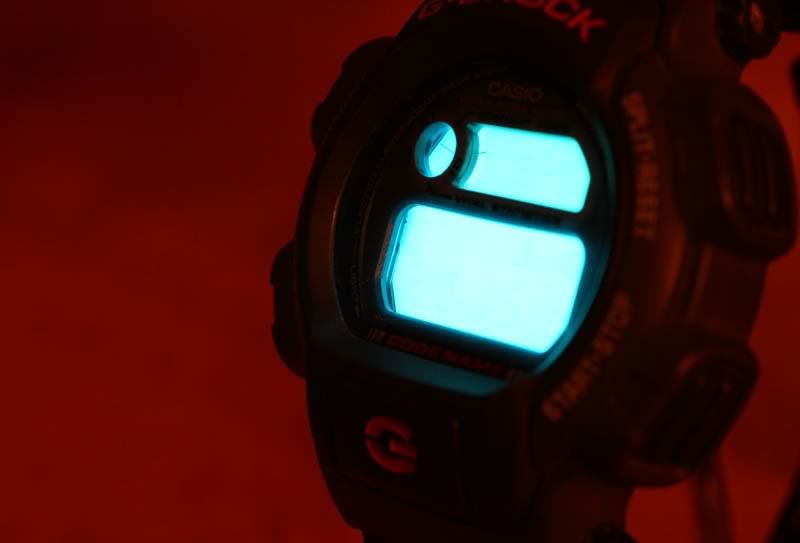
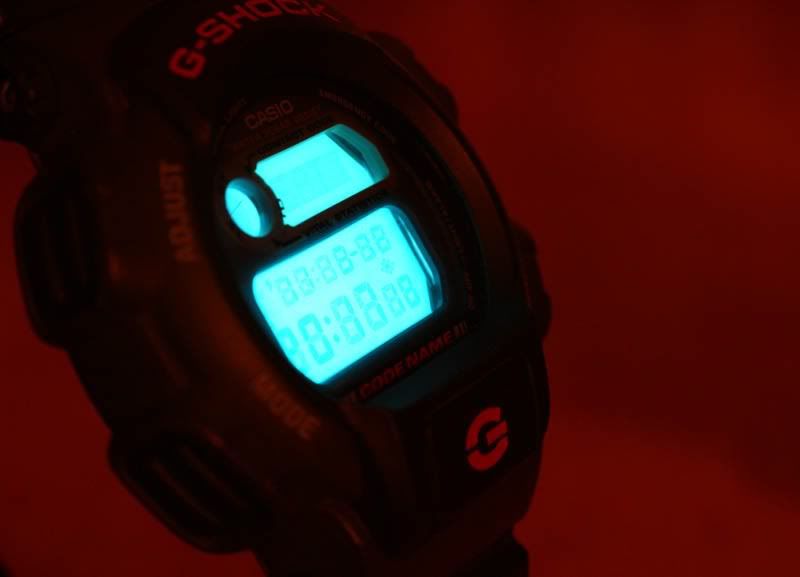
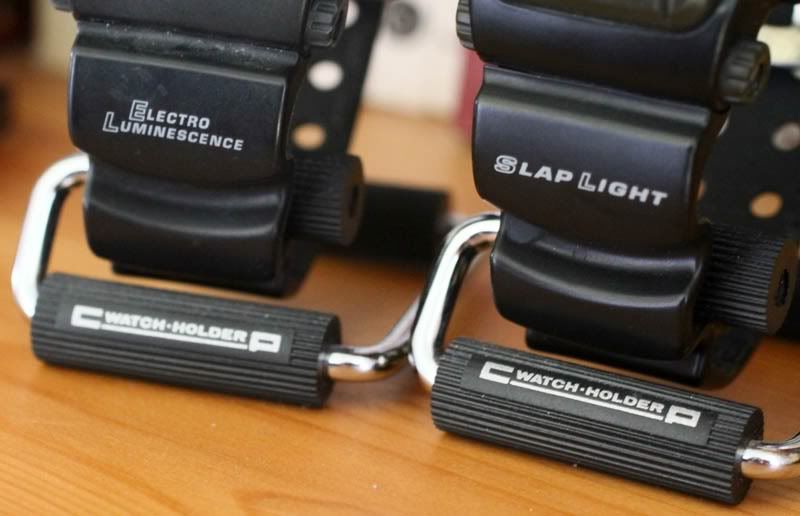
I think that the Codename is a very good looking brother of the DW-8400 Mudman, that I coincidentally featured here on 50 Gs a week ago. The special straps give the watch even a tougher look in my opinion, though the straps are pretty stiff. They may become looser when wearing the watch longer, or probably you also get used to it. Whenever strapped on, it feels solid on your wrist. It is packed with features, which are more gadgets than useful for daily life, though back in 1995 the Contact Mode could have been a handy and useful feature. The backlight is as bright as the Mudman, DW-6900 and DW-6600 models, which were about the first models which had the Electro Luminescent Backlight.


Although its successor, the DW-8800 Codename Cipher, is pretty common and not too hard to find, it not that easy to track down a DW-8500 Codename. Still , if you are really hunting down one, it must be not too difficult to find, as it was an international release. As it is not a very sought after model, you might be able to get your hands on one for a reasonable price ($75 - $125 range for a good condition to NOS basic model). Like the Mudman, bear in mind this is a pretty old model and that the button parts tend to crack when used frequently as the bezel gets older. Both mine are in pretty good, used shape and I have paid probably around $70 - $80 for each of them, in a batch of other G-Shocks.