Showing posts with label dw-9700. Show all posts

Sunday, February 27, 2011

G-Shock #8: Americas Cup and the Helly Hansen Gulfman

[Picture Credit Wikipedia]
Americas Cup is a famous match race between yacht clubs. It started in 1851 and was for the first 120 years a race only involving American and British yachts. In the 1970s, the Australians joined followed by the New Zealanders and in the 1990s, it became a real international challenge. After some controversy abort boat specifications in the 1980s, the arrangers settled on a new standardised yacht class, the International Americas Cup Class (IACC) which also meant it was easier to design and build boats to compete for the Cup. The changes brought in a number of new countries and entrants.

In 1992 it was time for the first Japanese entry from the Nippon Challenge syndicate with a boat named the Nippon (JPN 26). The Nippon was designed by Bruce Farr and skippered by Makoto Namba. 1992 was also the start of a new Americas Cup format where the challengers competed in a qualification series called the Louis Vuitton Cup where the winner of the Louis Vuitton Cup got to compete with the holder of the Americas Cup. Nippon Challenge did very well in the cup and ended up in third place, just outside of the challenger final.
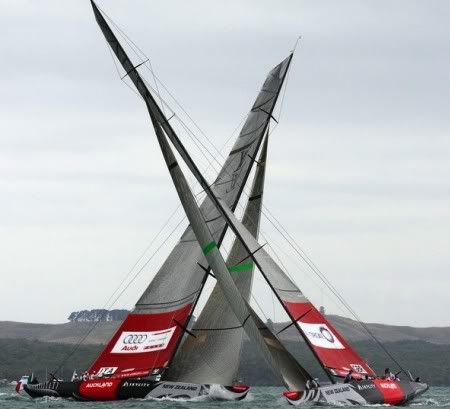
[Picture Credit Louis Vuitton]
In the 1995 Louis Vuitton Cup the Nippon Challenge syndicate entered two boats, Nippon 94 (JPN 30) and Nippon 95 (JPN 41), again with Makoto Namba as main skipper. The boats were bult in Japan and designed by Ichiro Yokoyama. As in 1992, Nippon Challenge did very well and ended up in 4th place of the challengers.
For the 2000 Louis Vuitton Cup, which is the main theme of this story, things were a bit different for the Japanese team. As in 1992 and 1995, the head and main financier of the syndicate was Tatsumitsu Yamasaki, head of a large Japanese food company but the Asian recession had meant that the syndicate had less financial resources than before with a budget of only 25 MUSD. Also, Makoto Namba, the skipper for the two previous challenges and one of Japans most experienced sailors was lost at sea duning a yacht race in 1997. Instead, the Australian Peter Gilmour with experience from previous Australian challenges was recruited as skipper. Nippon Challenge entered two boats for the competition, the Asura (JPN 44) and the Idaten (JPN 52). The boats was desigend by a team from Tokyo university and again bult in Japan.
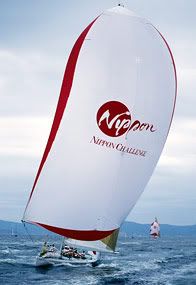
[Picture Credit Yamaha]
In the actual racing, Nippon Challenge again excelled and was beaten only by the Italian entry Prada Challenge in the initial round robin series. In the semi finals, Nippon Challenge had some difficulties and ended up in 4th place with the top two boats qualifying for the challenger final. In the final Prada Challenge beat the top US entry AmericaOne but was later defeated by Team New Zealand for the Americas Cup.
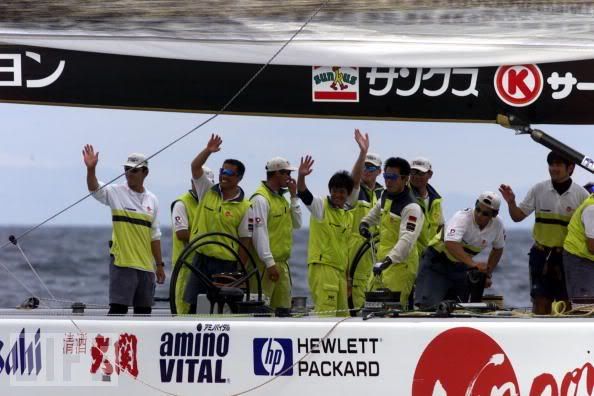
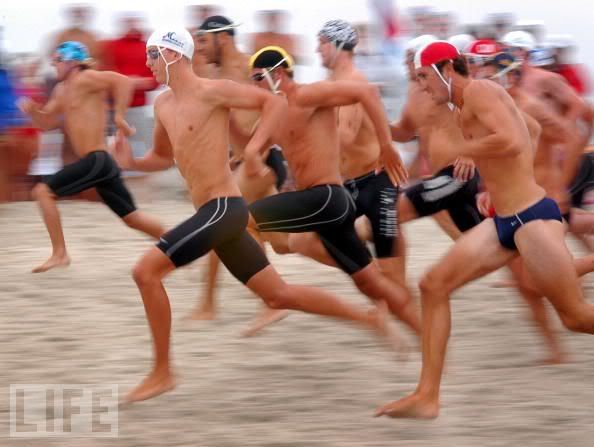
[Picture Credit life.com]
Casio had long been engaged in sports sponsoring and was, together with for example Asahi Breweries, Yamaha and Toyota, one of the main sponsors of the 2000 Nippon Challenge where 20 Japanese companies had participated with USD 750,000 each in sponsorship. In connection with the marketing of it sponsorship, Casio issued four watches under the Nippon Challenge brand.

The first and most expensive was a MR-G, the Nippon Challenge Americas Cup (MRG-1001V-4A) introduced in March 1999 and priced at JPY 62,000.
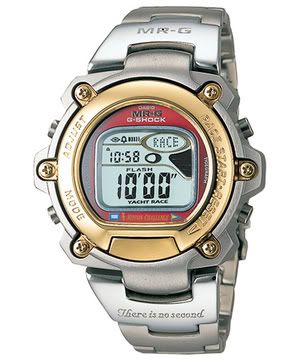
[Picture Credit Casio]
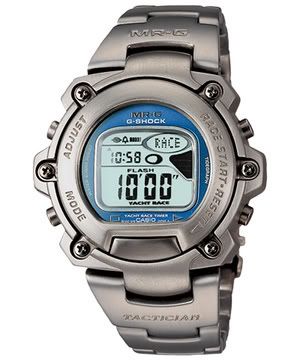
Already in October 1998, Casio had introduced the MR-G Nippon Cup Tactician (MRG-1001T-2) at JPY 62,000 but I cannot find any references to this watch being associated with the Nippon Challenge.
[Picture Credit Casio]
The mygshock wiki also has two versions of a Nippon Challenge 8200 Frogman listed, the yellow DW-8200AC-8T and the grey jelly DW-8200AC-9T. Both of these are noted not to have been released in Japan.
After this very long discourse, we end up at the theme of todays post, the DW-9700NC-8T Nippon Challenge Gulfman introduced in November 1999 for a listed price of JPY 23,000.
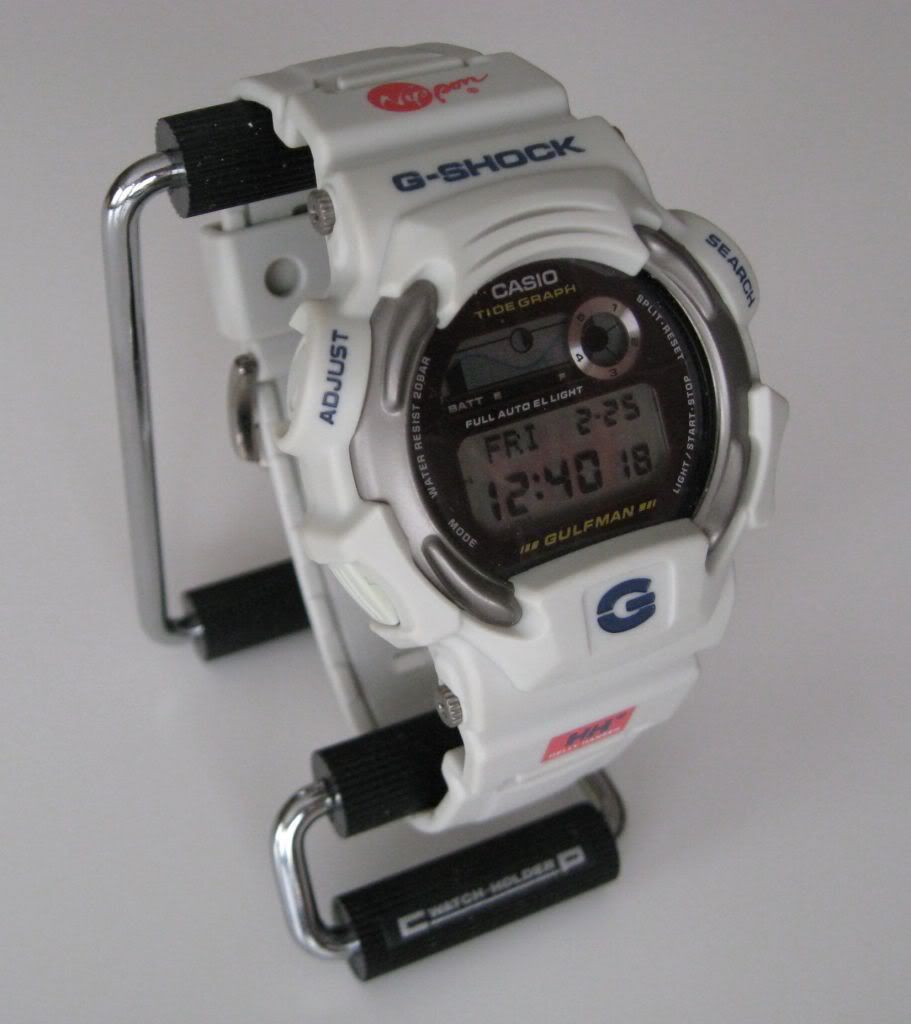
Specifications are here:


The 9700NC is a collaboration with Helly Hansen, a Norwegian sports clothing manufacturer. Helly Hansen makes professional specification sail racing gear and has sponsored many sailing teams such as the Ericsson Racing team who won the 2008/09 Volvo Ocean Race. Helly Hansen was also a 2000 America´s Cup sponsor and an official supplier of the Nippon Challenge team.
For a description of the general functions of the 9700 Gulfman, the previous 50gs post on the USLA Gulfman (which came onto the market only a few months previous to the 9700NC) is a good reference.


The packaging on the HH Gulfman is very similar to the USLA version with the fold and arrow style inner box.
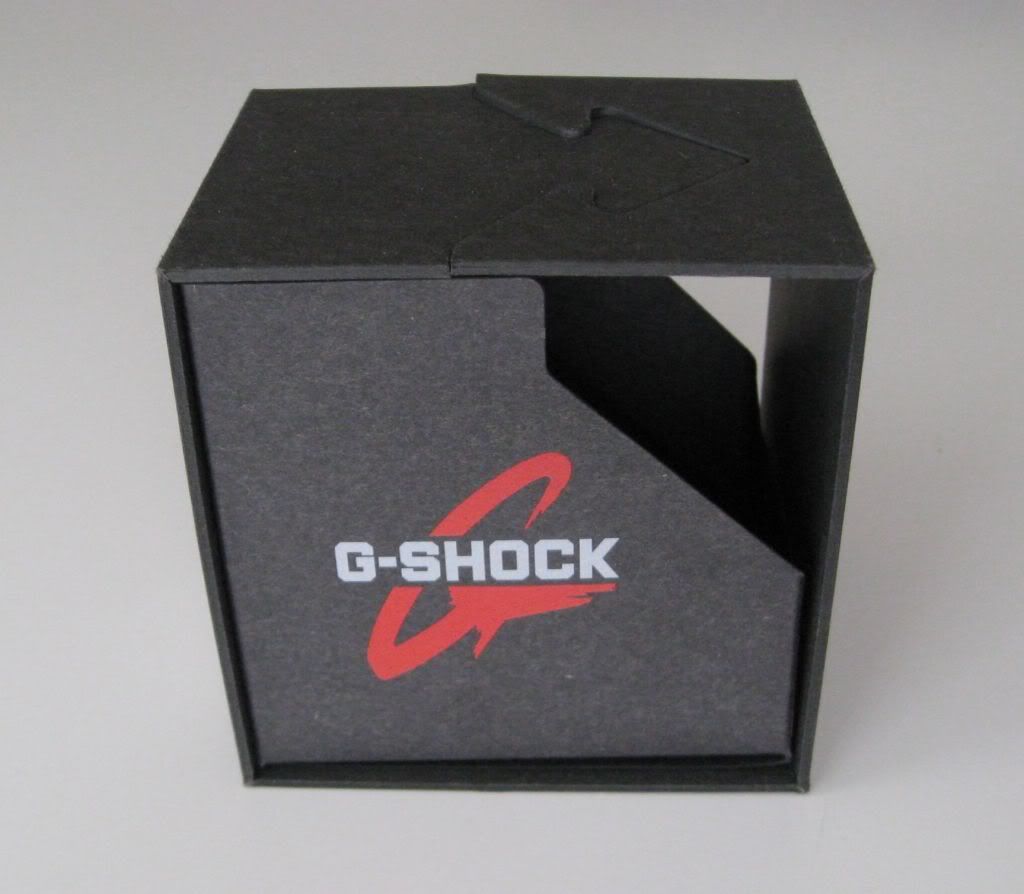
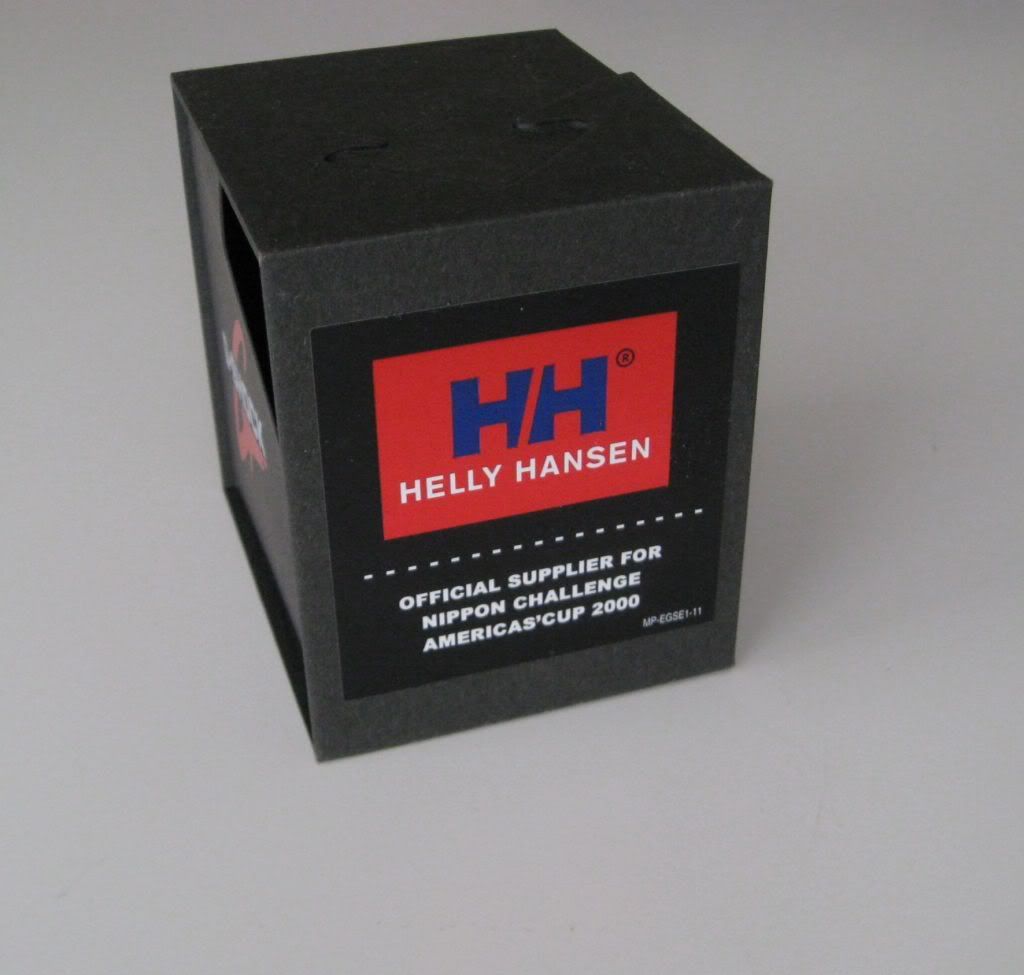
The box also has a Helly Hansen Sticker at the front.
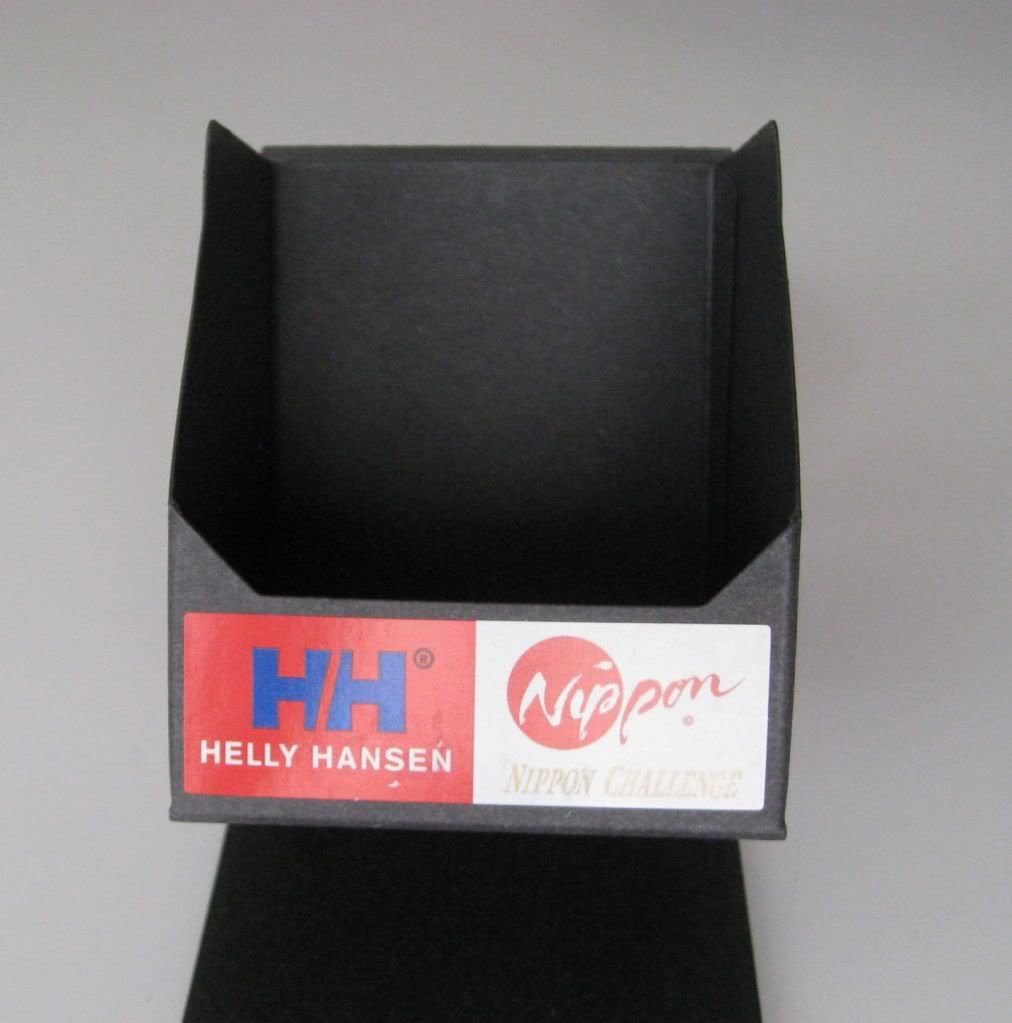
And a Helly Hansen / Nippon Challenge sticker under the flap.
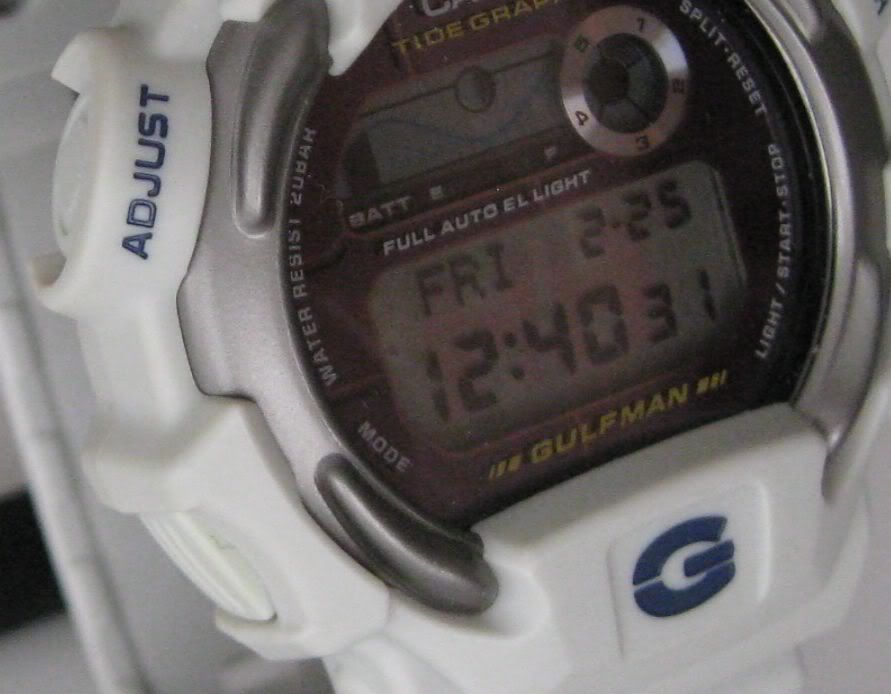
The watch looks like a standard Gulfman from the front.
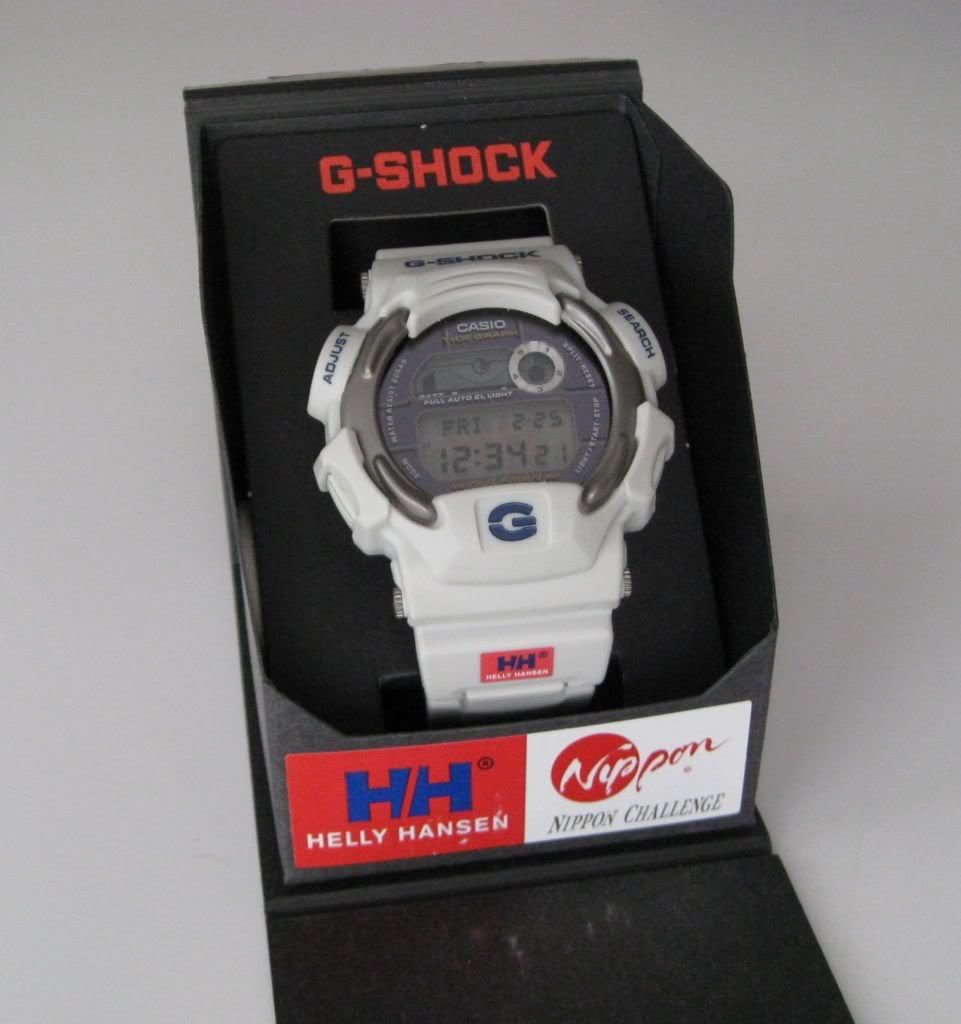
Blue "G" and lettering on the case.
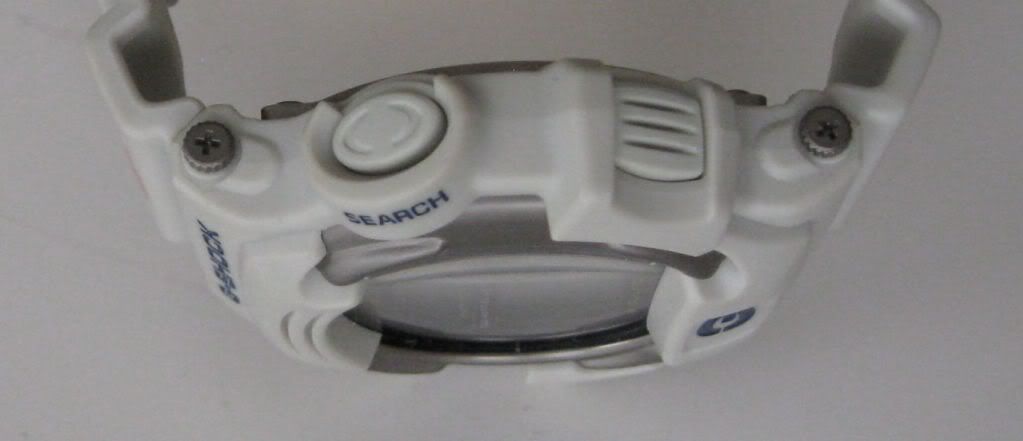
Matched buttons.
Most of the stock pictures show this watch as white but in real life (at least my version and a few others I have seen), it has a slightly grey color. I do not know if this is aging or it this was original. My guess is that it is a bit of both, as there were very few pure bright white G Shocks 10 years ago. To me, the gray color is good as it tones down the watch a bit and makes it more wearable than a pure white watch would be. Most cameras adjust the grey towards white but here you can see the actual color.
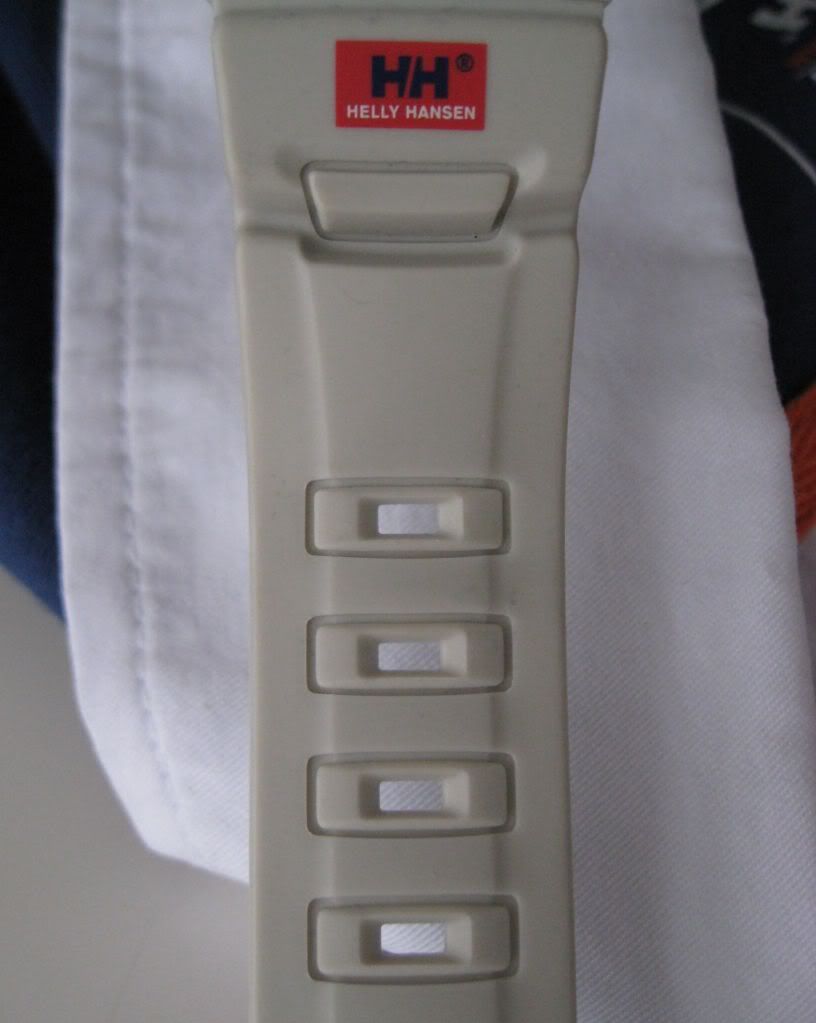
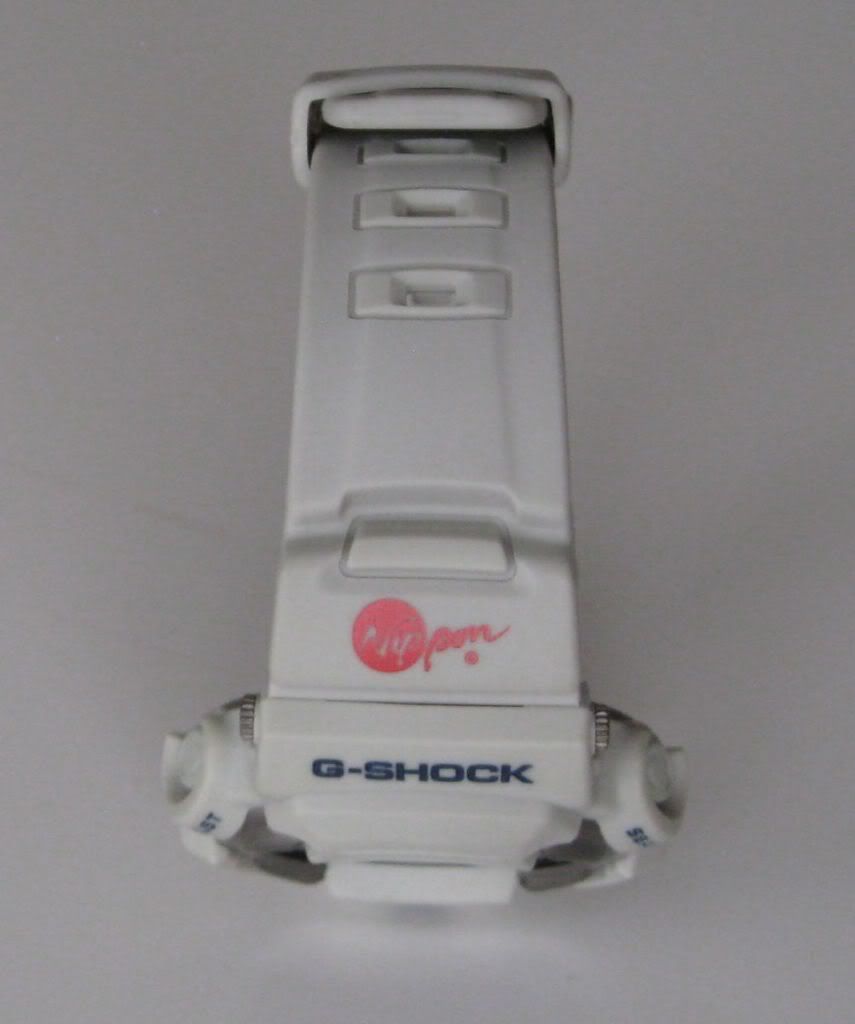
Branding theme continues on the strap with the Helly Hansen logo.
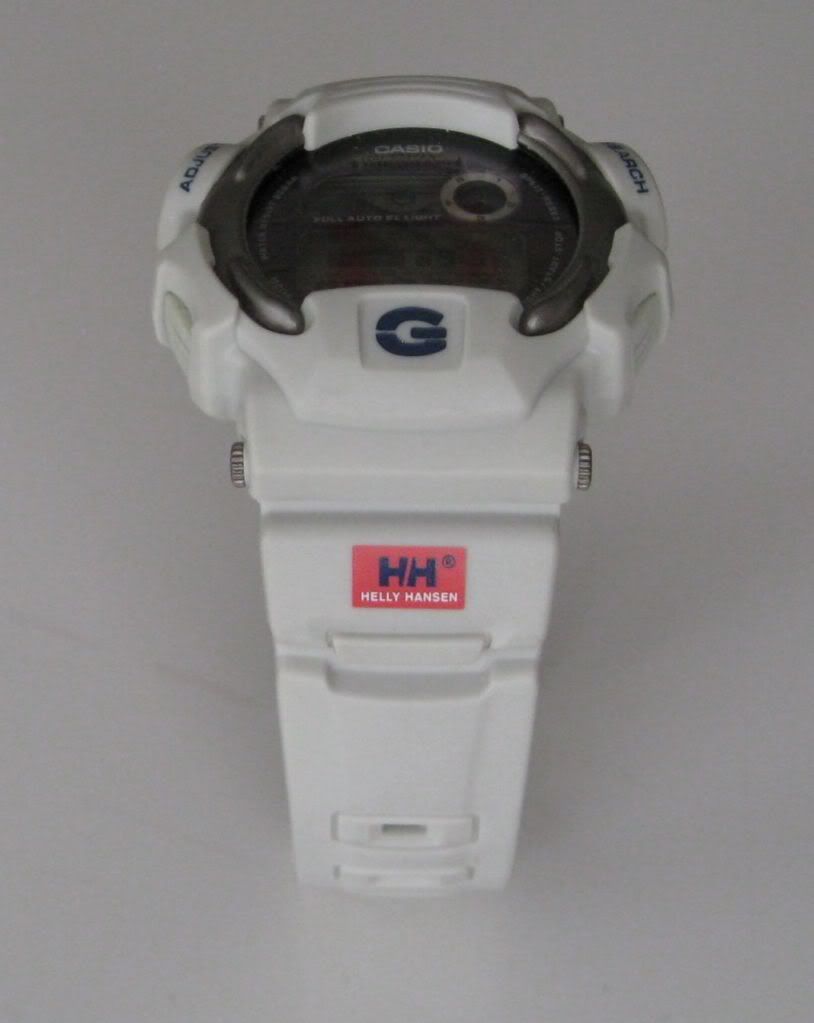
And the Nippon Challenge logo.
Strap keeper is standard and color matched.
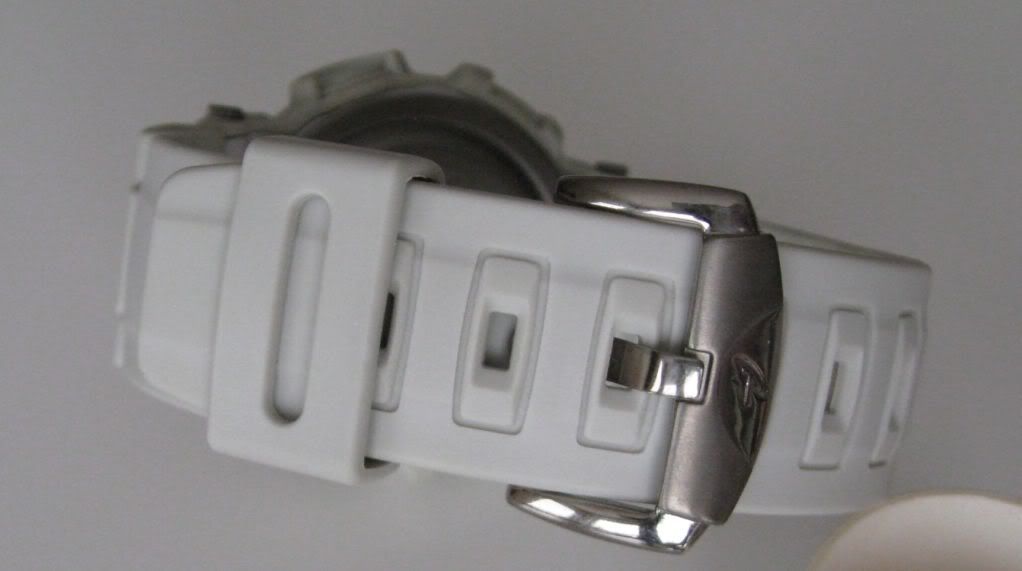
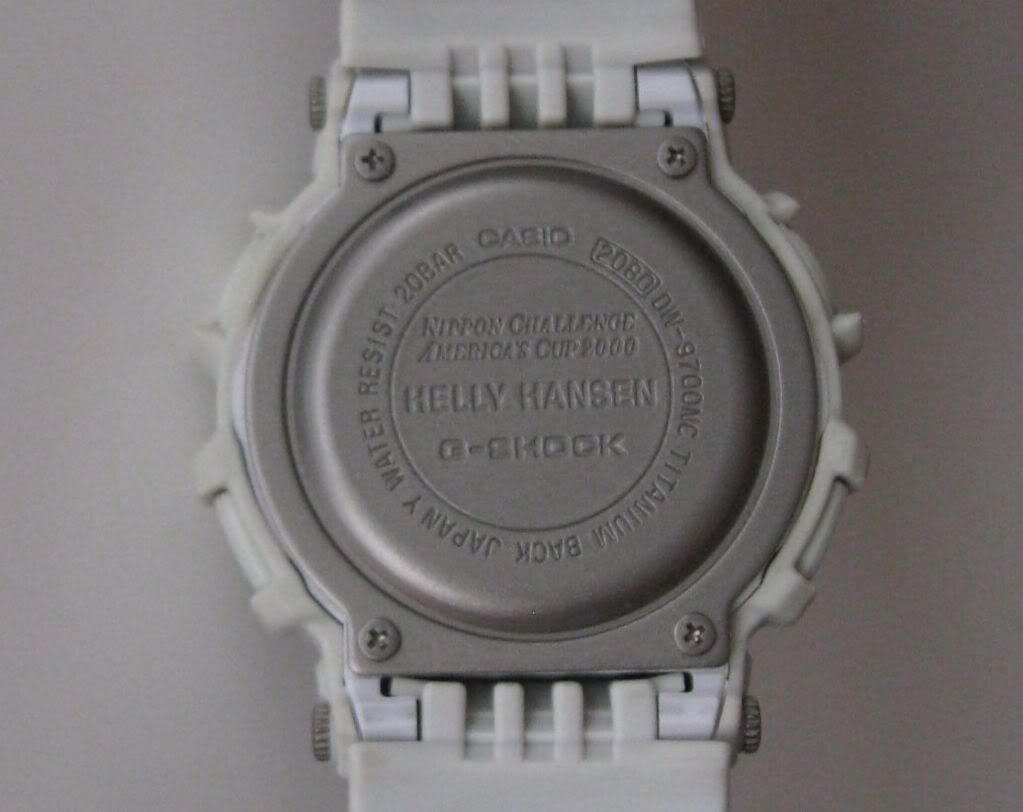
Case back is normal titanium with a slightly boring Nippon Challenge / Helly Hansen inscription in the center.
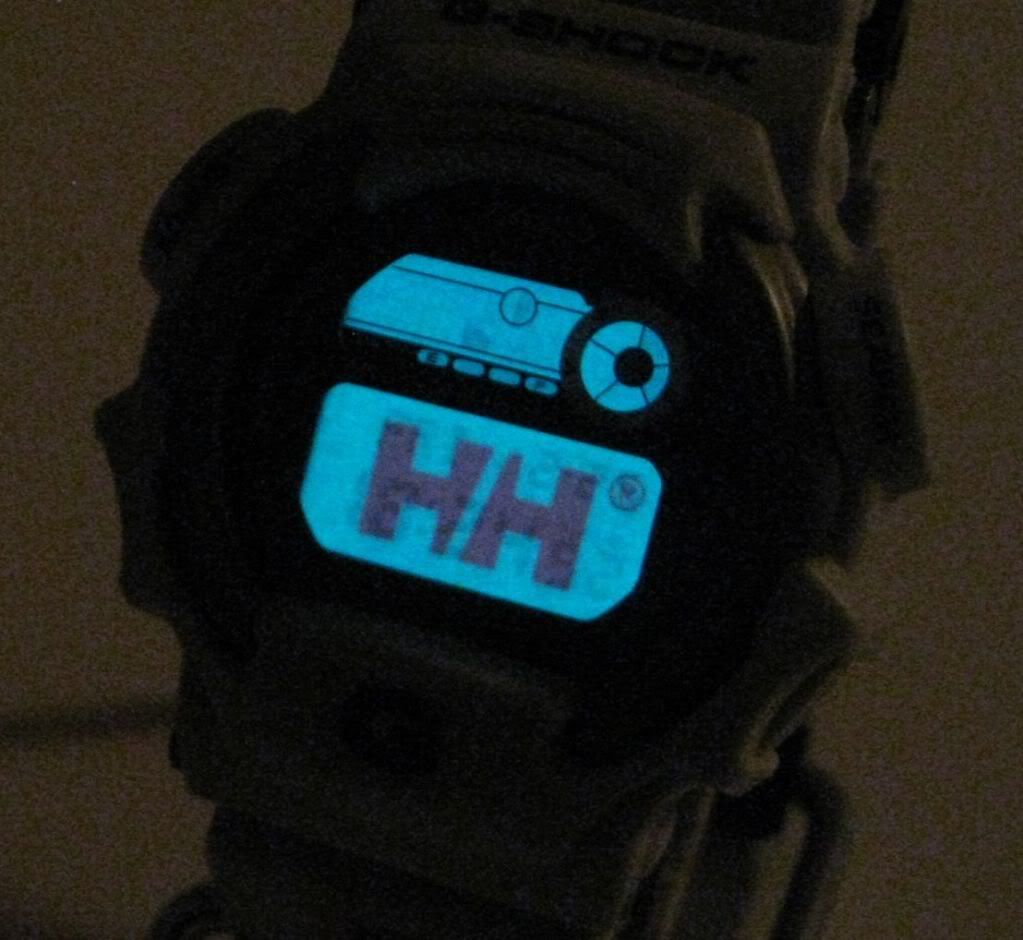
Helly Hansen branding continues with the backlight.
To summarise, this is the classic 9700 Gulfman which to me has great functionality and simple but good design. It is wearable due to its realively small size and low weight due to its titanium construction.
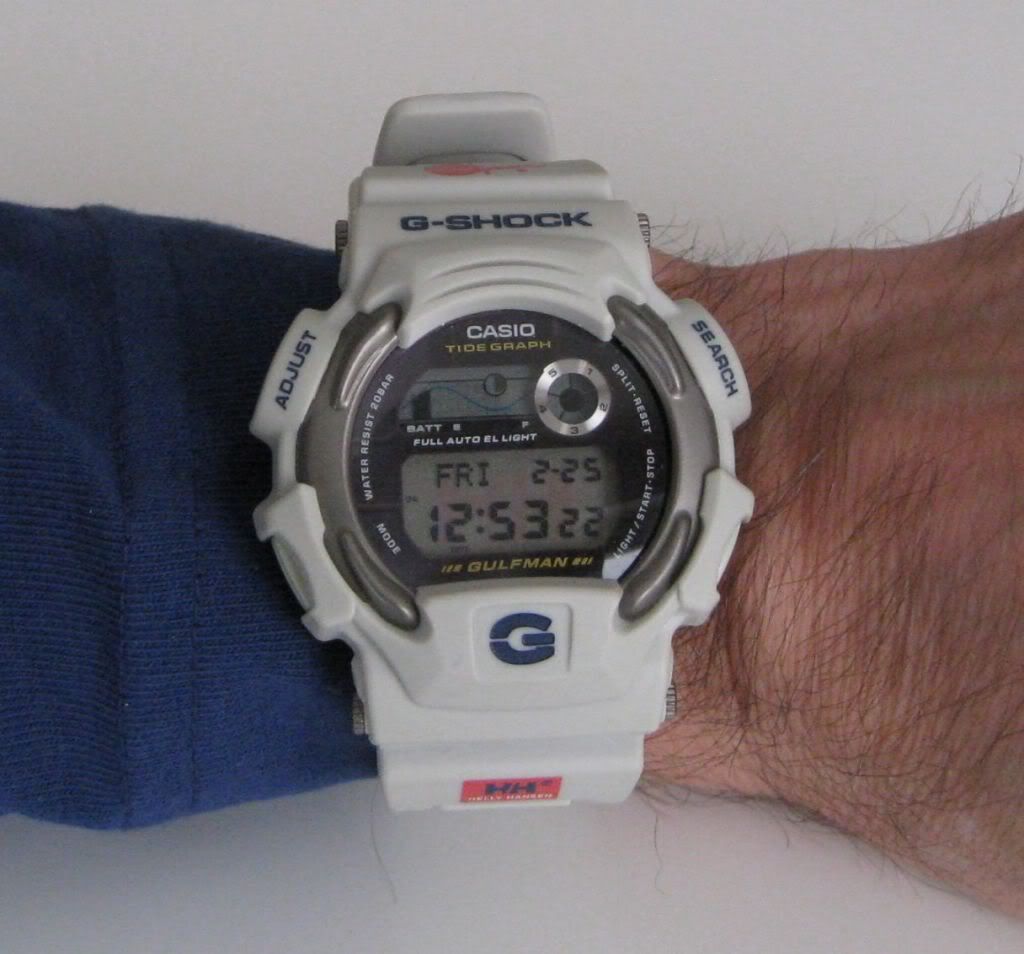
The grey/white coloring together with the blue and red accents makes this a sporty and fresh design great for both summer and winter use.
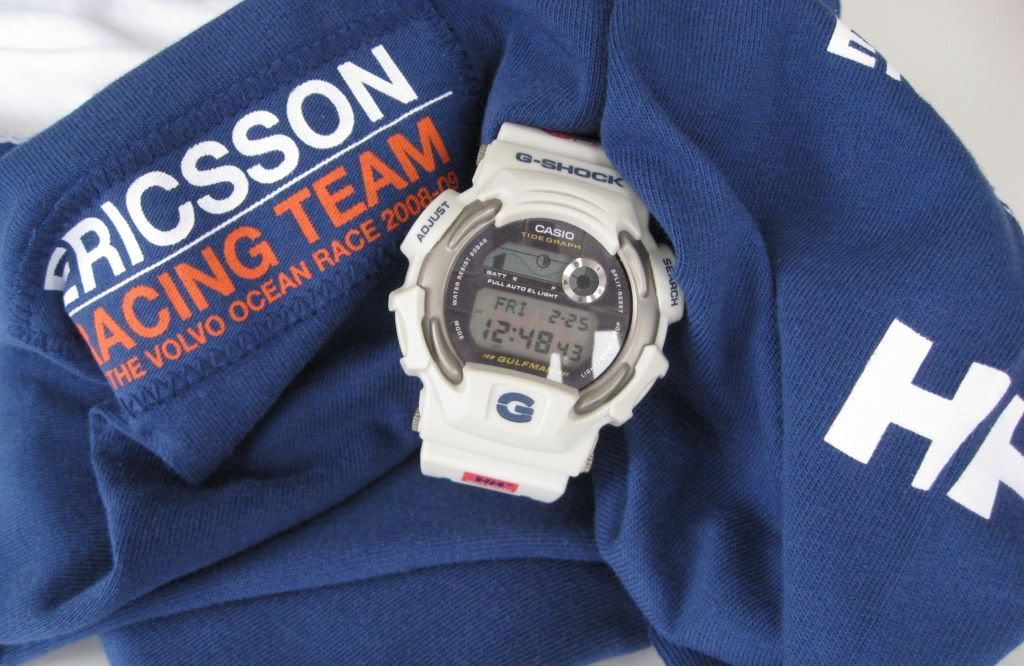
The 9700NC is unusual but not extremely rare and turns up both on auctions and forum sale sites with some regularity. Pricing at NOS level with boxes etc would be about USD 150-200 which is an excellent price for a very nice watch. If you want something to complement the watch, one of the 2000 Nippon Challenge boats, the Idaten, is presently for sale (as the GBR 52) on the website below. No price is listed.

http://americascupyachts-for-sale.com/gbr52.html

If you want to learn more about the Nippon Challenge and the Americas Cup, there is a book available as well.

http://www.amazon.com/Nippon-Challenge-Japans-Pursuit-Americas/dp/0385421710

Sunday, April 4, 2010
#12 USLA


In 2002 I purchased my First yellow DW/9350 `Yacht Timer` Raysman. I was pretty much enchanted by the yellow color and its size. Since these Raysmen were easy to get and not very expensive I bought a second pretty soon after the first. In the winter of 2002 I noticed a yellow DW-9700UL-9T Gulfman on auction. The seller was a new eBay shop based in Brooklyn, msgdistributors. Unfortunately for me, the auctions were only for US buyers.
Several times I watched how these Gulfmen were sold for prices around that of the yellow Raysman, about $100 - $125. There I sat, on the other side of the ocean, just watching how US bidders won these great watches for unbelievable prices.
I think it was around February 2003, I sent the seller a message. I wanted to bid too, but the seller replied it was not possible. I tried to convince him I was a collector and had bought G-Shocks from all over the world. Finally I convinced him. Alas, the last USLA Gulfman was already sold…
After the last of Michael’s Gulfman was sold, this model totally moved from the collector’s market. In the mean time I have bought several watches from Michael’s MSGDistributors store and Michael has grown quite a good reputation among G-Shock Collectors (nowadays he now sells not only to the US). The only problem for me is that packages from the US make the Dutch Customs very curious. So if I buy a $100.- watch (€80.-), I roughly have to add $20.- shipping, €15.- tax and €15.- fees for the service of the parcel service because they had to store it for days to weeks. You can imagine that this way watch collecting of relative cheap watches can become pretty expensive. The customs and parcel service know how to spoil collectors fun…
Suddenly in 2007 an USLA Gulfman popped up on the WatchUSeek G-Shock forum. Several members bought this model from various sources. I was pretty surprised to see these Gulfman around again. I watched one on eBay going for $168.- (I had bid on it, but was outbid with a much lower bid). When another one went on auction I decided to go for it. The price went quite some higher, but in the end I won with a price around $250.- (ex. Shipping). A hefty price, but worth it. I had wanting this model for more than 5 years. At the end of December 2007 it arrived to my house. The battery was lifeless, but after a long session under a halogen lamp it revived. The battery was after 8 years still holding strong.
So I store my “collection watches” in boxes. Somehow I forgot this model to feed light. First it looked like the watch wasn’t going to hold energy, but after continuously feeding light, it revived and now it is holding charge good.
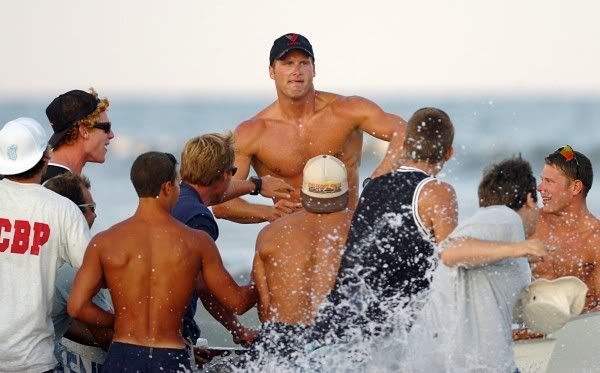
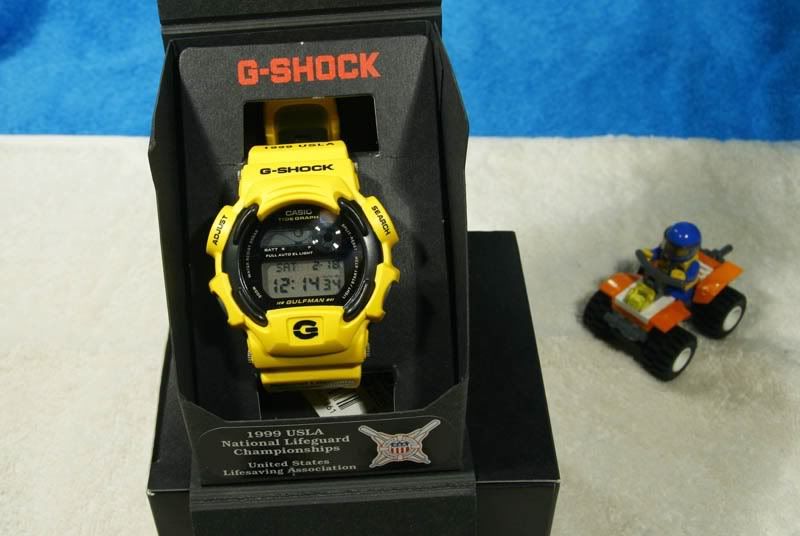
So, what is this watch all about? This watch was released to support the “USLA National Lifeguard Championships” of 1999, held in Cape May, NJ. It might probably not be a coincidence that Casio USA residence in New Jersey too.
USLA stands for United Stated Lifesaving Association. The primary goal of USLA is to, "Establish and maintain high standards of professional surf and open water lifesaving for the maximizing of public safety." Like probably in every country, lifesaving of people from drowning in water dates back from the early 18th century.
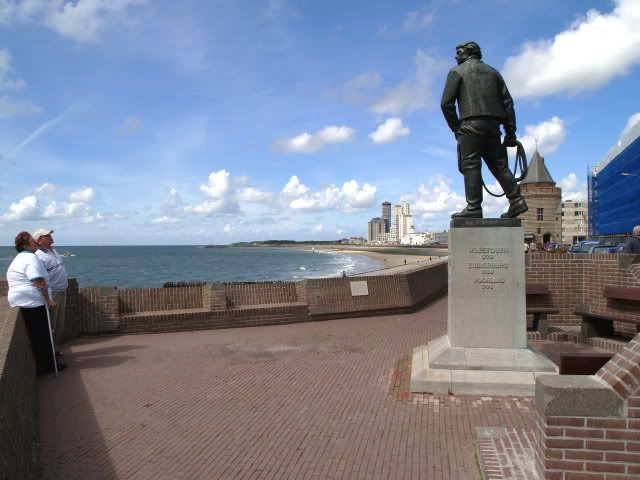
Coincidentally, I had a student who was a little embarrassed about her name. When I asked why, her partner told that her grand grand grand father had a statue at the Flushing Boulevard. This statue is from the famous Dutch life saver “pur sang” Frans Naerebout (1748-1818). One of his most heroic savings was the saving of 87 people from a frigate that stranded near the coast in a heavy storm in 1779. The weather was that so bad, that the regular savings vessel did not go out. I think I would be proud with such a forefather.
The USLA was formed in 1979, out of the National Surf Life Savings Association (NSLSA), which was formed out of the SLSA, founded in 1956. The SLSA used the Australian lifeguard association as an example. Before 1956 lifeguards were employees of local governments, organized in a similar way as local firemen and police services.

The National Lifeguard Championships date back to 1965. Probably the international, invitational competition on Hawaii between US and Australian lifeguards, forthcoming of their allied work during the Olympic Games of 1956, was the father of these championships. Nowadays the National Lifesaving Championships are heavily sponsored and have many thousands spectators on each event. The 2010 edition will be held on Huntington Beach, CA, the 2011 edition will be held in Cape May, like in 1999.
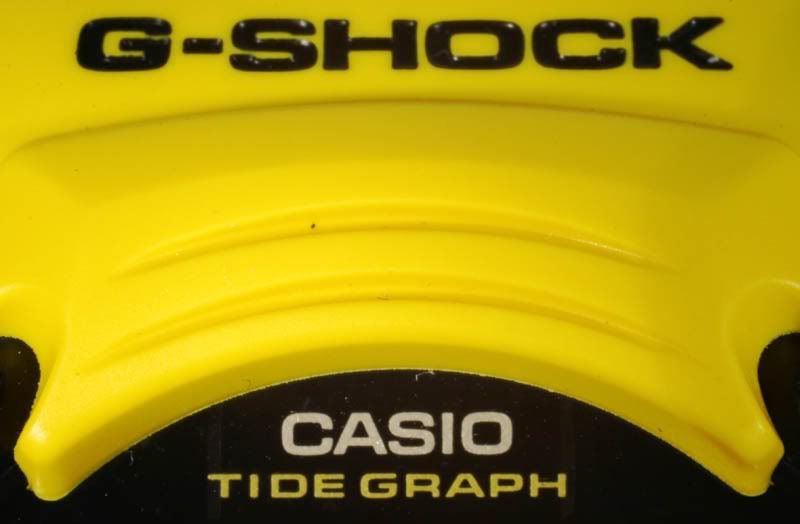
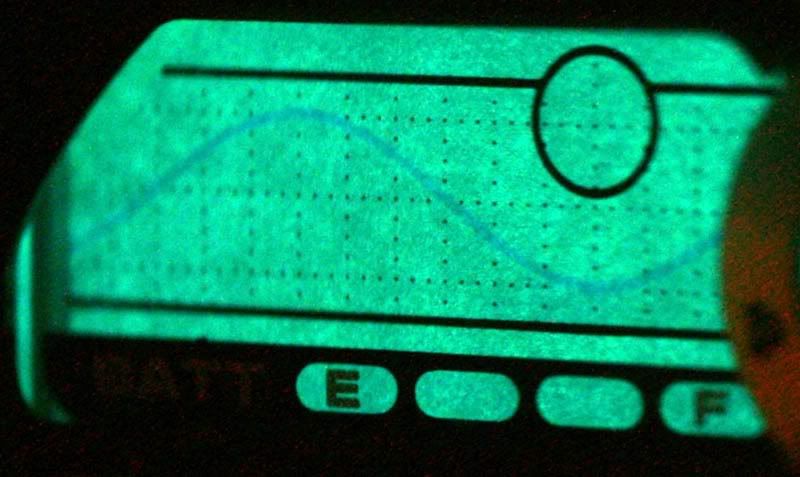
For those confused with this Gulfman, the DW-9700 model was the original model of the Gulfman. In 2007 Casio launched it’s successors, the G-9100 and GW-9100. The DW-9700 Gulfman is solar powered and has a Tidegraph with Moon Phase function. A function that is sadly missed on the Tough Solar Atomic GW-9100 model.
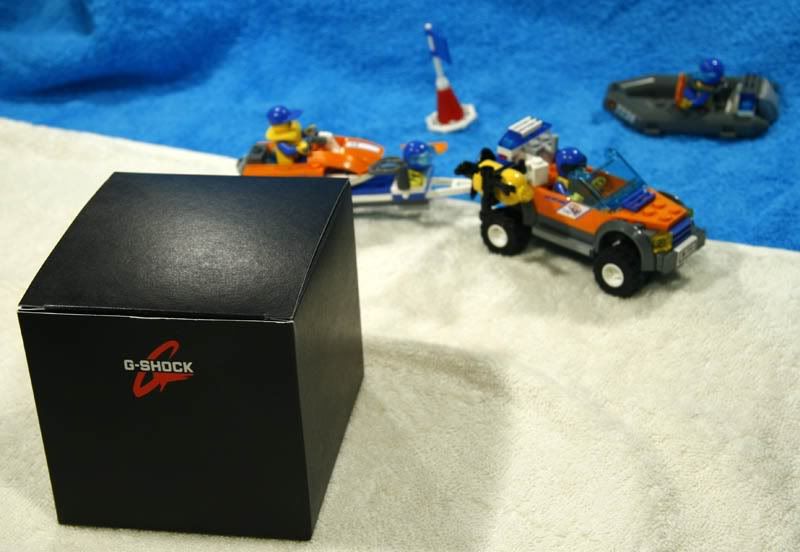
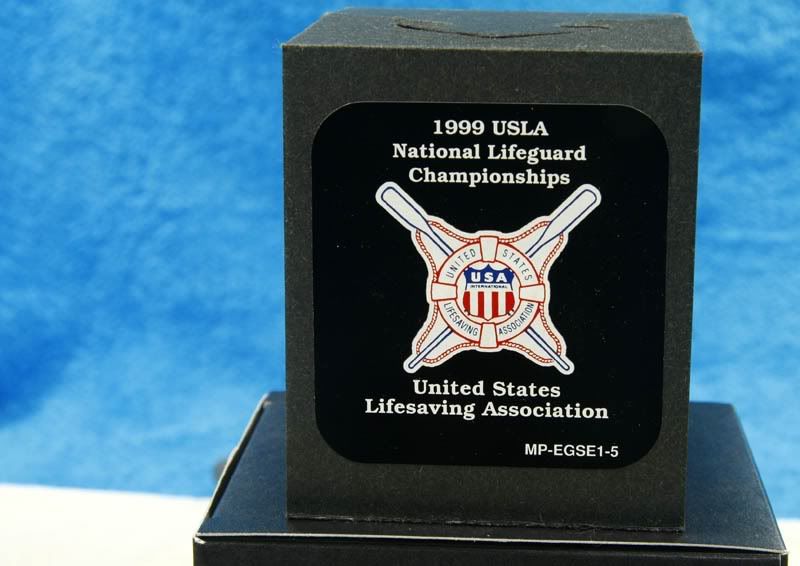
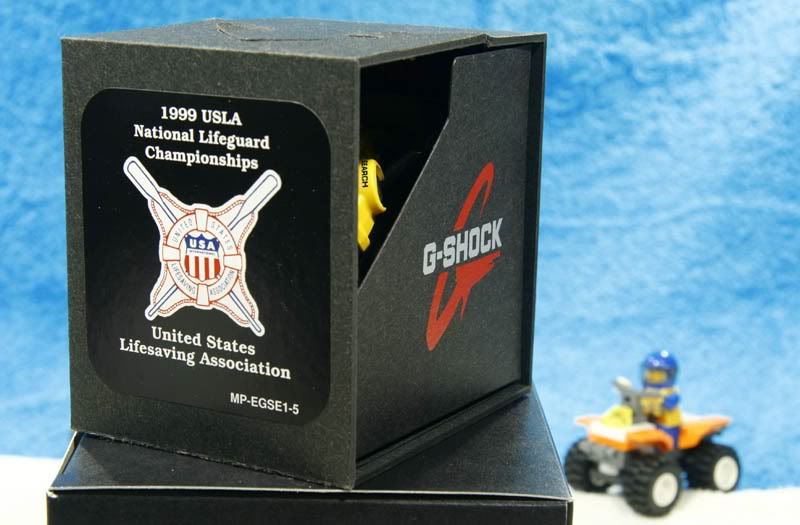
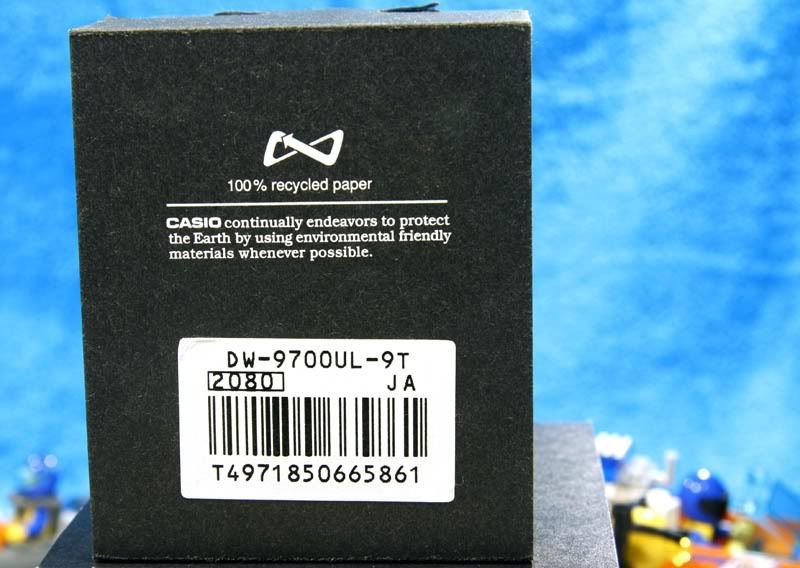
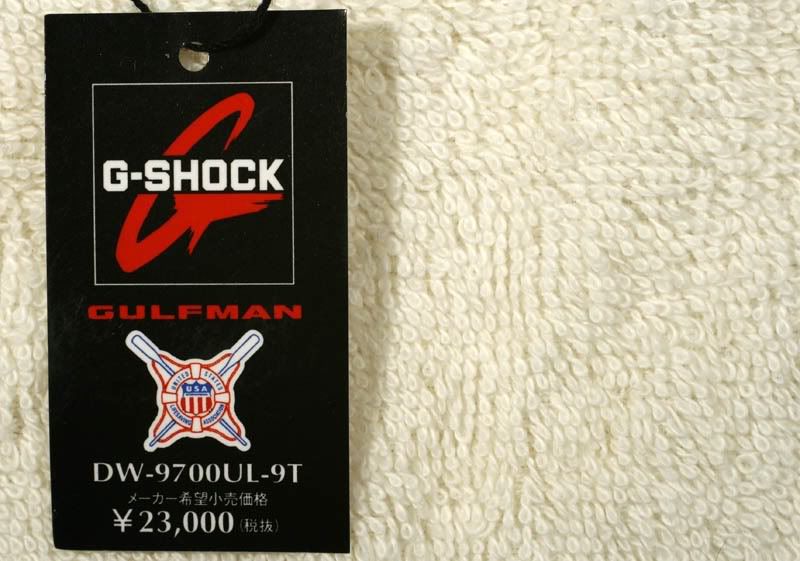
This model comes in a big black standard G-Shock box. The black inner presentation cardboard box was also standard in the late 90’s and folds open to the front. A big sticker shows the USLA “National Lifeguard Championships” logo in front of the unopened box, while a smaller sticker with the same logo shows when the presentation box is opened.
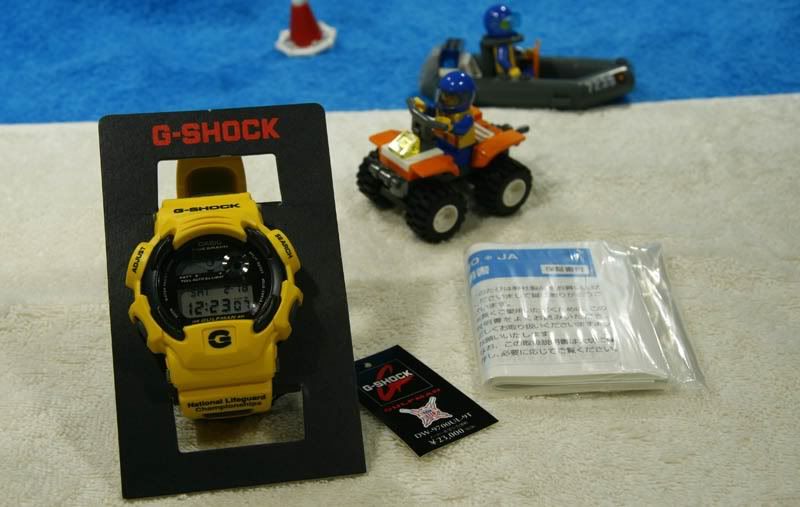
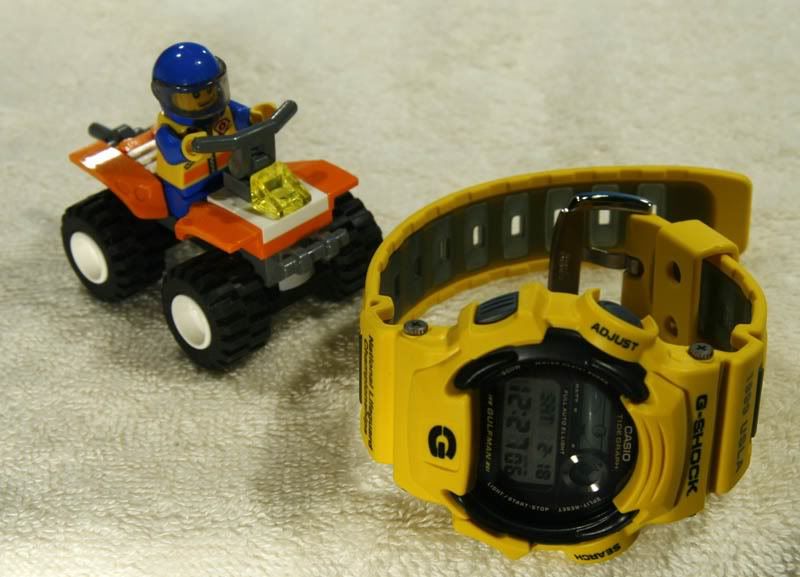
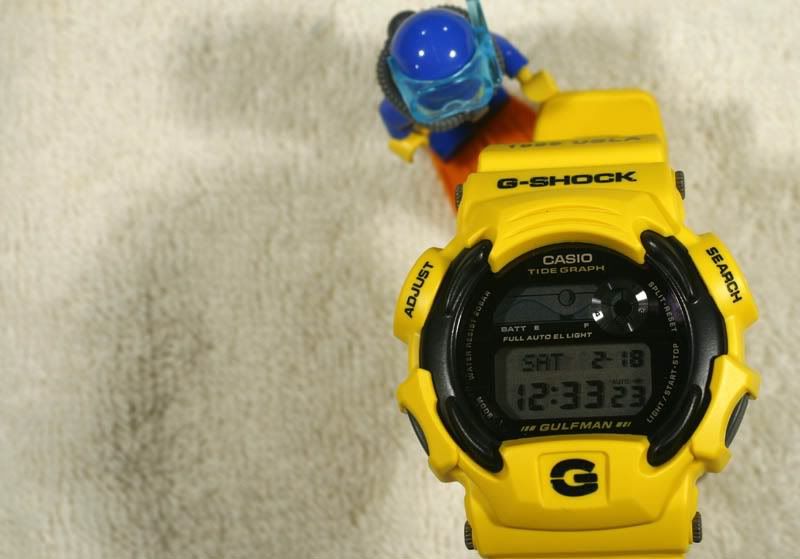
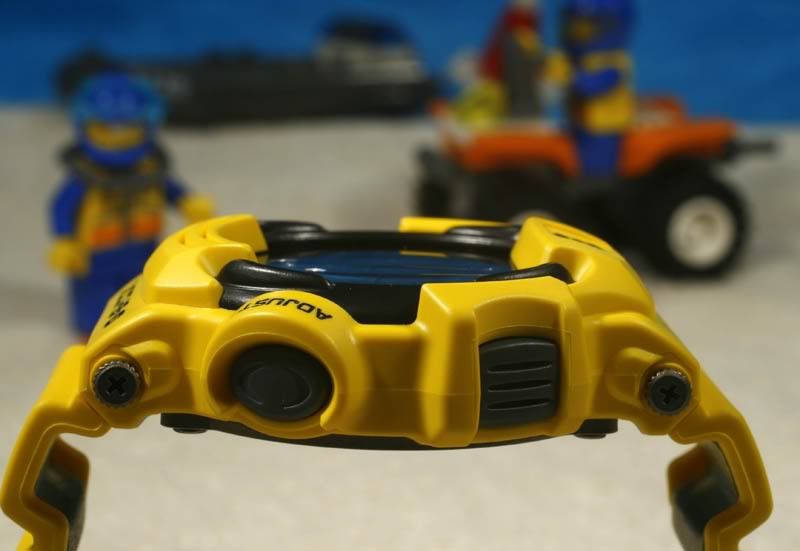
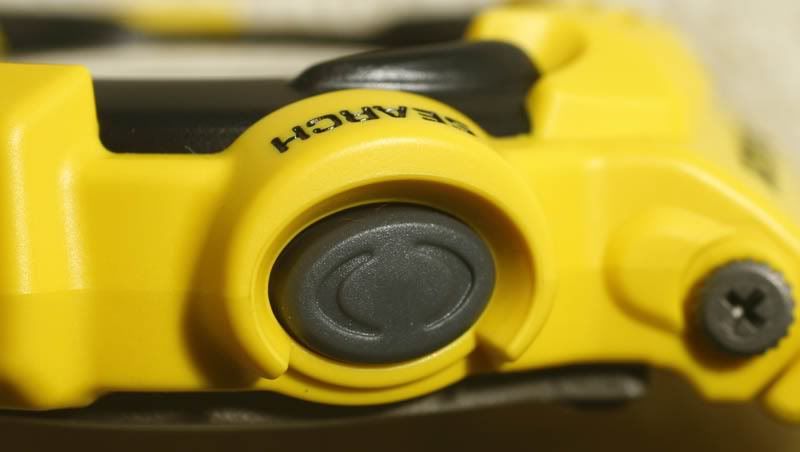
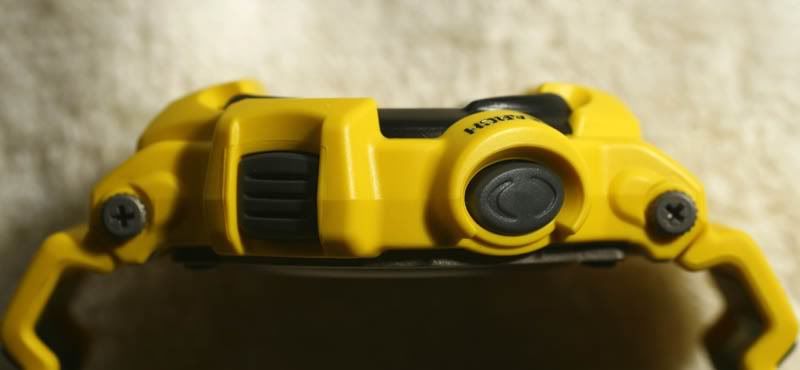
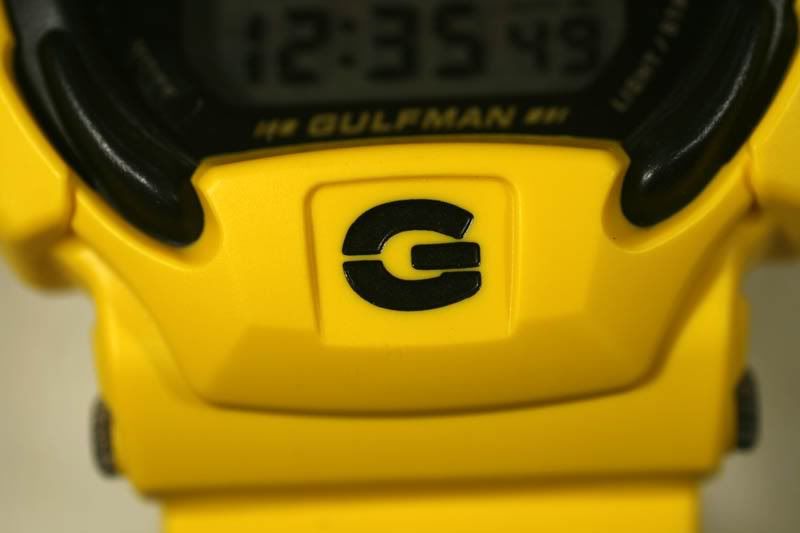
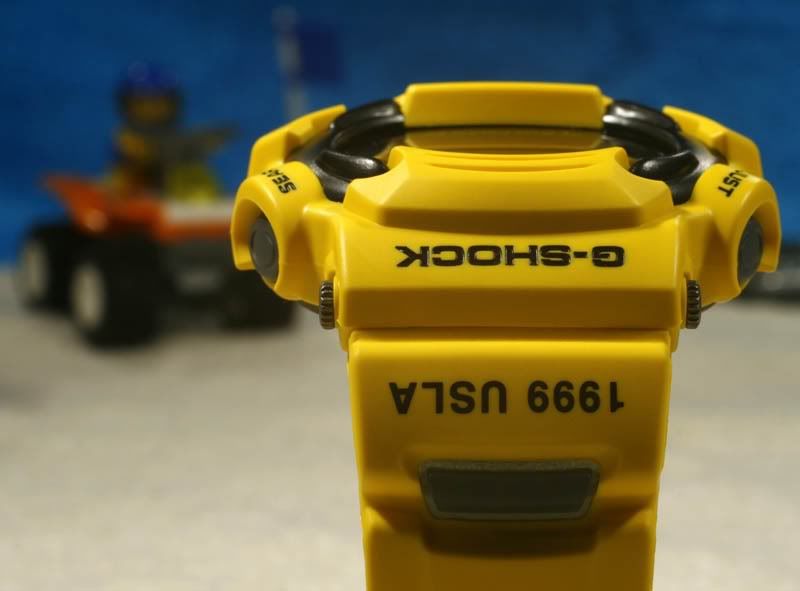
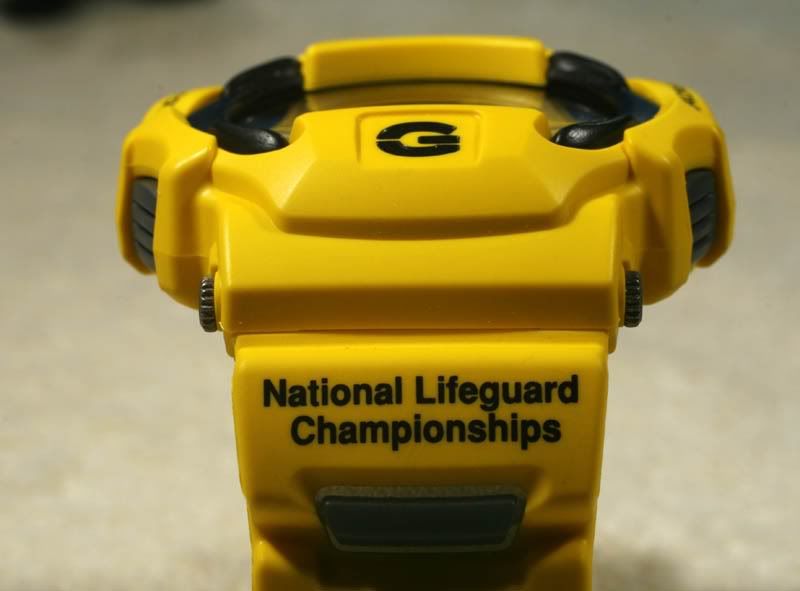
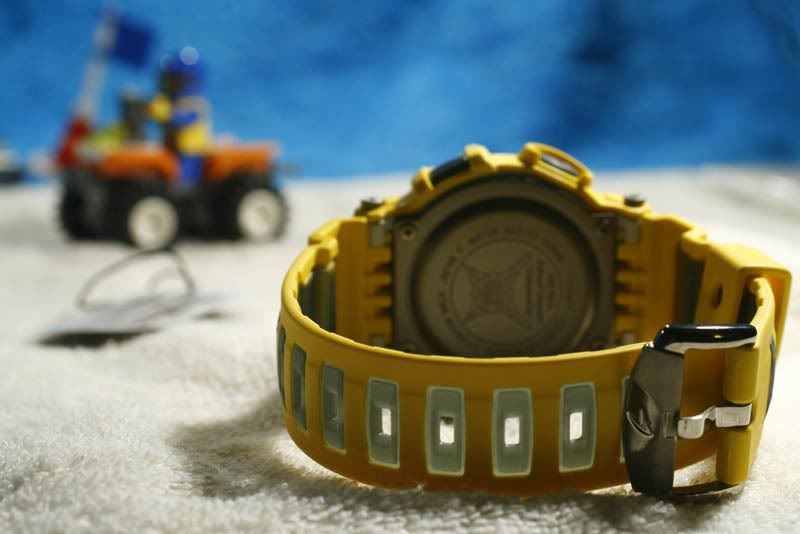
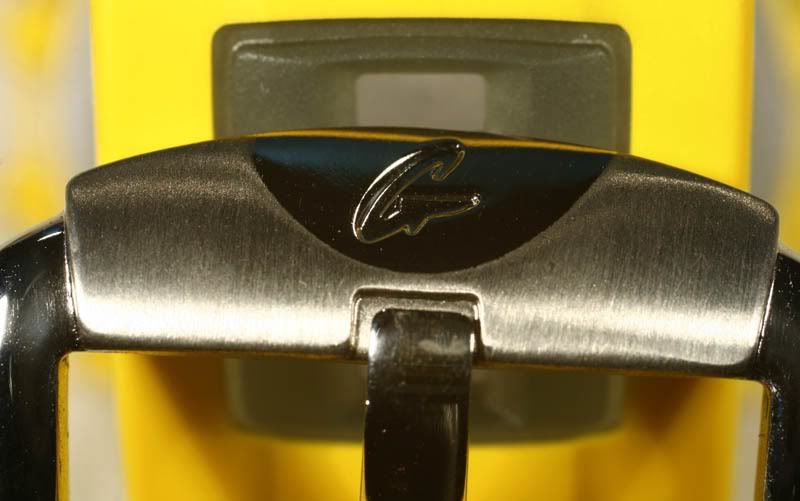
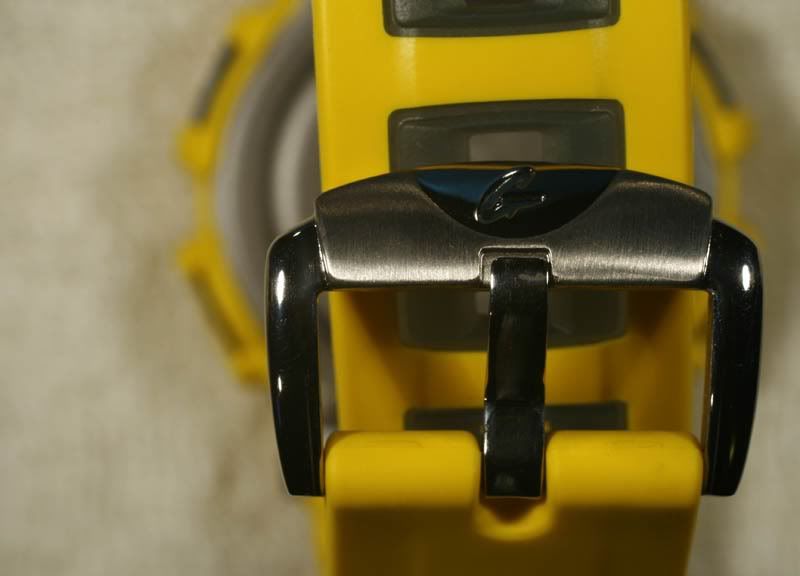
The yellow case with the black accents does make this watch stand out more than the black case of the 1999 ICERC Gulfman. Something you don’t see in the presentation box is the special strap. It is a dual mold strap. When I saw this watch for the first time, I thought the inserts on the strap were black. In fact they are translucent dark green, like the Men In Smoke Raysman. When worn these inserts probably always look black, but when taken off, it might look intriguing when sunlight plays with it. I do not know why is chosen for this color, but I think this color represents the sea.
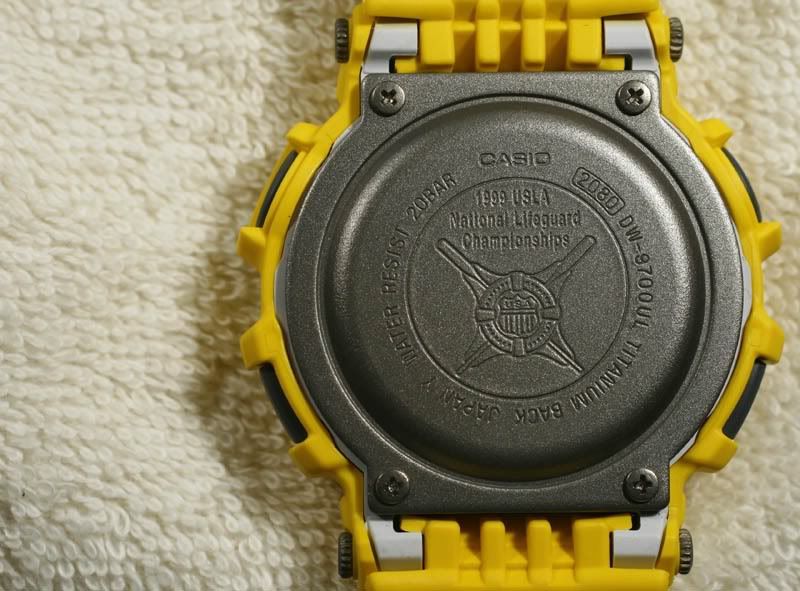
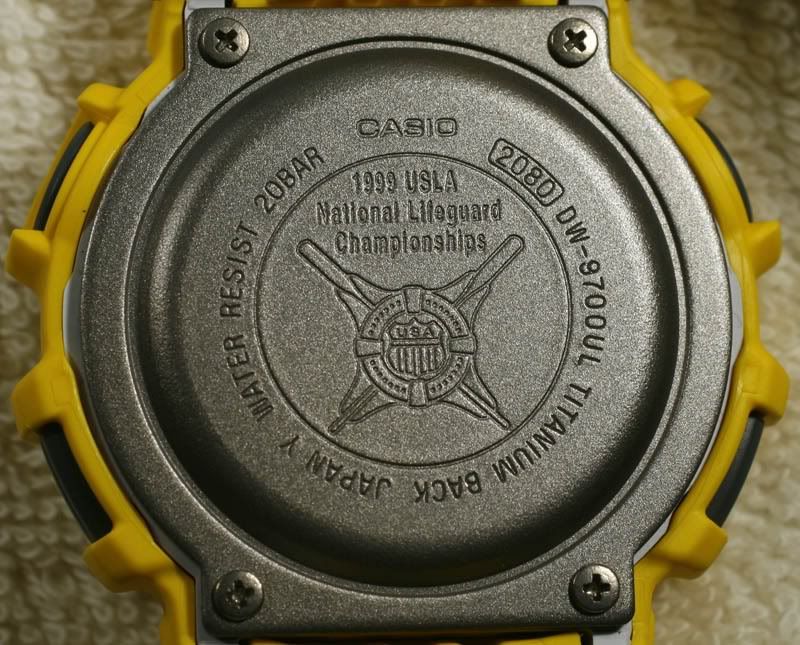
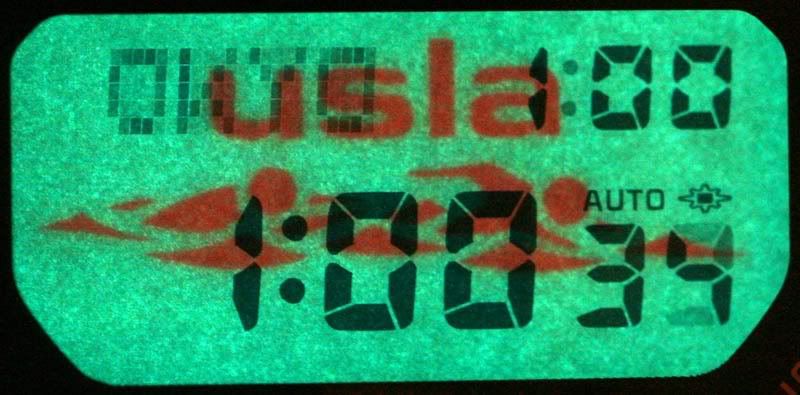
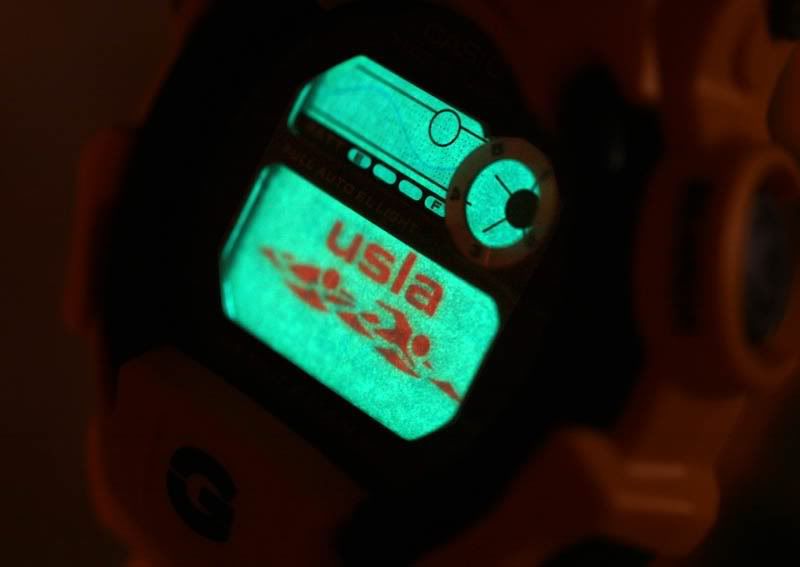
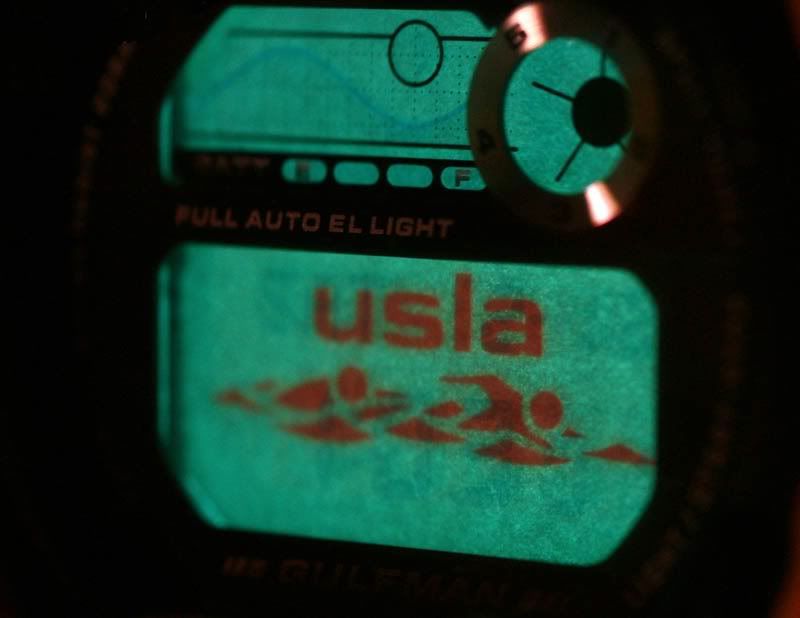
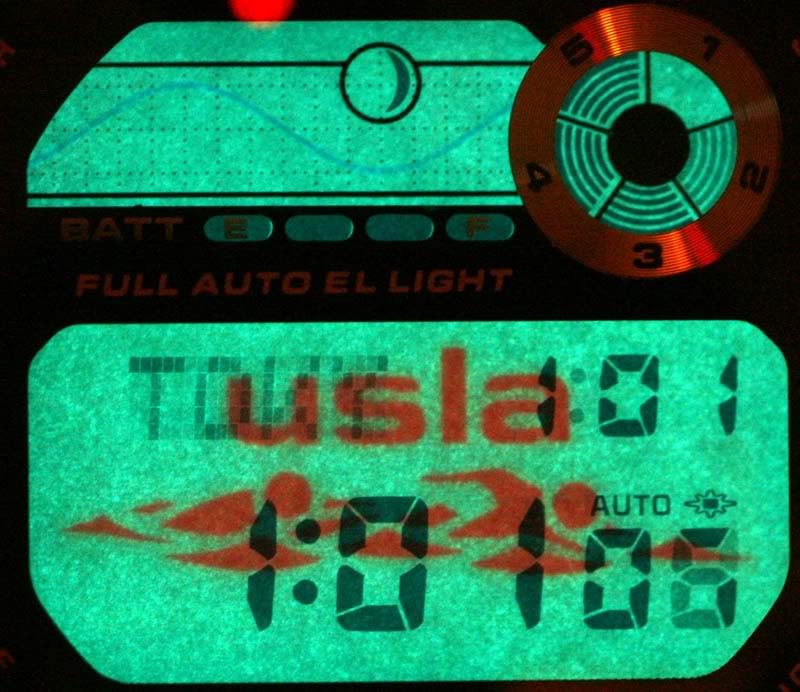
The text “1999 USLA” and “National Lifeguard Championship” are printed on the straps. The logo of the championships returns at the titanium back of the watch, while the USLA logo appears when the backlight is activated.
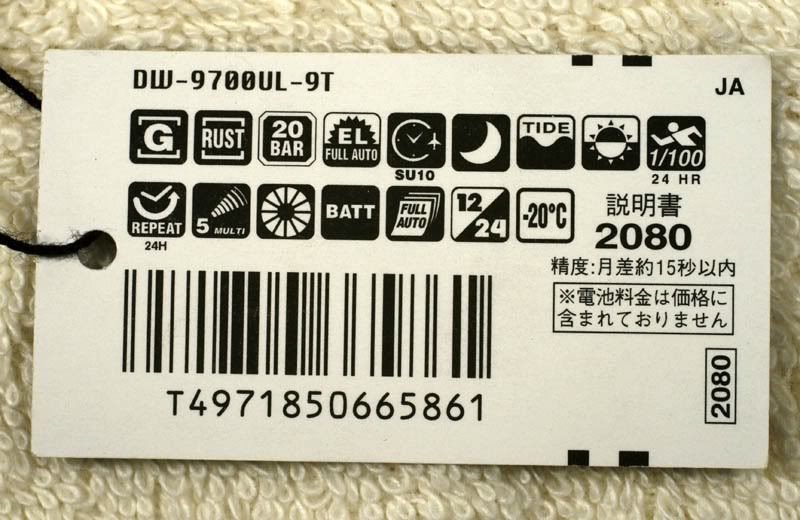
The Gulfman has the basic24h Countdown Timer and the 24h Stopwatch function on board. As written above, the Tough Solar function with Tidegraph and Moon Phase function make this watch special and useful for recreating, sports and work near and on water. The Gulfman can also show the Sunrise and Sun Set time. For a good working Tidegraph you need to input the correct data. Note you have to turn on and off the Daylight Saving Time (DST) at these dates and not just put the time one hour ahead or back. In the last case your Tidegraph, Sunrise and Sun Set data will be offset by an hour.
You can find out the Gulfman is the Tough Solar successor of the Fisherman. There is a somewhat hidden primitive Worldtime function on board. It shows 10 interesting fishing spots in the world, at least that’s what the manual of the 2080 module says. It is possible to choose one of these spots as “Home Time” It seems that Europe doesn’t have interesting fishing spots.
Back in 1999 Solar Powered G-Shocks didn’t have the Power Save function. Still power could be saved by putting the watch in sleep mode. By holding the MODE button for about two seconds the watch will turn the display off. Off course the watch will turn on when the MODE button is pushed again for two seconds, but maybe more fun is the “Display Mode”. Instead of pressing two seconds the MODE button, you press the ADJUST button for two seconds. The watch will now scroll through the different functions. This mode is actually made for shop displays but is also fun to look at home in its presentation box.
Although the USLA Gulfman sometimes pops up on eBay and the WatchUSeek sales forum, it is getting a pretty rare model. Best place to find is in the US, where most of these were sold, but due to quite some collectors, USLA Gulfmans can be found all around the world now. The original suggested retail price was ¥24000, so the watch was probably sold for around $250.- in the US. Expect now to pay at least $150 if you find one, the $250 I paid for it might be a bit high, though realistic compared with the original retail price. On the other hand, if you have the money and you want a model bad, it’s always worth it. I think eventually I was lucky. After this one, I haven’t seen an USLA Gulfman for sale for a long time.
You might say the Gulfman came packed with functions (there are also 5 alarms on board). It also means that a new owner has to study about how to set the watch correctly, but once set you have a great looking watch. Back in 1999 this Gulfman maybe could be considered a small wrist computer. The only flaw I can find on the DW-9700 Gulfman is the battery indicator. Somehow I always have trouble to view it right. You don’t actually pay for the package, but I like the way G-Shocks were packed around 1999 – 2000. Overall, this is a great looking flashy Gulfman, absolute worth the money I paid for it.