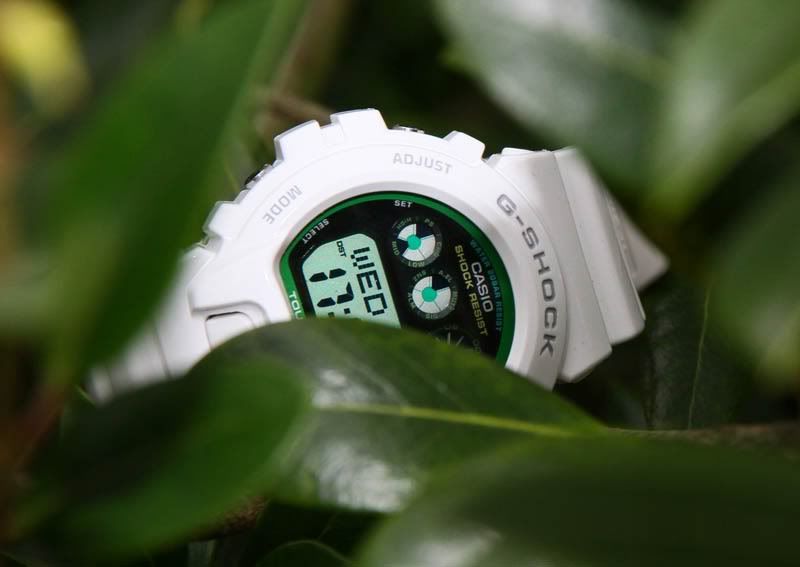
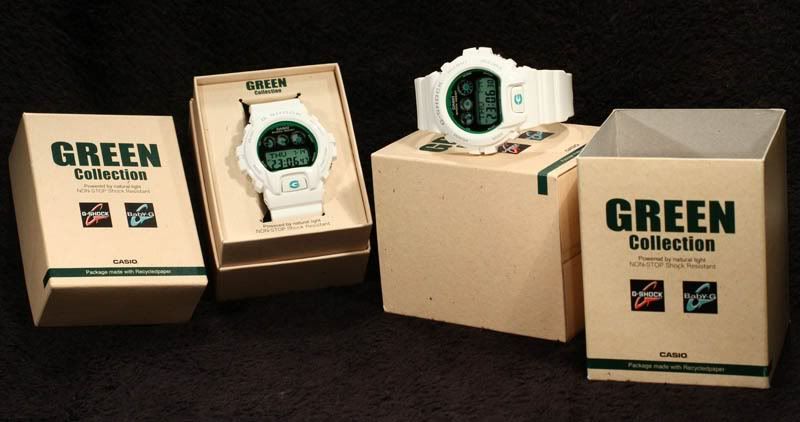
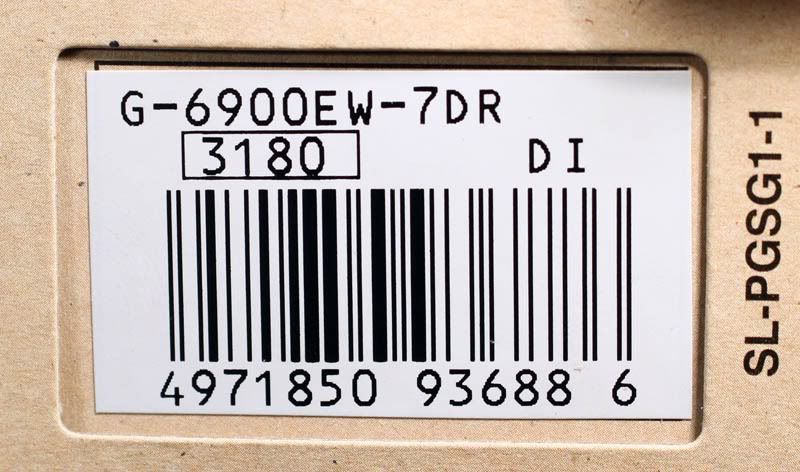
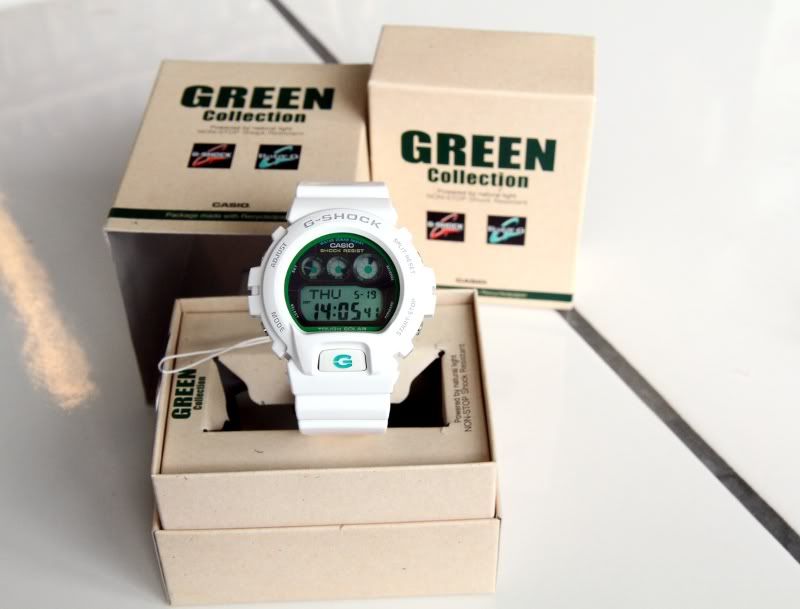
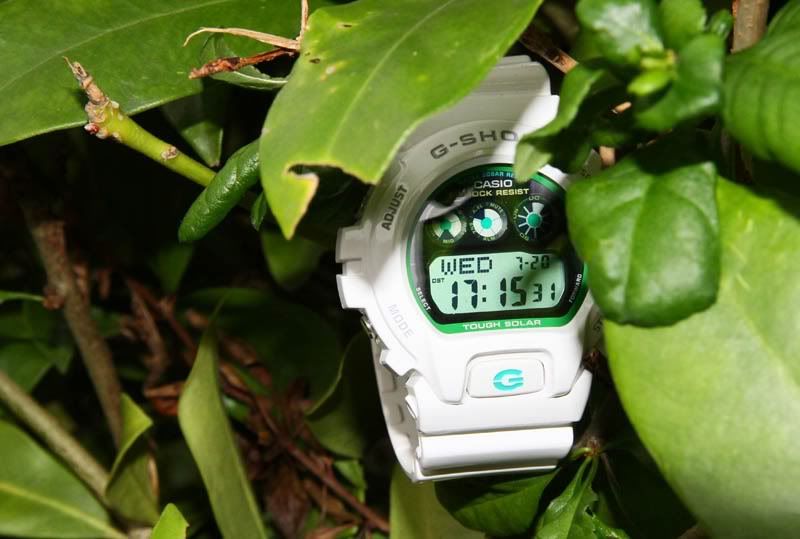
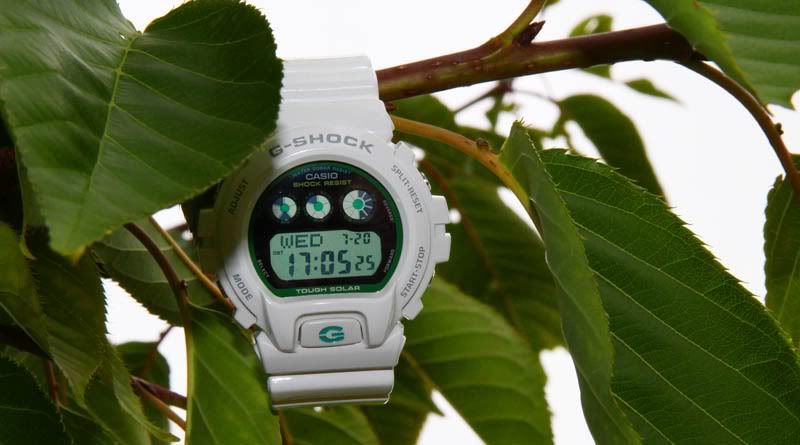
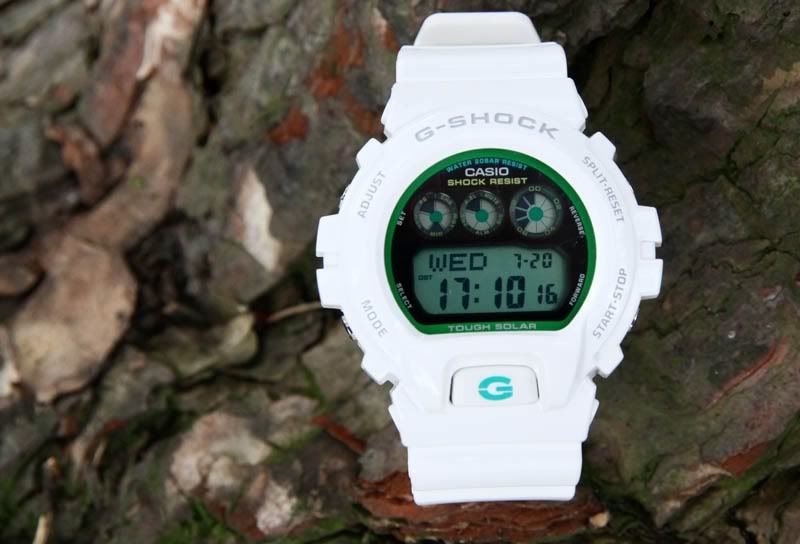
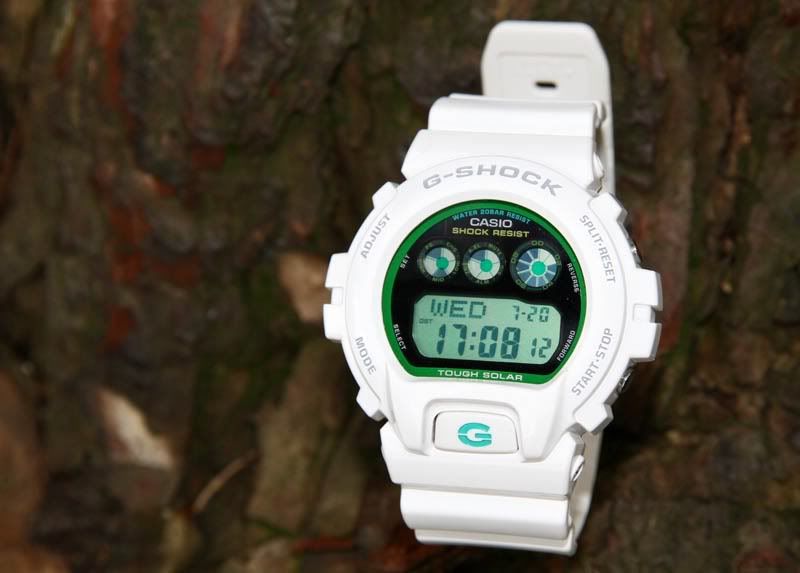
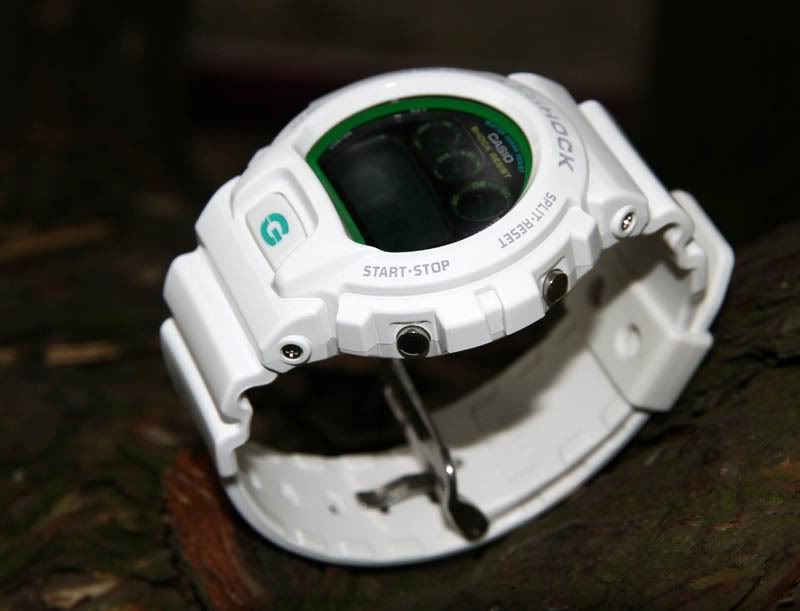
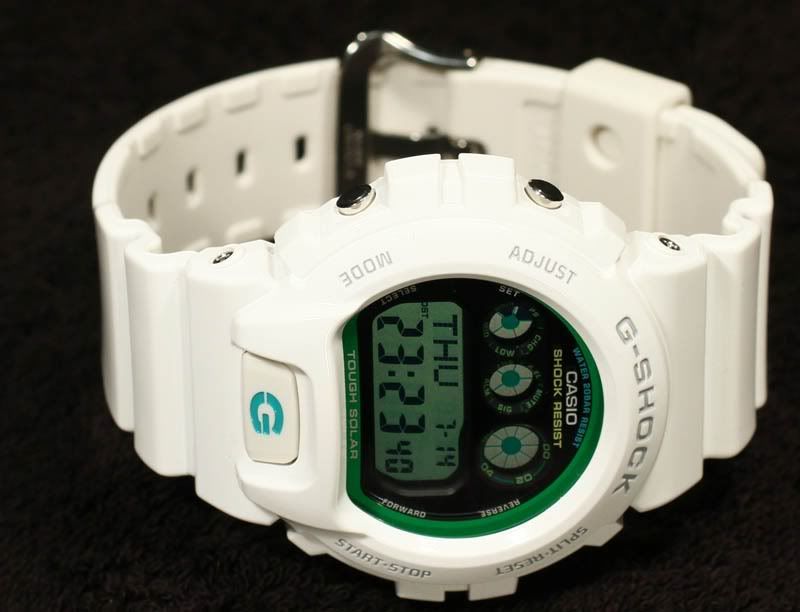
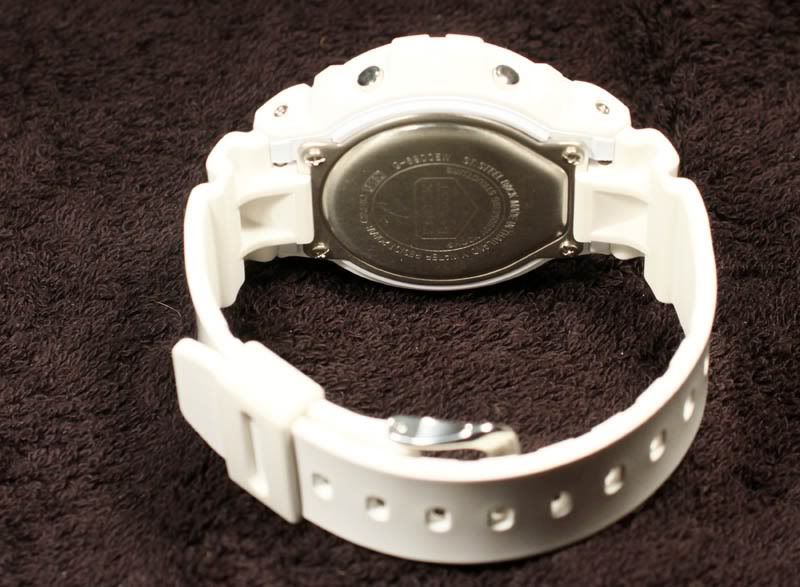
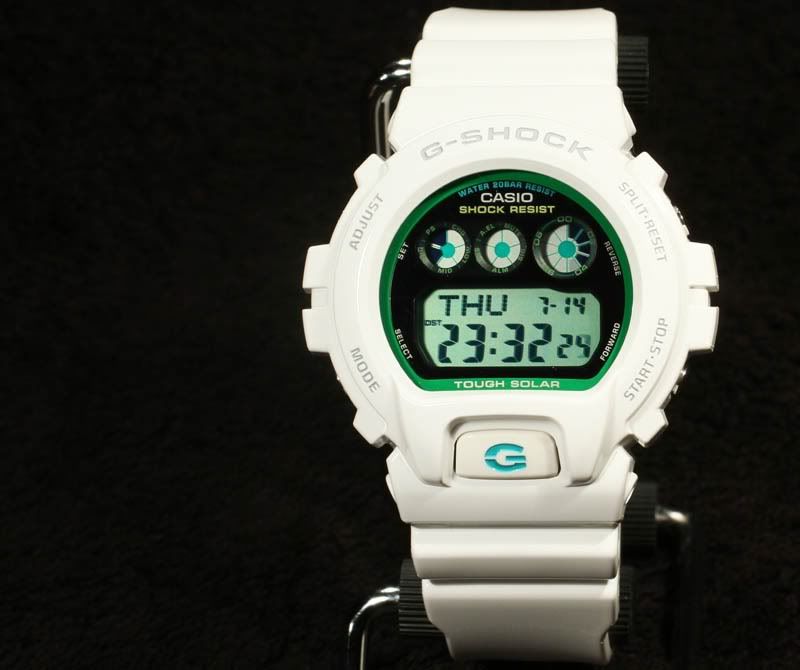
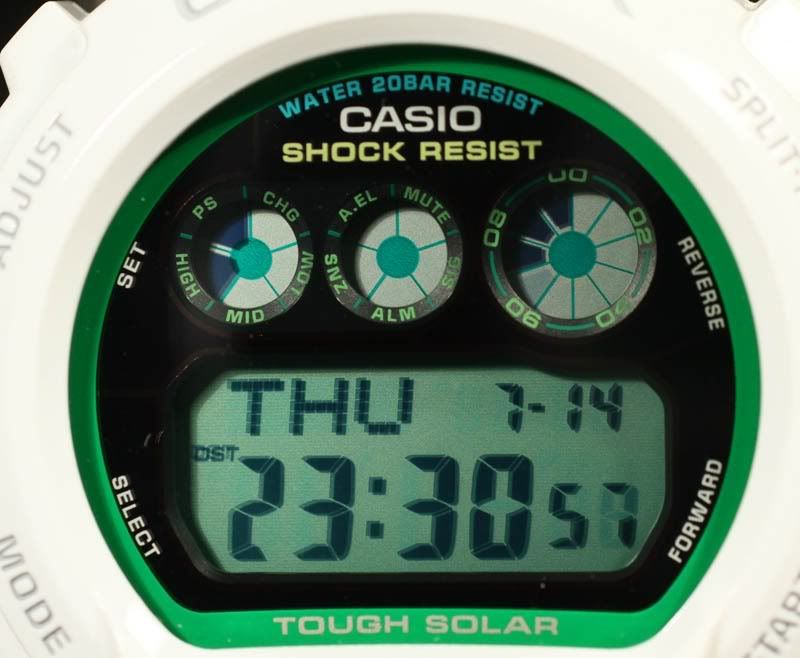
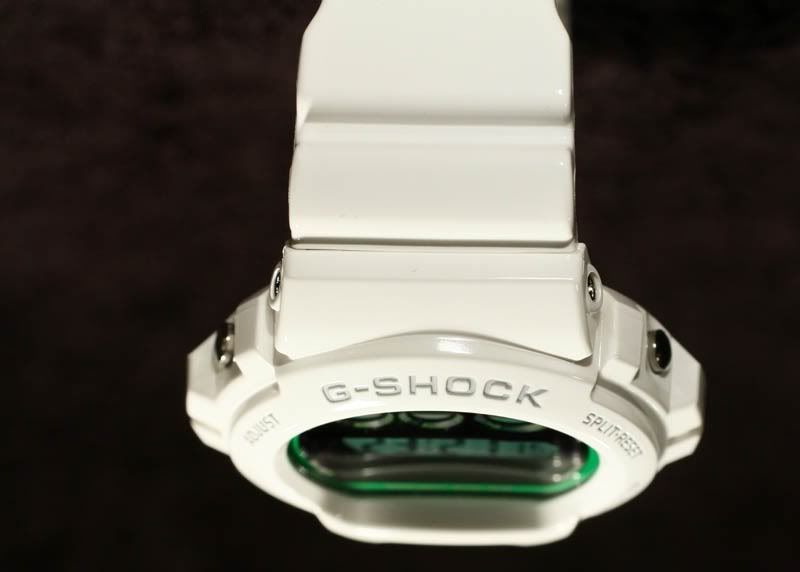
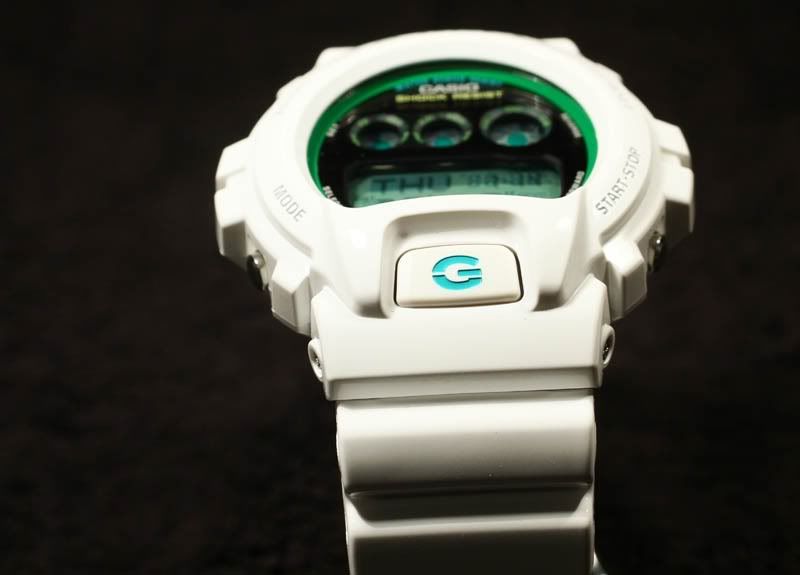
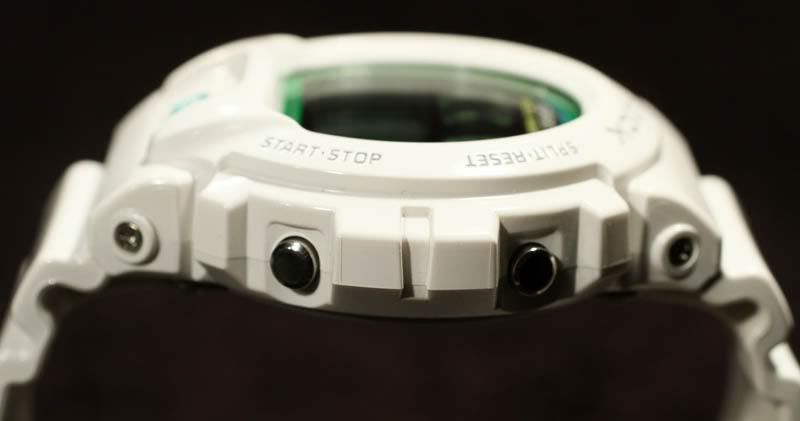
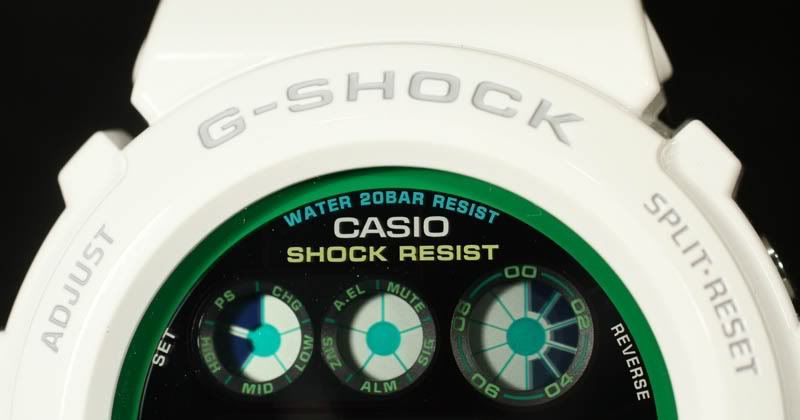
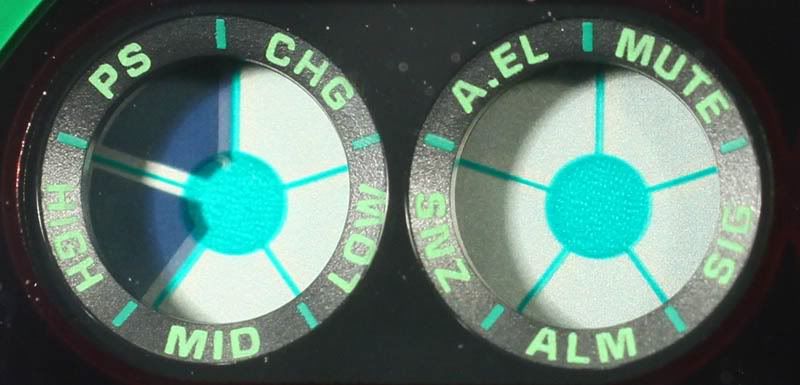
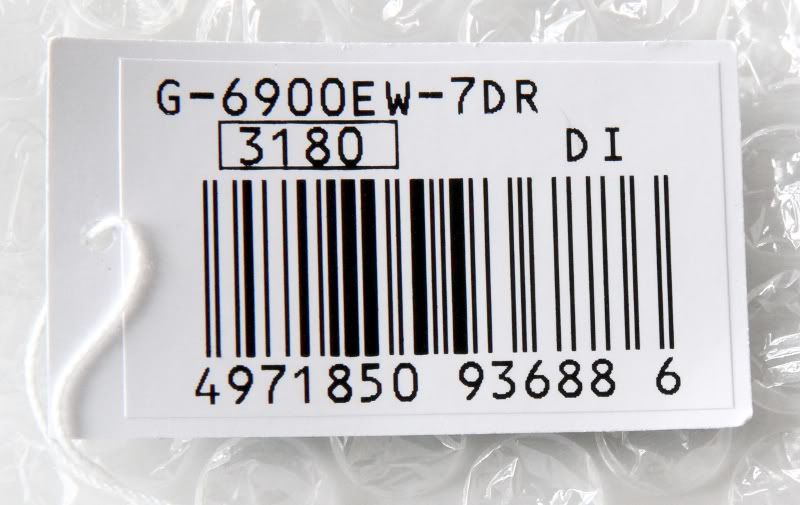
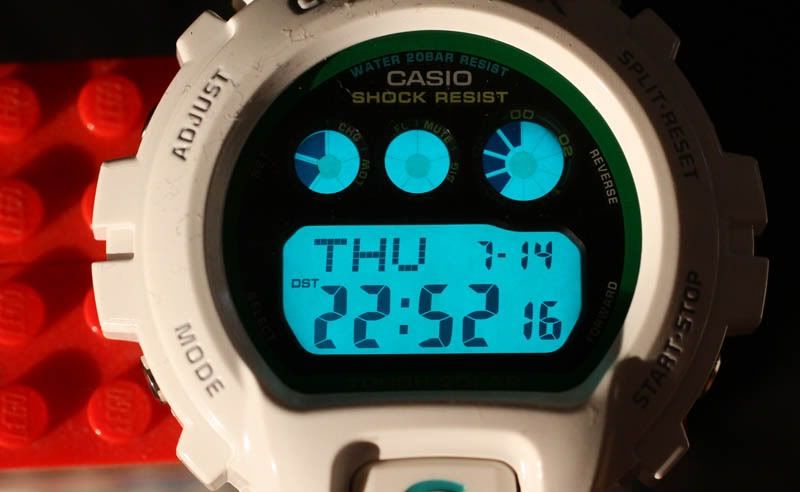
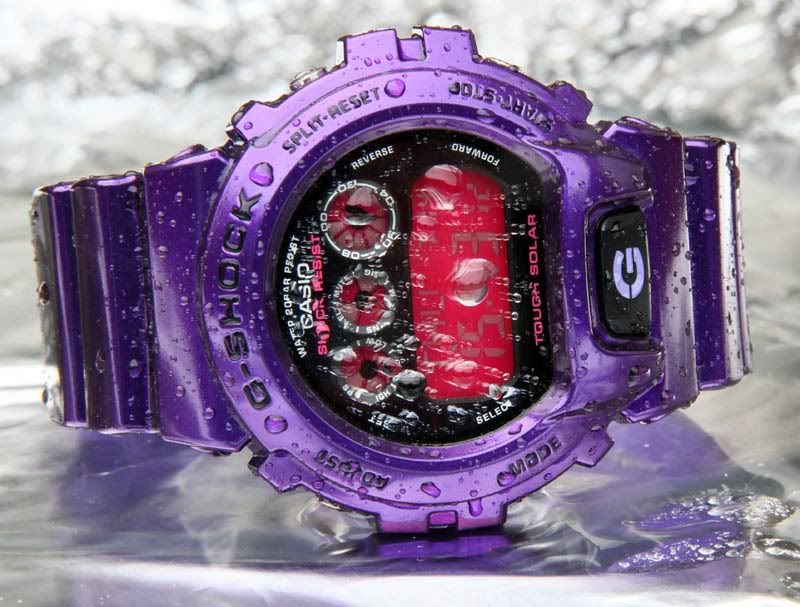
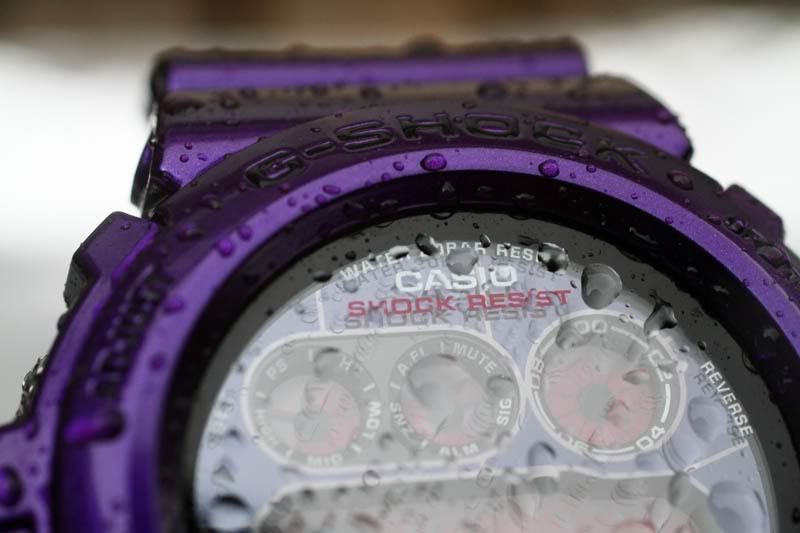
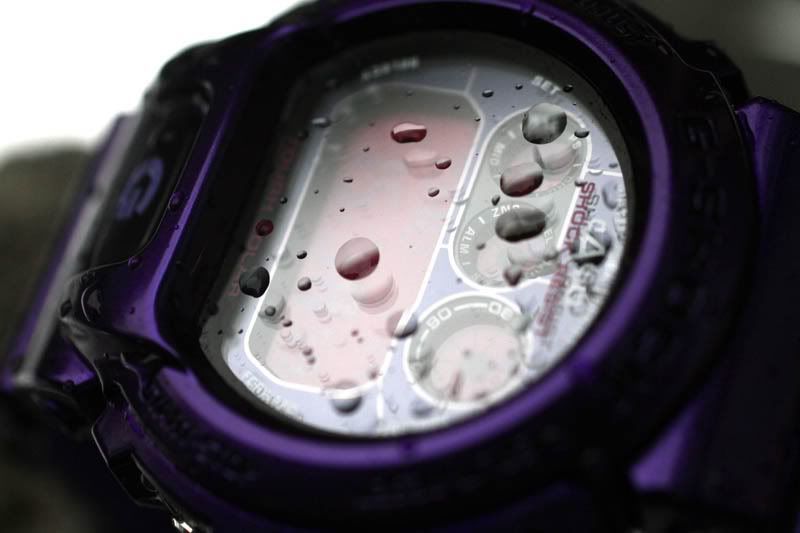
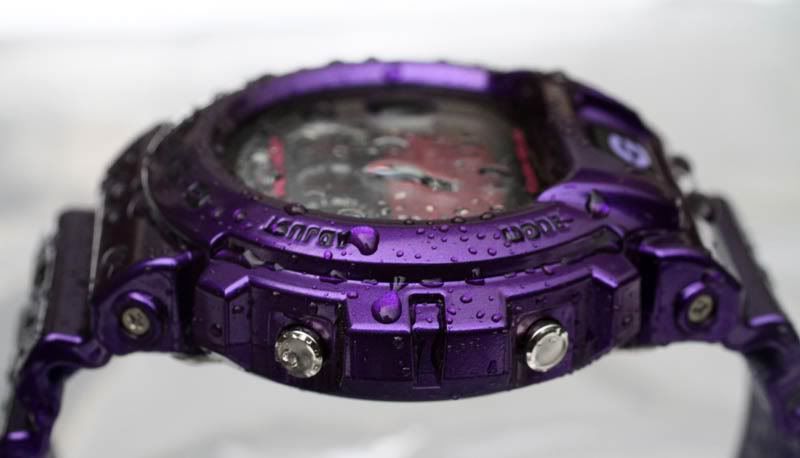
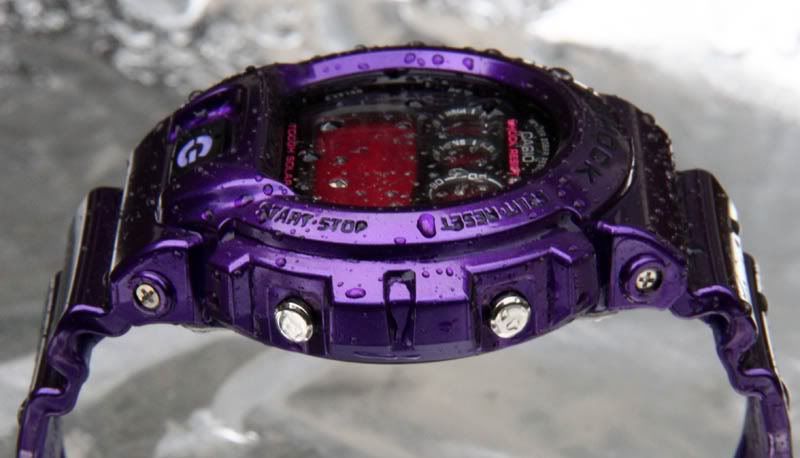
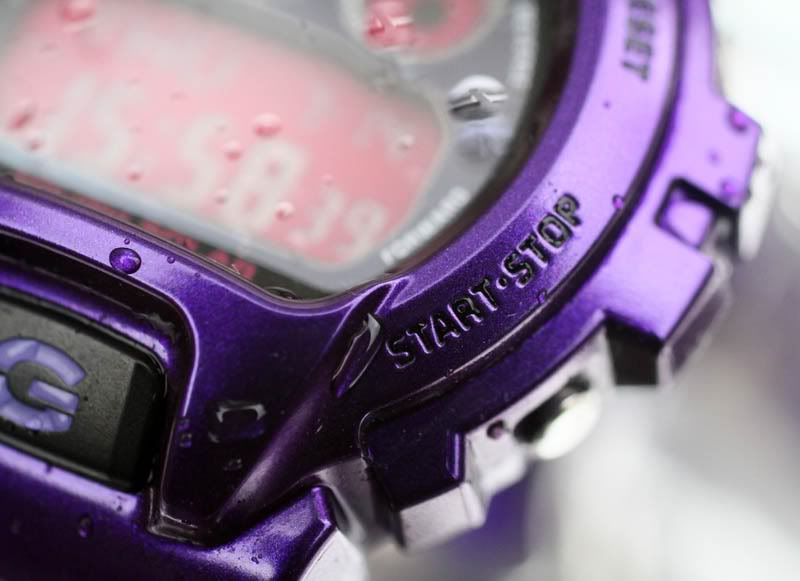
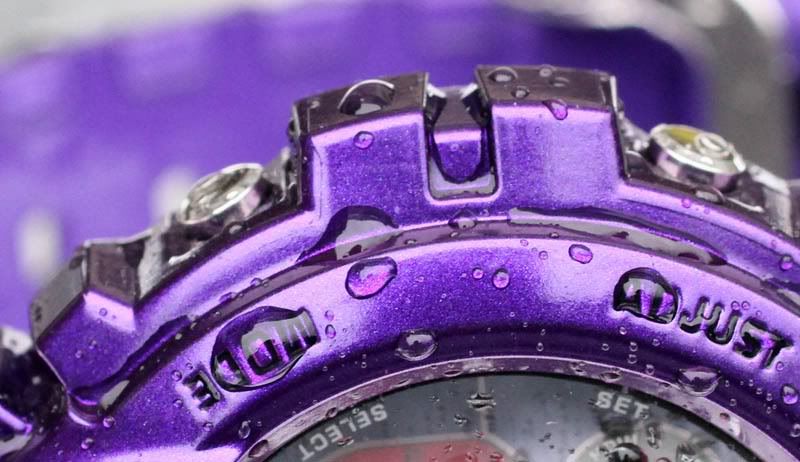
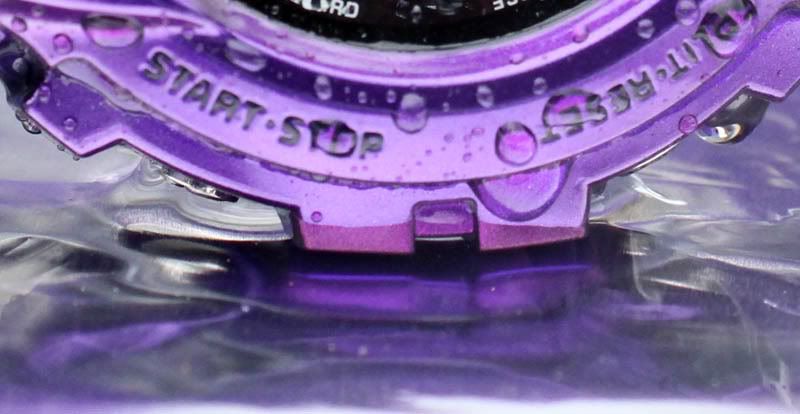
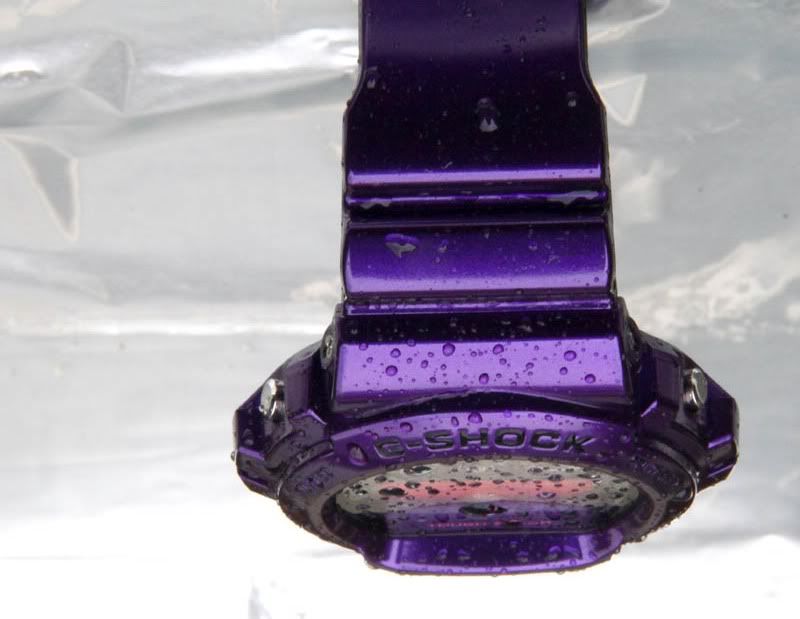
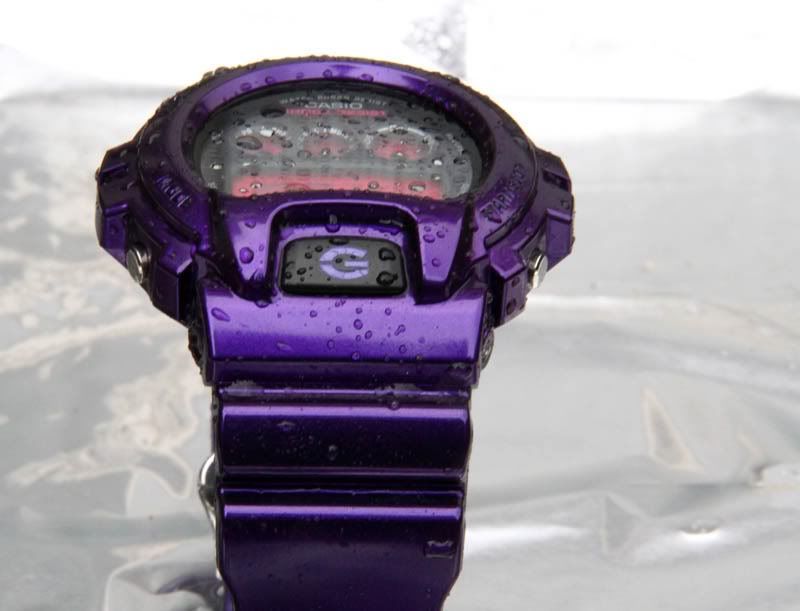
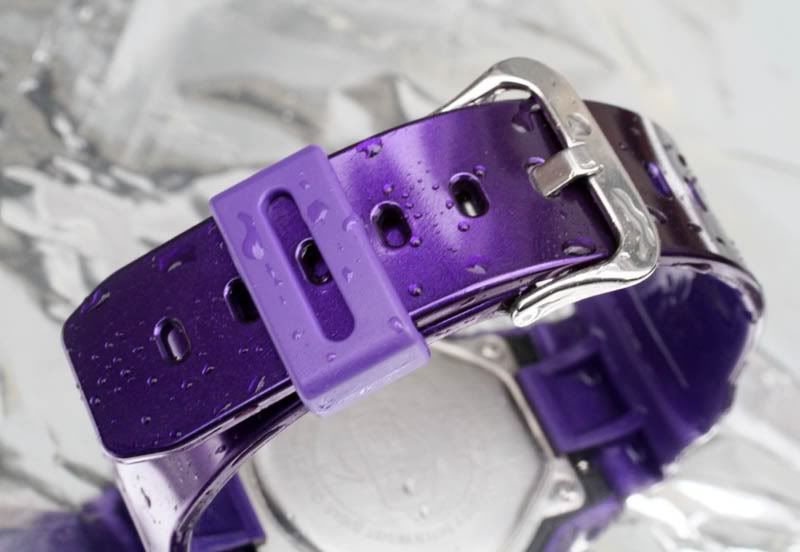
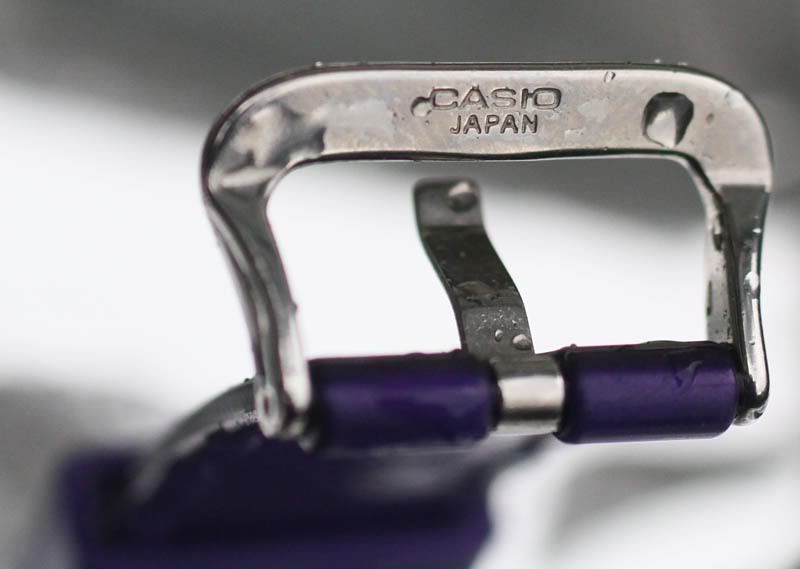
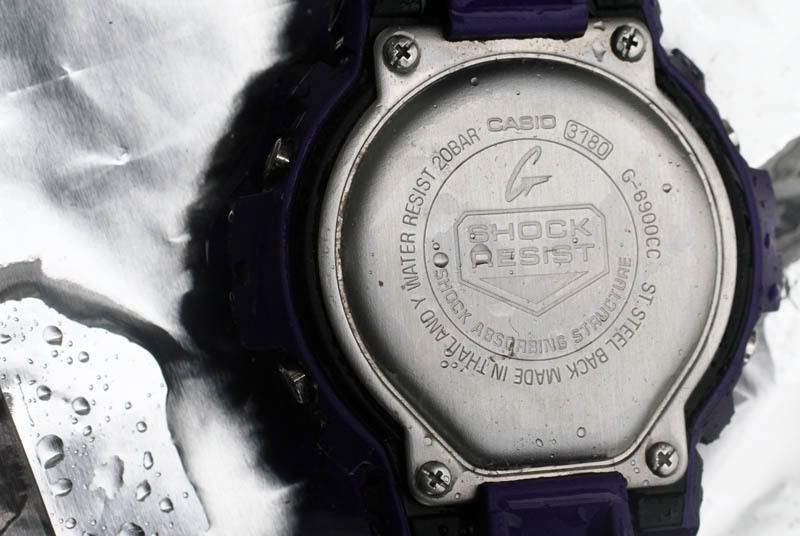
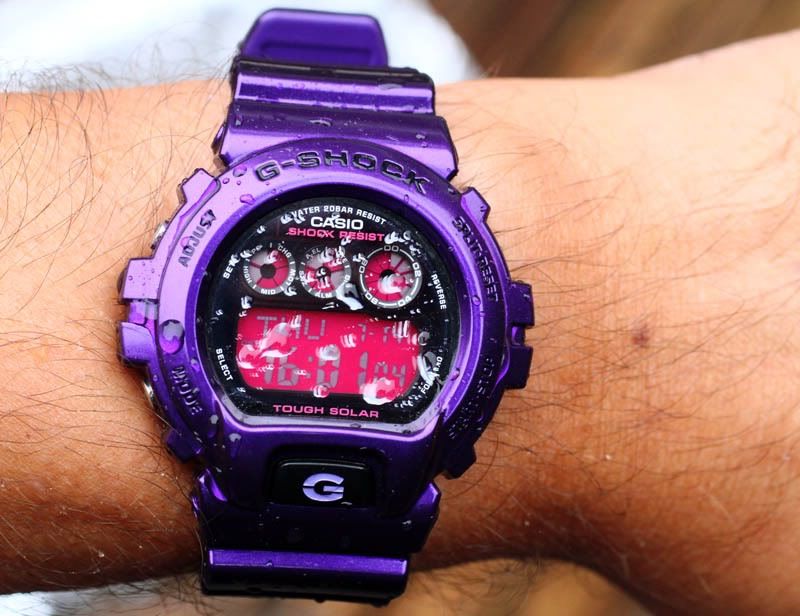
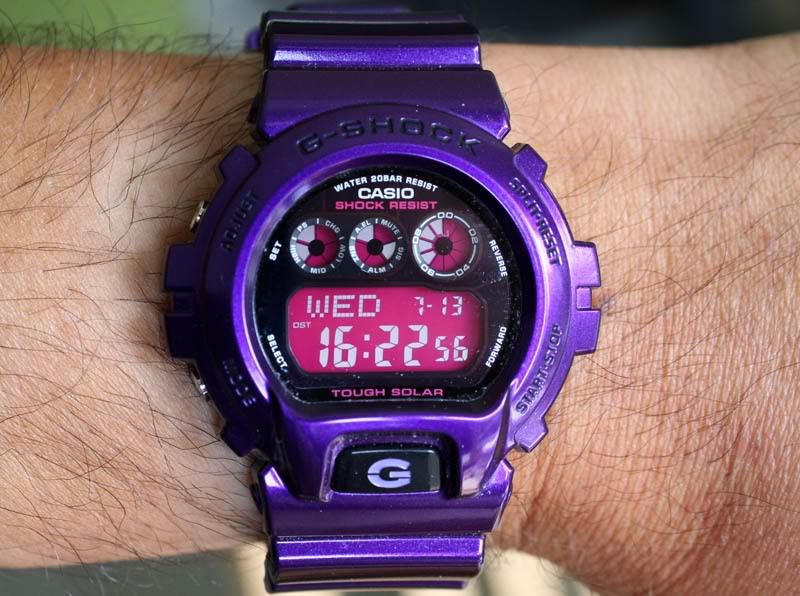
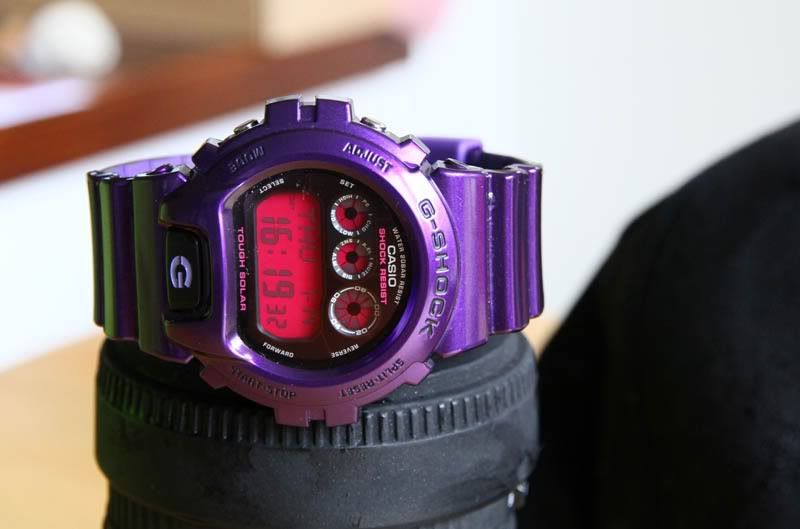
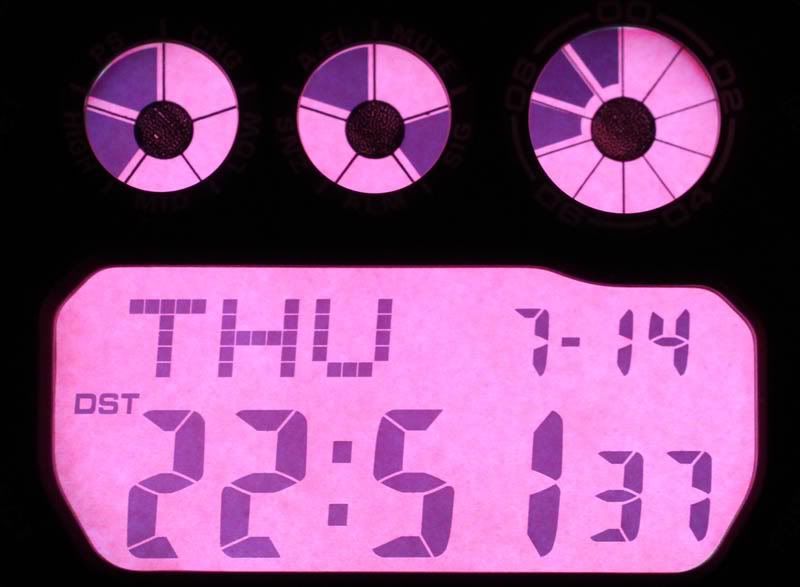
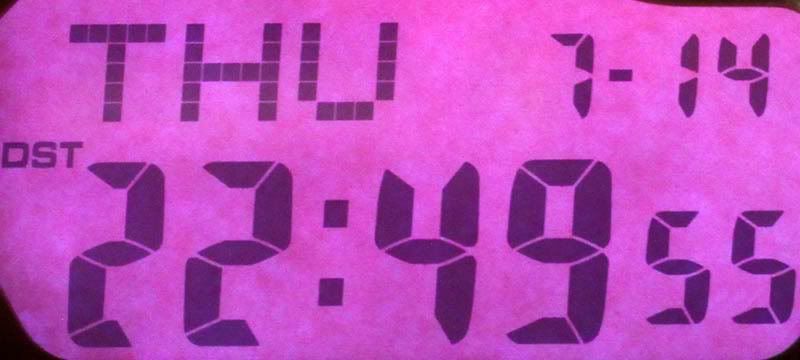
A lot of images were taken in my garden during heavy rainfall on a very rainy day. Between 50 and 80 mm had fallen here within 24 hour, which is pretty exceptional here. Normally your G-Shock doesn't come this wet in a box, but hé, it's 20 BAR water resist...
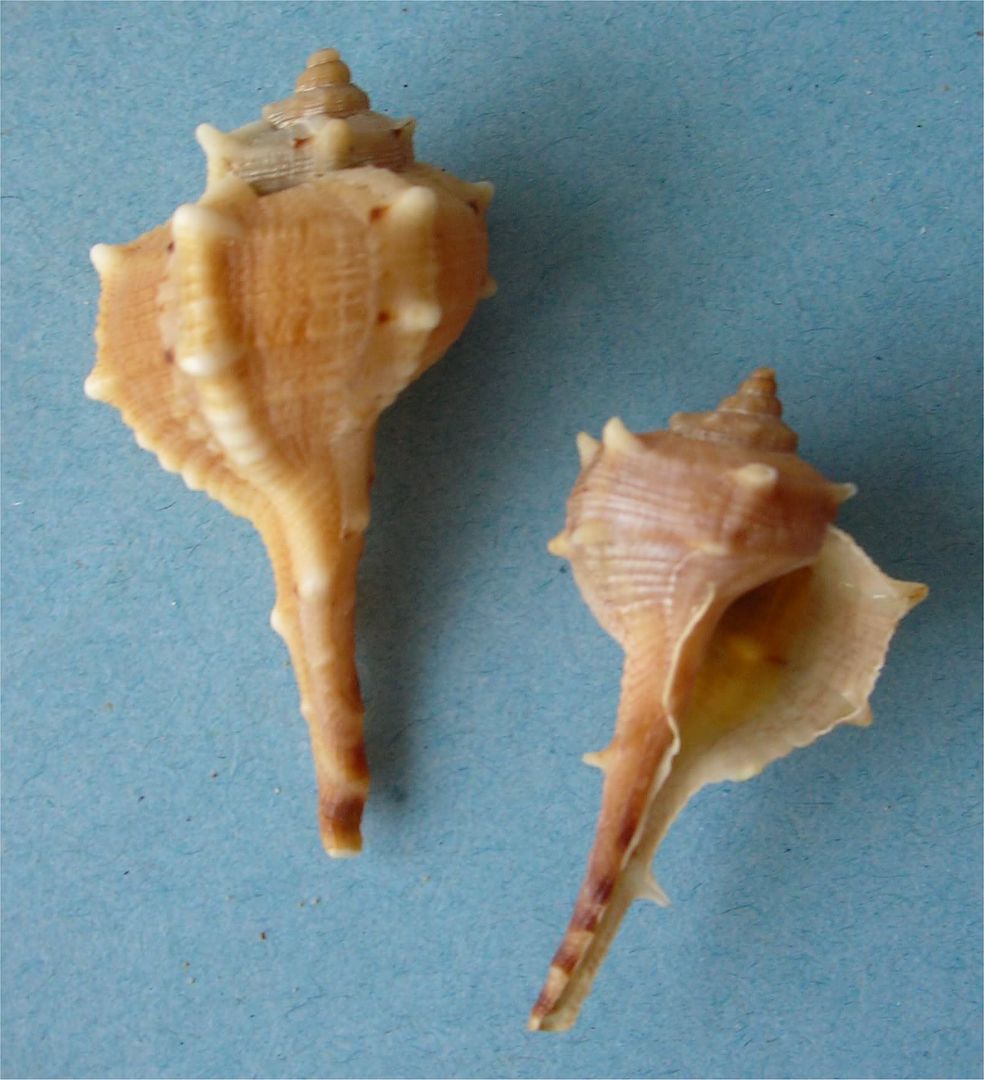
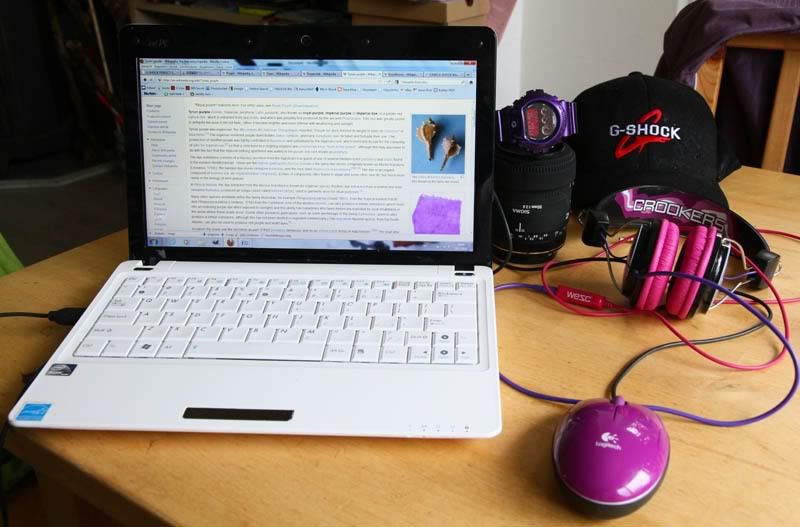
Purple has been a luxurious color in the ancient past. The dye was harvested from sea snails by slaves who dived with ropes and stones into the sea. You needed about ten thousand of them for a grams dye. No need to explain that pure dye was very expensive and exclusive.
Photo: M. Violante.
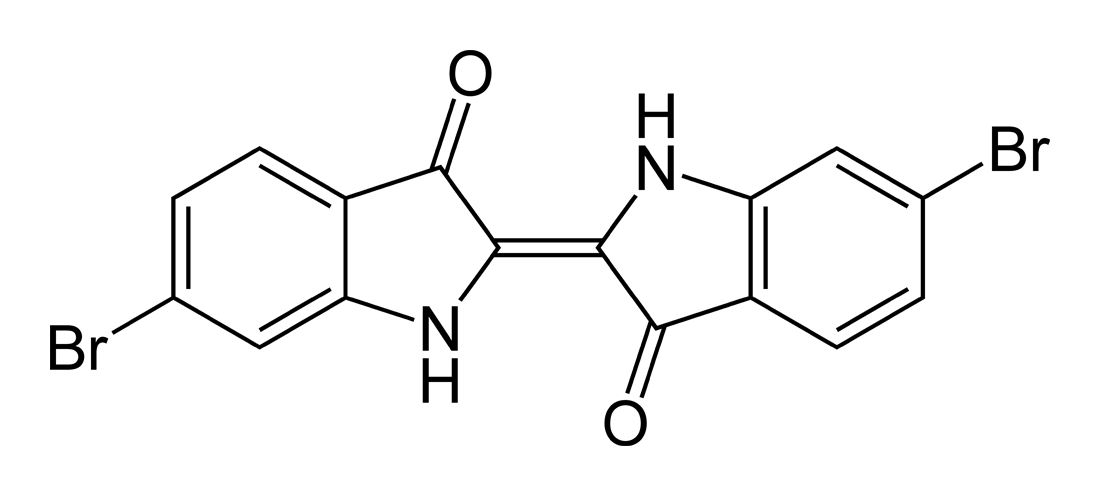
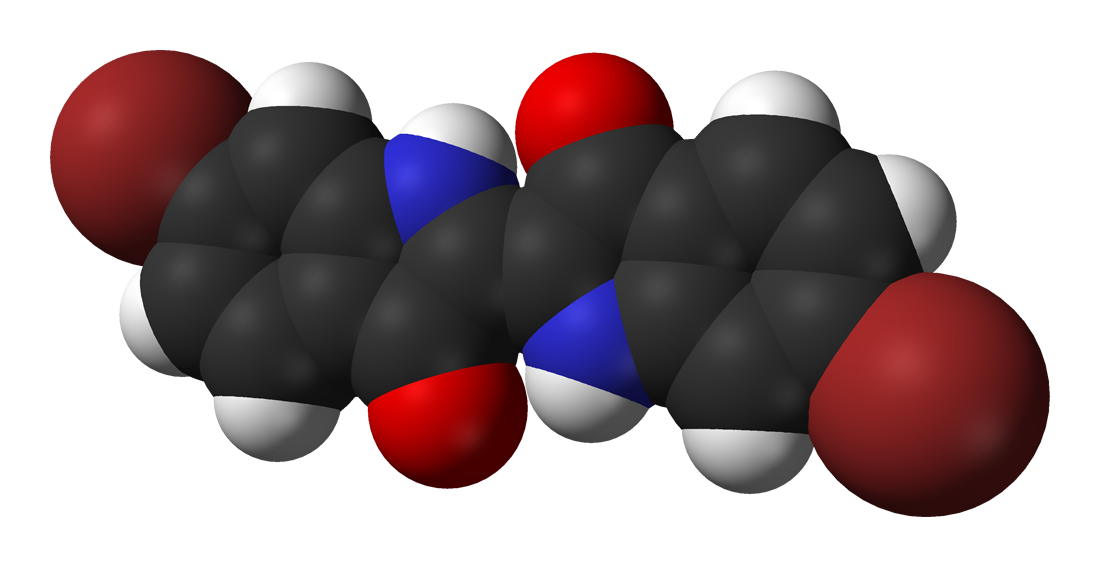
Dyed fabrics were 10 to 20 times more expensive than gold. These fabrics were made exclusively for emperors, royal families, bishops and cardinals. The dye, 6,6-dibromoindigo, can now be made synthetically, though it’s not produced in large scale.
6,6-dibromoindigo images by Ben Mills
In November 2010 Casio released the “Color Display” series in Japan. While these models were only for the domestic market, an overseas variant was released in a non-Atomic form. I think this model is for me the best looking model that Casio released in the past half year. I love purple colors. I wish the Waveceptor versions (models that can receive atomic time signals) also were released outside Japan.
One drawback of the Waveceptor version is the price. You can still find both versions on eBay. The Japanese 6-multiband Waveceptor version an be found around €150.- ($200) and the overseas model can still be found for around €90.-.
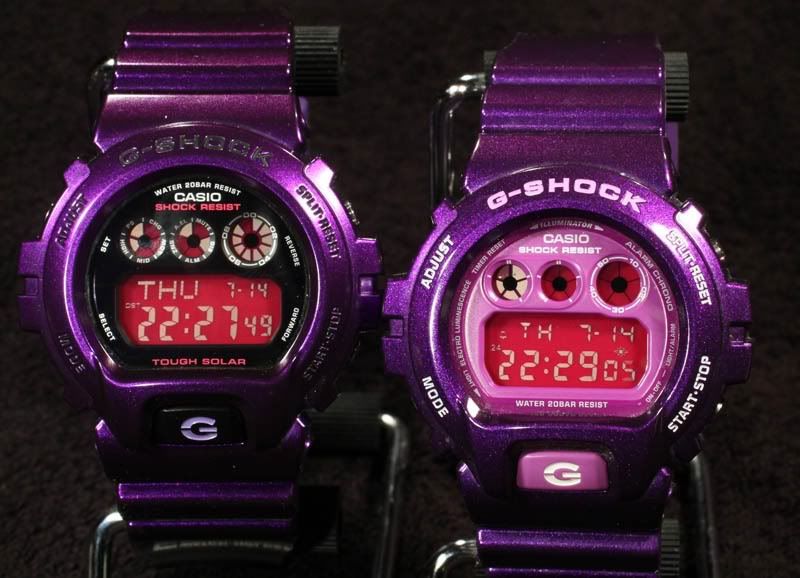
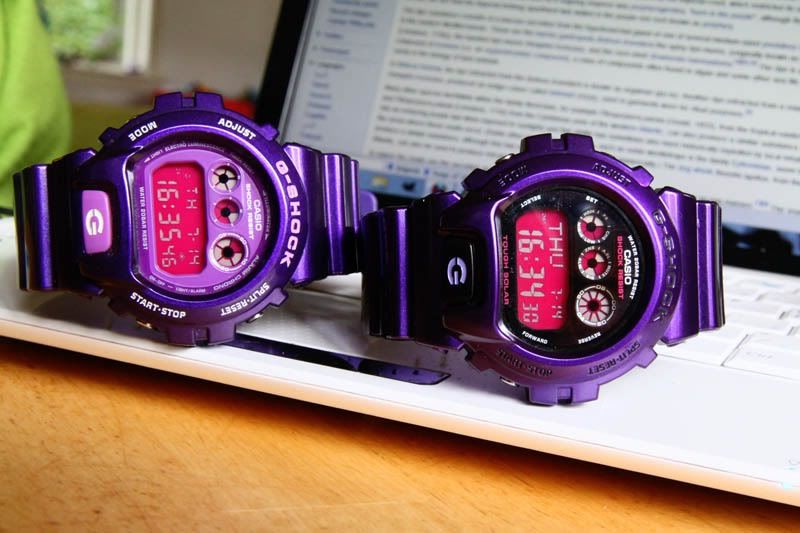
I think the name of these series is a bit diverting. There were only two models and they both have the same color fuchsia display. Well, for me fuchsia is not an easy color to describe as it is not red, not pink and not purple, but a shade in-between. According color scales, this shade is called Fashion Fuchsia, a less saturated tone pink than shocking pink (Magenta). The straps and bezels of the two models differ. There is a shiny deep black model and this metallic purple model. Actually they both look great in my opinion.
The purple “Color Display” model has the same metallic purple tone as the DW-6900CC-6JF of the August 2009 “Crazy Colors” series. It is questionable why this series is not simply included in the “Crazy Colors” series. It might be that Casio wants to leave the “Crazy Colors” series, since also the “Metallic Colors” series were not released as “Crazy Colors”, while these models also have these wild and bright color combinations.
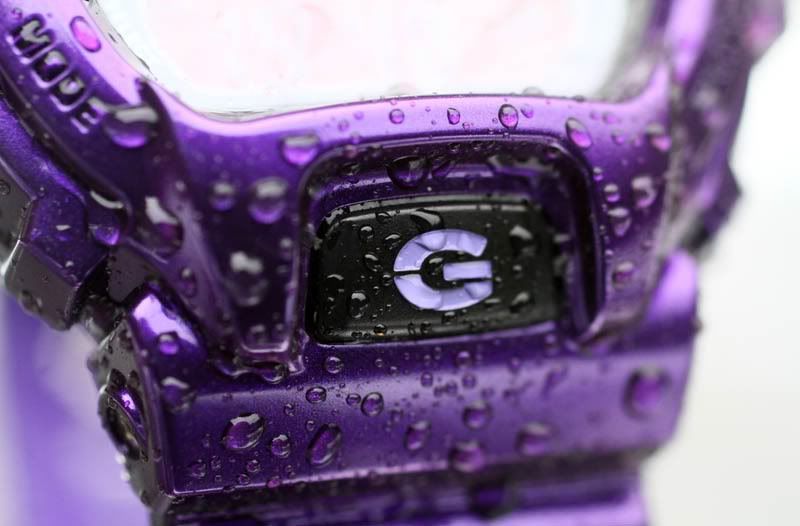
The straps are only metallic on the outside, so Casio must have used a special film on the outside of the straps to create the metallic effect. The metallic effect does not create color different color shades, as on the Snake Killer or the Gold Defender Frogman, but light falling on the resin create darker and lighter shades of purple, which makes this watch very nice to look at.
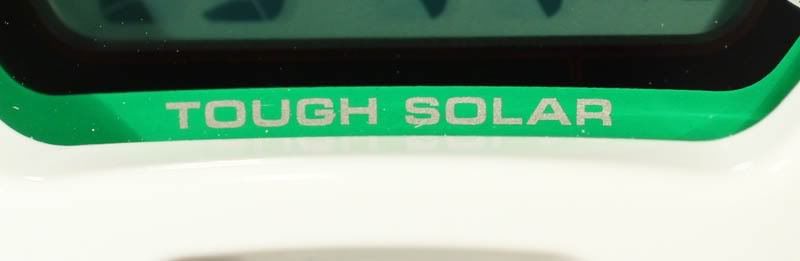
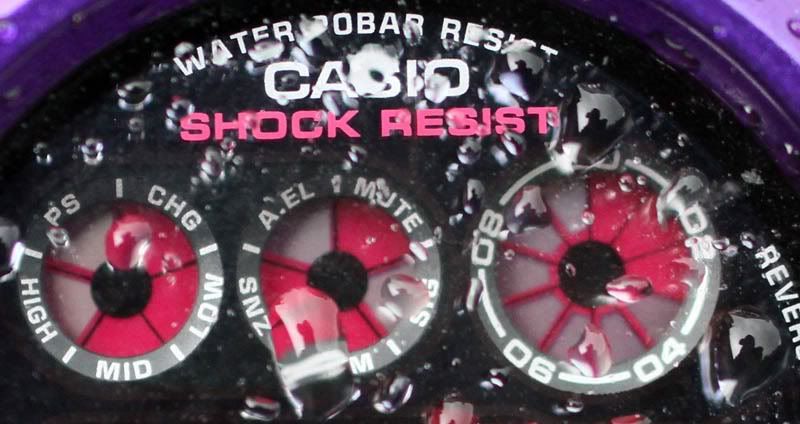
I think the best part of this model for me is the combination of the purple resin, the fuchsia red display divided by the very dark solar panels. Were solar panels about 10 years ago often shading between blue, purple and black, on this model the panels look dark black. Maybe under extreme angles it looks very dark blue. It does not only function as a solar panel, but also as a border for the colors. Only the texts SHOCK RESIST and TOUGH SOLAR, also in fuchsia, seem to be a bridge to the display.
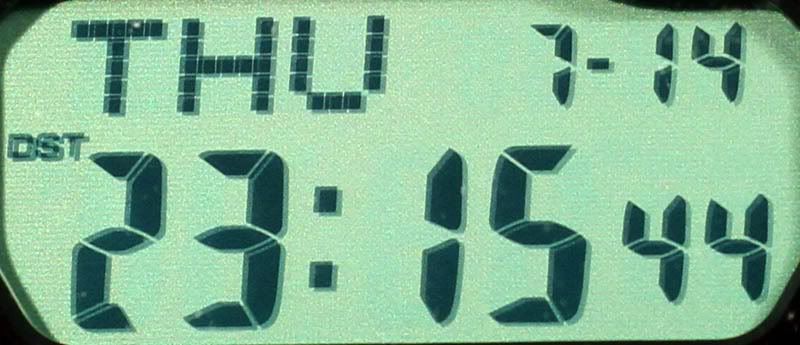
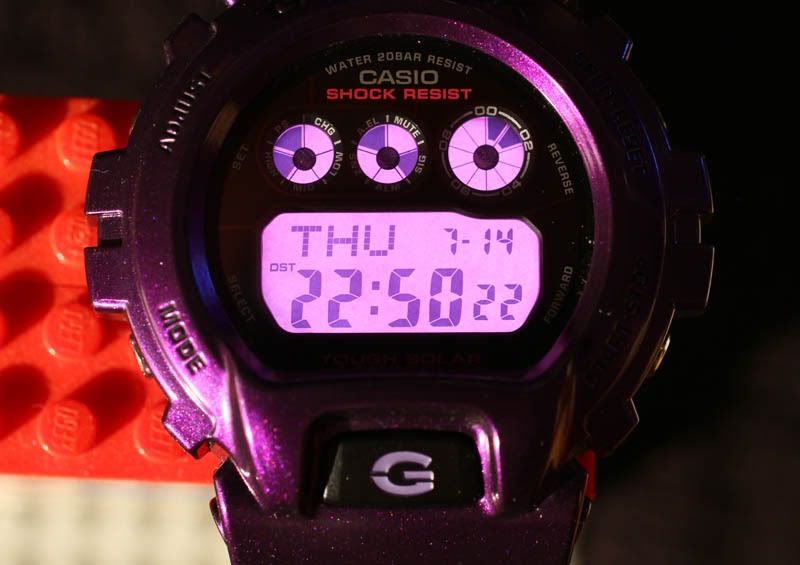
Although a vivid color is used on the display, the digits are remarkably good visible under different angles, though the best view is obtained under good light conditions. Taking good photo’s of the display was a bit harder. Most colored displays have the usual greenish or bluish backlight, but these models have a pinkish red backlight.


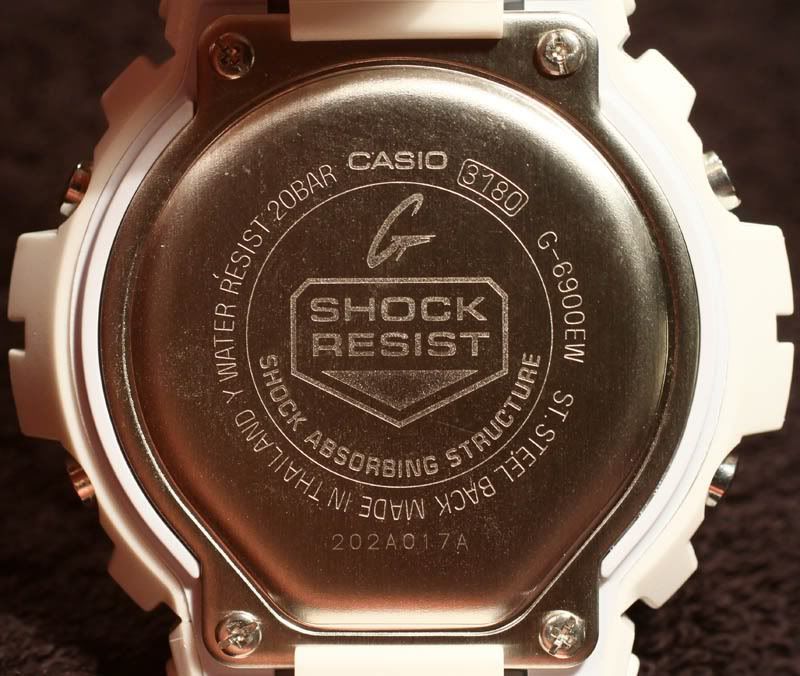
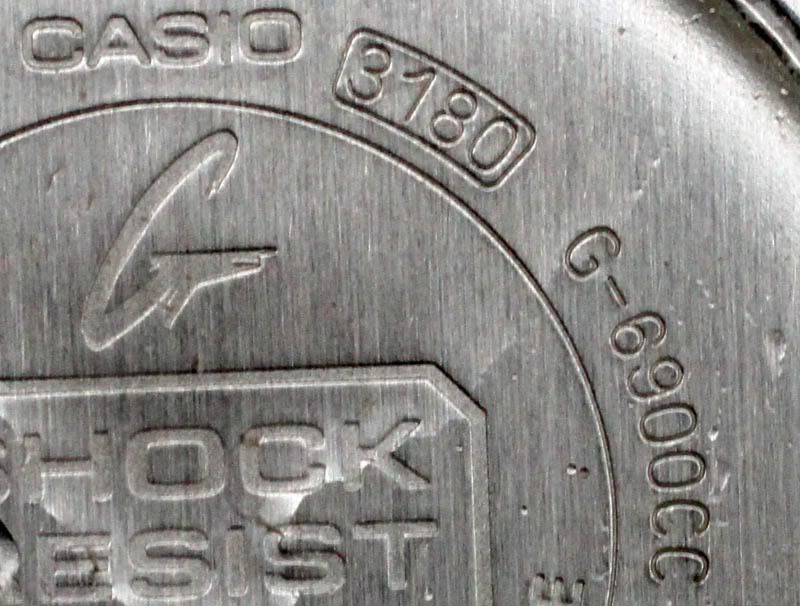
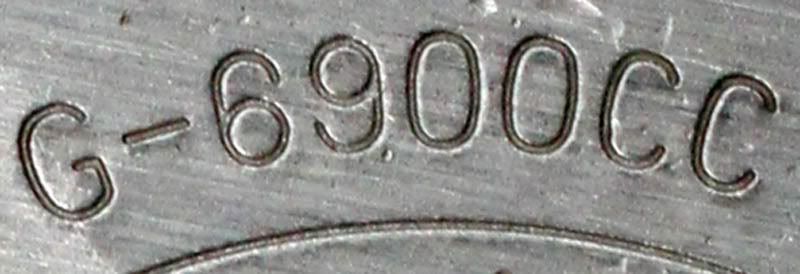
The engine of the G-6900CC is the 3180 module. The 6900 range is considered the round classic form by Casio, so you should expect basic functions. Well, the G-6900 is quite an update of the DW-6900 with the 1289 module. It has the same 24 hour Stopwatch and Countdown Timer function, but the Alarm function is expended up to 5 Alarms, from which one is a Snooze Alarm. New is the Worldtime function. Note that you need to choose the right time zone and DST setting when you set the time of your watch. Most of the time it’s only a matter of minutes of seconds (depends how long it has been that it has been set the last time). The Worldtime function does unfortunately not automatically set the time zones, so you have to adjust time zones that have DST manually. I think it should be great if this worked automatically, but the automatic calendar is programmed until 2099. No one can tell if the countries that use Daylight Saving Time will stop using it.


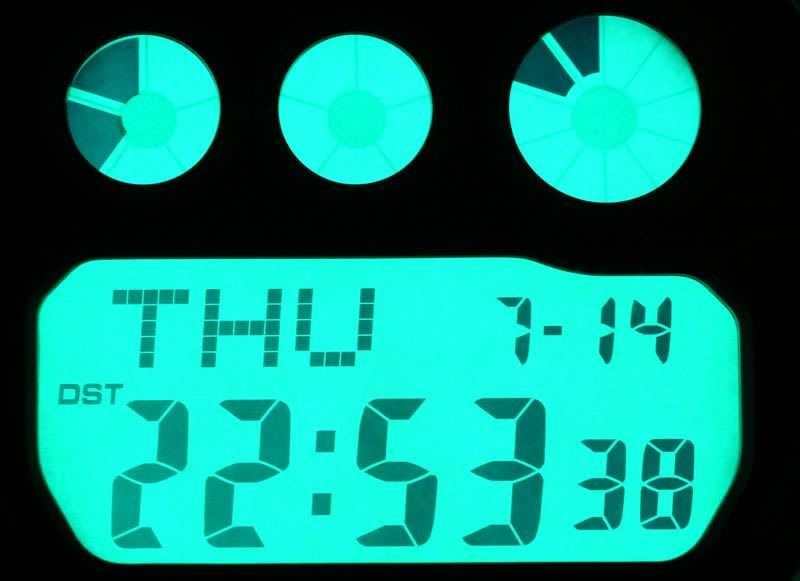
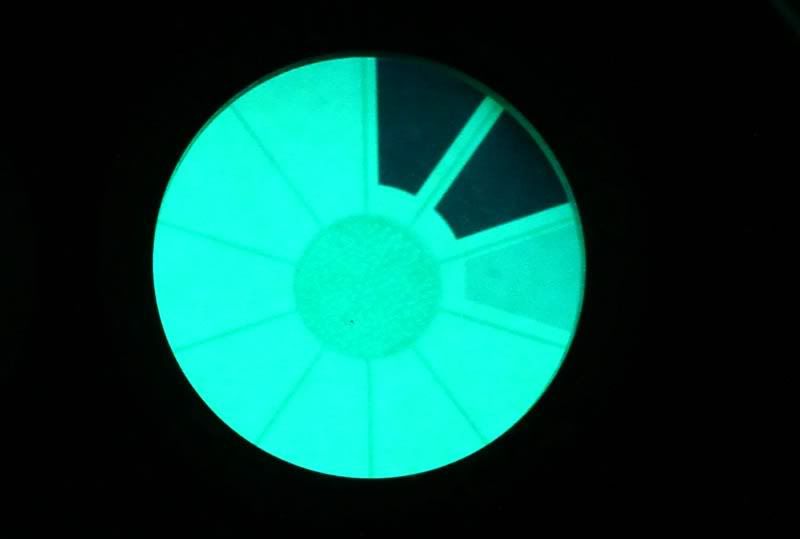
The best upgrade on the G-6900 is the Tough Solar function. With the Power Save function on (default), the watch can keep time in the dark for a very long time (months!). With all these extra functions the small eyes (“graphic area’s) have other functions than animate elapsing time. Only the big eye has still this function, which can be compared with the function of the seconds hand on an analog mechanical watch. The first small eye displays power functions. It shows the charge state of the battery, if the Power Save (PS) function toggled on and if the watch needs to be charged (when the battery is almost empty). The second small eye shows if alarm functions and the Full Auto Illuminator function are turned on or off.

I very much like the color purple. That´s why I have the first “Play Set” model (with purple G-Man) and the purple “Crazy Colors” model of August 2009. I think that from these three models this one like most. The deep black accent provided by the solar panels make the display stand out more than on the “Crazy Colors” and “Play Set”, though the color of the displays are the same. If I had more money, I surely would have bought the Waveceptor version.


Prices of G-Shocks in Japan are quite expensive and if you import a G-Shocks from Japan to The Netherlands, it will almost surely being accompanied with a high tax bill and high fees from the postal service. That’s why I choose for this much cheaper overseas version. I paid around €80.- for this model (including shipping) in April this year. It’s still available if you look around good. The price has risen a little bit. The cheapest I could find at the moment is around €90.-. The Japanese GW-6900CC-6JF can still be found on eBay for around €160.- (also including shipping). If you like this model and have the some extra to spend, I would go for the last version. This (much) cheaper G-6900CC-6DR model is, of course, a good alternative.