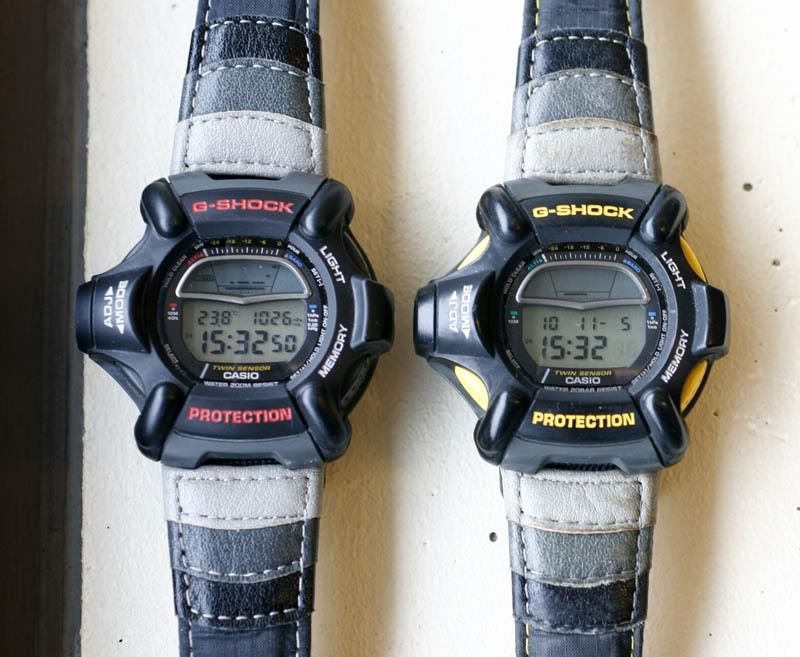
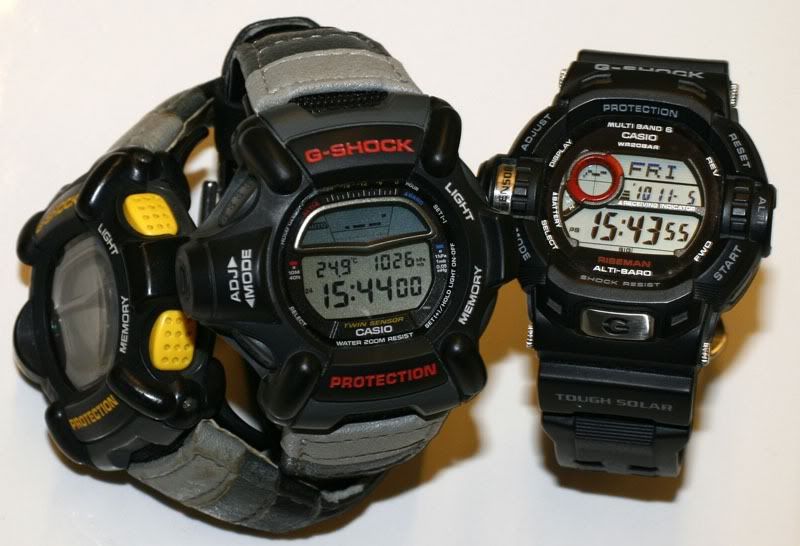
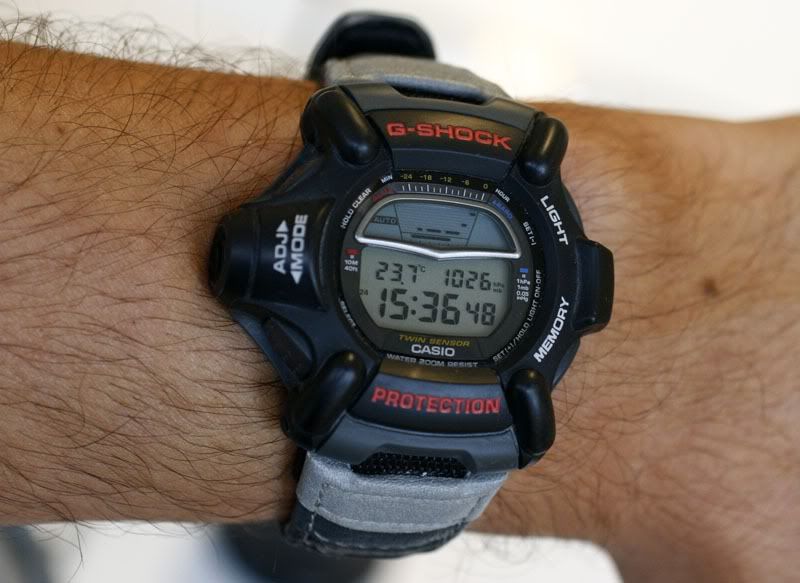
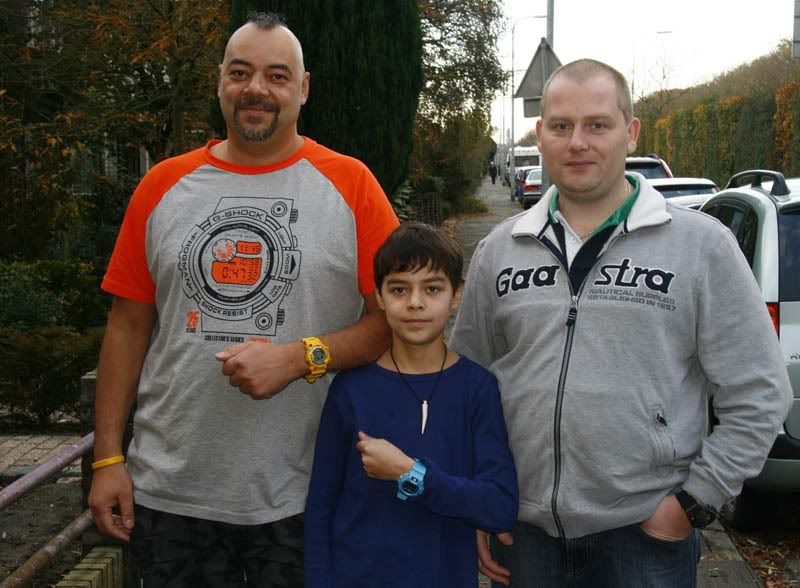
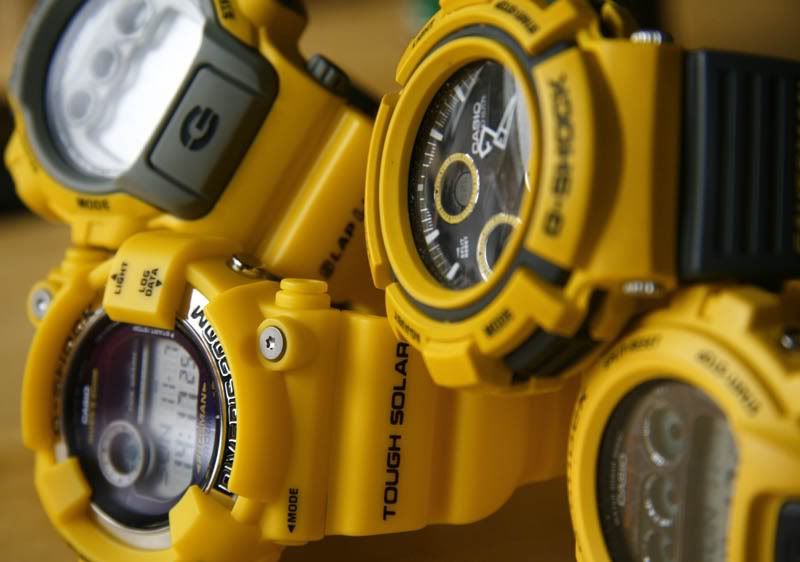
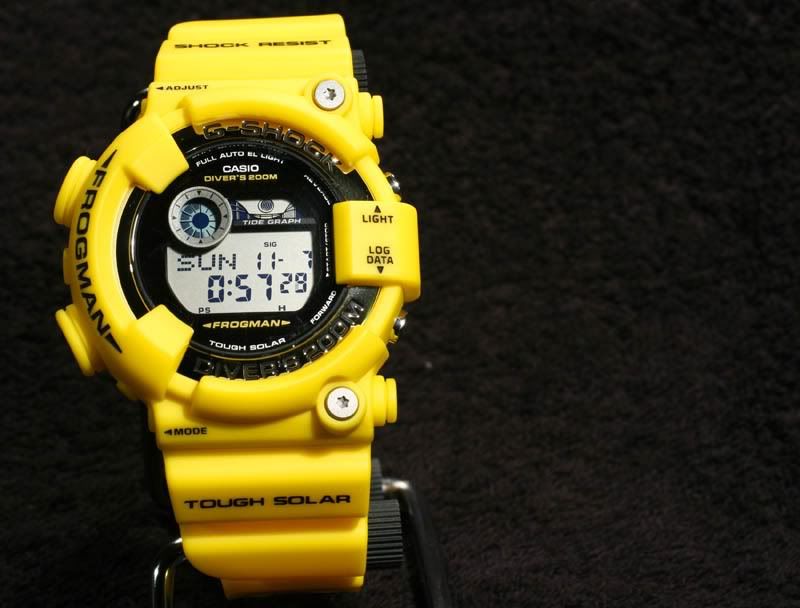
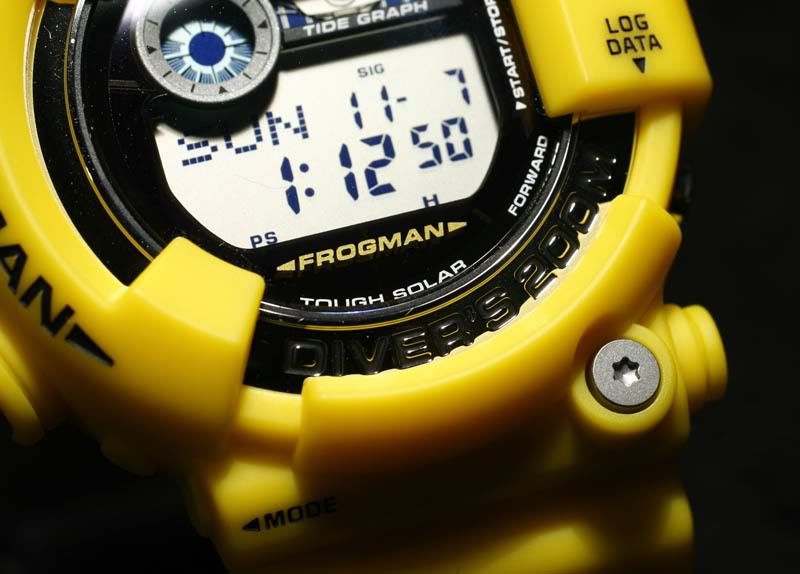
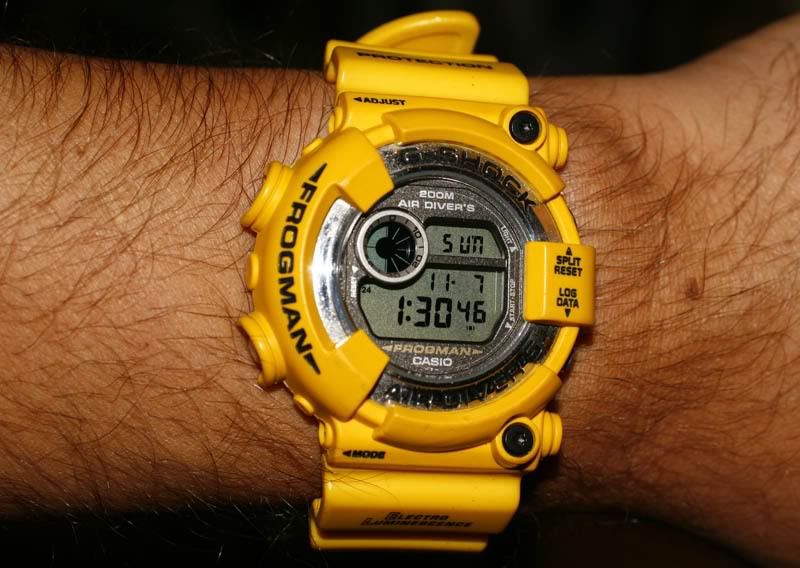
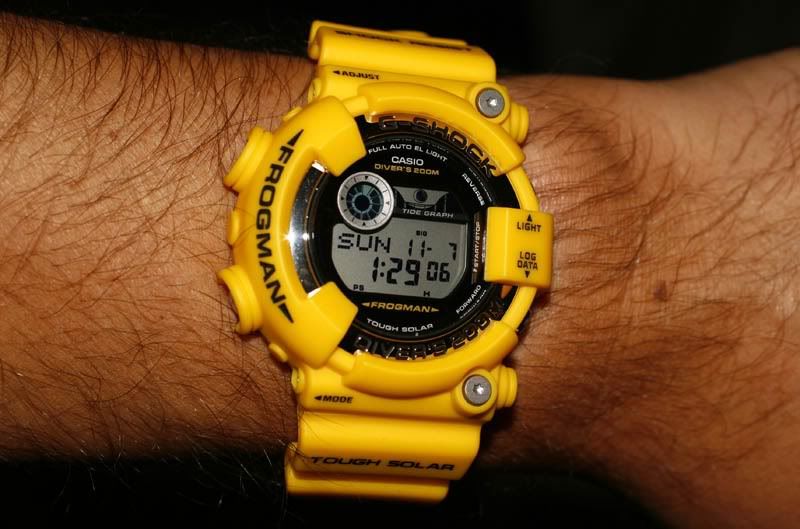
I got a visit of another G-Shock collector Saturday afternoon. Joost73 was the first to see my new GF-8250-9JF in person. On the photo I am wearing my good old DW-8250Y-9T Men In Yellow Frogman.
This year brough several special G-Shock Highlights. One of the most interesting are the updated re-issues of the Jason and of the DW-8250Y-9T Men In Yellow Frogman.
This morning (I'm writing this at Saturday, November 6th) the postman delivered my GF-8250-9JF. The release was scheduled at the end of October. Mine arrived on November 2nd at the shop in Oita and 4 days later it’s here. Again the Japanese Postal service proves to be very fast and sufficient.
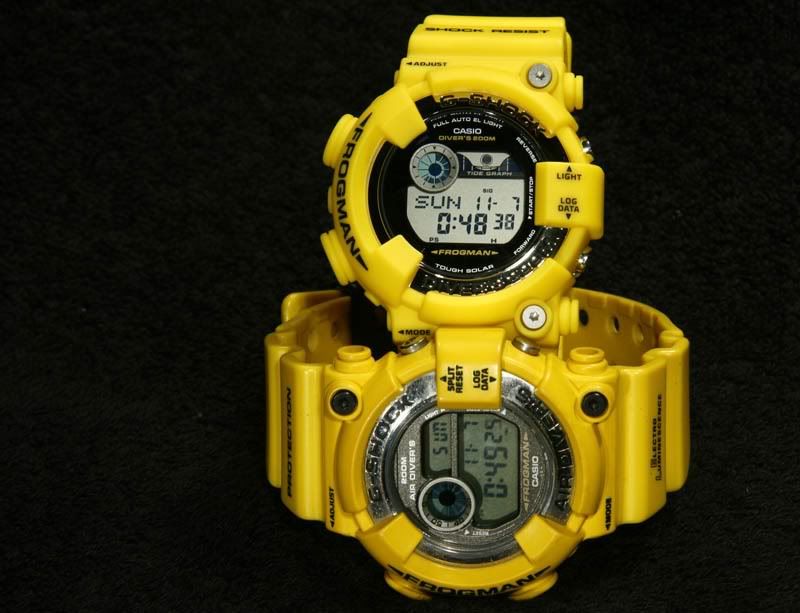
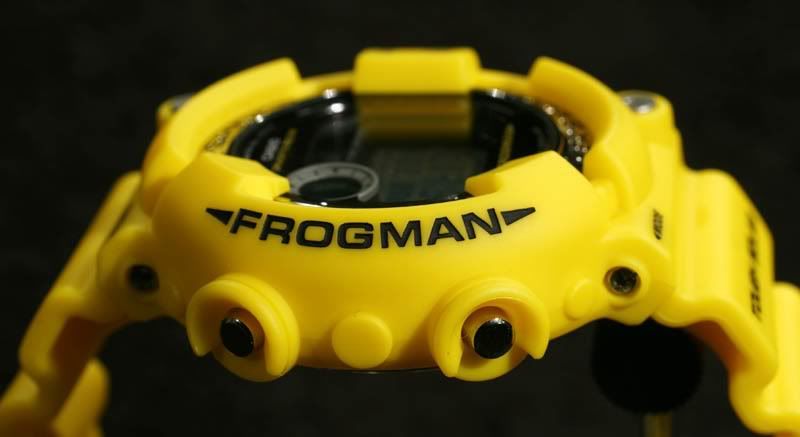
This GF-8250-9JF is the re-issue of the Men In Yellow Frogman, which was released in March 1998. The M.I.Y. Frogman was of the DW-8250 series. I do not know precisely why this sub-series exist, but the difference between the DW-8200 and DW-8250 is that the 8200 have a titanium case, while the 8250 has a stainless steel body. This might explain why my Men In Yellow Frogman is quite heavy. The new Frogman is also quite heavy. With 112 gram it is roughly double in weight of a DW-6900.
The GF-8250-9JF is not the first re-issue of the M.I.Y. Frogman. Already in 1999 Casio released a series of re-issue Frogmans in the Frogman 1999 series. You can easily recognize these re-issues as the number 99 is placed in the backlight under the swimming frog.
The GF-8200 also features stainless steel body. I saw some complaints when the first photo’s showed up on a Japanese shopping website, but Casio choose to update the module, but to stay with the case close to the original. Personally I do not think it is a big problem. If a high grade stainless steel is used, salt seawater must not be a problem. I have been in the sea with my M.I.Y. Frog. There is no sign of rust on the case.
Taken from my Men In Yellow Article in 2008.
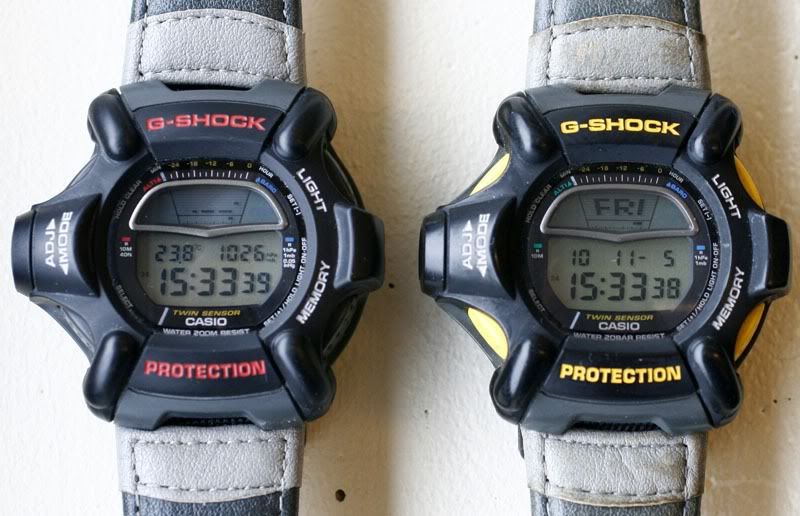
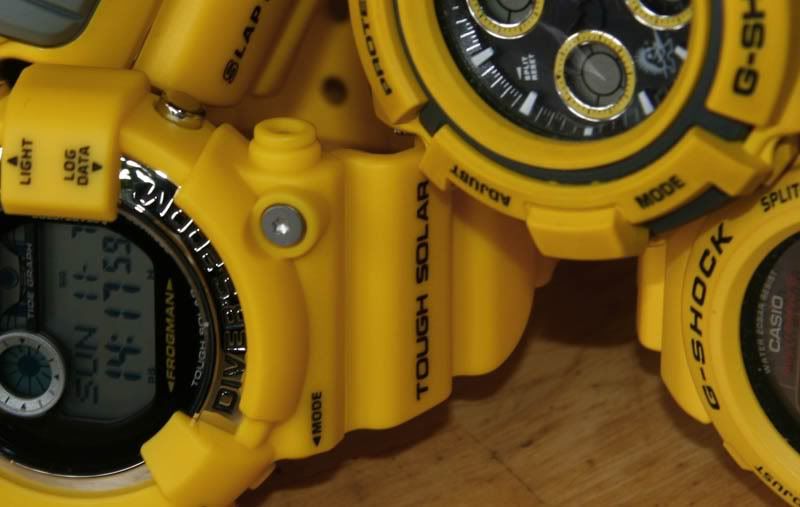
I must say I was very curious about how the color of this model would look like in real life. I can assure you the color looks very bright and is very close to the original Men In Yellow color. When I compare the new Froman with my quick reference material, my old M.I.Y. Frogman and MIY Gaussman, they look a little darker. These watches have been on my wrist quite a lot (and I am the 3rd owner of this Frog already).
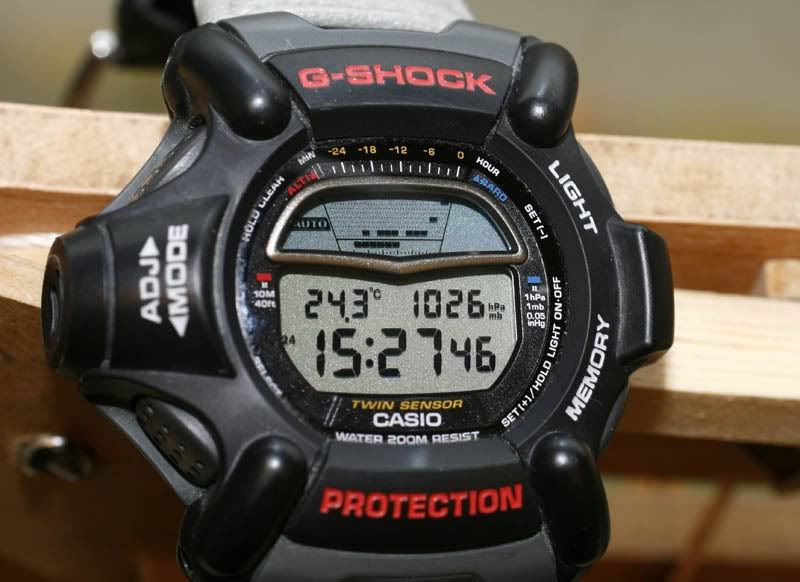
Notice that my Men In Yellow Frogman is a little darker. This is because this watch is quite worn. It once had the same bright yellow color as the GF-8250-9JF. Still my M.I.Y. Frog looks great.
However, if I compare it to my brand new M.I.Y. Mudman, the shade of yellow looks perfectly the same. It even seems that the yellow color of the new Frogman is a fraction more intense. When compared with my yellow G-6900, the G-6900 looks much paler. The rumor this Frogman would be lemonish yellow can be brought to the garbage can. This Frog looks pretty fresh!
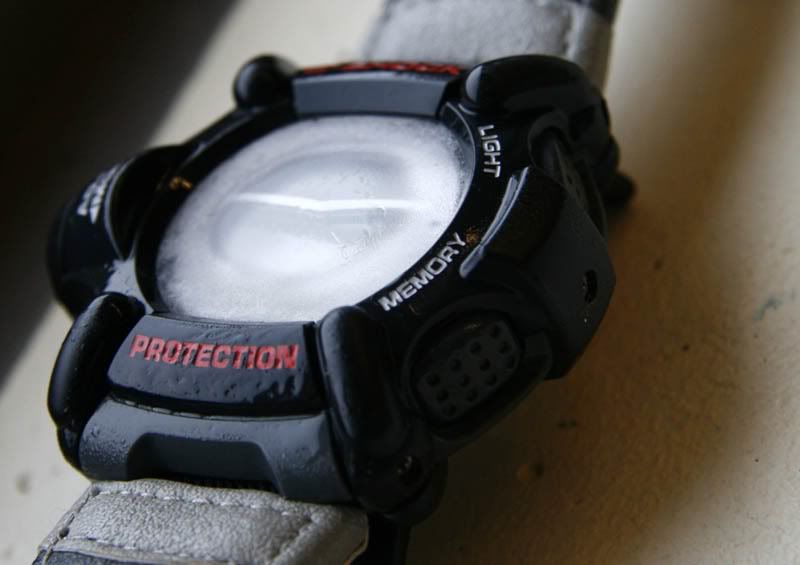
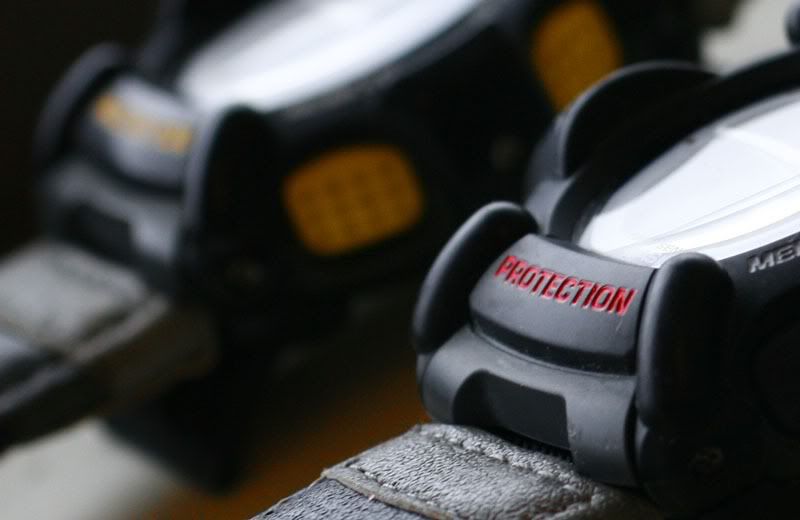
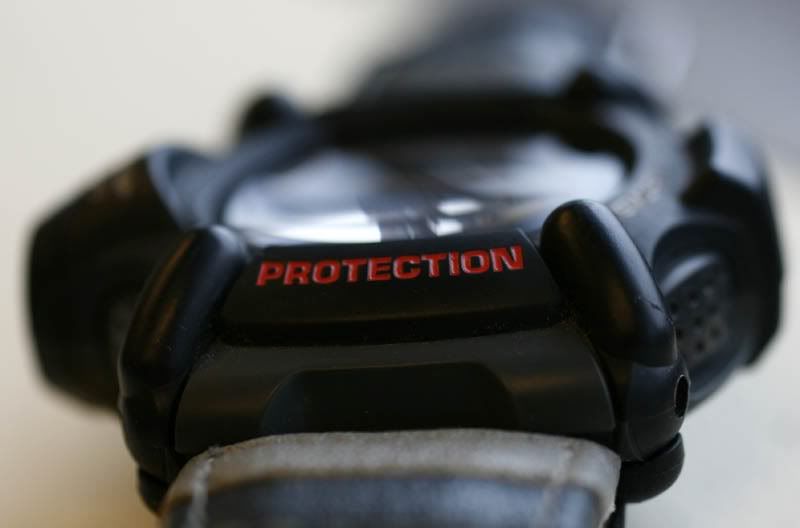
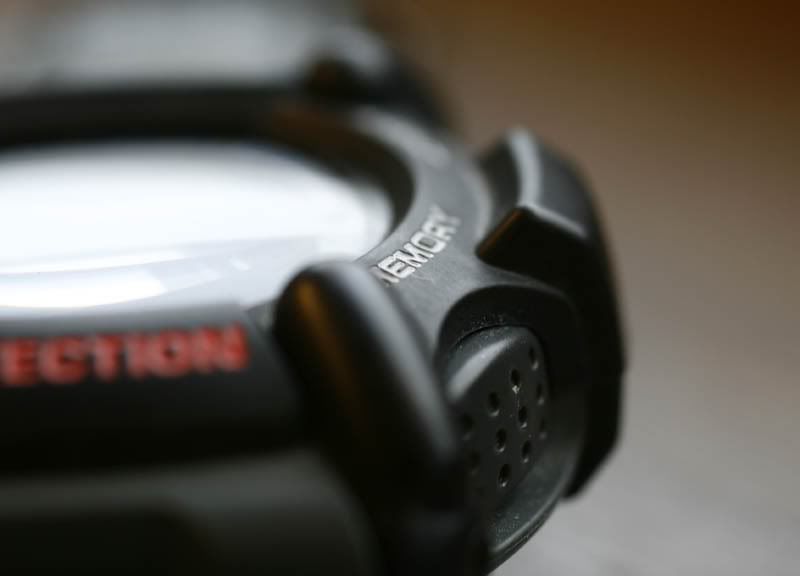
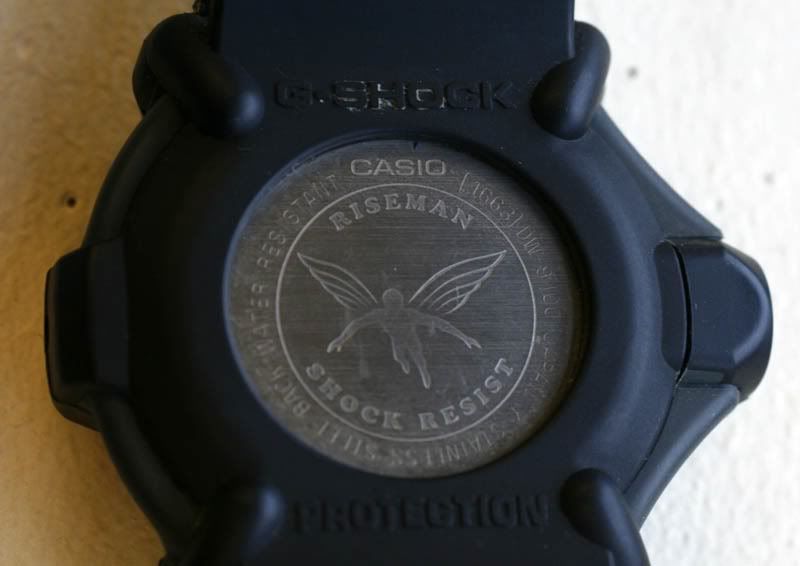
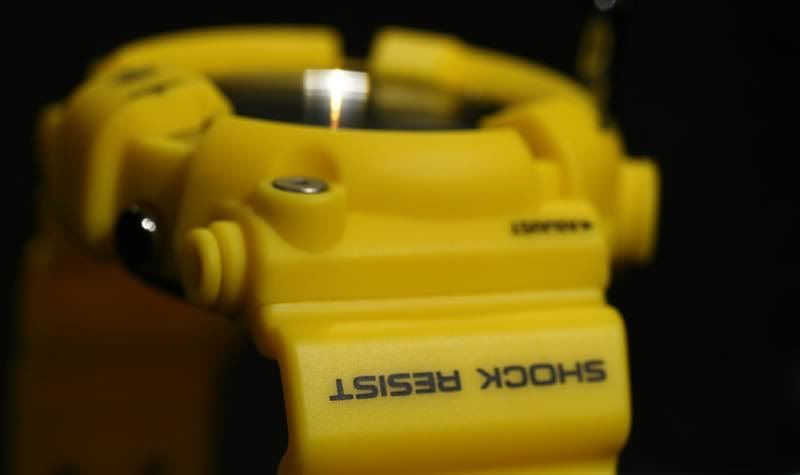
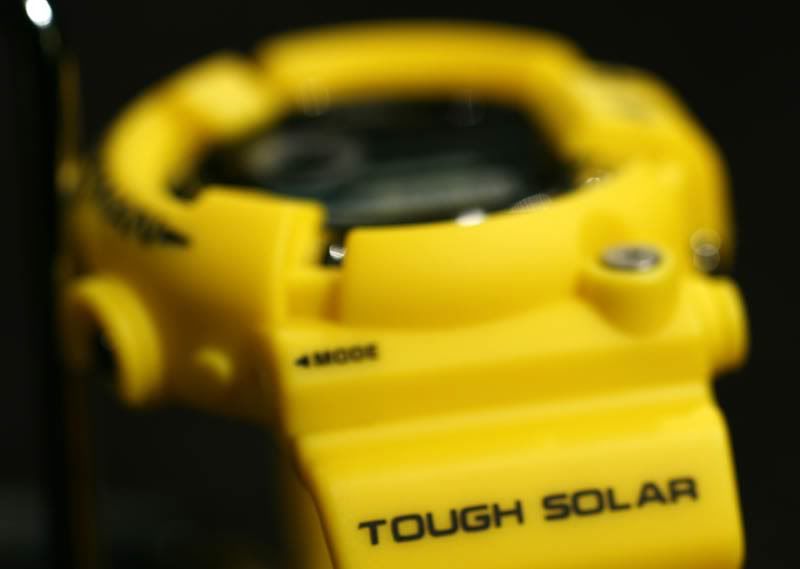
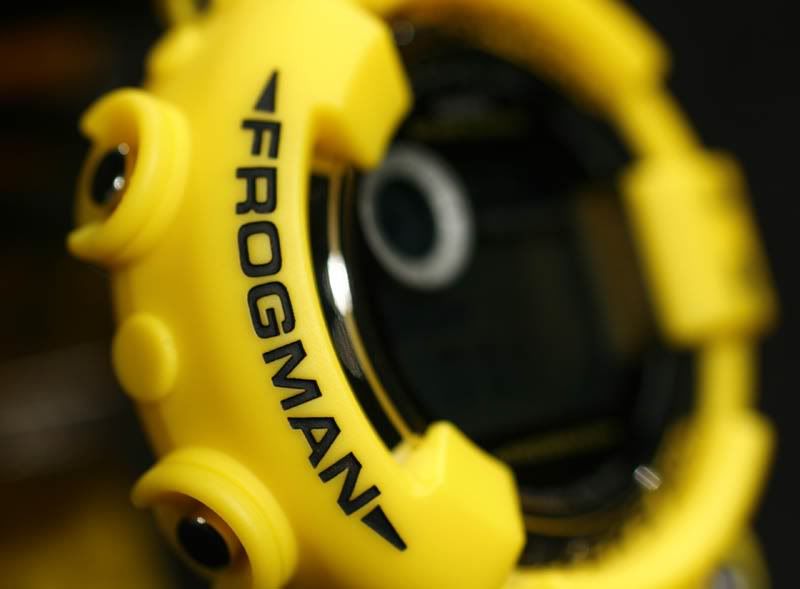
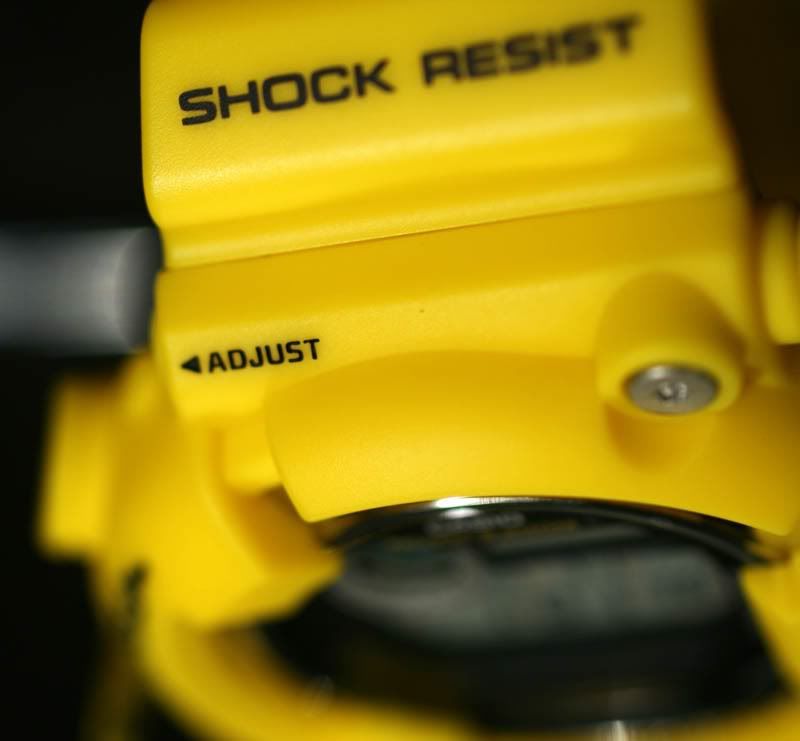
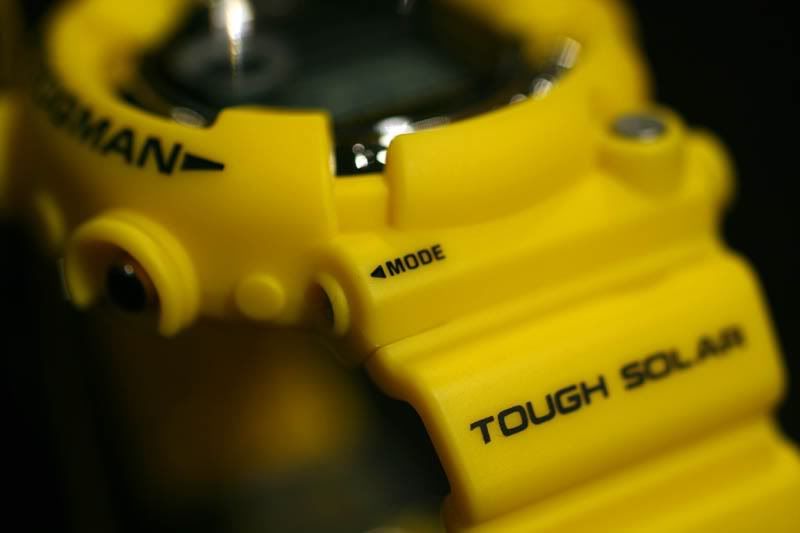
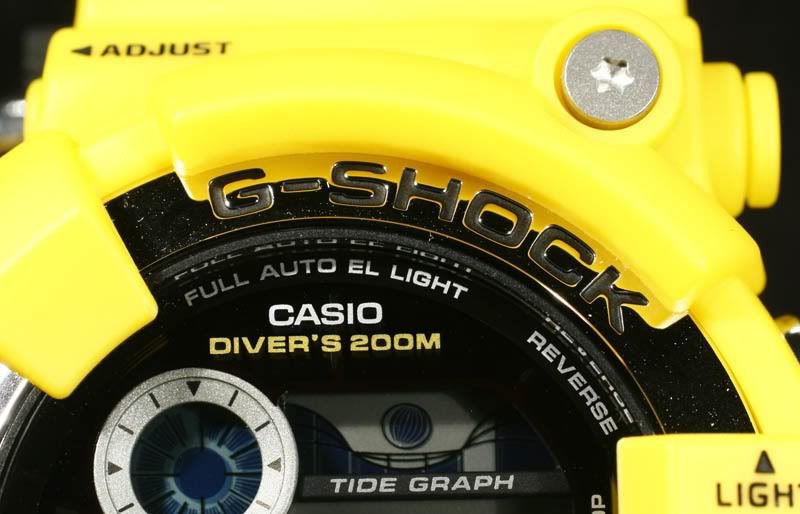
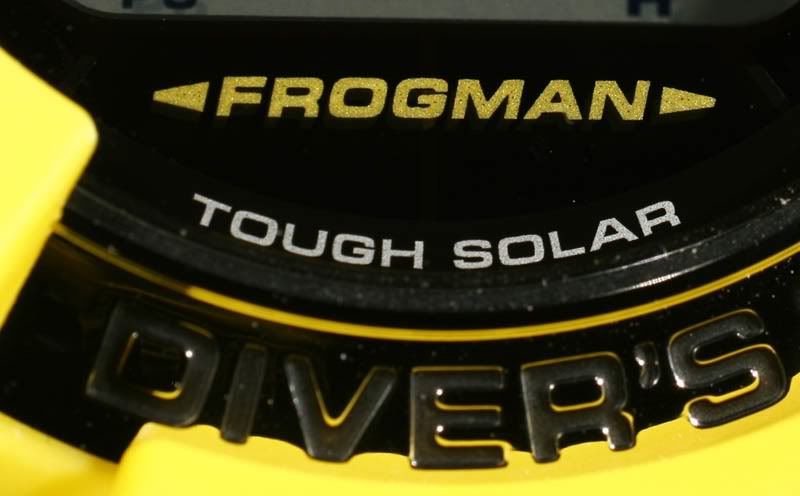
With an updated re-issue, you might expect noticeable differences. Well, I have found several cosmetic already. Of course is the text on the straps different. Shock Resist versus Protection and Tough Solar versus Electro Luminescence.
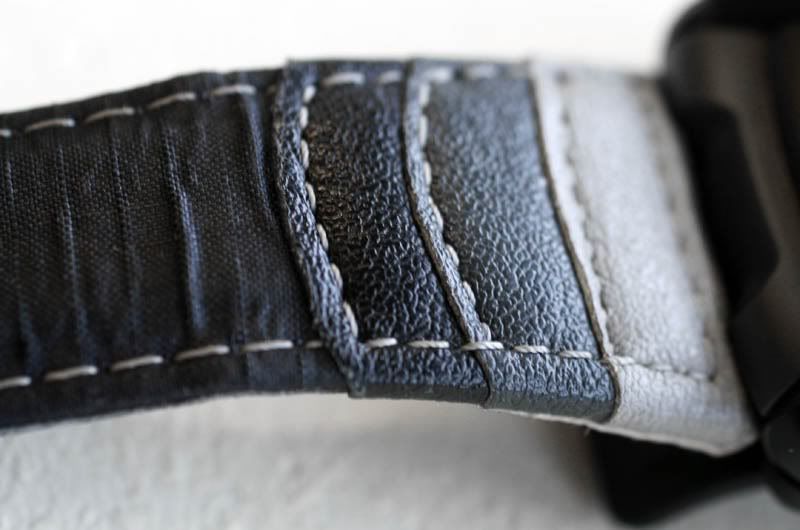
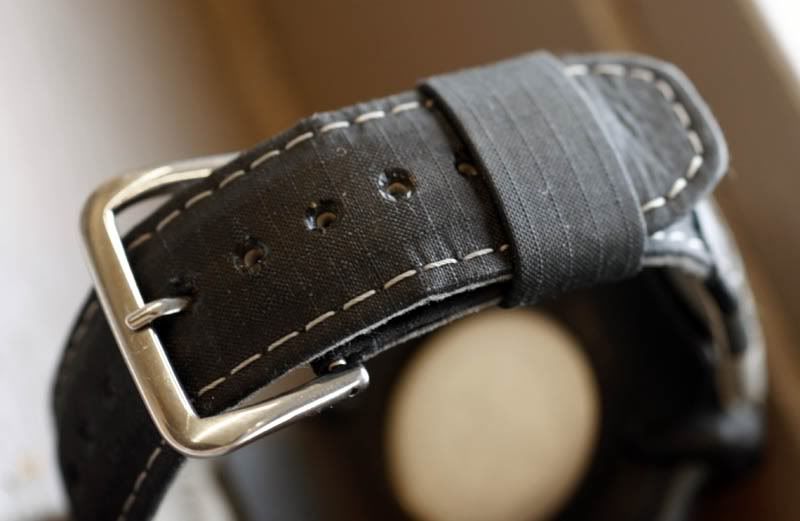
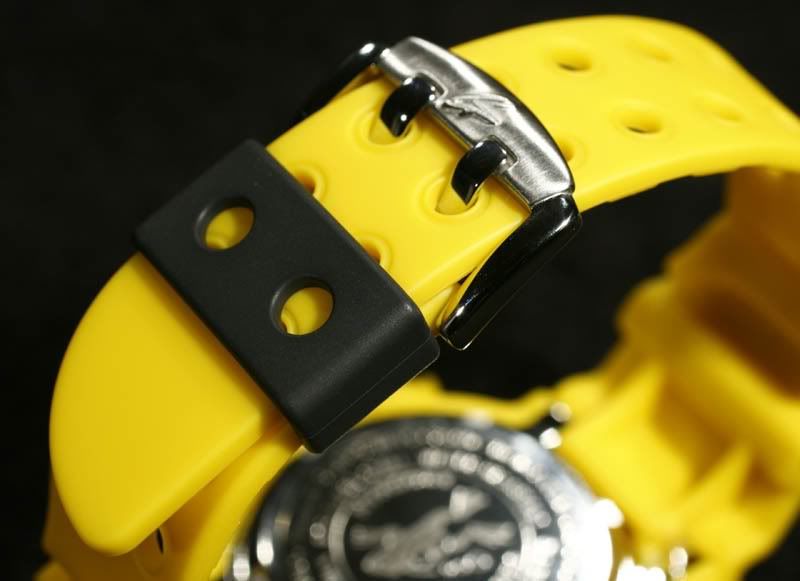
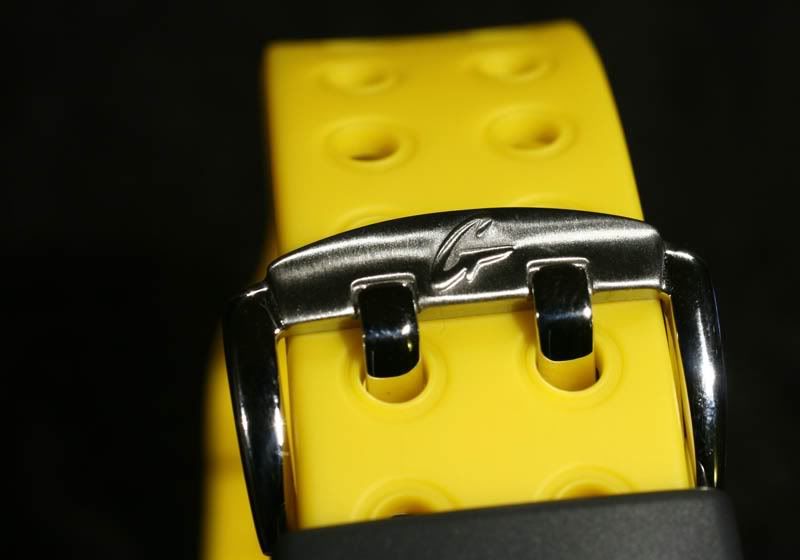
From my head I remember the original strap keeper of my old M.I.Y. frog was dark gray, but I am not really sure. It broke of the strap some years ago. I managed to find an strap holder from another strap, probably from a DW-8100 or DW-8300 series model, so it’s black now. The keeper on the new Frogman is very dark gray. It’s darker than that of the Gaussman and Mudman.
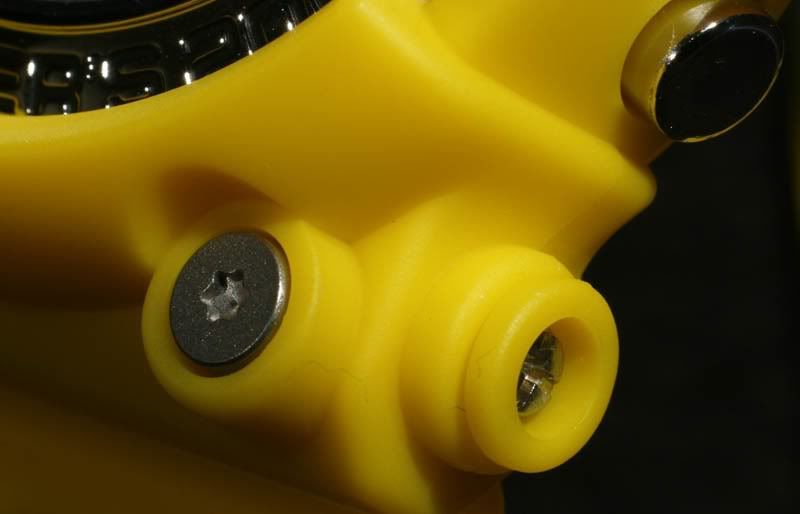
The
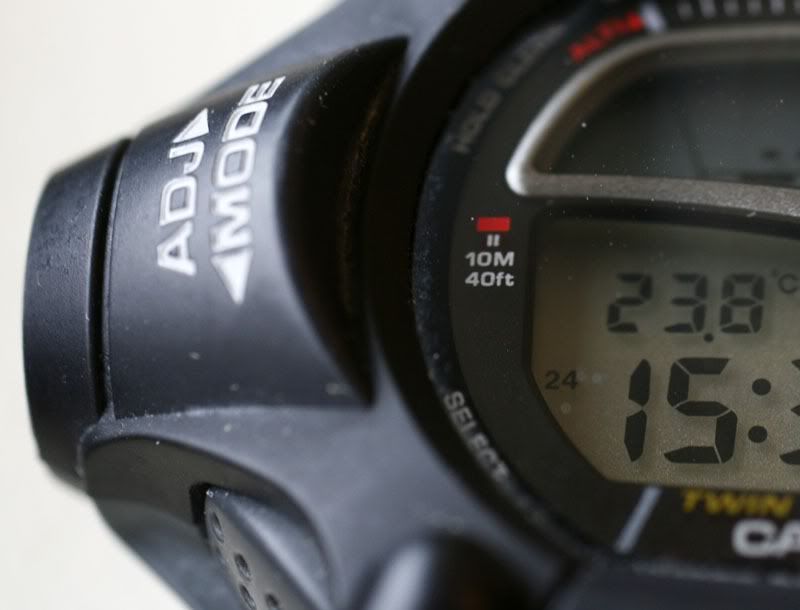
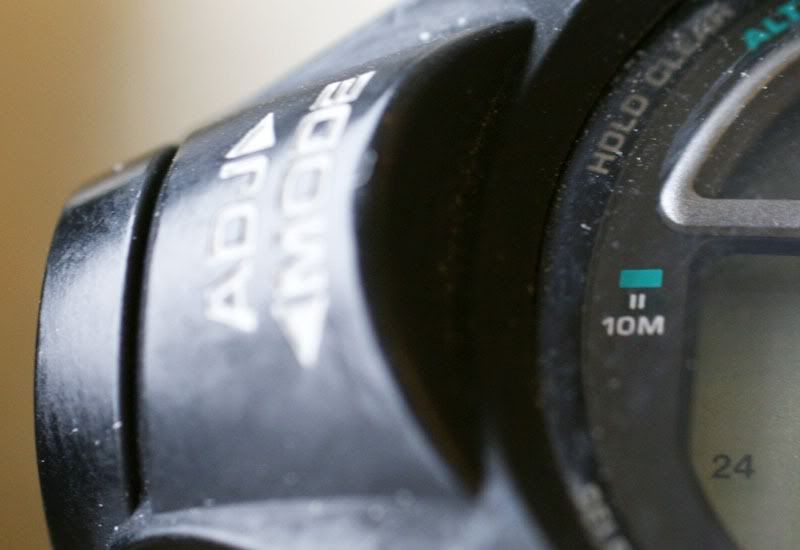
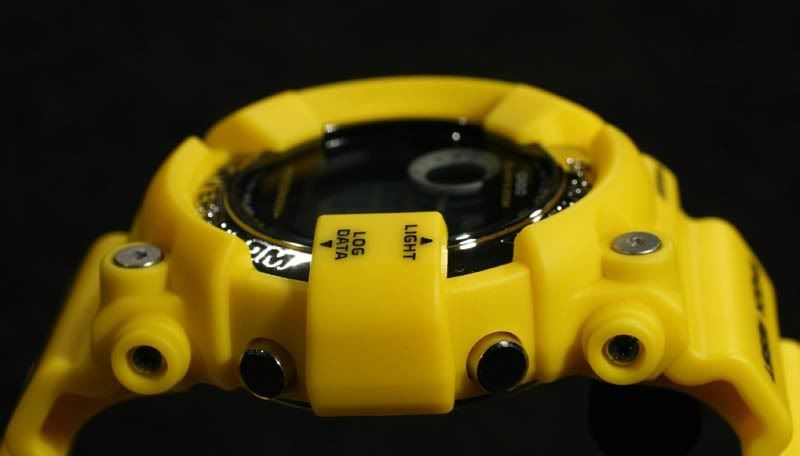
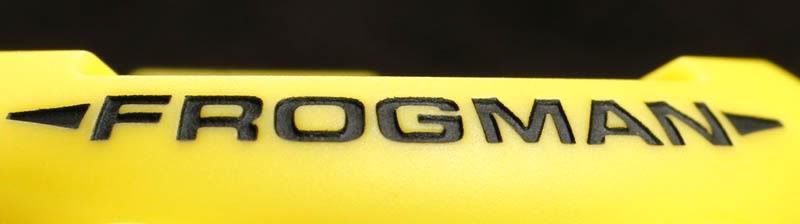
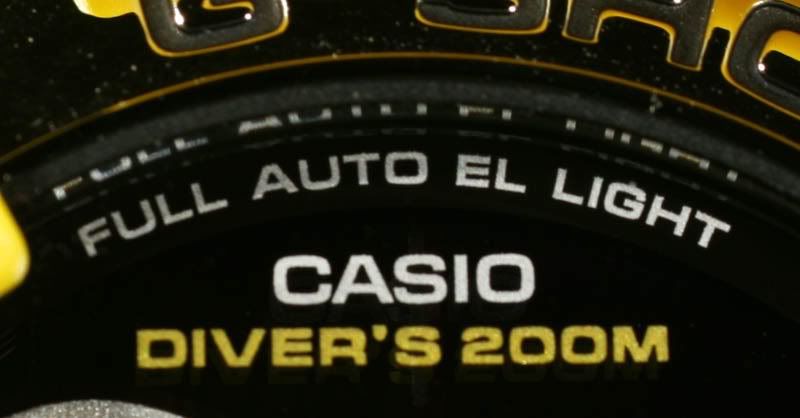
font on the bezel seems a little thinner than the original model. It is hardly noticeable. On the case the text below the display is different. Did you read Air D iver’s on the old DW-8250 models, this Frogman reads Diver’s 200M (or, for Petew "ZOOM", since he mentioned it, I can't happen to erase it from my mind) . The old M.I.Y. Frogman had black screws upon the bezel. These screws on the new Frog are metallic. It is said Casio used the same dimensions on the case of this Frogman. That should in theory mean that the bezel and straps are interchangeable. I have no guts to try. I am pretty careful with my old Froggy. I don’t have a spare bezel and straps for it (if anyone has a spare for a small price for me, let me know if I can afford it). When studying both models very carefully, it they look so much the same that I think it's true.

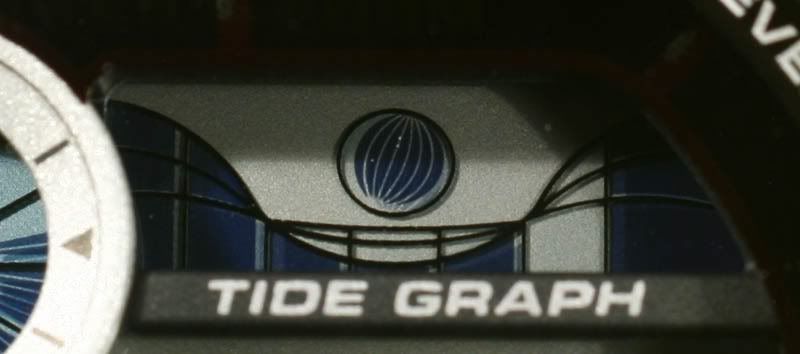
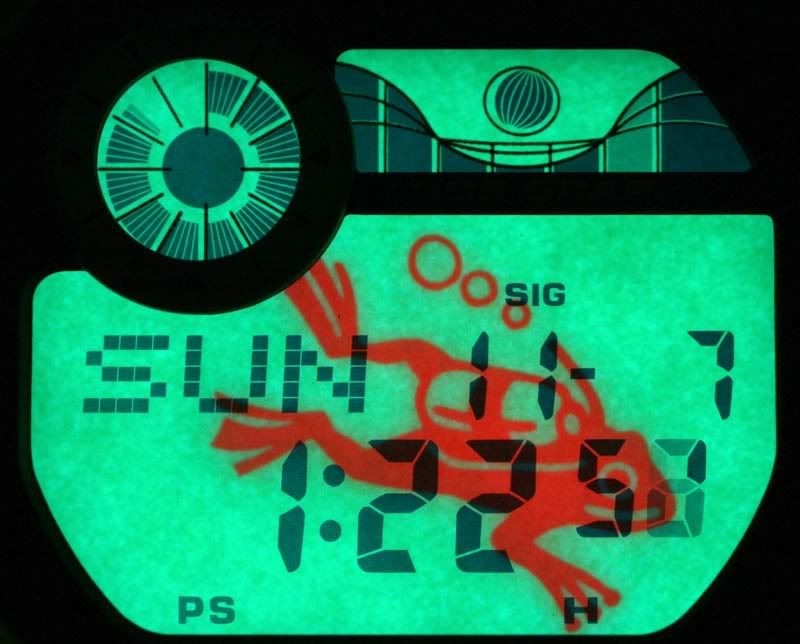
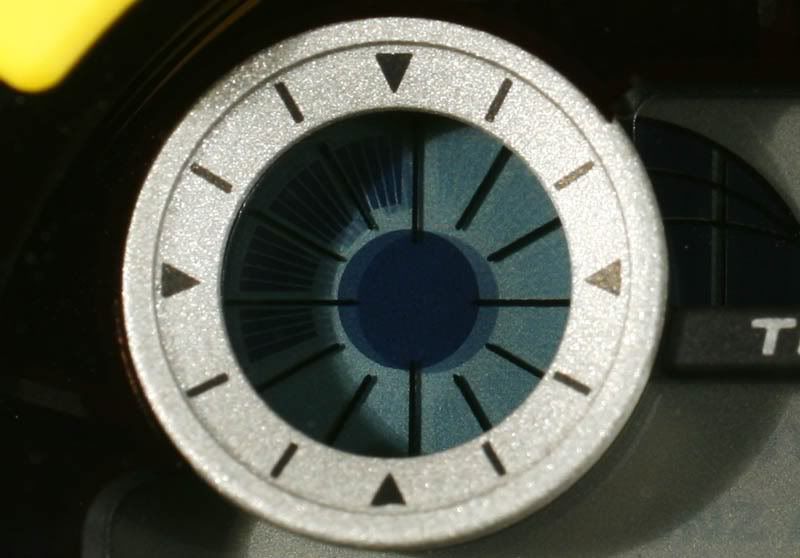
The biggest difference is of course the display and the module of this new Frog. The display is still divided in the same three subdials as the old DW-8200 model. The eye doesn’t show the minutes anymore, but now act as a seconds hand. I think it’s actually more practical. The upper dial now functions as a Tidegraph and Moonphase display.
The lower display now show the day and date (the day is only shown in the upper display on the DW-8259Y-9T) above the time. With a slightly smaller font it was possible to put the day under the eye. Although the digits are smaller, the display is still good and clearly readable.
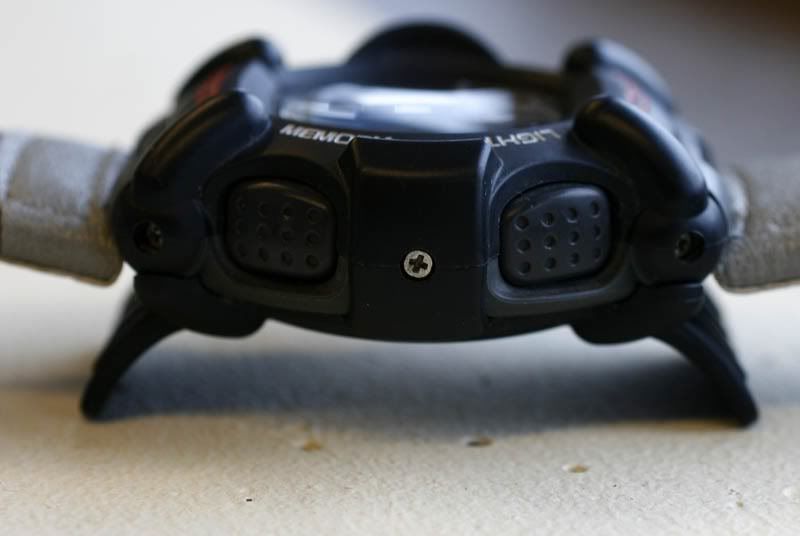
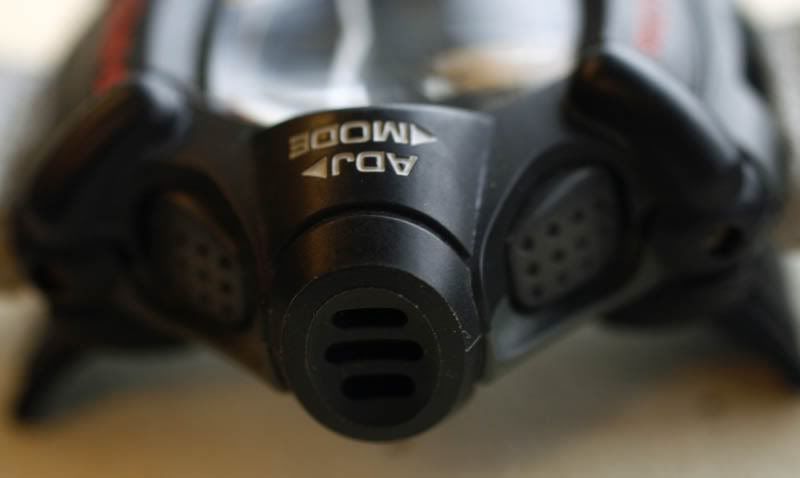
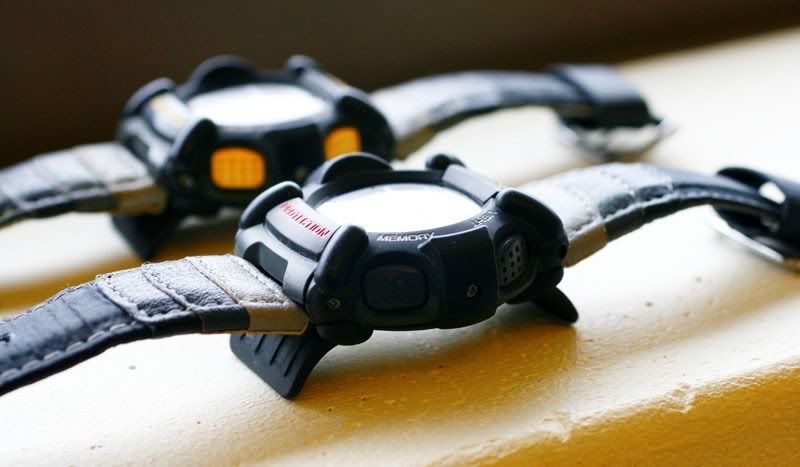
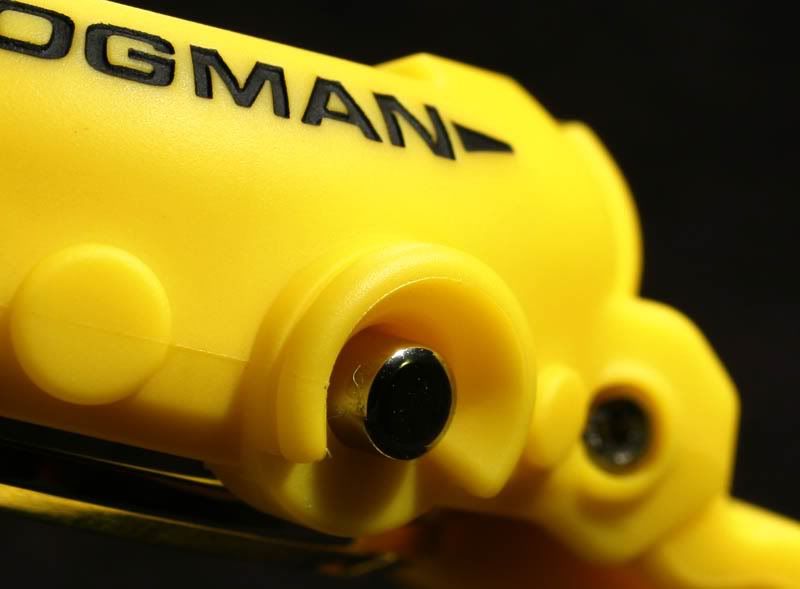
I never looked very good at the construction of the DW-8250Y so, while unpacking, I noticed some things on the new Frogman, that I should had noticed on the old Frogman too. My first thought, when I removed the plastic bag that covered the watch in the box were that the buttons on the left side seemed a little thin for the massive case and its button guards. Then I looked at my original Frog. My god, this one had the same small buttons!
When viewing the Tidegraph carefully, I noticed the crystal of the new Frogman is situated above the case. I thought, “I’m not used to that with a G-Shock”. So I took my M.I.Y. Frogman and what do I see…. The glass of the DW-8250Y is also placed above the case. In both cases the bezel protects the crystal. It is amazing that I noticed details on my old M.I.Y. Frogman that I would never looked at if I had not looked critical to this new Frogman.
So what functions can you find on the new Frogman. Unfortunately the 3266 module is very new and there is still no English manual available. Also the Tidegraph function is programmed completely different than the classic Tidegraph G-Shocks. Actually I think the new way is very simple and much cleverer. I’ll come back to this subject in a moment.
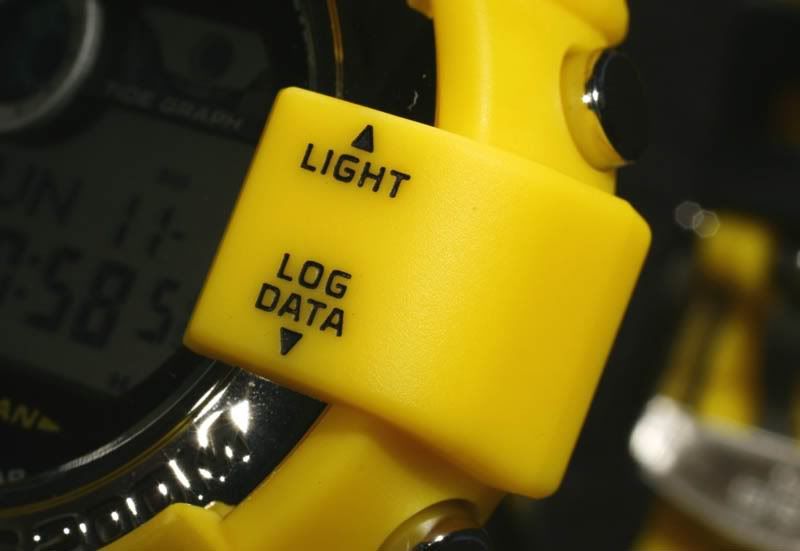
The operation of the new Frogman is comparable with the older Frogman models. With the lower left button (MODE) you can scroll through the functions. The upper left button can be used to adjust settings in different modes. A short push on this button changes the date into the World Time and Region Code of the World Time in Timekeeping Mode. Not unimportant, the upper right button is the light button and the lower right button (LOG DATA) functions as a scroll button.


If you push the MODE button and hold it for 2 seconds, you come into the Dive Timer Mode. It is a kind of Stopwatch, but in the upper row of the lower display the start time and the current time appear in the display if the Dive Timer is started. Where the old Frogman models could only store one Dive Log, it seems that the new Frogman can hold up to 10 Dive Logs (well, it’s not easy to read the Japanese manual if you can’t read Japanese). You can start the Dive Timer with the LOG DATA button. You can also stop the timer by pushing the LOG DATA button for about two seconds (a long beep is heard).
The first MODE you enter from Timekeeping Mode is the LOG DATA function. It shows the last logged dive. The upper line shows the start time and the elapsed time after the dive. The lower line shows the total dive time.


The next mode is the Tidegraph mode. Here you can scroll though the time and see what the Tide is at that time. Only thing I didn’t manage to do is scrolling through the date. There is probably a way to check tides at different dates, but I was not able to find a way to do it. You can also program the Tidegraph here. It’s actually pretty simple. You enter the time of the High Tide and the Frogman now knows what the current tide is. Actually it’s a very simple way to program your Tidegraph. You don’t have to know your location parameters, the time of the highest position of the moon and the Lunitidal Interval. If you live near sea, it’s always pretty simple to find the tides table. Besides programming the tides, you can also set the hemisphere where you are on. Strangely mine was set to S, although the fabric settings are for Tokyo, which is located on the Northern Hemisphere. The Hemisphere setting is used to program the moon data I think. You can view the Moon Age by shortly press the ADJUST button.

Next mode is the World Time Mode. The Frogman has 49 city codes, with the UTC offset pre-programmed. You need to adjust the DST for the cities manually. The watch is programmed until December 31 2099, so a lot can change in DST settings for different countries. Therefore it is not possible to make the DST settings change automatically every season.
Next mode is the Alarm Mode. Like most new models, nothing new here. 5 alarms, 1 is a snooze, and a hourly chime.
The last two functions on this Frogman are a 24 hour Stopwatch and a 24 hour Countdown Timer. The Countdown Timer shows the start value during countdown.With all these functions on board, this Frogman is pretty well equipped, even without the Atomic timekeeping.
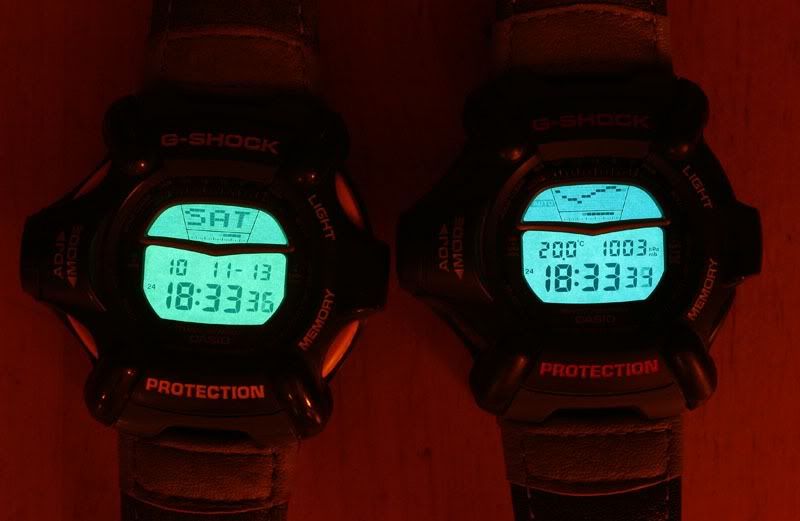
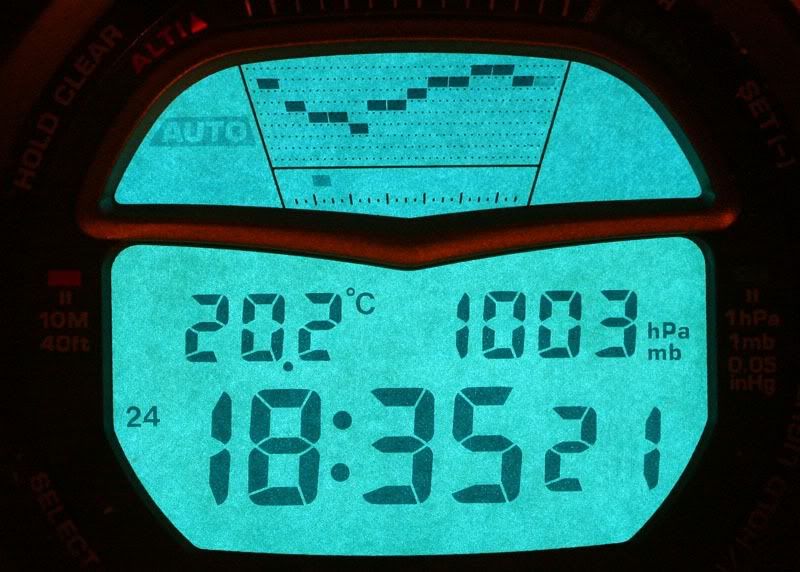
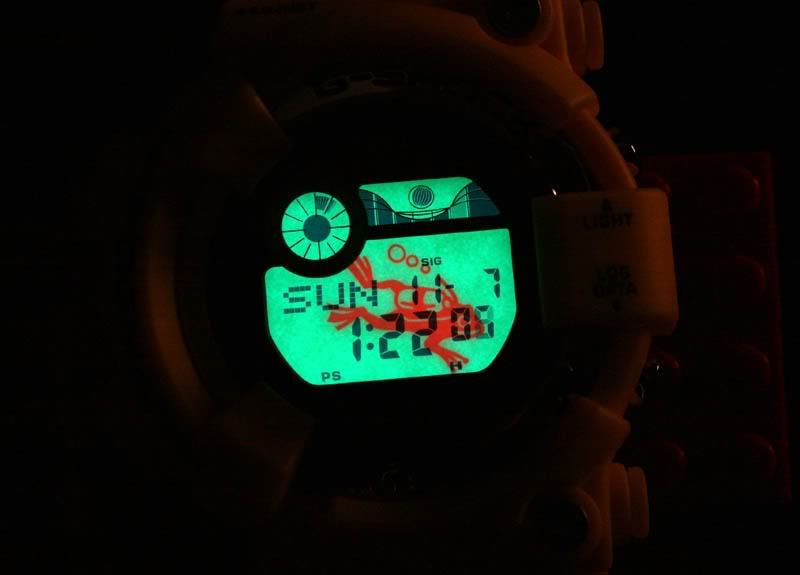
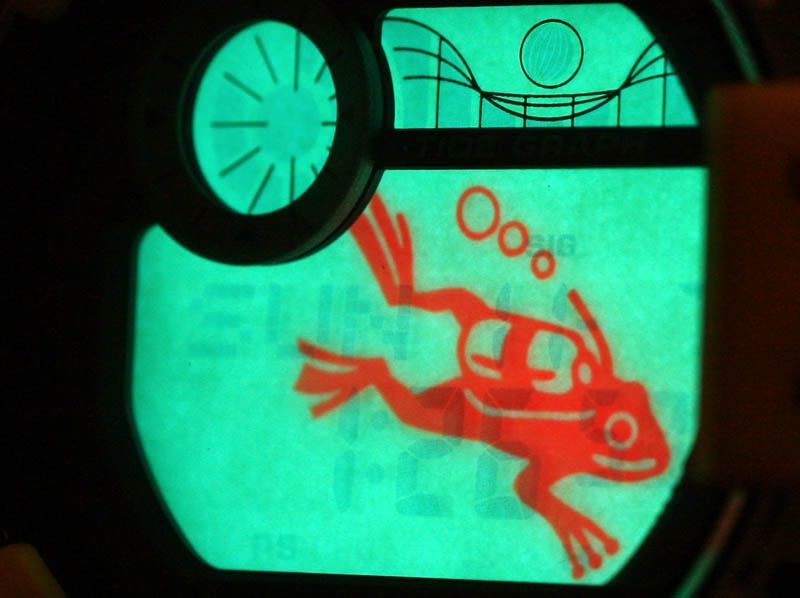
I think this Frogman, although not Atomic, is packed with functions. It is also possible to mute the buttons and also you can choose a short or a long illumination of the display. A cool feature is that the display shows a diving Frog when the light is activated.
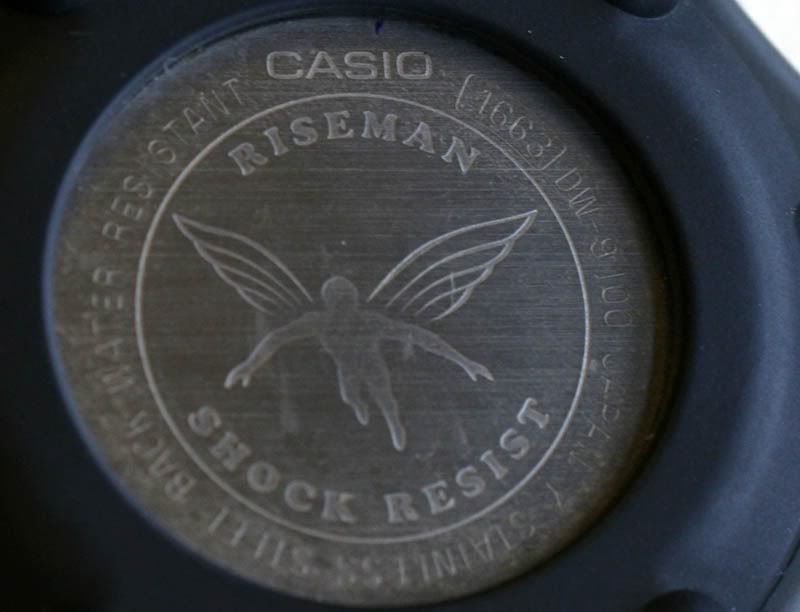
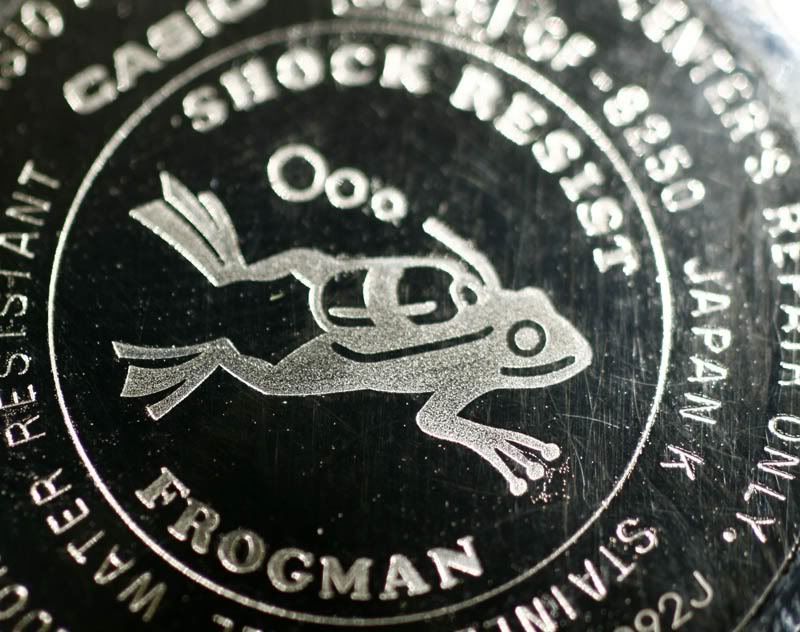
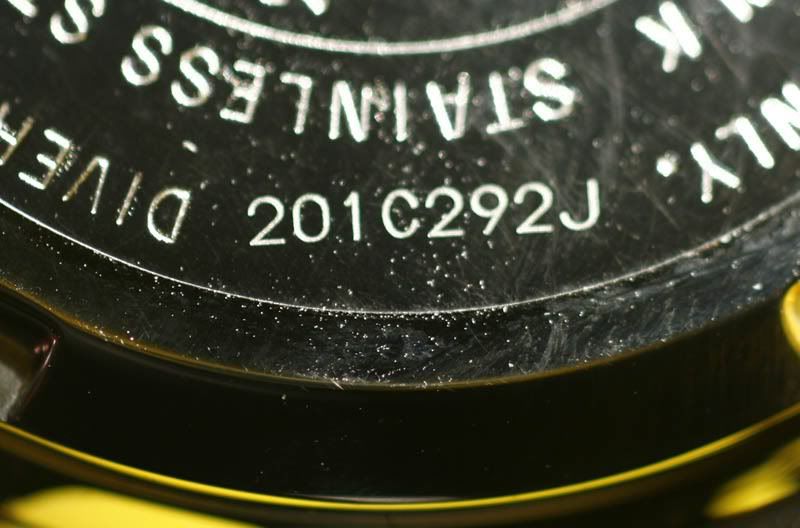
On the first photo’s I saw of this model a few days ago, I noticed the absence of a serial number. I thought it was a pity that the serial number wouldn’t be present on this Frogman, but after studying the back I noticed mine has a serieal number. The numbering is different than on older G-Shock models on this model, as it should start with 0, but it starts with a 2. Also it’s an alphanumeric serial number, in my case: 201C292J. I noticed on photo's of the GWF-1000 model that also that model has this type of serial number. It might be a new way to mark a screwback G-Shock.
Old vs New
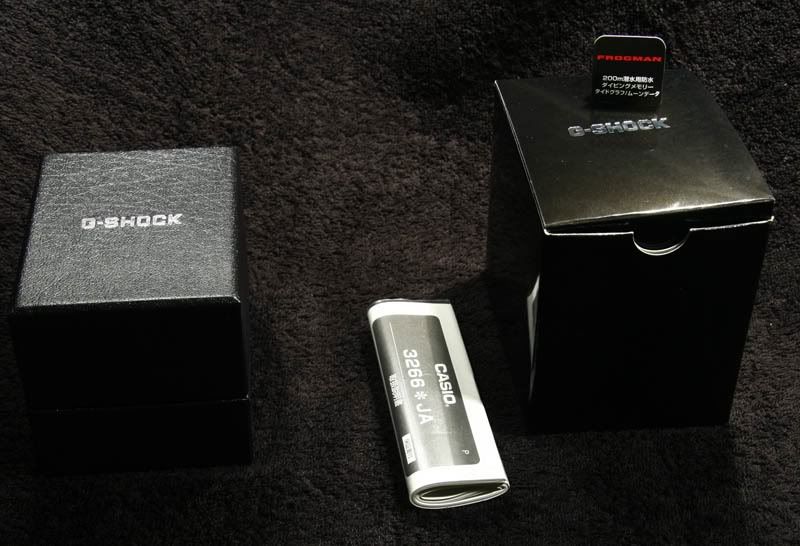
The GF-8250-9JF does not come in a special box. It is sold in the basic Japanese cardboard box with a second box in it made of thicker cardboard and a kind of leather print on it. I think it’s a little e a pity, because the first Men In Color models came in a special tear plate motif box.

While the old Men In Yellow Frogman had a suggested retail price of ¥24000, this new GF-8250-9JF model has a price tag of ¥38000 yen. As I had a special deal with Katsu-san, I can’t reveal the price I paid for this model. I also have no clue about the availability. It is really just on the market for 5 days in Japan and this is probably one of the first outside Japan. GMT+9 predicted this was going to be a very rare Frogman. It is also a very beautiful Frogman. I watched this model very critically when I unpacked it and during the writing of this review. All things I thought that could be considered as a negative point could been thrown overboard as it was the same on my very beloved M.I.Y. Frogman. I can’t complain about the small buttons on the left side and the crystal that lies on the case instead of in the case. If I would have complained about that, I should have done it about my old M.I.Y. frog, but instead I had never noticed it on the old model. It shows that writing reviews you can maybe look too close to a watch. I think Casio has done a very good job by upgrading the good old M.I.Y. Frog. Casio brought us this year the GW-3000 Sky Cockpit, the GXW-56, the new G-001 Jason and this model as high lights. It’s a pretty hard decision to make which new model is the greatest. I think I am going to vote this release as the G-Shock of the year with a close finish with the GXW-56.

With the GF-8250 I hope Casio turned into an interesting new road. This new Frogman is quite different from the GWF-1000 type Frogman. Where the GWF-1000 is even bigger and has a complete different design, with the GF-8250 Casio goes, in style, back to the roots. On the GW-200 models sometimes was complained there was no Tidegraph. Well, here you have one. The module can be considered as a non-Atomic upgrade of the GW-200 module. As for the looks, the DW-8200 has always been very popular under G-Shock collectors (specially in Japan). I do not be surprised if Casio used this line to re-issue old popular DW-8200 models. So What's next? A Tough Soalr Real Black model?
Did you think this was an interesting article and you like to read more background information, then I can recommend you these links: