Sunday, February 7, 2010

# 4 Legendary Pride: "Death or the Gladiolus!"

I was thinking about writing about this G-Shock for a long time. I knew this article wouldn't be easy for me, since I had one specific goal. Finding information of a specific car model. With a lot of searches and help from some Japanese friends I managed not only to find more about the car, but actually also about the race and the driver. I had been writing about three weeks on this article. I hope you enjoy the article about the watch and it's background. See this article as an ode to this car, its driver and my Japanese friends who helped me. In August 2004 Casio released in collaboration with the international Car magazine the “Legendary Pride” series. The series consist of the GW-1310RJ-7AJR , GW-1310RJ-7AJR, the GW-700RJ-1JR, GW-700RJ-2JR and this G-701RD-7AJR .
In 1960 “Ivory White” was the national color scheme for Japanese race cars. The color scheme comes back in the watches of this series.
Testsu Ikuzawa and his Honda S800 at the Nürburgring in 1967.
Tsetsu was a competitor in the Nürburgring 500km race.
Photo © Joe Honda.

These colors must bring the owner a feeling of the “Good Old Days”, when car racing was dangerous and drivers were prepared to die for victory (in Dutch we would say “It’s death or the gladiolus”). When racing was still about honor, not about money.
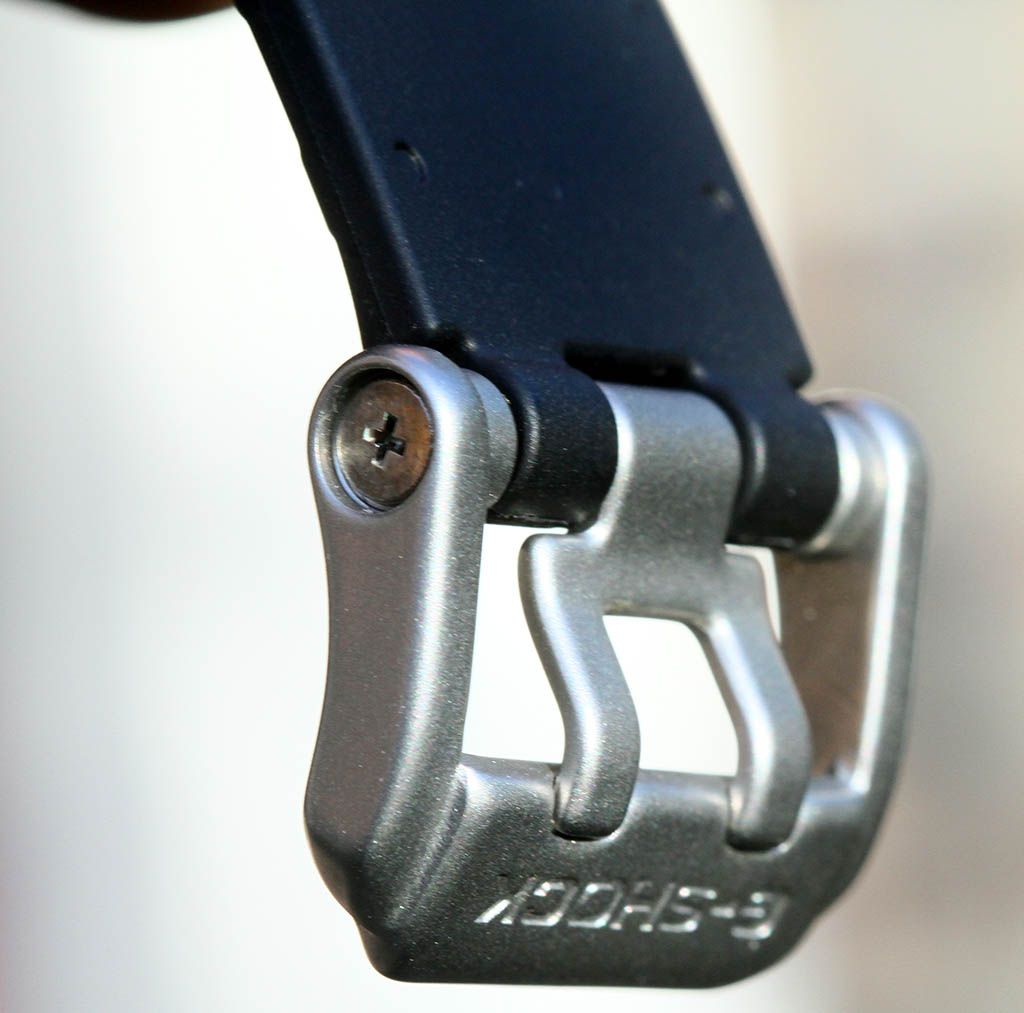
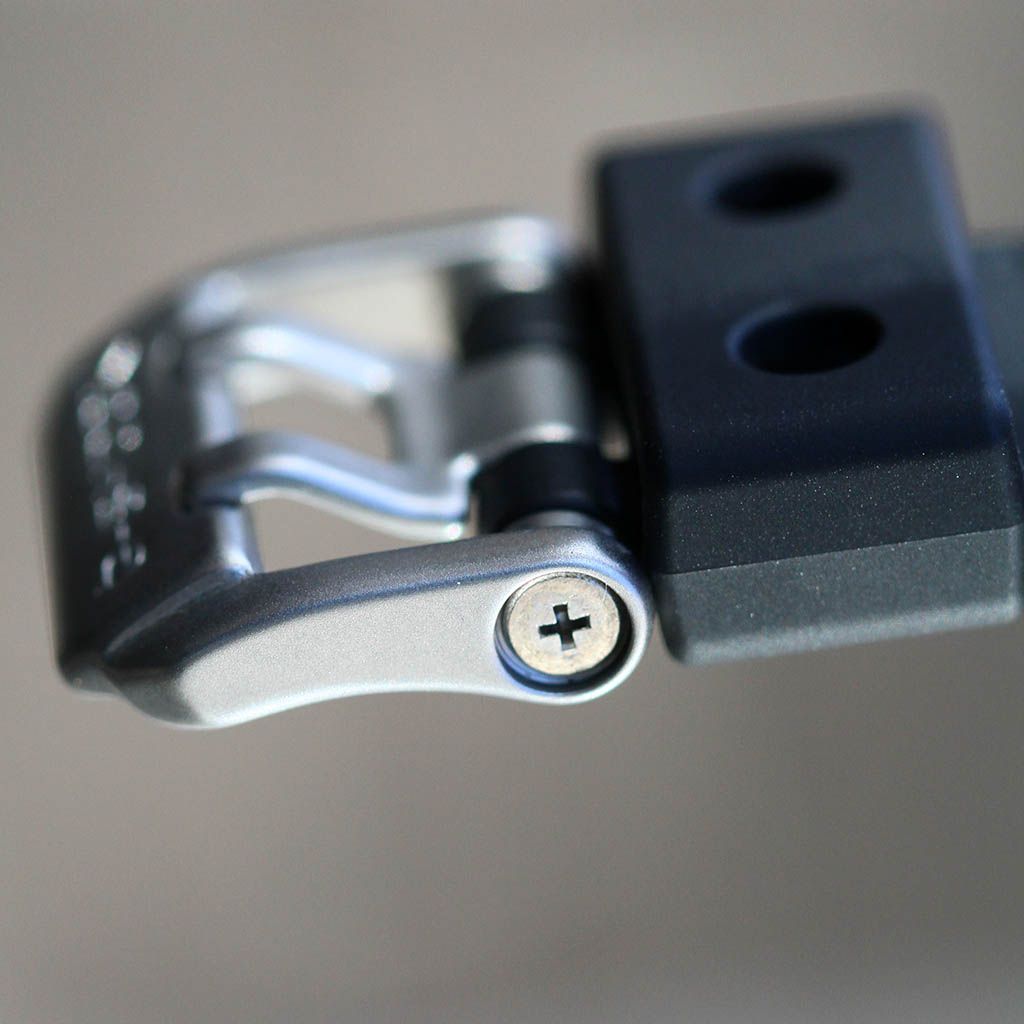
The watches are presented in a special display box. It’s the same kind of display box as the Kawasaki models were presented in. The box does not only contain the watch, but also a card with a drawing of a vintage Japanese racing car of the ‘60s. This drawing is made by the illustrator Bow of Car Magazine. The signature of Bow cannot only be found on the box and the card, but it’s also present on the back and buckle of the watch.
My knowledge of Japanese sports cars is pretty limited. I showed the card on my Japanese weblog, asking readers if they knew the model. To my big surprise 4 readers of my weblog responded with a lot of details.
Honda S-600
One thing is sure, it is a sport-car of the Honda S-type . Although "Clubhouse MK-II" says there might be a mistake in the drawing, I think that sports cars are often prototype models, so parts of earlier models might be present.
Above: Honda S600, below Honda S500. The grill is similar of the drawing.
I think the conclusion of "Clubhouse MK-II" is correct. This car is the Honda S series. The front grill is S500, bonnet and wheels are S800 and the body is S600. The mirrors look exactly as on the photo of the scale model set of the S600. Also the hard top is the same. It points that the drawing represents the S600 of the "Nürburgring 500km race" of 1964. And yes, I found it. In 1964 Denny Hulme (1936 - 1992)from New Zealand drove for the Brabham team in a Honda S600, number 88. He ended on the 13th place in overall ranking, but ended on #1 in the Grand Touring 1000 class. When you look closely to the Hardtop, tou'll recognize the flag of New Zealand and the driver's name D. Hulme.
Denny Hulme (above) became Formula 1 Champion in 1967, also for the Brabham team. He died in 1992, at the age of 56, by a heart attack during the Bradhurst 1000 race in 1992. His death made him the first F1 champion who died a natural cause...
I owe a lot of thanks to Murphy, Clubhouse MK-II, Tibiko and Pink-Elephant-Syn. Without them I would never have found this conclusion.
m(_._)m m(_._)m m(_._)m
The G-701RD is a special version of the G-701D model. The G-701D model is a “Cockpit Series” model. These models in this series are inspired by cockpit instruments of racing cars. The structure of these series can maybe be compared with the “Master of G” series. “A Man In Mat Black” Gulfman is part of the MIMB series, but also a “Master of G” model. This G-701RD-7AJR is part of the “Legendary Pride” series, but also a “Cockpit Series” model.
The first series of Cockpit watches had metal face protectors (sometimes called “bull bars”). On the stock photo’s these watches didn’t quite impress me. Also my knowledge about G-Shock didn’t go further than the 90’s models, the Frogman and the G-2300. The only metal G-Shock I had was a MR-G Tactician. It was impressive, but rather small. I expected these Cockpit models to be small too.
In the summer of 2003 I happen to spot a Cockpit model on the wrist of a German tourist in the St. Bavo Cathedral of Ghent. I noticed the watch wasn’t as small as I expected it to be. It looks quite sturdy actually. Not long after I spotted this watch, I owned a G-510D and a G-520D.
When this model came out, it did not take long before it was also sold in Singapore. I do not remember the eBay seller anymore (Pokemonyu?), but he had this model on auction at the end of 2004, with a starting bid of $1.-. The box looked very cool. The card, the colors of the dial, the green part on the side. This watch and the story behind it were a perfect combo. I fell specially for the ivory white dial. I think I won the auction with a final bid around $125.-. This was quite a lot of money for a G-Shock around that time. I was thrilled when I got the watch. It looked exactly as I expected it to look. Maybe even better.
Another one went on auction. I showed it to my colleague Paul. He was excited. He is an avid Car Racing fan. He even has a Formula 1 website. I started bidding for him and got it for around $80.-. Since I try to get often one model for the collection and one to wear, I started to bidding on a third one. I don’t dare to write the final price, but it was somewhere between $35 and $40.-. Unbelievable. The seller sold in the meanwhile several more. I even saw one for sale in Germany, but suddenly they all vanished from eBay and other G-Shock sellers around January 2005.
When I put this model on G-Peopleland e-mails kept coming in. Where did I got this watch from? Did I sell it? Even now I sometimes get mails from people asking where they can find this watch. I’m afraid I cannot help them. I have seen this happen with the red GW-203K Frogman and the G-Phyton models. If you were in time, you could have had them cheap. Now they seem rare and wanted. It’s a pity I couldn’t afford the Pythons. I guess I had other priorities. I think they hit eBay around the same time as the GW-203K’s were there “cheap”. You just can’t have them all I guess.
The first thing you’ll notice on the G-701RD is that it’s thick, about 14 mm. The case itself is about mid-sized, The case width is about 43 mm while a DW-6900 is about 49mm wide(official measures are 45 and 50 mm). The height of the case is a bit hard to define. It has two big lugs where the bracelet is attached to the case. With these lugs the height is about 57 mm.
The case doesn’t have the bull bars, but the thickness of the watch make it look as impressive as the earlier Cockpit models. The green resin part on the side looks like a back protector, but it isn’t. I think if it was a regular model, this would have probably been stainless steel. The protective raised rim around the crystal is pretty high, but the module itself lies deep under the crystal. This creates even a more tough and sturdy look.
The dial has 4 small sub-display. The top display shows time, date or day. It is also the display that is used in other modes than Time Mode. Also it shows if the hourly chime, an alarm and the snooze alarm are activated. The left and right eye animate the time. I always compared them with the seconds hand on an analogue watch, thought the right eye actually animates minutes (one digit is one minute). The left eye rotates like a small seconds hand. In the odd minutes the eye is filled, in the even minutes the eye gets cleared. A similar thing happens to the minutes eye. The bottom eye displays the seconds.
The 3344 module has besides normal timekeeping: Worldtime with 27 cities and 29 time zones, a 60 minute Countdown Timer, a 60 minute Stopwatch and 5 alarms (1 snooze alarm) with a hourly chime on board.
When scrolling thought the modes, will see H.SET appear after the different modes in the top display. This is actually the adjust mode for the analog hands, called the Hand Setting mode. When you press the Adjust button for 2 seconds, you can move the minute hand with 20 second increments (180 steps per hour). If you exit the Hand Setting mode, the minute hand will be slightly adjusted to the seconds count of the internal clock. If you need to adjust the hands for a longer time, you can push the top right button, while you are also pushing the lower right button. You can now release the buttons, while the hands move automatically. Just push the lower right button to take over manual control. This trick actually works on more modern Ana-Digi G-Shock models.
The G-701RD had a very clear EL backlight. I am actually glad this watch has an EL backlight. Most of the newer ana-digi G-Shock’s now have LED lights, which brightly illuminate the dial, but the sub-dials are unreadable. Now the digital time (digital time keeping has still my preference) is good readable, unless the hour hand is blocking the view. Actually, if needed, it’s not completely blocking. With looking around the hand, you can still read time.
There is some illuminating paint on the hands and 5 minute markers. Like on most G-Shock’s, this illuminating paint is not really impressive. It also loses power pretty fast, so that the time is pretty hard to read already after 5 minutes. Somehow I hope Casio will sometime use an illuminating paint that is as bright as on my Seiko Monster.
Summary: The G-710RD is a great Cockpit model. The color design by Bow is very nice. It’s bright, but not shouting. The ivory white rather gives this watch a luxurious look. I have removed three links and adjusted the bracelet to my wrist. I have a 7”wrist and the watch wears very comfortable. The analog clock has good visible hands, so reading time is very easy. The top display with digital time (which can also display date or day) may be small, the EL backlight is bright and the font is very clear, so it’s also not hard to read the digital time too. I rather would have seen a 24 hour Countdown Timer and a 24 hour stopwatch. The things I time just often take longer than 60 minutes. Because the watch has such a good looks, I will forgive Casio for this flaw. Once I put the watch on, it’s hard to switch to another watch. You can see I have worn it quite a lot of times. There are scratches on the metal bezel, which show up naturally good with the strike light of my light set-up. Yep, I like this watch a lot. And so does my colleague Paul like it.
Sunday, January 31, 2010

# 3: The Final Frogman

I installed a different set-up for this photo shoot. I was searching through my DVD collection. From far behind piles of DVDs I found one of my two copies of “Vanity 9”. Why do I have 2 copies? Our first DVD player didn’t play the DVD well. Later I bought a second, but the problem was still there. I discovered that you needed a newer DVD player, with stronger laser, to play it well. It plays fantastic on our HDD recorder. This DVD is very rare and wanted, I paid around $70 - $90 for each of them. It contains several tracks of French artists that, at the time of release, were only available on hard to find vinyls. The tracks are animated with Go-Go dancers. The Movie is directed by Seb Janiak and all videos were taken in one shot. Just in case you might think what’sthat on the background…
It all started in August 1993, when Casio released a huge G-Shock the DW-6300 Frogman. The huge case design was inspired from the hatch of a sub-marine. I just found out again, since I checked the article I wrote on this model earlier. In September 2009 Casio launched the 5th Generation Frogman, the GWF-1000. The official line up consist of 77 Frogman models, with several collaboration models (like Addict, LRG and Mastermind) the total amount of Frogman released will be somewhere in the 80’s, all shaped after this first DW-6300.
No doubt the GW-200 model was my favorite model. The looks are better than the basic DW-8200, the DW-9900 is smaller, and the GW-200 is also Tough Solar (except the “Snake Killer” and the “Carbon Frogman”). I still can’t speak for the GWF-1000. With a SRP of ¥68000, I have to wait a while, before acquiring it. It looks promising, though the price is more than doubled unfortunately and so quit out of my financial reach. Since I am saving for a trip to Japan, it might maybe can take until 2011 when I’ll decide to buy a GWF-1000. Maybe Casio will have released some nice new Frogman models. We had three Gulfman models released for the I.C.E.R.C., so maybe we get a new series of Frogmans (translucent?).In November Casio announced the “Final Frogman”. With final Casio means this is the last GW-200 model. Frankly I felt quite sad about this. Like the DW-9900 and DW-8200 I think there was a life for both the GW-200 and GWF-1000 beside each other, with the GW-200 more affordable alternative for the expensive model with Atomic Time keeping and Tide graph.
With the current new generations of “Master of G” models, Casio created also a cheaper alternative. Somehow I would like it if Casio created a more affordable Frogman in the ¥30000 - ¥35000 price range. The downside will probably mean that it will be a non-atomic version.
The Atomic Timekeeping is something that was missed a bit on the GW-200, there GW furthermore only used for Waveceptor models. It could be explained in the fact that in 2001 the GW-200 was not fully developed. This might explain the sudden appearance of the Carbon Frog and Snake Killer, which had both the conventional battery operated module of the DW-9900.
When I saw the first photo of the “Final Frogman” I was in pretty much doubt. The bright yellow lettering looks a bit strange. Normally black G-Shocks are accented with red and white or yellow and white lettering. Also a few years ago there were counterfeit G-2000 and DW-8200 models, which had this color scheme sometimes. Also the GW-200-2JF had this color scheme, but the watch is navy blue and the color yellow is not as bright as on the Final Frog.
My thoughts changed after I read the background of this Frogman. It is a tribute for first Frogman, the DW-6300-1A. I have this Frog and I love it really very much. It has good looks and is pretty heavy, which gives it the feel that it’s a tough watch.
At the first comparison you’ll notice on the “Final Frog” is that very black resin has been used. The DW-6300 looks more a bit dark brown. It looks like the same black resin that has been used on the GW-5000 and the Men In Mat Black series. Also t he yellow tone of the lettering has a deeper tone, almost like an egg yolk.
After I read Petew's article about the GWF-1000 on GMT+9 in September 2009, I can't look at the side of a Frogman without reading "ZOOM".

Where the DW-6300 has gold buttons, the GW-200Z-1JF has plain silver buttons. I think Casio missed the boat a little here. A good tribute model should have gold tone buttons, like the 25th anniversary series.
I had doubts ordering this Frogman. Did the DW-6300 cost back in 1993 just ¥18000, the GW-200 models raised in price to ¥30000 for the last models. Therefore for me the looks must be worth the price. I loved the poisonous green “Love The Sea And The Earth” Frog, and also the 25th Anniversary models were great, but this one somehow looked different.
The most important reason I bought this Frogman is that it was the last of the GW-200 series. Several times there had been a rumor that a certain model would be the last. I remembered the I.C.E.R.C. Frog of 2006 was called the last GW-200 Frog. Maybe Casio didn’t want rumors now and just called it “Final Frogman”.
So, would I wear it? Probably not. Somehow I don’t like the sharp contrast of the deep black resin and the intense yellow lettering. I wish Casio had used a little less distinctive yellow paint, which has been used on the GW-200-2 and the original DW-6300. I like bright colors, but somehow the combo just don’t seem right to me. Maybe it’s just personal.
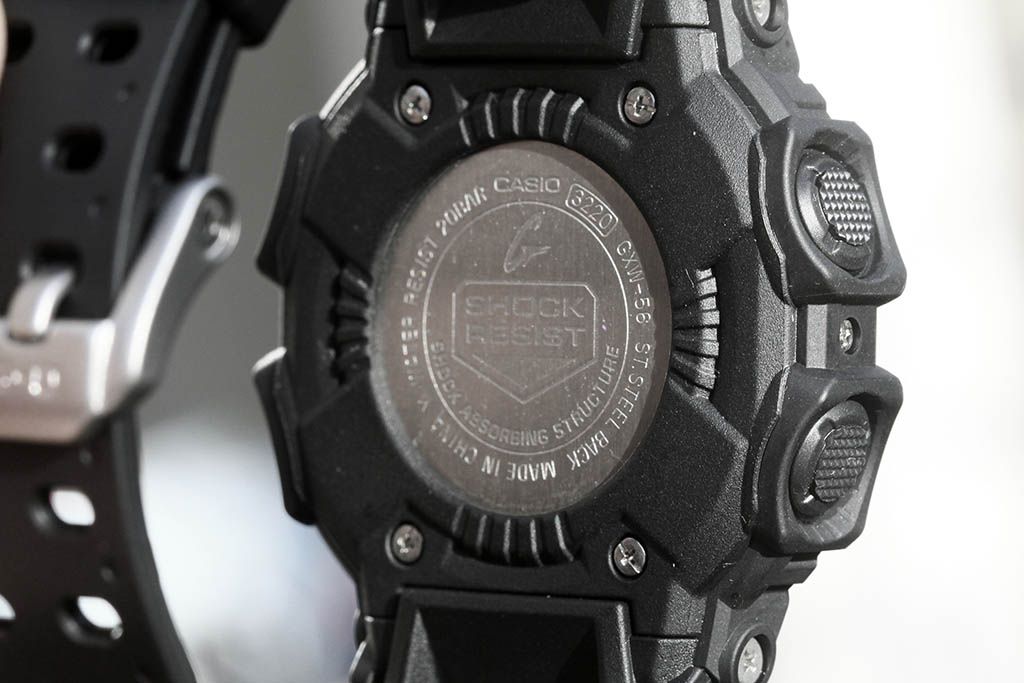
A nice but small tribute detail is found on the back. The GW-200Z-1JF has a shiny titanium back, which seems to have the classic diving frog logo etched on it. If you look more closely, you’ll notice the bubbles of the Frog’s breathing apparatus form “200” as a tribute of this successful line. The GW200’s have been in production for over 8 years and have been the longest running Frogman model.
Secretly I hoped to see this frog back in the backlight, but unfortunately for me the frog is left out. Still the EL backlight is better than its tributed predecessor. The DW-6300 had to do with a tiny green light bulb, making the display hardly readable in the dark when used. The Final Frog has a nice bright and clear greenish EL backlight.
The future will show us if the GWF-1000 will be a successful successor. From real life photo’s I’ve seen that the looks are very nice. Where Casio has developed a more streamlined design for the new generations Mudman, Gulfman and Riseman, this Frogman looks rather more old school. I think it’s looking pretty cool. It makes me remind to the good old DW-6400 and DW-8300 Gundam models. The downside is the price. The Frogman series were not the cheapest models.
The full titanium body and the ISO rating for the 200m water resistance make the Frogman more expensive than other G-Shocks, but they were always affordable at the time of release. With the retail price more than double, I doubt if I can write here the GWF-1000 is an affordable G-Shock. Of course the term affordable is discussable, if I'm correct the PMWF (Poor Man's Watch Forum) defines a watch under $1000.- as affordable, but does the additional upgrade with a Waveceptor function, Tidegrapgh and DLC coating (see GW-5000) justify the extra ¥38000?

Monday, January 25, 2010

#2 Meet The Men In Ice White Riseman!

Hello everybody!

My name is Joakim Ågren from Sweden, and this is my first article here at the 50Gs Blog, I am going to be collaborating with Sjors in writing articles here at this blog from time to time, a little article here and a little article there hehe.

Many of you probably already know me from the Watchuseek G-Shock forum where I am a veteran member since late 2003. I have been a G-Shock fan since 1992, but did not buy one untill 1995, and started collecting in 1999. My first G-Shock ever was the classic DW-6900, the really cool yellow taxi Driver version, or as it is officially known as the Yellow Skull, part of the Skull series (red, black and yellow versions) DW-6900H-9 (unfortunately I no longer have it since it was stolen from me at a beach in Cyprus back in 2005). Since then I have probably bought and flipped over 150 G's. Currently I have about 40 of them, most of them brightly colored. Just like Sjors I like bright and bald, oops sorry I meant bold, colors hehe. For this first article I will be showing you guys my Men In Ice White Riseman MIIW or MICE Man lol

Here it is the GW-9200PJ-7DR Riseman:


This rare version was released only in the Japanese market back in November 2008 as part of the Men In Ice White Series also starring a Gulfman GW-9100P-7JR. But in early 2009 a export version came out. But it was not the normal kind of export version intended for sale everywhere. The one I have is this very rare export version the GW-9200PJ-7DR,(Japanese is GW-9200PJ-7JF). The difference is that it comes in a standard tin box and also English manual, while the Japanese domestic version comes in a cushion box with only Japanese manual. Normally the export versions also have a fire dragon on the backplate, while the Japanese versions have the flying squirrel on the Solar Atomic models, also the export versions typically all have both metric and imperial units for the altimeter and thermometer. But this one only have metric units, just like the Japanese domestic models. Thats because this was never officially released as a worldwide export model, this one could only be found in tax free shops in Asia.


The thick manual, Module nr is 3145


I am normally very hesitant to wear white G-Shock watches, because they are nearly impossible to wear, without them getting dirty. But this one has a nice shiny white coating on top. This makes it more resistant to dirt, and if it gets dirty it is easier to clean. Also worth noticing is the blue tint LCD and blue eye, that adds a little bit of flare to it. I like it! But just in case it gets dirty or damaged, I bought a replacement set from Tiktox. I bought their very last set. Getting a replacement bezel nowadays is nearly impossible.


The buttons and bottom half is gray, and the sensor cover is silver. I like the fact that the bottom is gray, this will protect against the yellowing a white one would have, due to simply wearing it for a while. Here you see the backplate with its nice Flying Squirrel, which is my fave character on any G. Flying Squirrels is the coolest animals mother nature ever came up with hehe.


Altimeter mode with the altitude at the bottom and something very unusual in the top display, A stopwatch that is separate from the regular stopwatch and tied to the altimeter. If you start the logging, the stopwatch will start. You can then later on in the log book check how long it took you to ascend/descend.The resolution of the altimeter is 5 Meters (no feet available) and it updates every few seconds for a few minutes, then after that it only updates every few minutes instead to conserve power.


I tried to get the Risemans thermometer to match the outside thermometer showing -9 degree Celsius, but I could only get it to around -1.7 degree Celsius before the display fogged up to much for me to see anything.

The barometer mode, here gladly we can see the current time unlike in altimeter mode, the barograph is in the eye, but you can change the view to a arrow trending instead by pushing the upper left button.In the upper display we see the current pressure in hPa (no inHg unit available on this one), also we see the temperature in Celsius (no Fahrenheit available). In the main bottom display we see the current time. For some strange reason tough, you can only stay in barometer mode for 5 minutes or so before it reverts back to regular time keeping mode. But that is not such a big issue since you can always see at least the barograph in regular time keeping mode.


Riseman on top of the world oh yeah baby hehe:) Here wee see the World Time Mode, current time still visible.


Stopwatch mode with current time still available even after you start it. Its a 24 hour stopwatch which is good. The yellow timer/stopwatch you see at the bottom here, that one is magical. It has been on the same battery for over 14 years and given of a 1 minute alarm every day since then and it is still going strong on the original battery. Thats amazing!


Timer mode, this is also a 24 hour timer, time still visible. The final count beep sequence is only 5 seconds long, I would have wished for at least 10 seconds.


FIRE IN THE HOLE, YO DUDE WAKE UP, ITS THE CAPTAIN SPEAKING: WAKE UP, YOU CRAZY FOOL lol
Alarm, there is 5 alarms and a snooze available plus an hourly chime of course. Unfortunately like usual with G-Shocks the alarm signal is not very strong, but it is stronger then average for a G on this one, but still not good enough to wake a heavy sleeper like me up. Also the alarm signal only lasts for 10 seconds. So the alarm function on this watch is rather weak. But it can function as an alert or reminder alarm.


I can do logging oh yes! :)

Here we have the log book. You can store up to 20 sets of data, each set containing data about ascent and descent, minimum altitude and maximum altitude, also there is the stopwatch data that show you the time you took to ascend and descend for the trip.Then we come back to the time keeping mode. Unfortunately there is no quick return function so if you want to go back to time mode from the other modes you have to push the mode buttons multiple times. So thats a minor issue.

Some wrist shoots:


OMG Its a Stormtrooper on my wrist! The dimensions of this watch is 51mm tall 49mm wide and 15mm thick. So its a midsized G. I think it is the most comfortable G-shock I have ever worn, even slightly more so then my Rally Mudman that is famous for being comfortable.


The nice sensor side, the sensor cover is part of the bezel. So it is not part of the sensor as one might think!


Here you can see the center button which gives direct access to the altimeter.


Nice profile, here you can see that one side sticks out a little further then the other side.


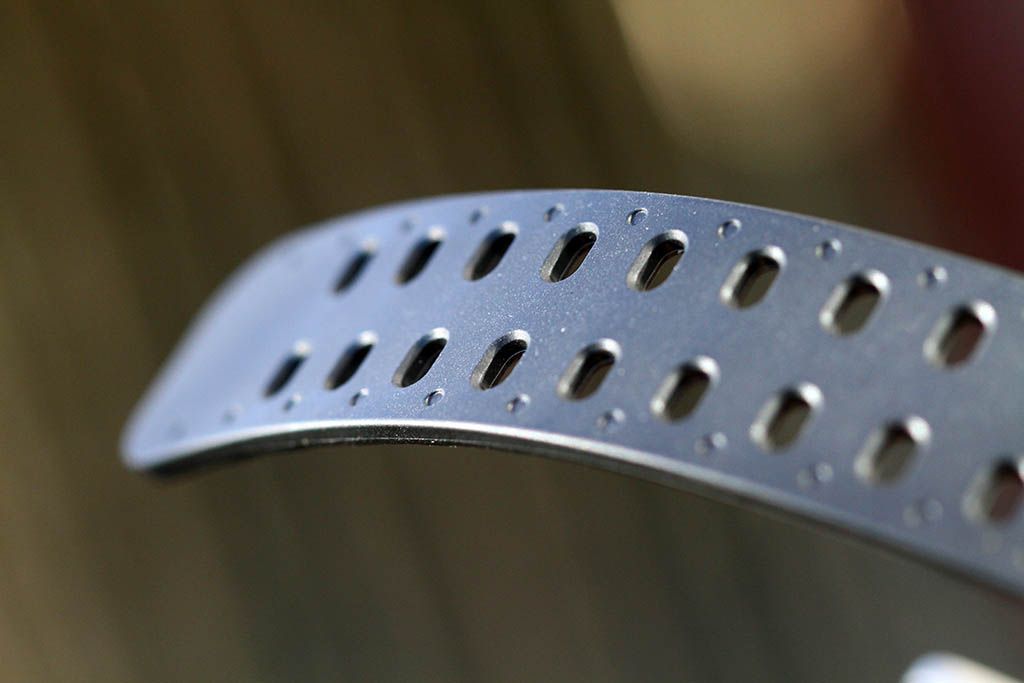
The strap have a double pronged buckle with double rows of holes, this adds to its great look, it is
easier to buckle up and it is more steady. All modern Master Of G's have this arrangement except the Gulfman.

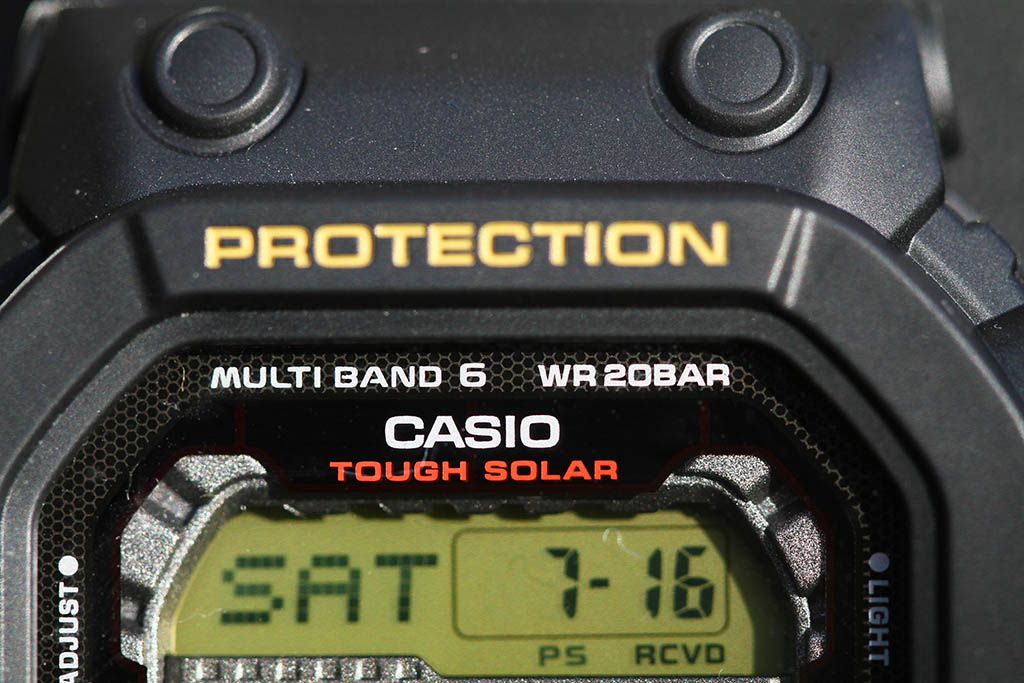
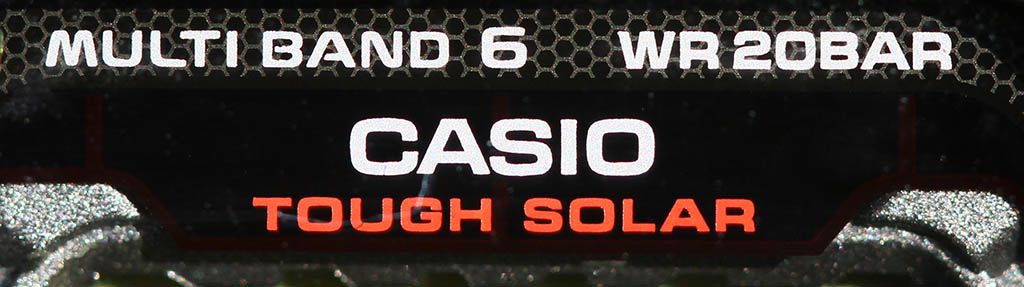
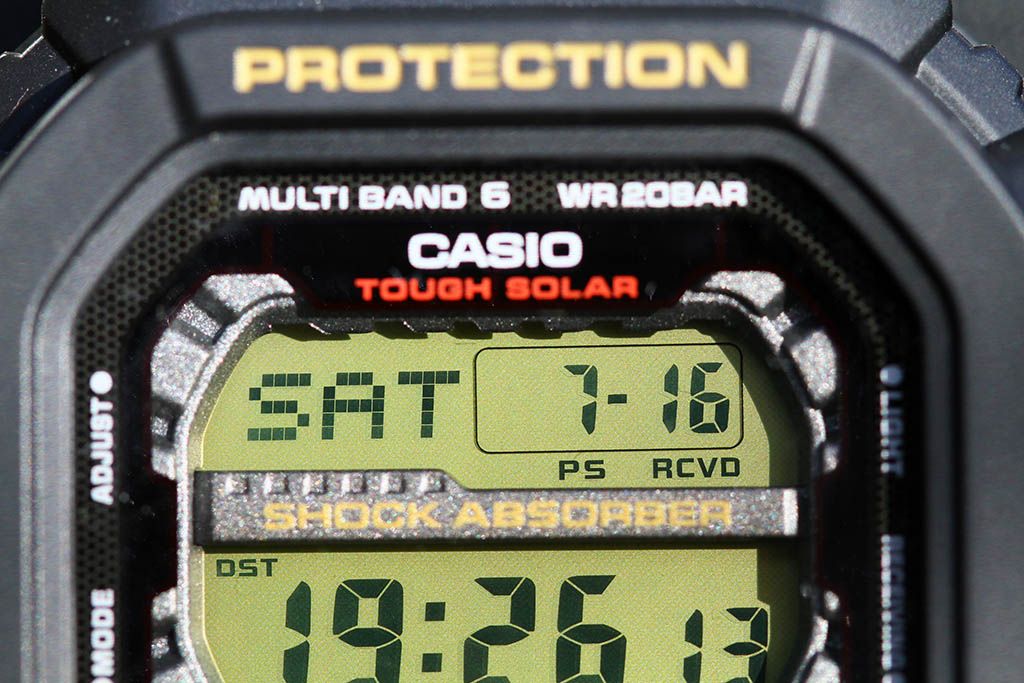
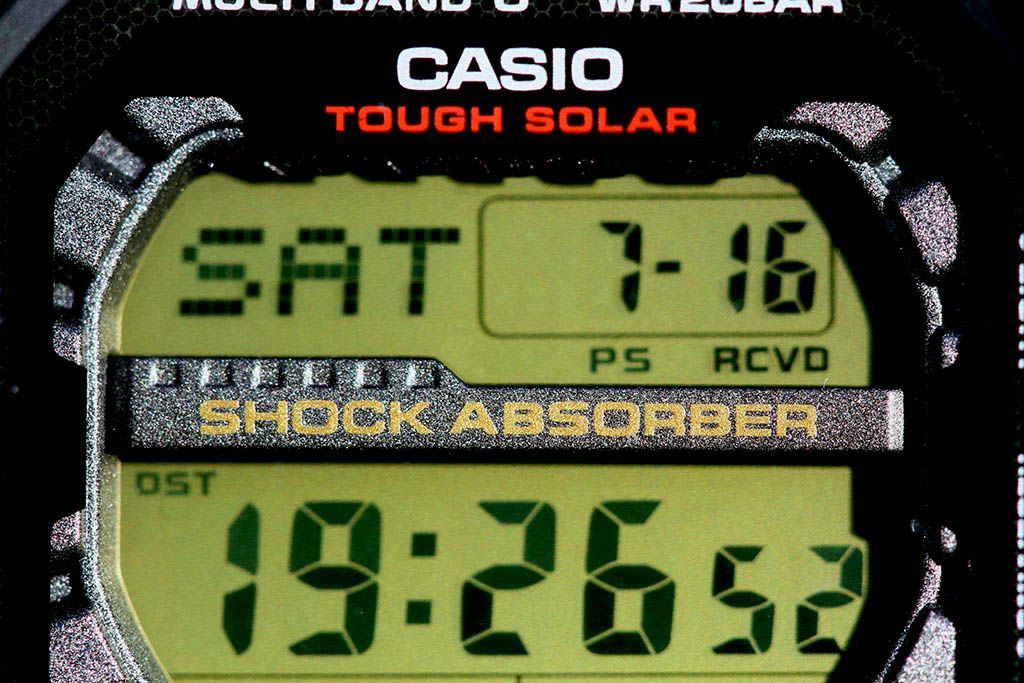
Other things to mention is that this model is Tough Solar and also have atomic sync time keeping function, its multiband 6 so it can sync with the 2 towers in Japan and the 2 towers in Europe and also the one in China and in the USA.

Unfortunately for me its a weak syncer and I can never get a sync indoors. My other 6 band atomics can sync indoors. But they are ER versions which means that they where intended for the European market, so perhaps this Riseman is not weak to sync because of the fact thats its a Riseman, but because its a model intended for the Japanese market? I am slowly starting to think that even tough they are all Multiband 6 models, perhaps Casio is tweaking the coils a little to get maximum reception performance for their respective home markets? but I have no proof of this, just a feeling and self observation.

This was my walk trough of this watch. My final verdict is that the Riseman is one of the very best G-Shocks. Function wise it is top of the line and there is much to like about it. It is definitely deserving the Master Of G title. But it still have some weaknesses and we are all still waiting for that ultimate G a full fledged ABC (Altimeter Barometer Compass) G-Shock, will it ever come? who knows...

This version of the Riseman the MIIW is one of my fave versions, perhaps my most favorite version? I love it a lot and its one of the faves in my collection.


El shoot, my camera is not the best at taking EL shoots but I hope when I get a new better one soon that it will be better.

And finally an extra treat for you all!

After all this is the Men In Ice Riseman so of course it should be in its element don't ya think?

I have put this Riseman trough hell the past 9 days in my attempts to create clear ice and have the Riseman inside the ice. In total I have frozen and re-frozen it over 30 times I think and it is still a champ and going strong.

Creating clear ice in a regular freezer is nearly impossible, I know I have tried every method I could find on-line and almost all of them failed. Thats because in a freezer it freezes from the outside and in. But in a ice machine, or what professional ice carving companies do, is freeze from the bottom up and always keep the water free flowing during freezing. That will create clear ice for sure.

When you freeze from the outside in, the ice will from at the surface first, thereby preventing the trapped air to escape and it will become foggy inside the ice. The other big factor that destroys the clarity is the enormous internal pressure at final freezing, the pressure can reach an astounding 14500 psi. Fortunately that only last for a fraction of a second, otherwise a G-Shock would break completely. But it will cause internal cracking of the ice, destroying the clarity.

Here some shoots from just one of my many failed attempts:


Here you can see that I hanged the Riseman in the center of the can, by suspending it in sewing thread and also by using some tape. Then I filled it with water and froze it inside.

Here was the result:


This was one of my more successful attempts, we can see part of the strap and the Risemans bezel inside.

Now to my successful attempt, but I had to cheat a little hehe


First as always I boiled the water for a few minutes, its essential in order to release a lot of the trapped air inside. I tried using fresh water from the tap, distilled water, carbonated water etc and all failed. Boiled water gives a clearer result in the end.


Then I poured the water into 2 loaf shaped trays and after letting them cool down for 30 minutes I put them into the freezer. Now I had to monitor the freezing process very closely. I checked up on them every 30 minutes or so...

Then after about 4-5 hours of freezing, some steps followed that I could not take a picture at since I was a little stressed and had to use both hands and be very focused. What I did was to warm up the trays until the ice came loose. Then I used a screwdriver and picked up the bottom on each piece of ice, and poured out all the remaining unfrozen water inside. Yes it is essential for this to succeed, that you do not let them freeze all the way trough, hence the close monitoring during freezing.

Final step was to take the Riseman, and then put it in-between the 2 hollow ice blocks, thereby creating a nice coffin for it. Then I let the ends freeze together again, but I did not use the freezer instead I let it happen outside the house.

And voila here was the final result:


Don't forget to click the pictures to get their full size, to see the full effect! What a nice and suitable place for a Men In Ice White Riseman, don't ya think?

Some more:


What a beauty! :)

Another One :)


T
hats the way to go for a beauty Queen! :)

But wait, look she came back to life again? hurray:) As a nice treat to her I gave her this nice G-Shock miniature 50cm Snowboard, as a thank you for long hard duty during the course of these experiments!


I hope you all enjoyed my article, please leave some comments if you liked it...

Over And Out Joakim Ågren!


Sunday, January 17, 2010

#1 Yacht Timing

Well, let’s give it another try for 2010. It will be a challenge to reach another 50 articles, but this year I hope I get reinforcements . I’ve been looking through my collection and I have seen several interesting model to write about, but it is after 100 articles and over 20 Intermezzo’s pretty hard to tell what’s already been written about, and what’s not.
This afternoon I brought Bram to a Nature Historical Museum, where he joined an excursion, while I sit in the lunch cafe of the museum. Before we left I picked up my yellow DW-9350 Raysman out of a box. I thought I did not have written about it, but alas, in November 2008 it was also the centre object of a 50Gs article. Well, let’s just pretend I didn’t find out this and see if this article has a different approach than the other.
The DW-9350 Raysman Yacht Timer model was released May 1998 and is a little different model than the standard DW-9300 model which was released 2 months earlier. All DW-9350 models were derived from the Middle Sea Race Malta model (DW-9350MSJ-2T), which was officially released a month later.
The yellow version is in my opinion by far the most good looking DW-9350 Yacht Timer model. The other two models were in beige and gray tones. I personally do not like the Middle Sea Race Malta model very much, because of the blue/white color scheme. I just do not like most blue G-Shocks.
The Raysman (in general) was a quite a novelty, back in 1998. Before this model, solar watches had a capacitor that could store energy for maybe for a couple of days. For the Raysman Casio used powerful solar panels and a large storage battery (Panasonic ML2020, ML stands for Manganese -Lithium). When it was fully charged it has enough energy to keep the watch running for about 9 months in total darkness.
I somehow regret that Casio stopped using this battery model (I am not sure which battery is out in the new GWF-1000 Frogman) and uses mostly the CTL1616 battery now. While Casio once admitted there were problems with the first batch of CTL1616 batteries they used, I must admit I have (again) at least 3 G-Shocks entered the Recovery mode. At least one of them already had its CTL1616 replaced with a new one. Some G-Shockers describe a failing CTL-1616, making a G-Shock go into Recovery Mode, the "Recovery Blues". Although I can get the batteries replaced for a relative low price (about €15.- each, including water resistance test), this can become quite an expensive problem in the future. I hope I can find a cheap way to get a few of these batteries and change them myself. The replacement procedure is about the same as a conventional battery change.
Note that the chance to get the recovery blues is drastically reduced when a Tough Solar G is worn daily. The Recovery Blues is maybe luxury disease, but pretty nasty for G-Shock collectors. The problem has with me only occurred to models released around 2003 to 2005 (first Tough Solar Waveceptor models, like the GW-300, MTG-930, etc).
The solar cells of the Rayman are the black/blueish panels around the display. These cells are strong enough that they can even use dim indoor light to recharge. Of course direct sunlight speeds up the process very much.
A funny novelty on the Raysman is that you can turn off the watch. The display just turns blank. Only the "SLEEP" mark in the eye is filled. It is a way to conserve energy for a long time.
in newer models this function was replaced on Tough Solar models by an automatic Power Save function.
I discovered the yellow Raysman pretty soon after I started collecting. Two USA sellers on eBay put them on auction, starting at $1.00. I think one of these sellers is still active, now under the name jj_watches. They still have often interesting models on auction, but unfortunately the Dutch customs like the way they sent packages. So I have to add at least €40.- ($60.-) to the total amount of watch + shipping, making buying G-Shock’s from this seller quite less interesting. Actually I hardly buy from USA sellers, due to the high shipping prices and the almost 100% catching rate of the Dutch customs. But enough rant, you can't blame the seller for this and the walnut pie and hot chocolate are tasting too good here in this restaurant .
The auctions for these Raysman may started at $1.00, the usually ended between $110 and $130. I think I got my first one for about $125.-. Not much later I won another one. I believe at a pretty low price, around $100. I don’t know why, but I seem to have 4 of these very good looking watches around (2 used, 2 new), since I got the opportunity to buy them. I think if I get the opportunity to get one for a nice price I still would be tempted to buy it. I think it was the first big G-Shock I really loved. The one photographed has got a lot of wrist time. Therefore some colorization might be seen on the straps.
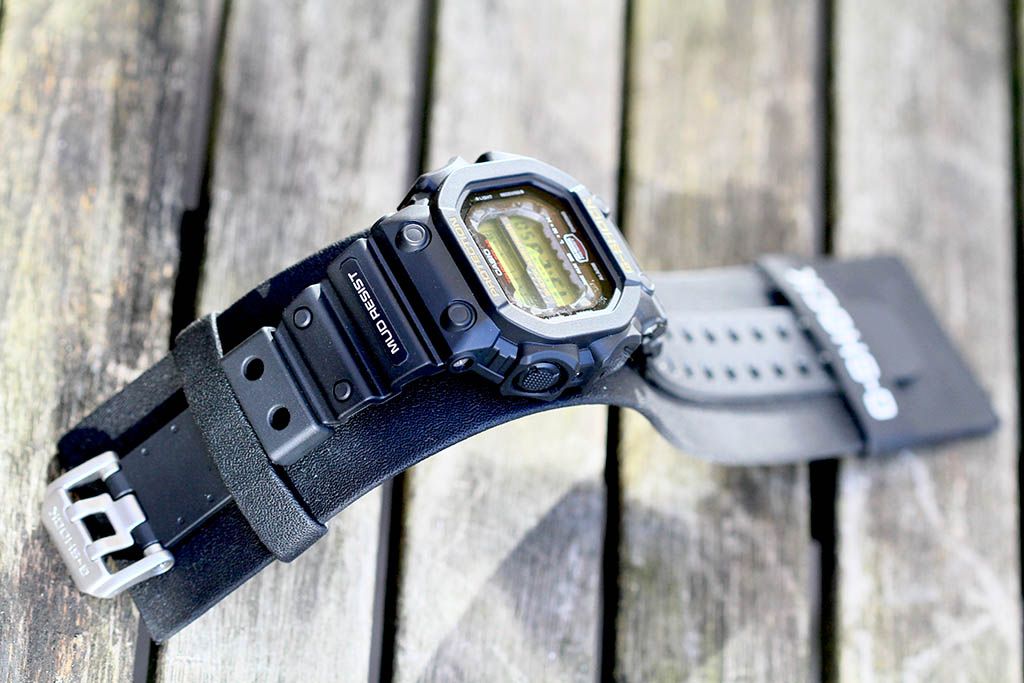
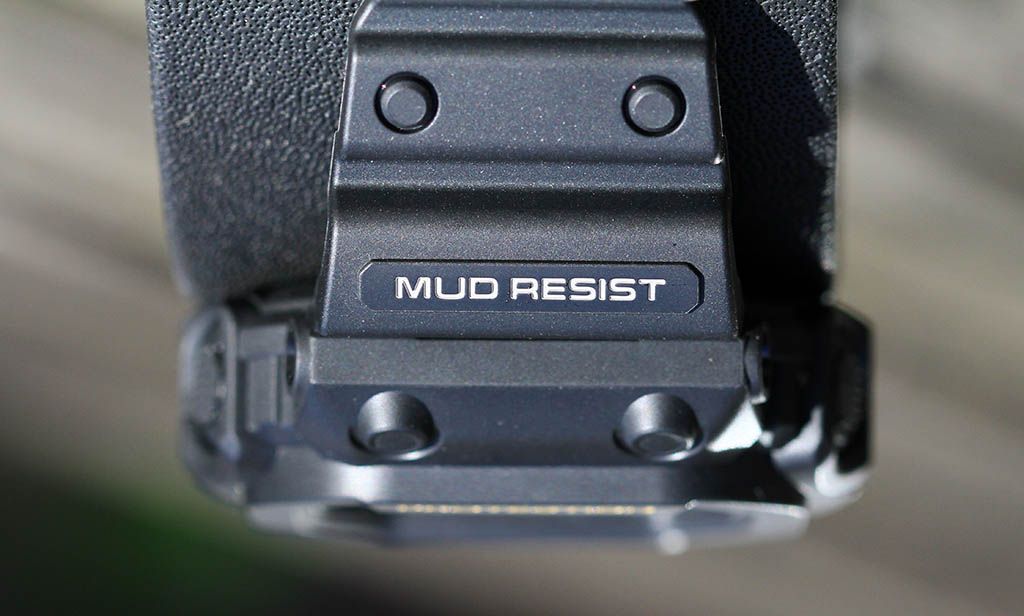
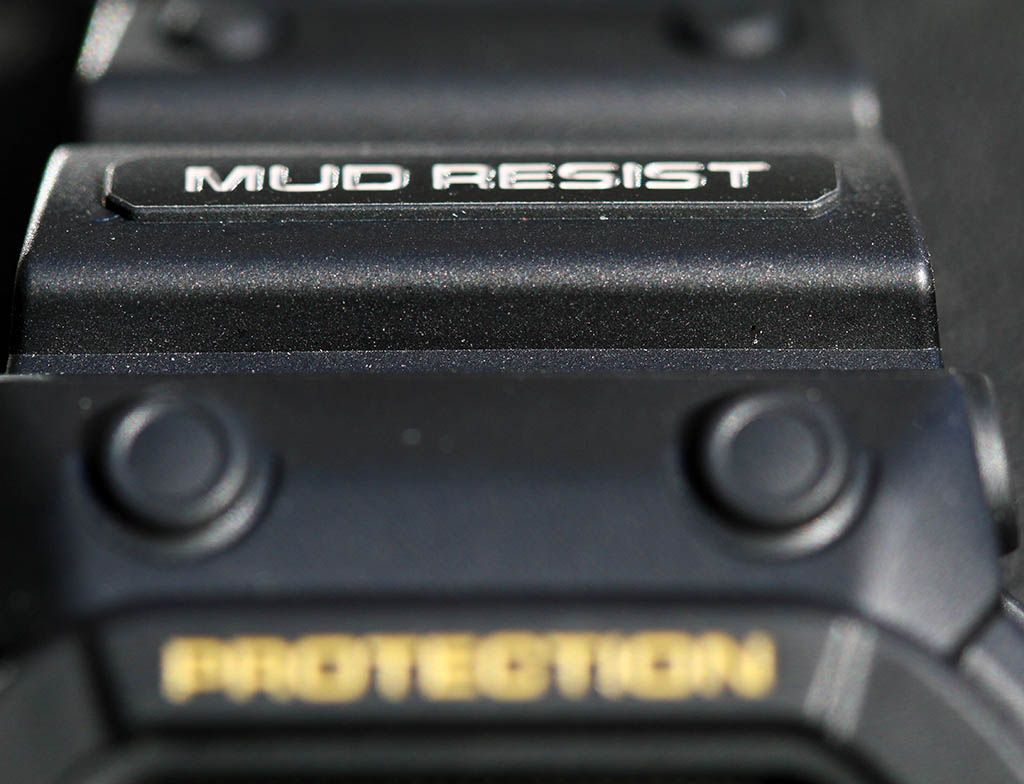
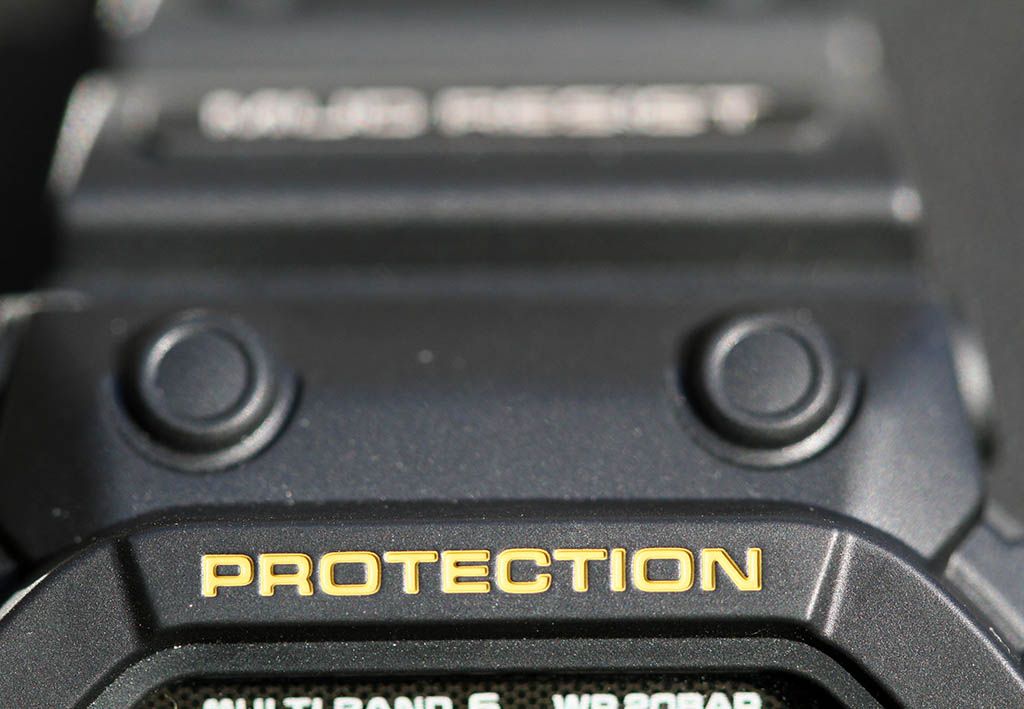
The outward design of the DW-9350 is not much different of the DW-9300. The two toned bezels are the same. The Raysman is a Mud Resist model, so the buttons are covered by the bezel. Casio developed for the Mud Resistant models a new procedure to use two types of resin in one mold. The type resin used around the buttons are flexible, while the rest of the bezel is pretty stiff, acting as a shock absorber for the case.
This procedure was actually already used for the first time for the DW-5500C in 1985. Nowadays it’s almost impossible to find one with a complete bezel. The Mud Resistant structure is vulnerable when aging. The life span of a G-Shock is, according to the triple ten criteria, at least 10 years. For most G-Shock models this is much, much longer. Stories of DW-5600’s that run for about 20 years are not uncommon. Unfortunately the bezels of the DW-5500C disintegrated soon after 10 years and I get from time to time e-mails and other messages of people who’s Raysman bezel is cracked at the buttons or light button. Frankly I also have two Raysman with cracked bezels. Unfortunately bezels are not longer available at Casio. I nowadays am more careful with wearing my Raysman, which is actually very much a pity, because it still is a very nice big beautiful model.
The strap is also different. While the two tone strap of the DW-6300 seems to be made in one mold, the strap of the DW-9350 is probable made in two pieces. When used for a long time the middle part (that looks like a woven structure) can loosen from the outer part. It has happened to me two times (actually I bought the watches both times this way). Luckily it happened in a time I could simply buy a new strap. New straps were by the way pretty expensive. I believe they were about $50.- or more. If you read this and think: “I have a broken strap and I want a new one”, please don’t mail me. I have no idea where to get spare parts of a Raysman. As far as I know even the supply of straps have dried out worldwide.
The woven part of the yellow and the beige Raysman are in the same tone as the outer part. On the grey model the woven part is lighter. At the top of both straps there is a metal insert. One says “Yacht Timer”, the other says “Shock Resist”. The straps are attached to the case with 4 screws.
The Raysman Yacht Timer uses the 1584 module, while the basic Raysman uses the 1803 module. The differences are small. The only difference I can find, besides the display layout, is the “fast button”. When you push the upper right button, you enter with the basic Raysman the Data-Memory mode, while the Yacht Timer models enters the…,Yacht Timer.
So what does Yacht Timer mean? The yacht timer function is a Countdown Function that gives a series of signals given on certain times before the timer ends. These signals are given 15, 10, 5, 4, 3, 2, and one minute before the timer ends and then 50, 40, 30, 20, 10, 5, 4, 3, 2 and one second before the target time. If you think so many beeps are annoying (which is pretty understandable), you can of course turn this function off. The Yacht timer can be repeated. Small detail, when watching/using the Yacht Timer, the regular G-light button is used as start-stop button, while the lower right button acts as a light button.
The Raysman has a Data memory function, that can hold 30 data sets of names with telephone number. Back in 1998 a mobile phone was not quite a common yet, so it was a cool function back then. With a 24h stopwatch and 5 alarms with a hourly chime on board, the Raysman is a pretty good equipped model.
On the back of the watch a bat hanging on a branch is hanging upside down. On the regular Raysman the moon can be seen under the bat. On the Yacht Timer model you see waves of the sea.
A pretty cool feature that came with the new Tough Solar technology is the Full Auto Illuminator (Full Auto EL light). On some earlier G-Shock models the Auto Illuminator was already introduced. When this function was turned on, the EL-Backlight is turned on when the watch is tilted for about 40 degrees. This is about the position when you look at your watch. This function can become pretty energy consumptive, so this function turns off by itself after a few hours to spare the battery. The Full Auto Illuminator detects the amount of light (via the solar cells). If it is light enough, the light does not turn on, but if it’s dark the light turns on when the watch is tilted. In contradiction to the Auto-Illuminator, this function does not turn out itself after a few hours. The philosophy behind this is of course that the energy lost on these illuminations can be charged up again with light.
Although the Raysman is released almost 12 years ago, it is still not too difficult to find. Easiest to find are the basic and this yellow model. Also the prices are not too high. Expect prices around $100 for the basic Raysman and a little more for the Yacht Timer model (less in used condition). Bear in mind that the bezel is the weak part of the watch after these years. Let’s hope Casio will make once again such a nice big G-Shock like this.
* Note 1: The photo's of this article have been shot later. When I wrote this article, it was relative warm and there was no sign there was going to be snow. A week later about 10 cm of snow fell, which is pretty uncommon here.

*
Note 2: I normally don't do this, but a good friend of me put up his entire collection of Raysman for sale. There are are some pretty rare ones and I'm biting my fingers, because I don't have the funds for the Middle Sea Race (I may not like the color combination, it is a cool model to have in my collection) and the Gardian Angels at the moment. The prices are very fair, so if you are interested, have a look here.

Thursday, January 14, 2010

Intermezzo #22: A new year, some new battery changes.

A new year has started. I hope you like the new header I made for my 50 Gs weblog. I wish you all a great and healthy 2010, which will bring you a lot of G-Shock pleasure.
I made 2 sets of 50 G-Shock articles in two years and several intermezzo's. At the end of 2009 I was thinking what to do this year. For myself I want to limit my new G-Shock purchases to 1 G-Shock a month. I want to go to Japan at the end of the year, so I need to save money and the funds have to come from somewhere. Since I have made 100 G-Shock articles, it will become harder to find interesting G-Shocks to write about. Therefore I have asked a friend to help me get to the annual goal of 50 G-Shock articles. I think he will introduce himself soon, but older G-Shock collectors and enthusiasts will probably know him.
I start this year with an intermezzo about the battery changes I did today. A friend of me in Japan (Tibiko) inspired me to buy some bottles of Chimay. I thought I open a bottle of Chimay capsule blue, a great barley wine, brewed by the Trappist monks of the Abbey of Scourmont. The name refers to the color of the cap. There are also a capsule red and a capsule white. The red cap is nowadays actually brown. I visited the abbey 2 times in my life. It is a very beautiful place if you like a quiet place to come in peace with yourself. The abbey does not only make good beer, they also make very delicious cheeses.
The first watch I changed the battery from is a DW-6695-K. It is a special model with the letter K in the backlight. It was in Europe released as the "Buchstabe" series, while in Japan it's called the "A-Z Gangsters".
The battery is changed. The AC contact (reset contact) is located. The contact is short-cut with the battery for about 3 seconds.
The rubber gasket is lubricated with a little bit silicon grease. When the screws are put back on the lid, a final test. The sound works and the EL lights up brightly. Another successful battery change.
The 2nd G-Shock is a DW-003 with a double Velcro watchband. This model has a back protector and distand holders. First you have to remove the distance holders (4 screws), then 6 screws of the back protector. Position of the alarm spring.AC contact. Another Reset.
The rubber pad is put back. The spring sticks through the hole.
The gasket is lubricated and all parts and screws are put together. A final test shows this is another successful battery change.
The last G-Shock is a DW-004. This one has a similar construction. Now it has wrist rests, because this model has not a double Velcro watchband, so the procedure is about the same as the DW-003.The position of the screws are pointed with small arrows on the back protector. Yehaa, another successfull battery change. Well, I am going to enjoy the rest of my Chimay Blue. Keep an eye on 50 Gs. I hope you will enjoy the new forthcoming articles. Cheers!
I was planning to do this battery change later, but a post of C.K. on the G-Shock Forum on WatchUSeek made me decide to do it today.