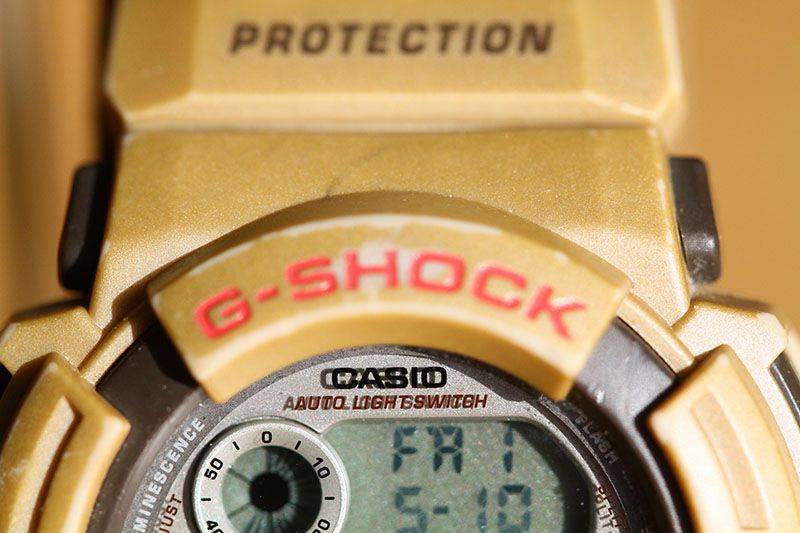
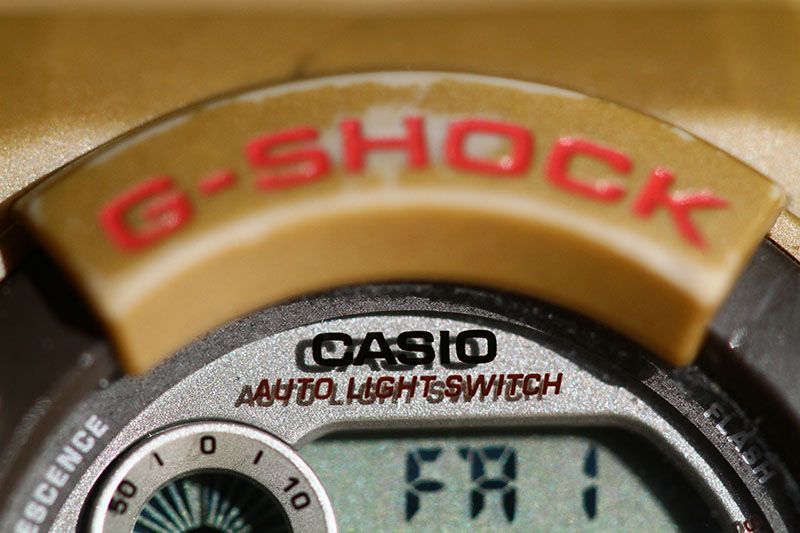
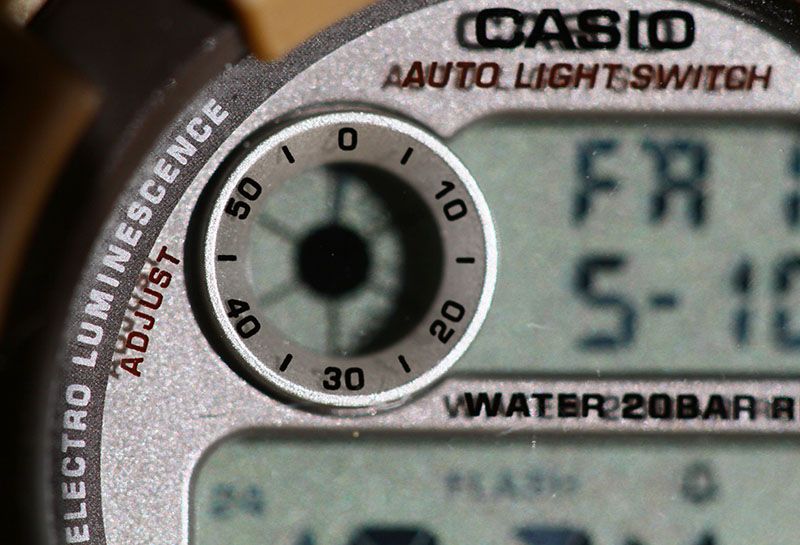
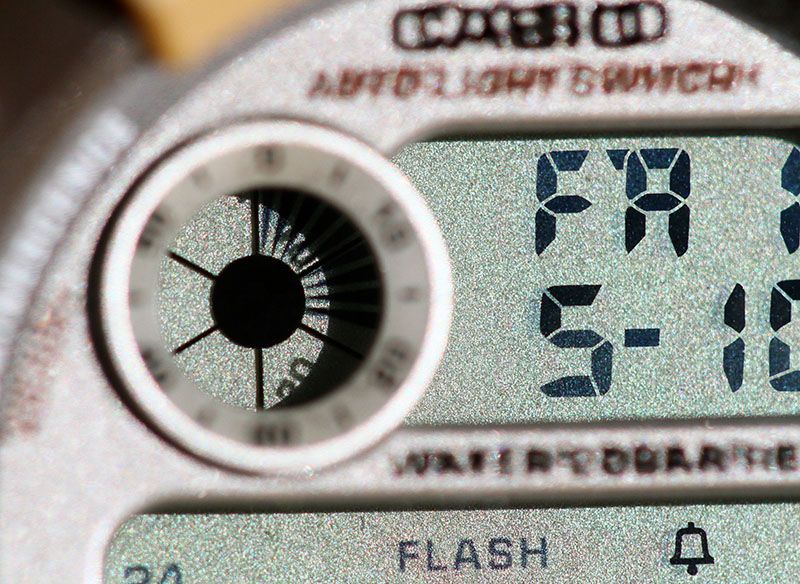
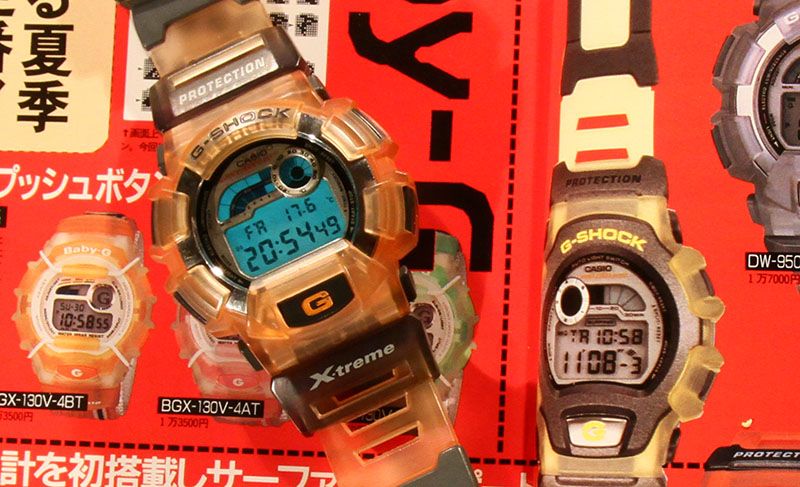
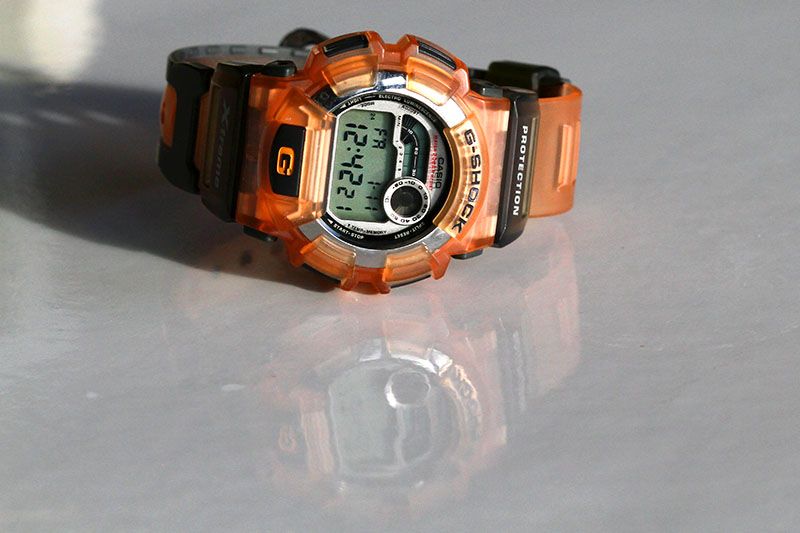
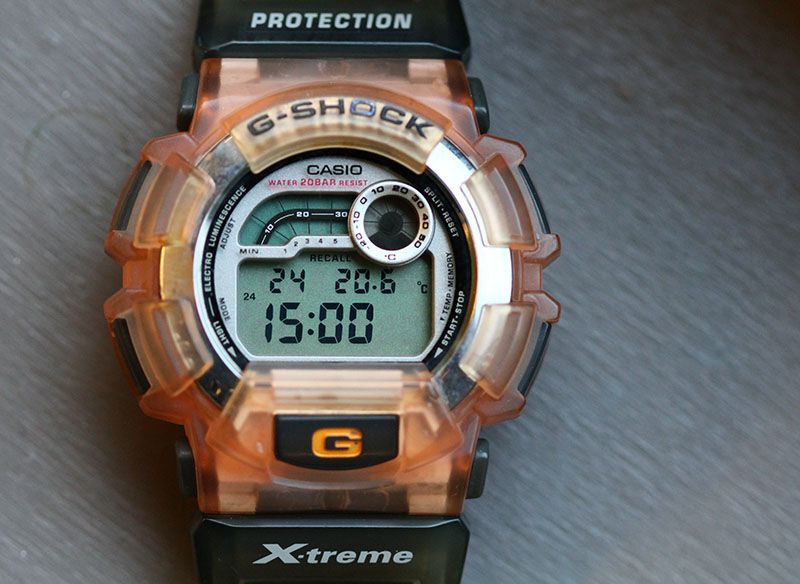
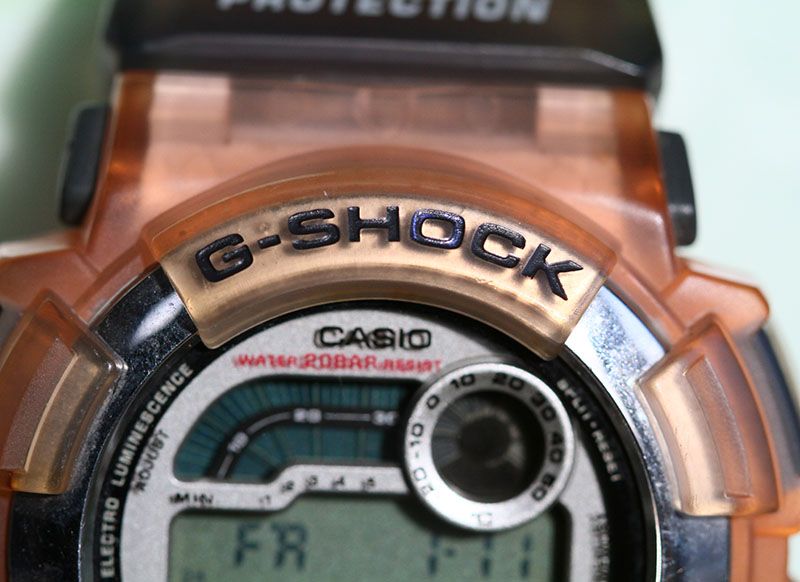
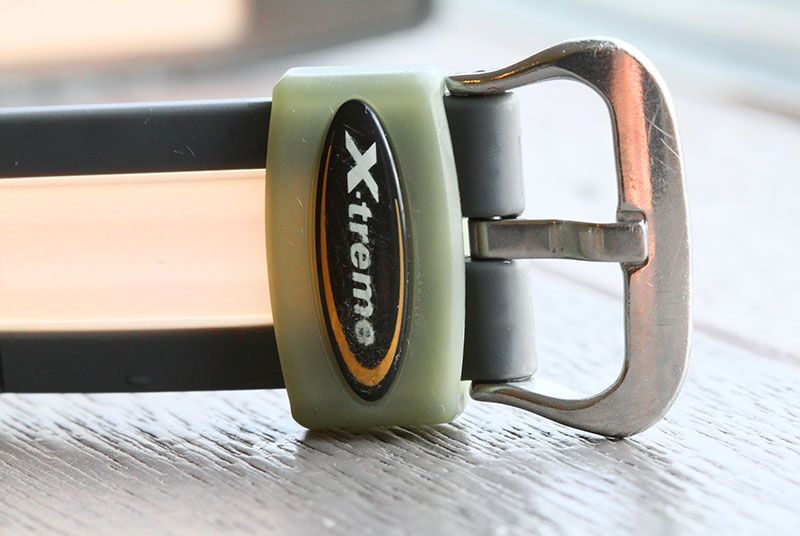
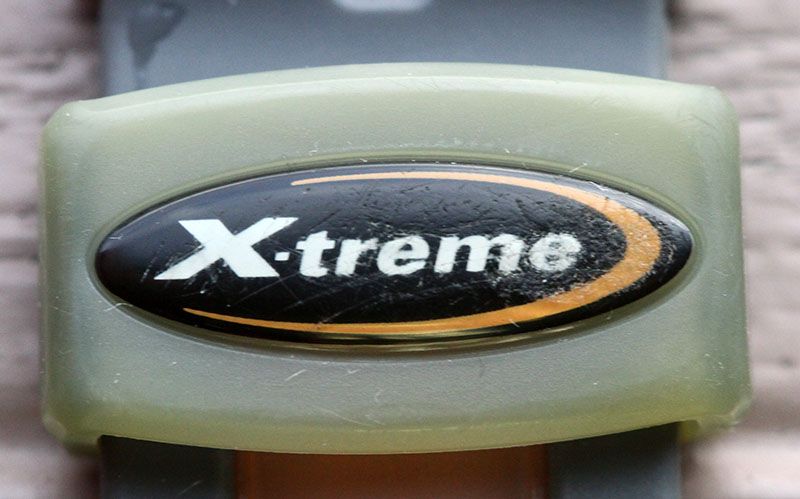
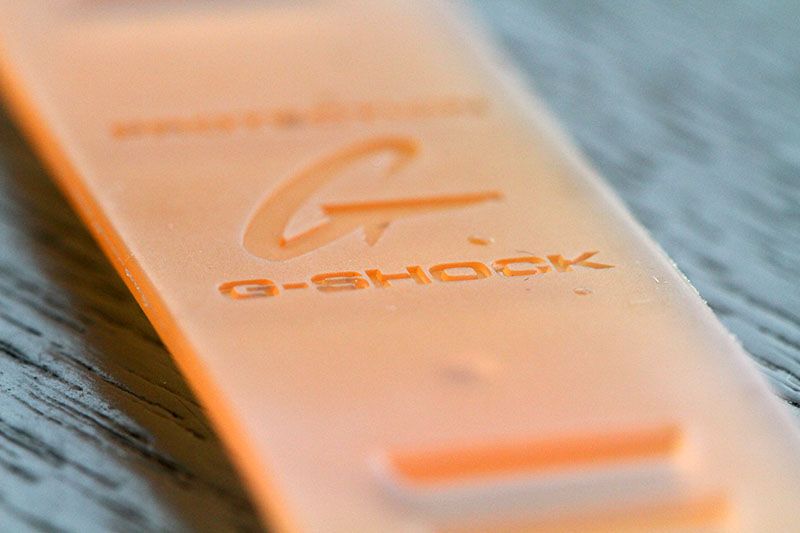
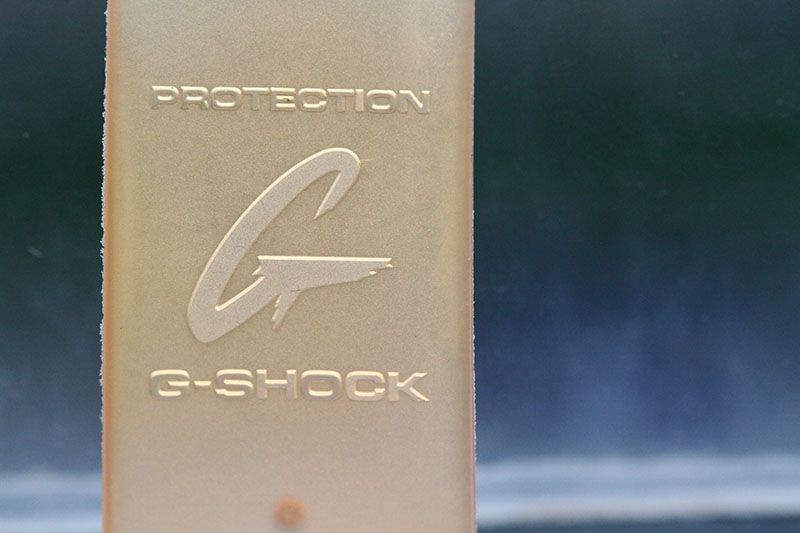
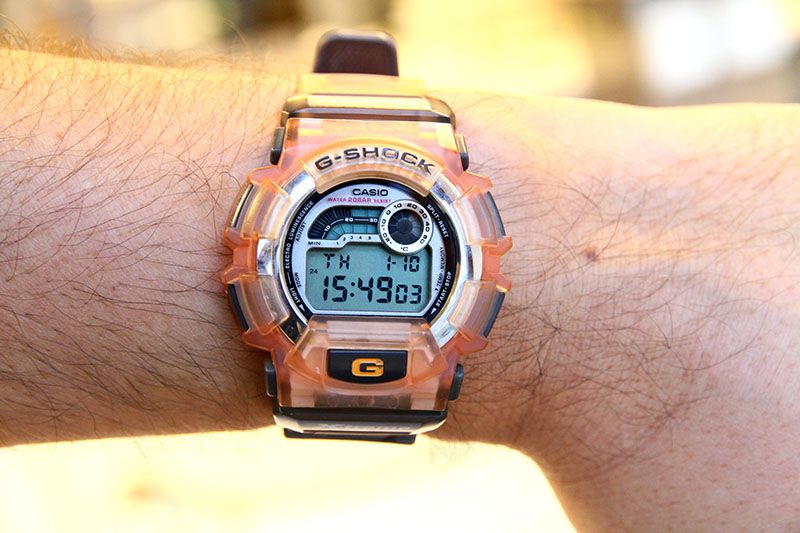
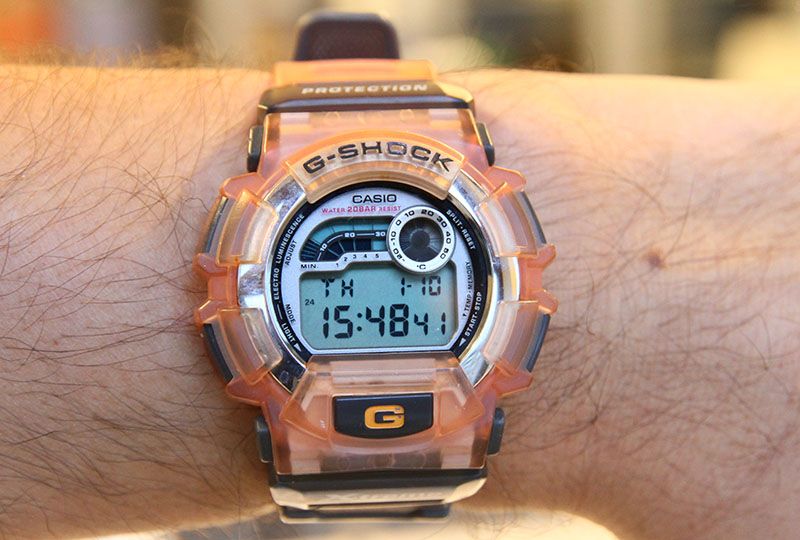
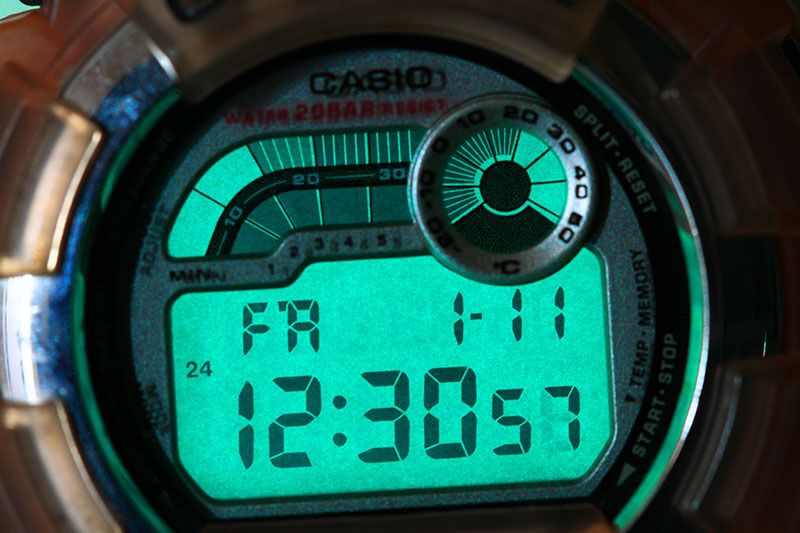
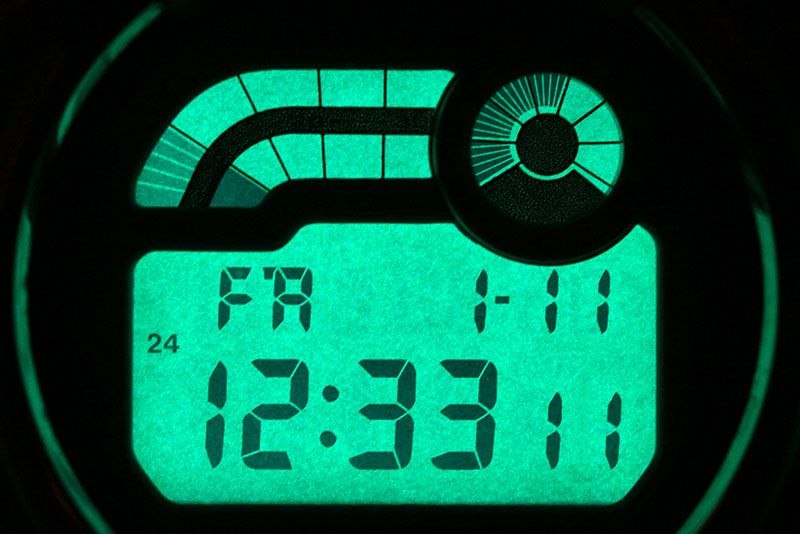
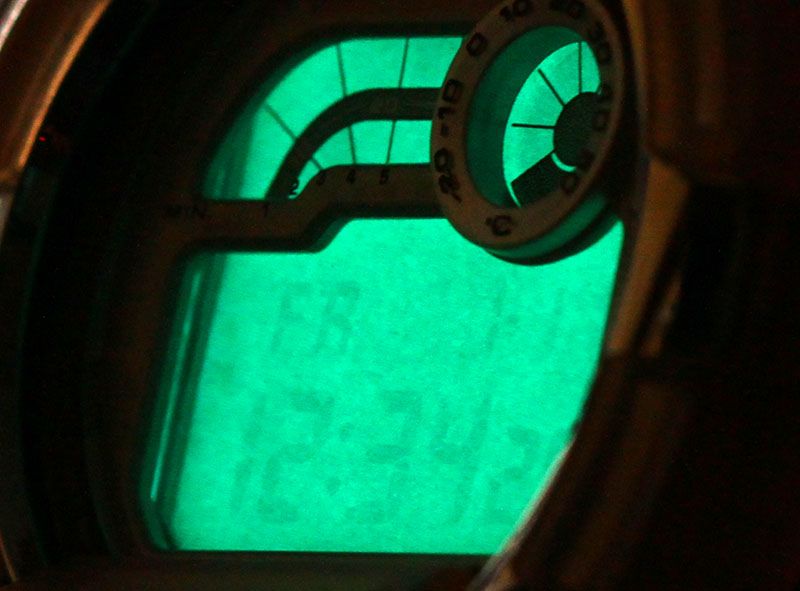
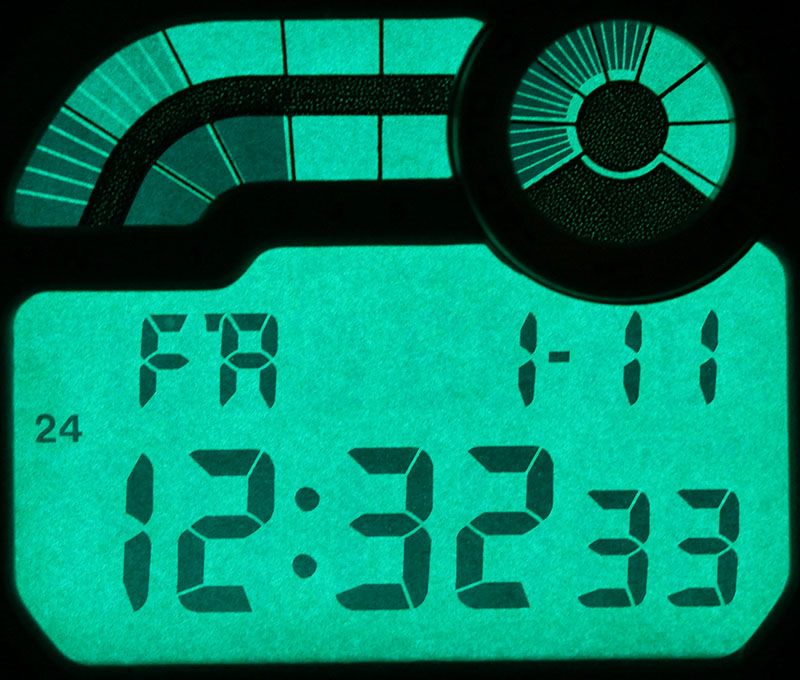
April 1998 Casio presented a new Spring X-treme line-up. X-treme was the Japanese name for the G-Shock models for extreme sports, like surfing, snowboarding and skateboarding. This DW-9500XS-4T is a wristwatch, dedicated to the professional surfer. Outside Europe the X-treme models were sometimes released as G-lide.


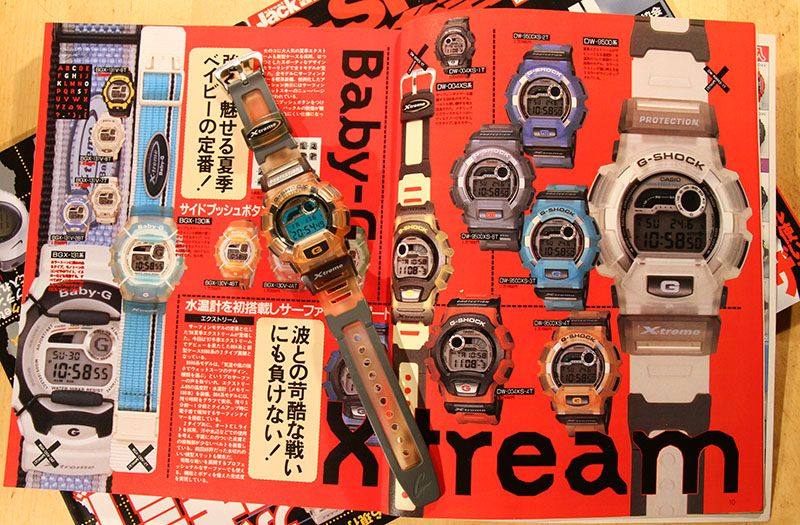
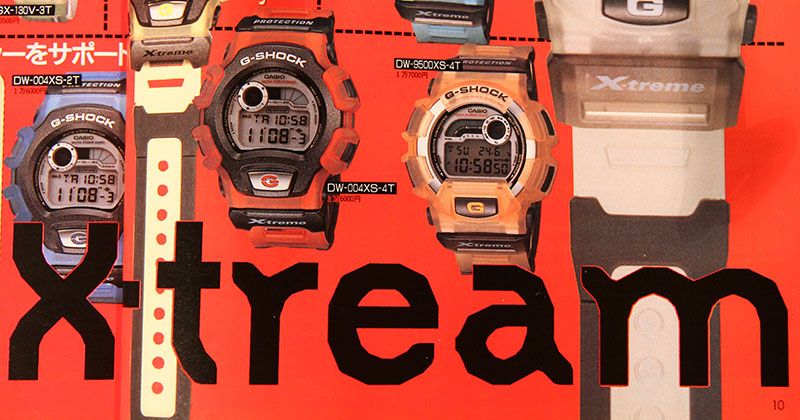
I had always wondered why the first Extreme Sports models weren’t called G-lide too. Although both names stress the purpose of the models, G-lide, specially the logo, also stresses the function and shape of the used boards. On my latest G-Lide article I got a comment of Dorkinaut23 with a very plausible answer why two names were used. It is actually pretty obvious. In Japanese language there is no “L” sound. Often the “L” is replaced with an “R”. Therefore G-lide would be pronounced as G-ride in Japanese. In the name X-treme there is not such a problem. There are more pronunciation problems. So is there no much difference between the “U” and the “A”. Therefore Mudman is often written as Madman. Also my name has a difficult “RS” combination. Therefore my name is written as "ショーズ". It is pronounced as “Sho-zu”, avoiding the “R”. If you look at the photo's above (from HotSpin Vol 9, 1998) and Street Jack Best Super Goods Series Volume 1, 198), you'll notice even the name X-treme isn't written consequent.

The series name X-treme was abandoned in with the beginning of the Millennium. Since 2000 all Extreme sports models are released as the well known G-lide models.
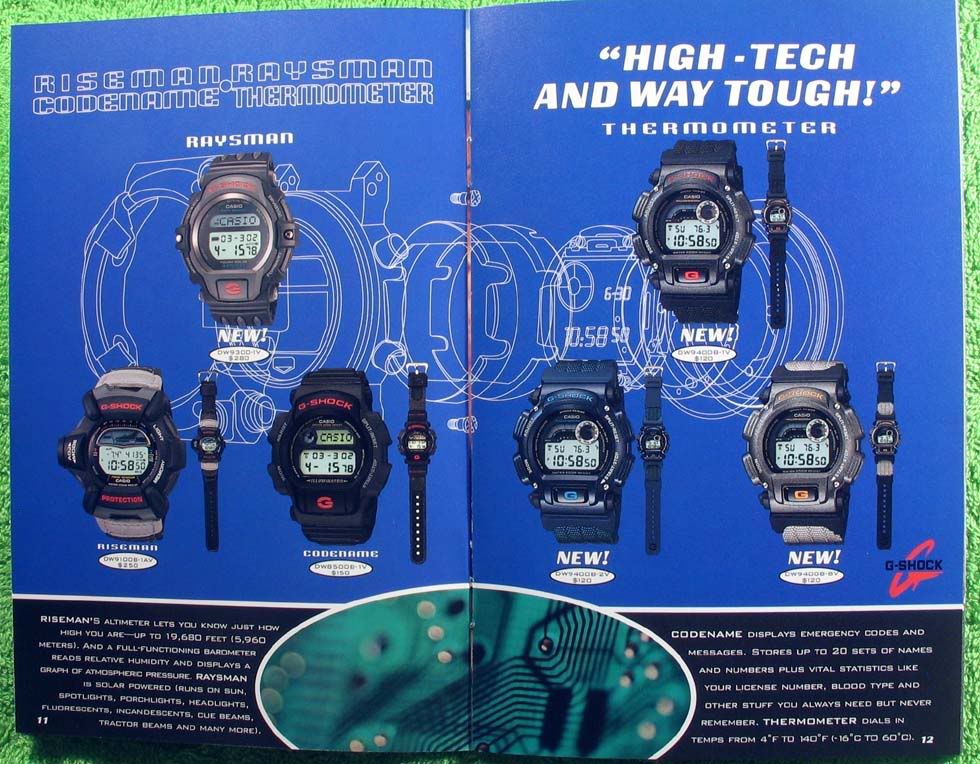
Page promoting the DW-9400 "Thermometer" in the US brochure "Hard Body" of spring/summer 1998.
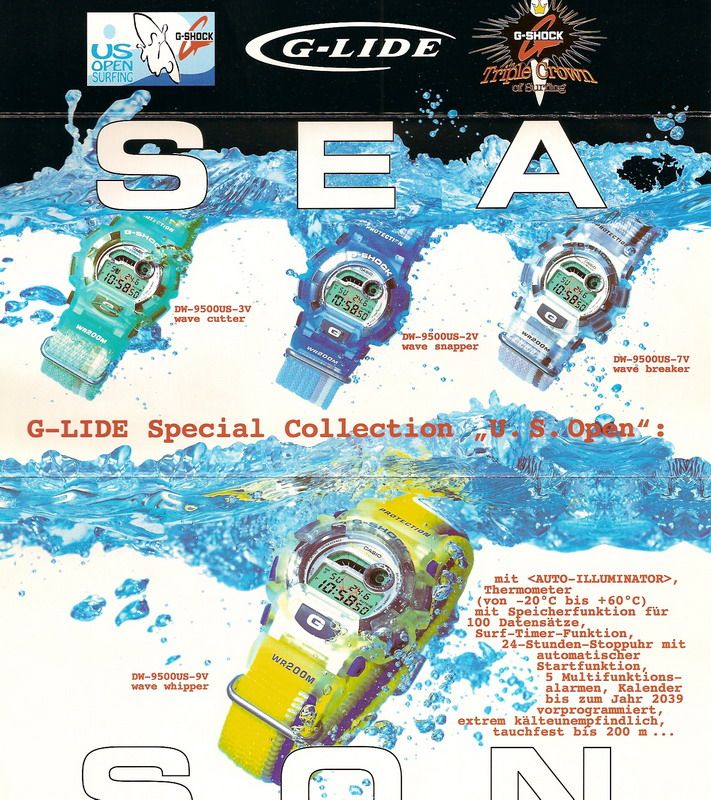
I got this image from Lee172. He wrote several articles a few years ago for 50 Gs. It is from a German catalog, probably from 1998 or 1999.
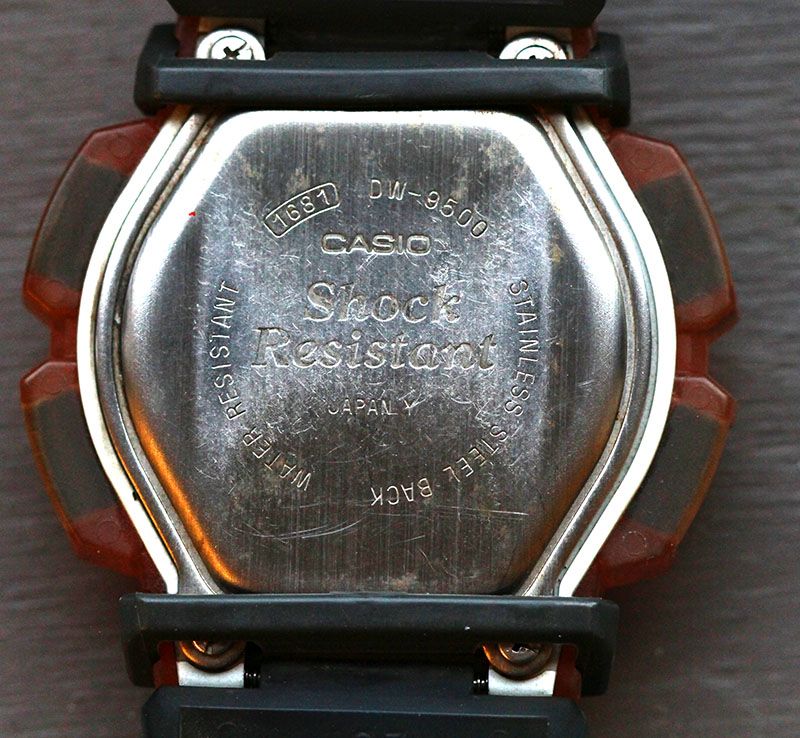
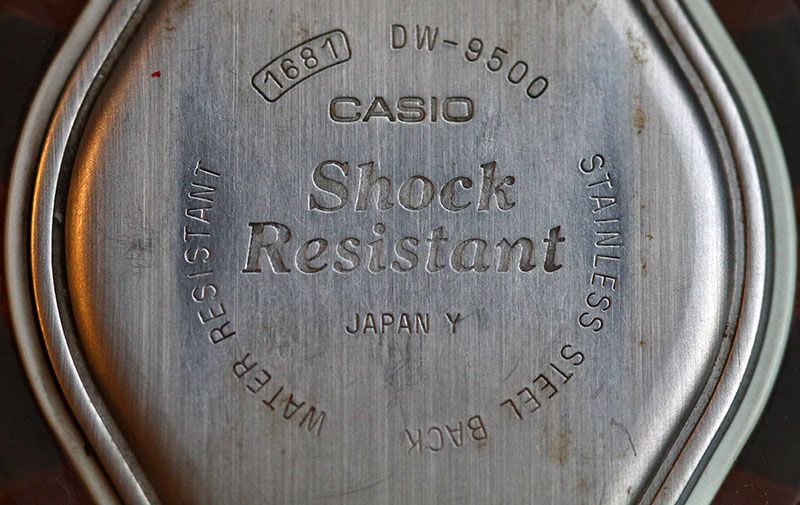
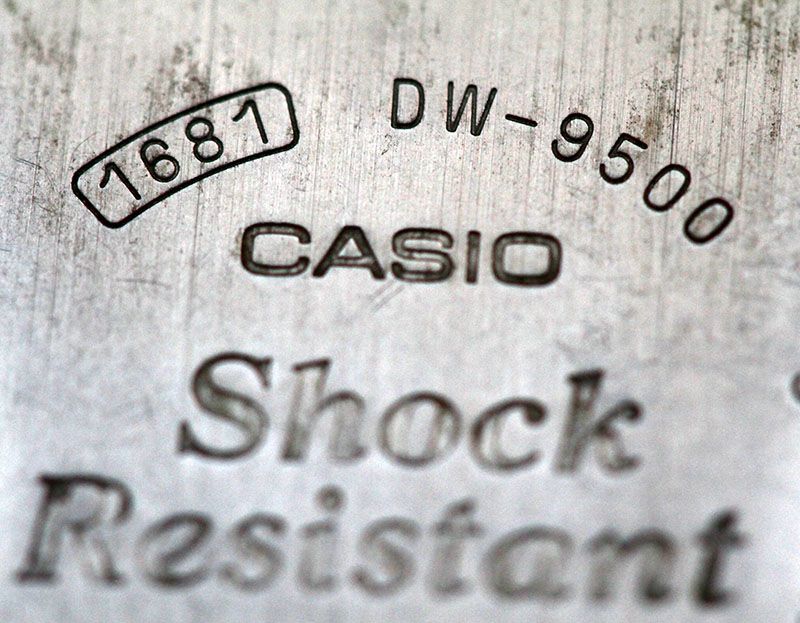
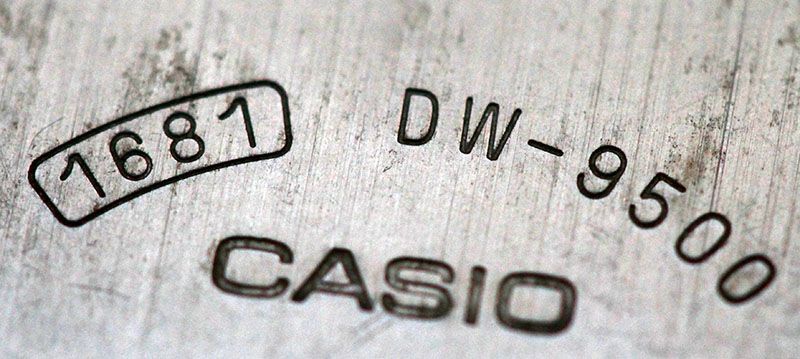
The DW-9500XS “Thermometer” was only released in Japan. In the US and Europe there was a DW-9400 Thermometer and a DW-9500US released, which was released for the US Open of Surfing in 1998. The DW-9400 model looks like the DW-9000 type models, but the module is probably the same as the DW-9500US. The DW-9500US has a 1683 module, which is similar to the 1681 module, but can change between ºC and ºF.
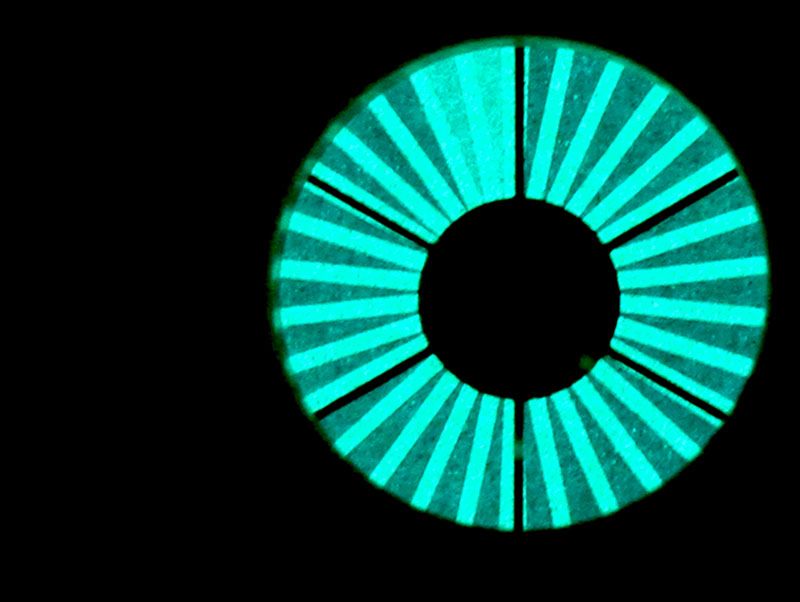
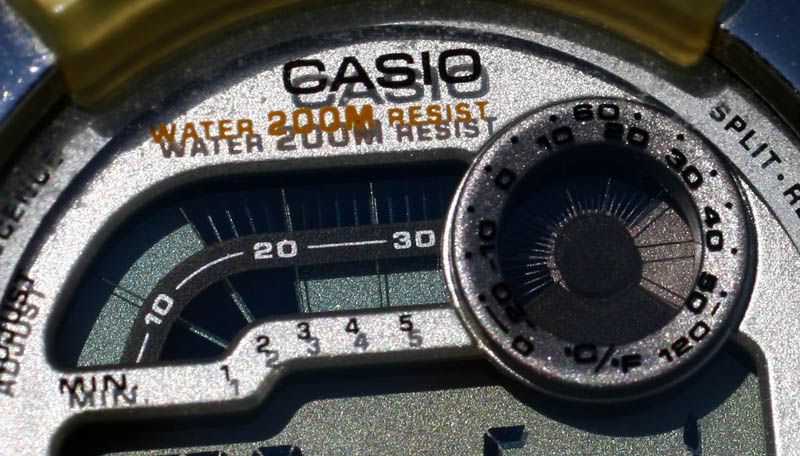
The Thermometer "Eye" of the DW-9500US, showing both ºC and ºF.
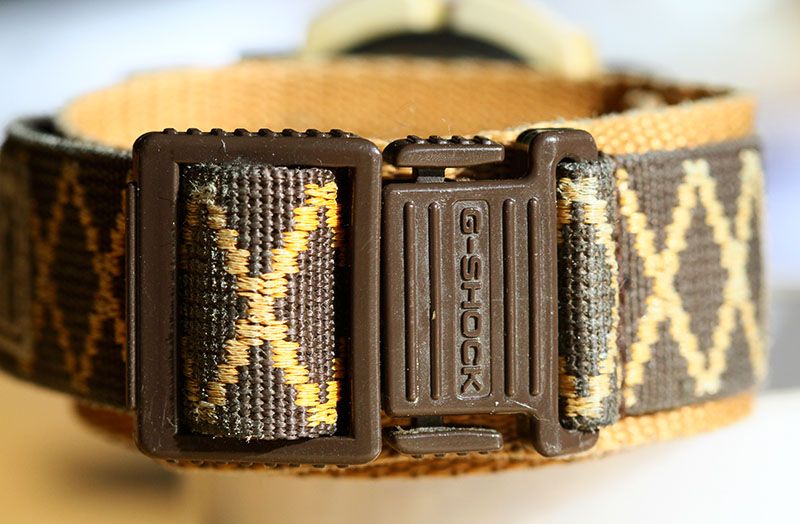
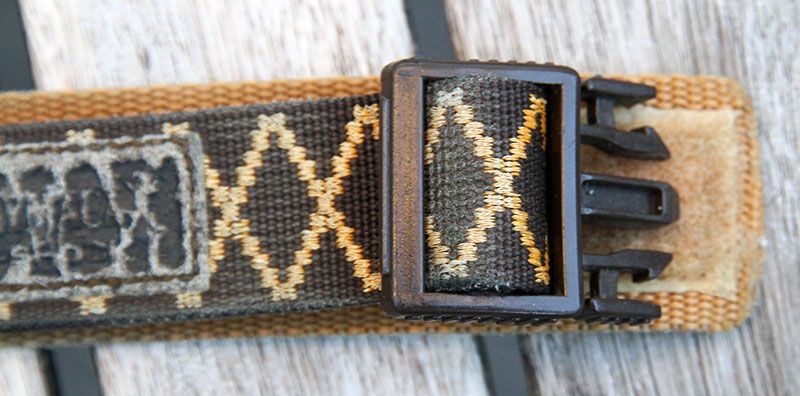
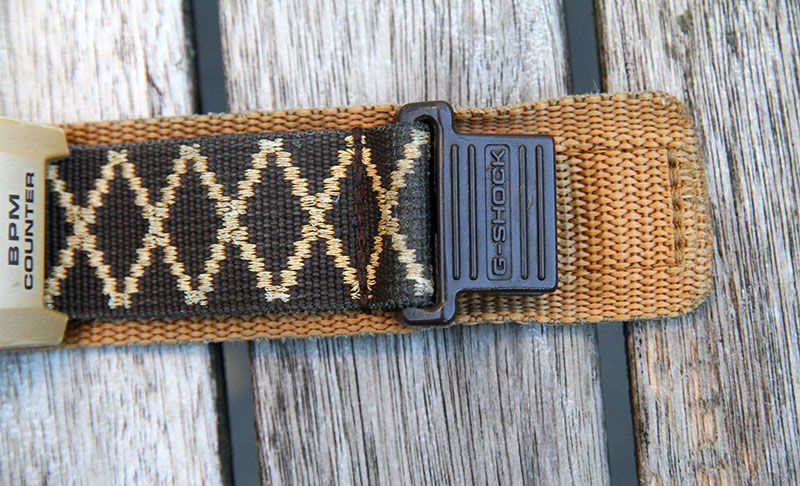
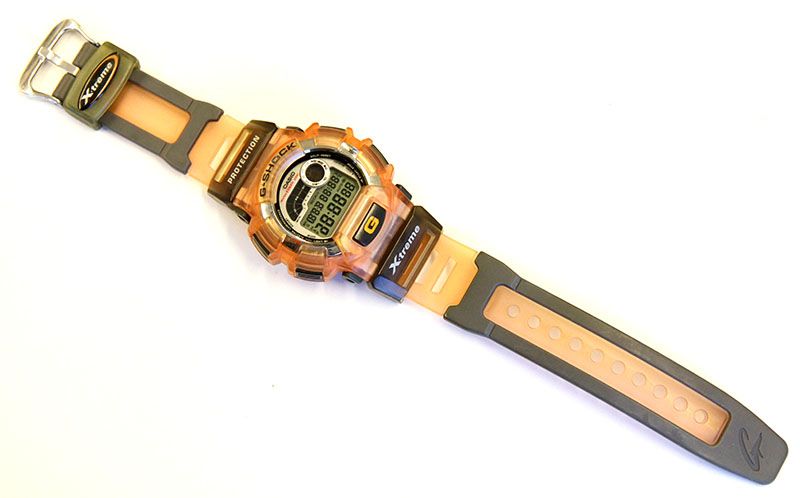
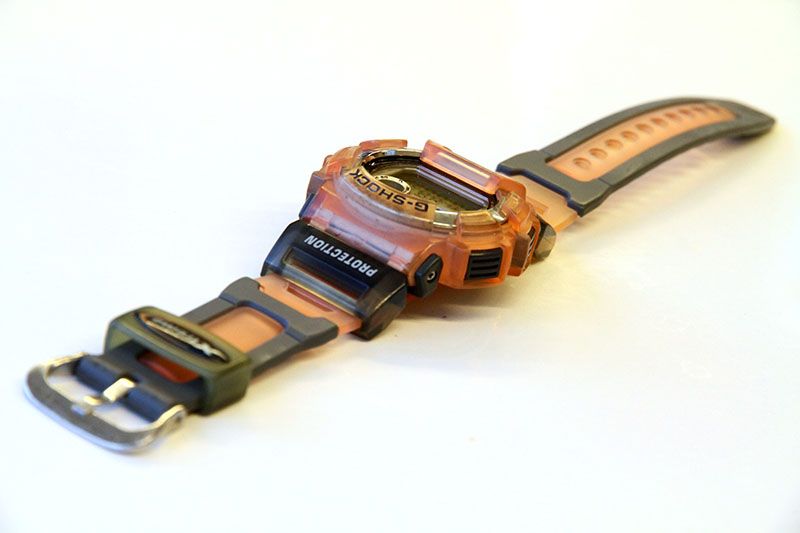
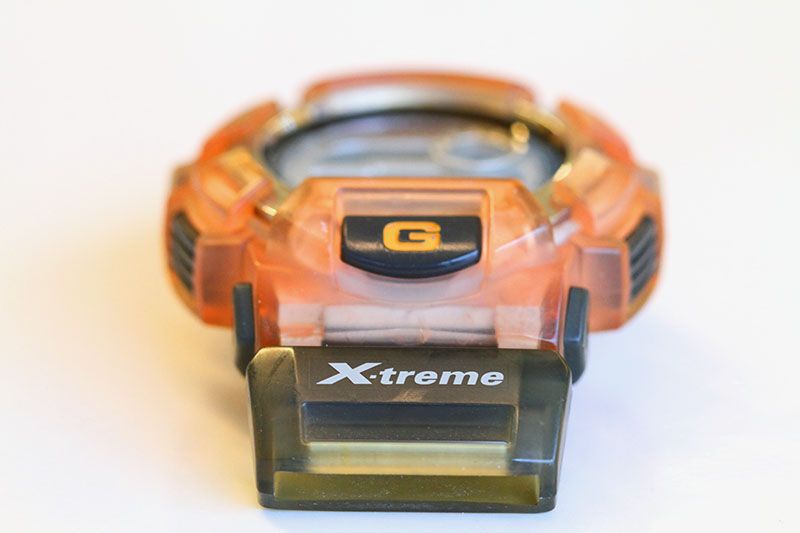
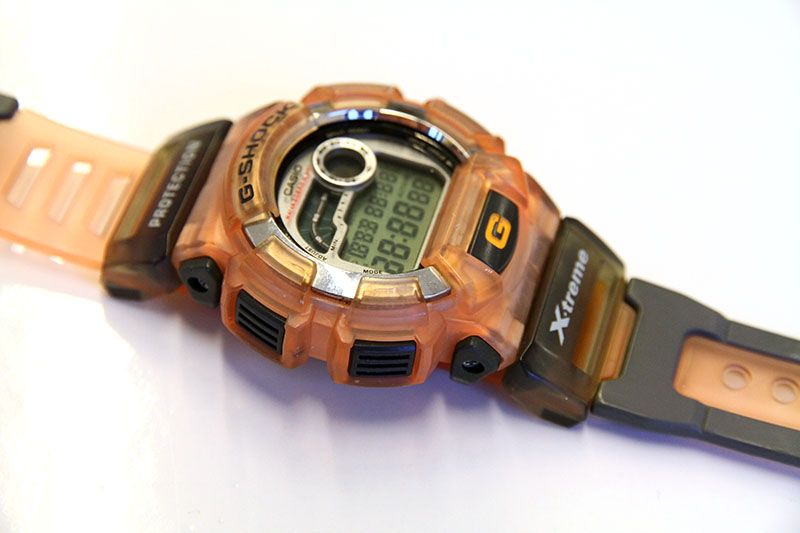
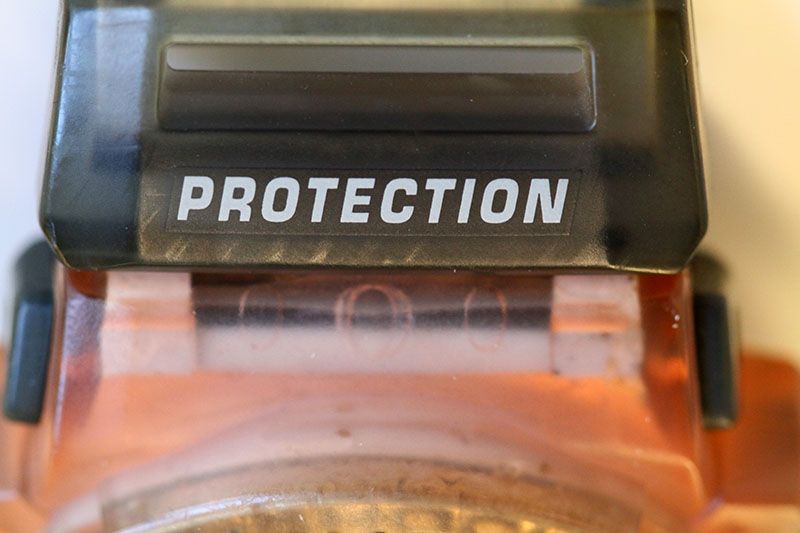
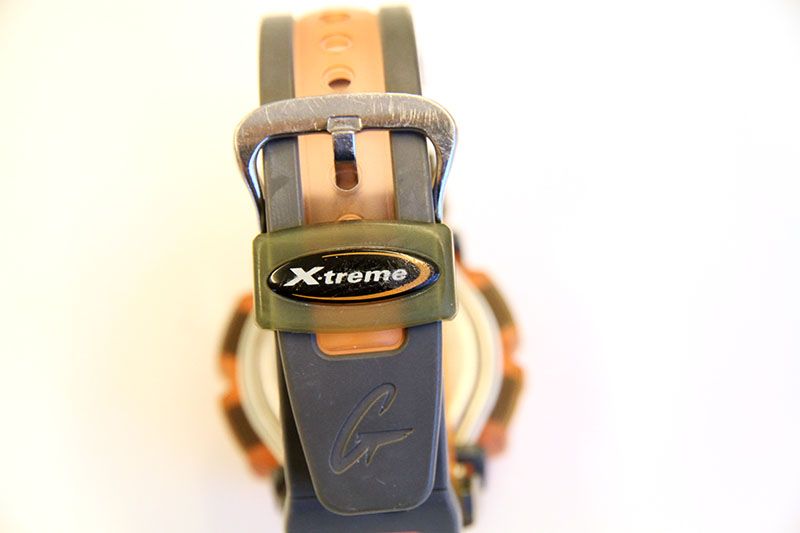
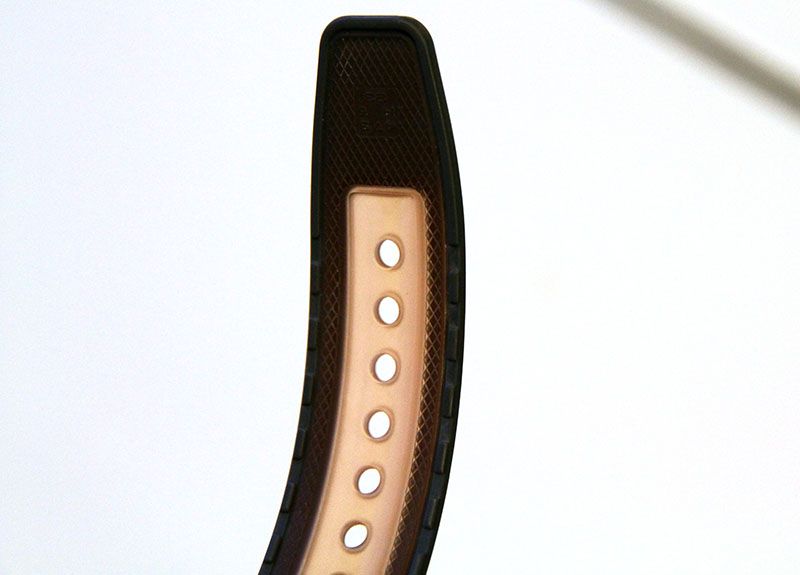
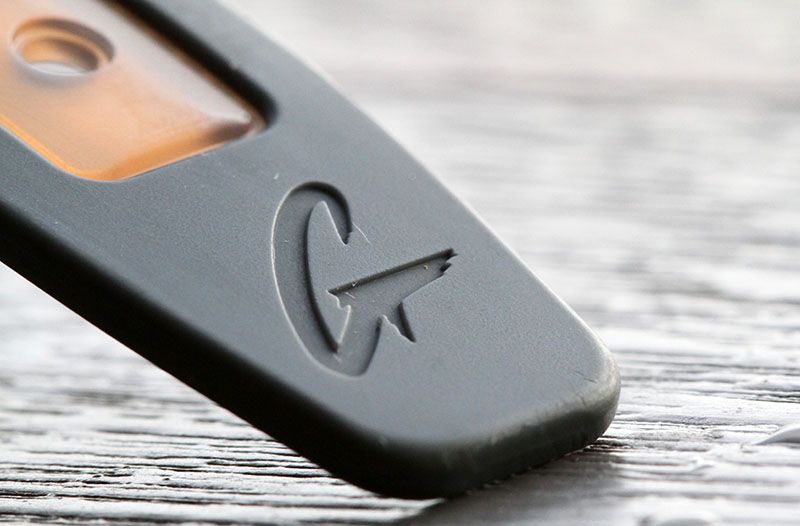
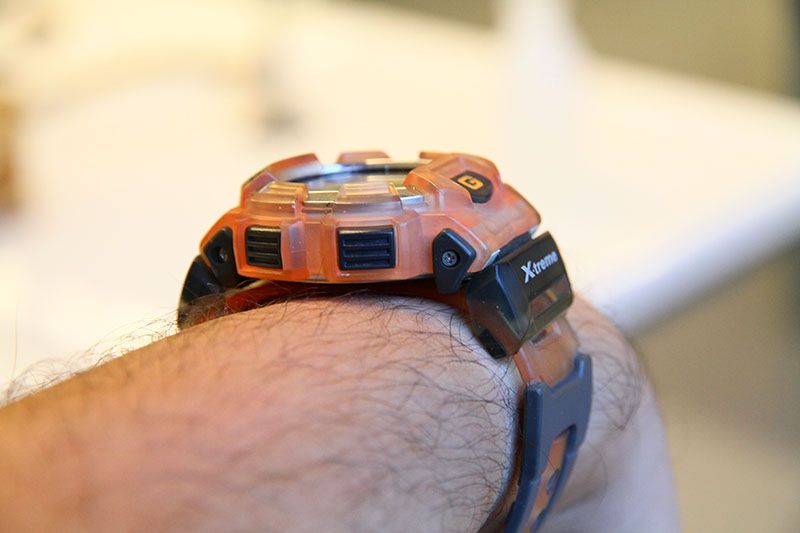
As the DW-9500XS models were specially designed for Surfing, it has a similar design as other G-lide models of the ‘90s, like the DW-003S, DW-9000S and DW-6900S. The strap is long enough to fit over a wet suit and additional holes allow air to flow between the arm and case, preventing nasty smells and irritations. There is even an additional hole in the strap adapter.
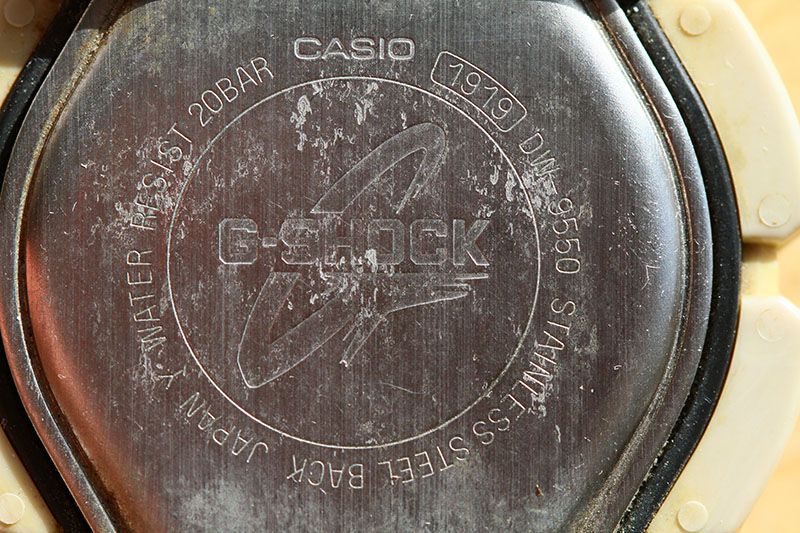
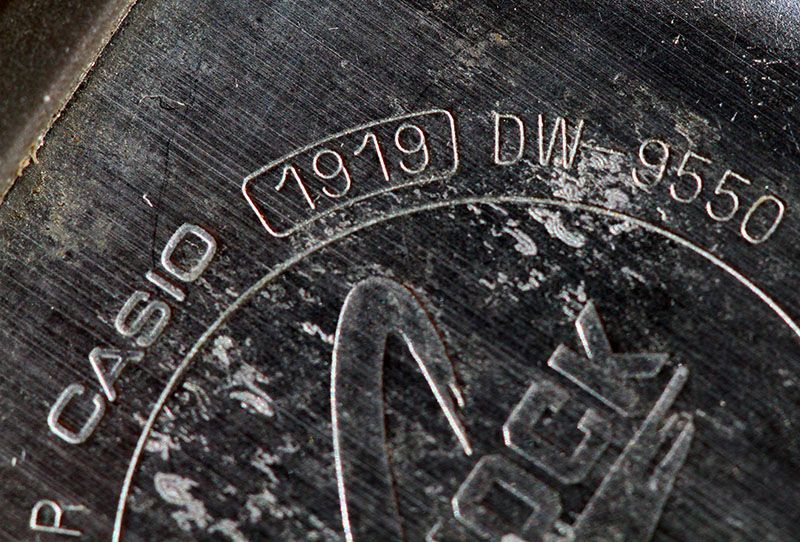
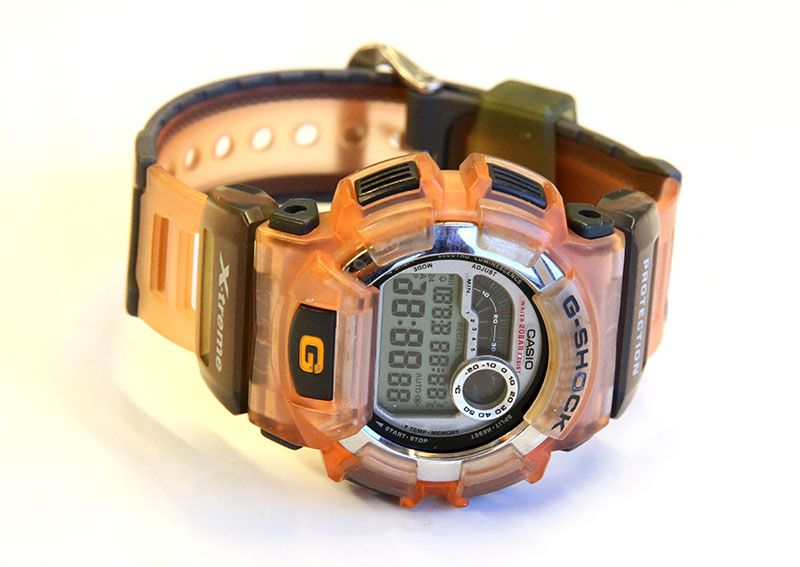
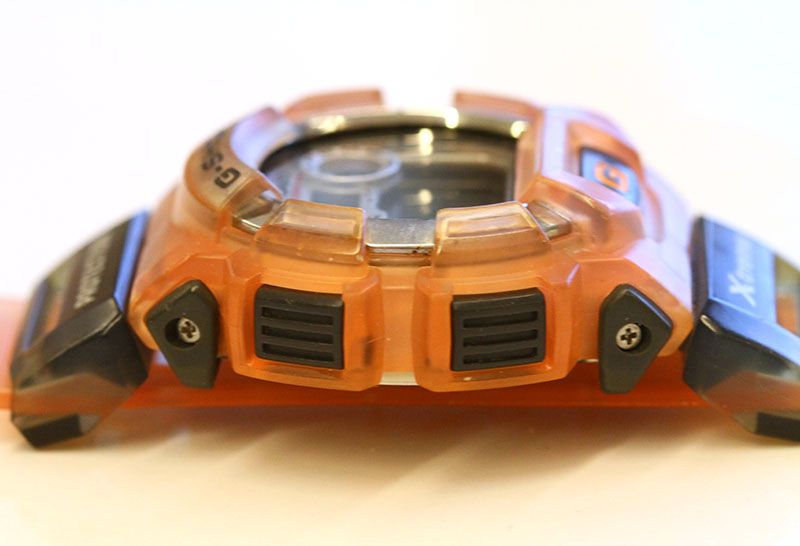
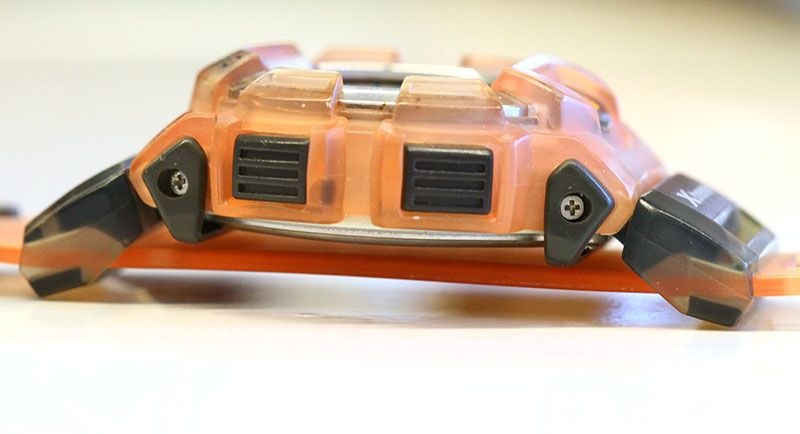
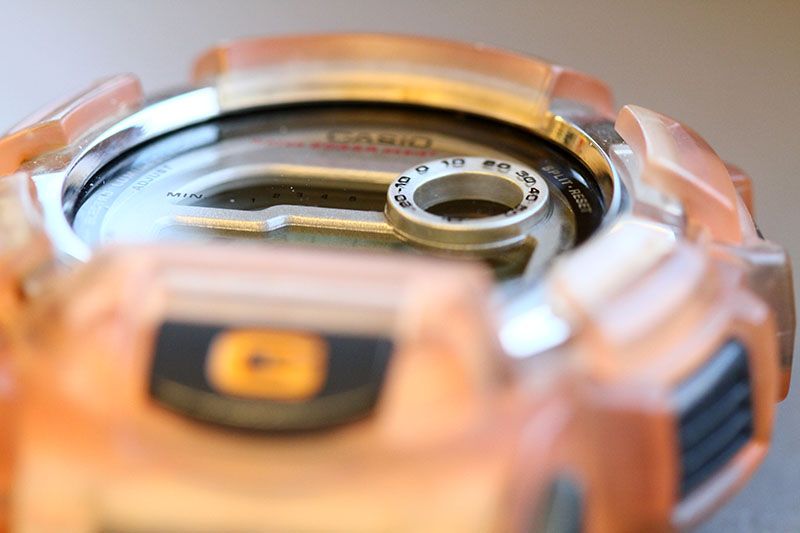
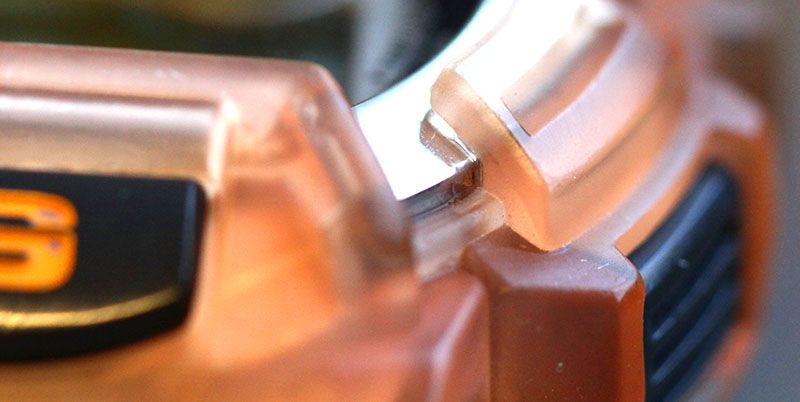
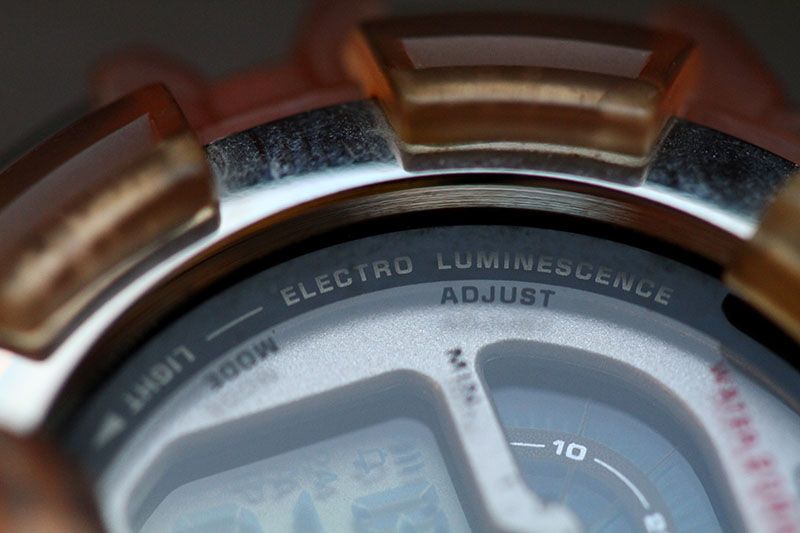
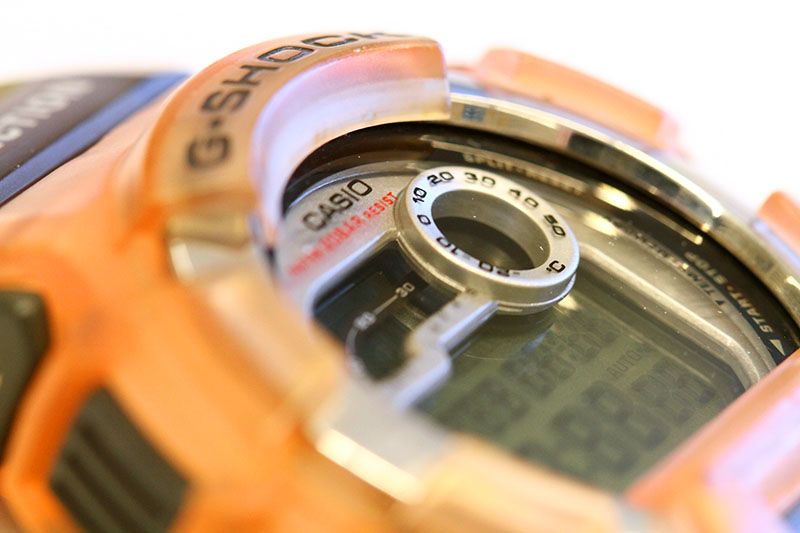
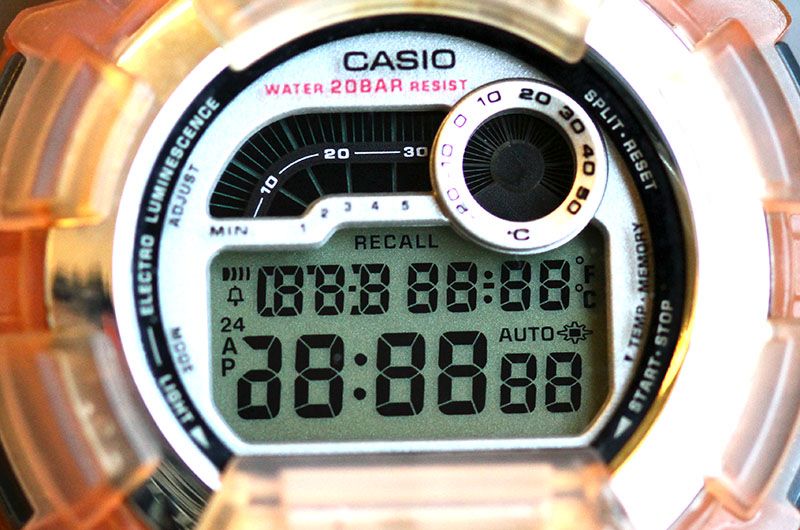
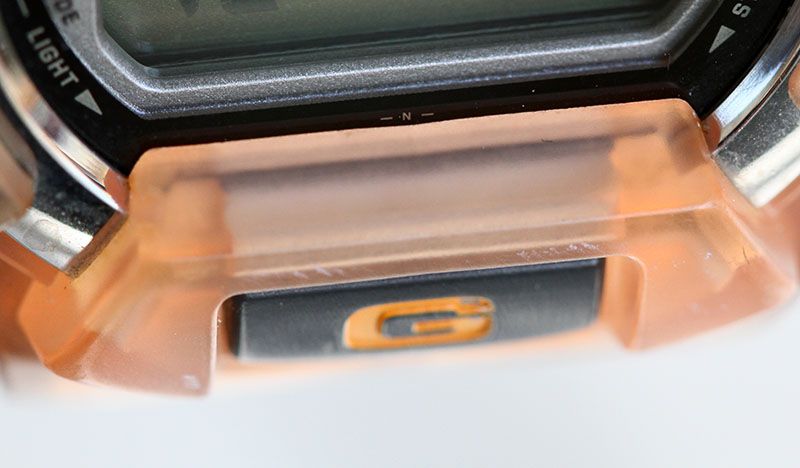
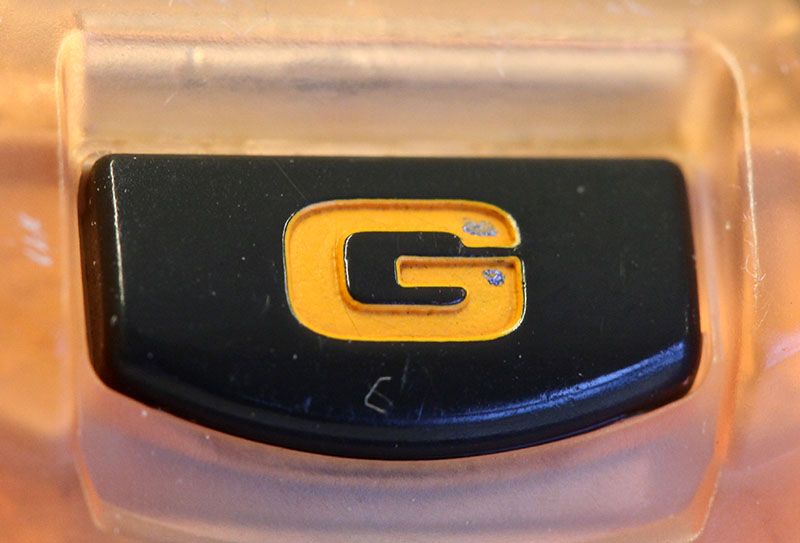
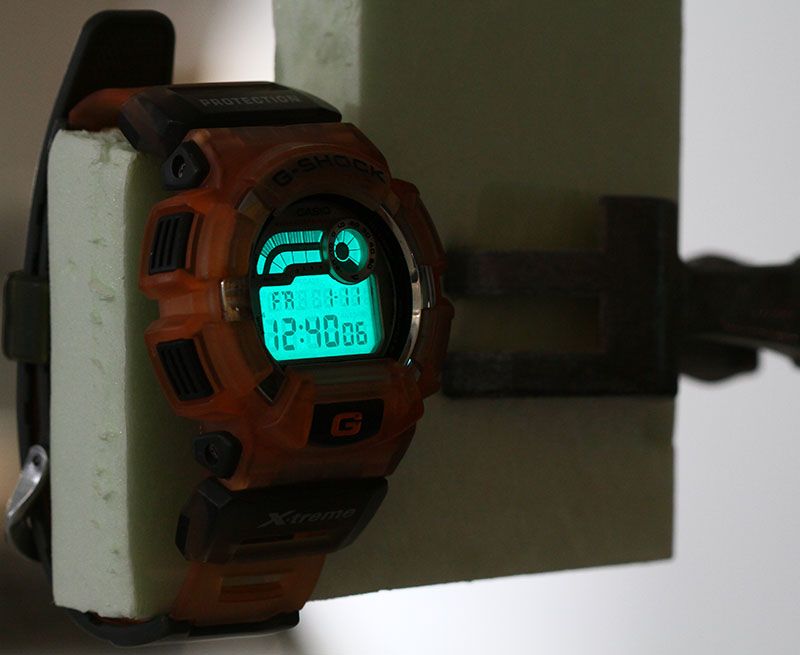
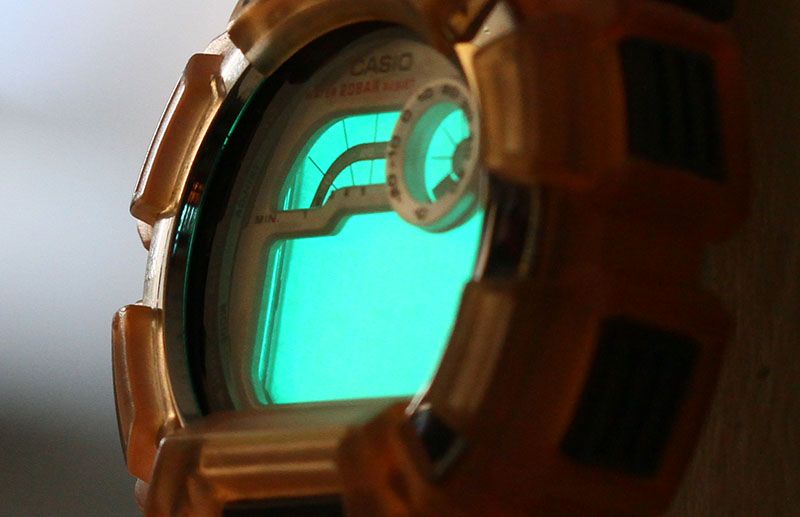
The DW-9550 case and bezel have a typical ‘90s G-Shock design. It looks much like the DW-9000 design, but at the front there is a metal ring instead of 4 metal pins.
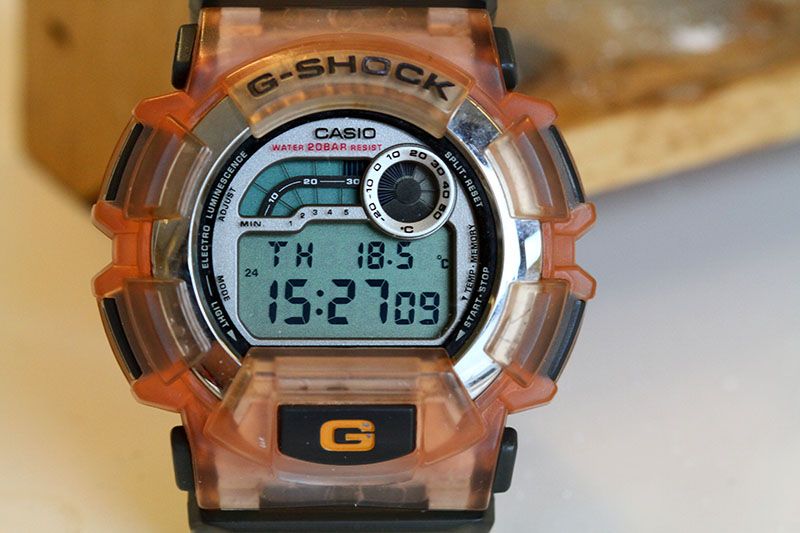
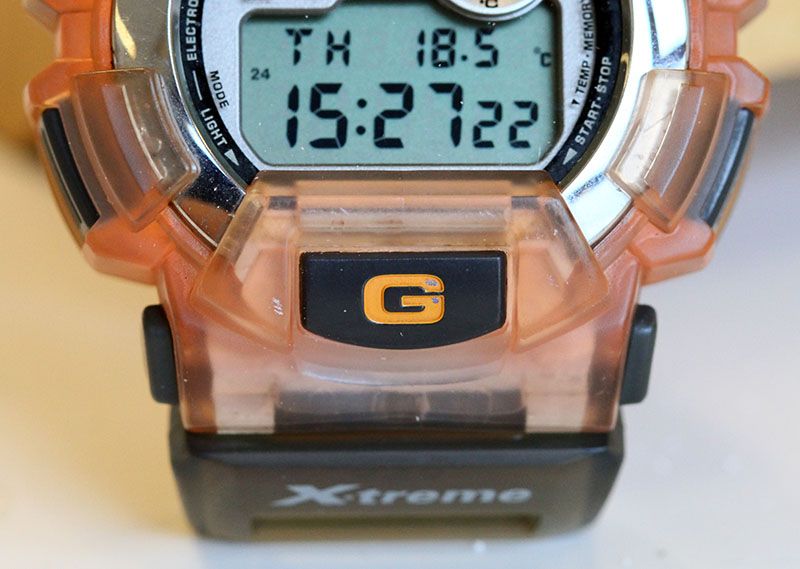
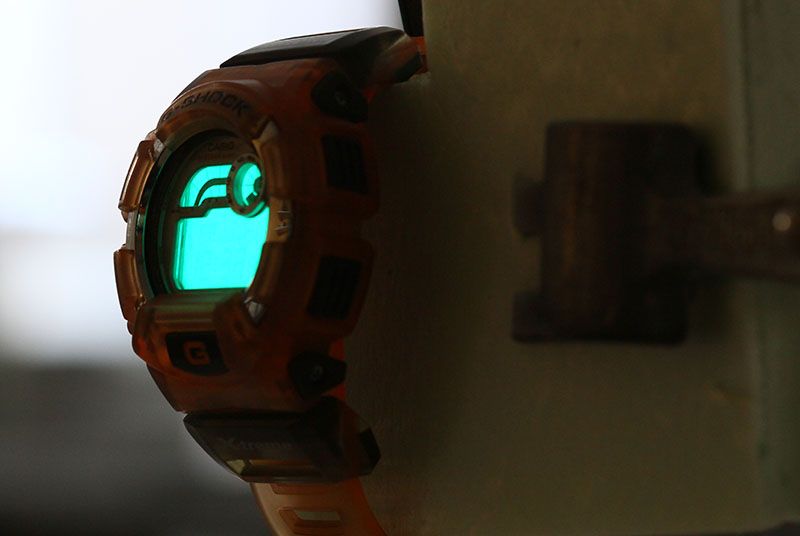
This DW-9500XS was released in 5 colors. Besides this “red” version, there was also a blue, green, grey and white model. All came in similar translucent strap and bezel design. Although the frosty translucent resin does not give a clear view from what lies below, these models are sometimes in Japan referred to as “Skeleton” models, analog to mechanical “see through” watches. In English translucent models are often referred to as “Jelly” models, like the jelly bears.
Most important extra feature of this G-Shock is the Thermometer function. Although it is possible to measure the temperature manually anytime, it automatically records the temperature every hour and stores it in the memory. The watch can store up to 100 temperature records. When all memory places are full, the oldest record is deleted to make place for the newest.


In Timekeeping Mode you can start a temperature reading by pressing the upper right button. After a short measurement the date will be replaced by the temperature. The measurement will also be added to the Temperature Data Memory. Casio already does not recommend to read temperature while the watch is worn on the wrist. The temperature reading will be affected by the wrist temperature. It’s best to take off the watch and let it acclimatize for 20 to 30 minutes. The thermometer responds pretty fast. While testing this function (off wrist) I had it in my (warm) hand. It caused a pretty rapid temperature raise of about 1 degree centigrade. Also direct bright sunlight and moister can affect the thermometer function.


You can leave the Time Keeping or Thermometer mode by pushing the Mode button (the usual bottom left). Next function you enter is the Countdown Timer Mode. Unusual for an X-treme/G-lide model is the 1 second to 24 hour capacity. Usually G-Shock surf models of this era only have a 60 minute Countdown Timer. A big plus! The Count Down Timer has also a Progress Beeper (which can of course be toggled on and off), which keep you informed about the progress of the timer function. It starts beeping at 10 minutes before the target is reached, followed by the 5, 4, 3, 2, and 1 minute, 50, 40, 30, 20 10, 5, 4, 3, 2 and 1 second mark. It also has the possibility to toggle Auto Repeat on and off. A pretty useful function.
When you leave the Countdown Timer Mode, you’ll enter the Stopwatch Mode. It is the common 24 hour Stopwatch.
The Temperature Date Recall Mode is a kind of recorder. It shows the last measurement first. If the watch has done over 100 measurements, the first measurement is deleted and the latest measurement gets number 100. When left is a certain place it is a good way to record the temperature over a long period (up to 100 hours = 4 days). As the thermometer function is not accurate when the watch is worn, I consider this function more or less a gadget then a useful function. Still I sometimes use a record function like this when camping outdoor. If left hanging somewhere in your tent, you can record the temperature during the night. For people in the US, sorry, this model only shows ºC. It was a Japan only model.


Finally there is also an Alarm Mode. Not just a simple ’90’s single daily Alarm, but 5 independent Alarms, which also can be set to a day and month. This means that every Alarm can be set as a Daily Alarm, a Date Alarm, a 1-Month Alarm (every day during one month) and a Monthly Alarm (only on the programmed day of the month). Pretty unusual in 1998, specially the combination of the number of Alarms and the Date Alarm and variations.
This watch is not for sale pretty often, although it is also not really rare. I have bought mine, probably for a small amount in January 2008. I probably have paid somewhere between $50 - $60 for it. I have no clue from who I bought it from. It might be a friend of me, it also could be a lucky find on eBay. Nowadays, maybe you have to pay $10 - $20 more, but as far as I know, these models are not really sought after. They are just fun to wear.


Although the watch has a relative basic G-lide look of the 90’s, it is pretty complete, specially with the Thermometer function on board. I hardly use this function, but the extensive Countdown Timer functions and the Alarm functions are pretty complete. I pretty much like the DW-9500 case design. The protected buttons and the metal ring around the display gives this watch a quite tough look. Only negative point maybe would be the colorization of jelly resin. As this watch is salmon pink/orange, yellowing will be masked better, then if the watch was white or grey though. As you can see, my X-treme is used, but the jelly is still looking very good after 15 years. Never the less, it is a great model for water sports.