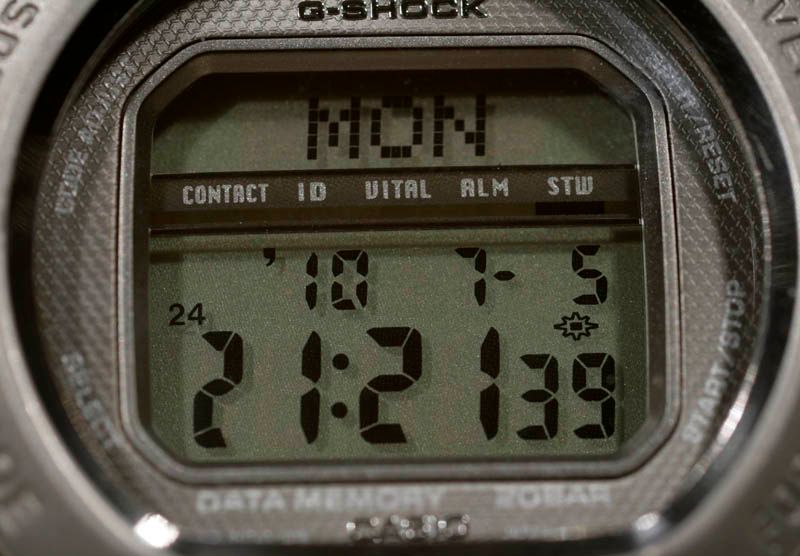
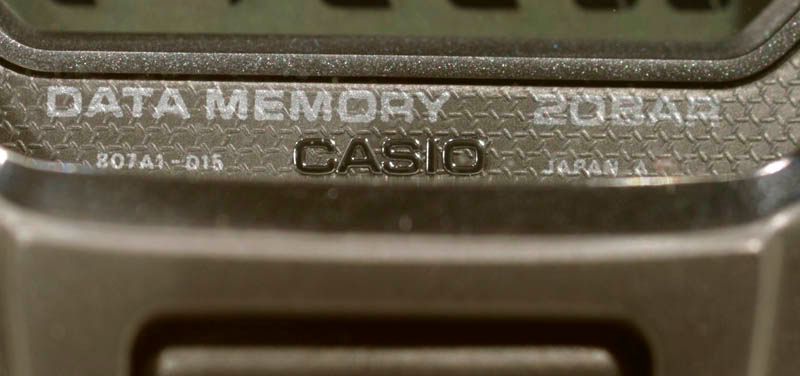
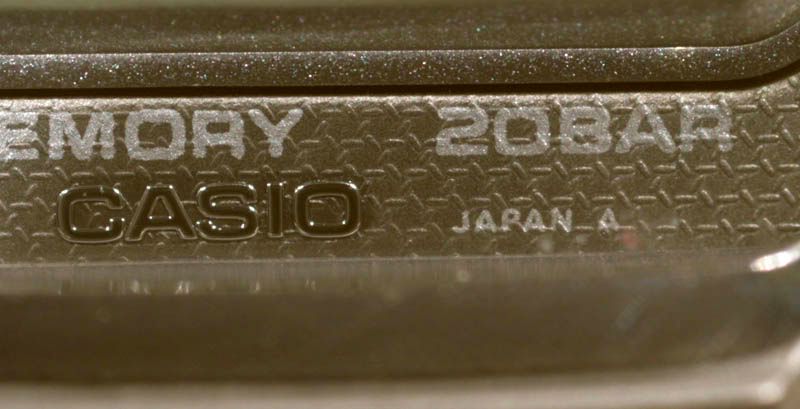
In 1960 the UEFA and CONMEBOL (the European and South American tootball organizations) organized the Intercontinatel Cup for the first time in Spain. The winners of the UEFA Champions League and the CONMEBOL Copa Libertadores met eachother in the end of November or begin of December.
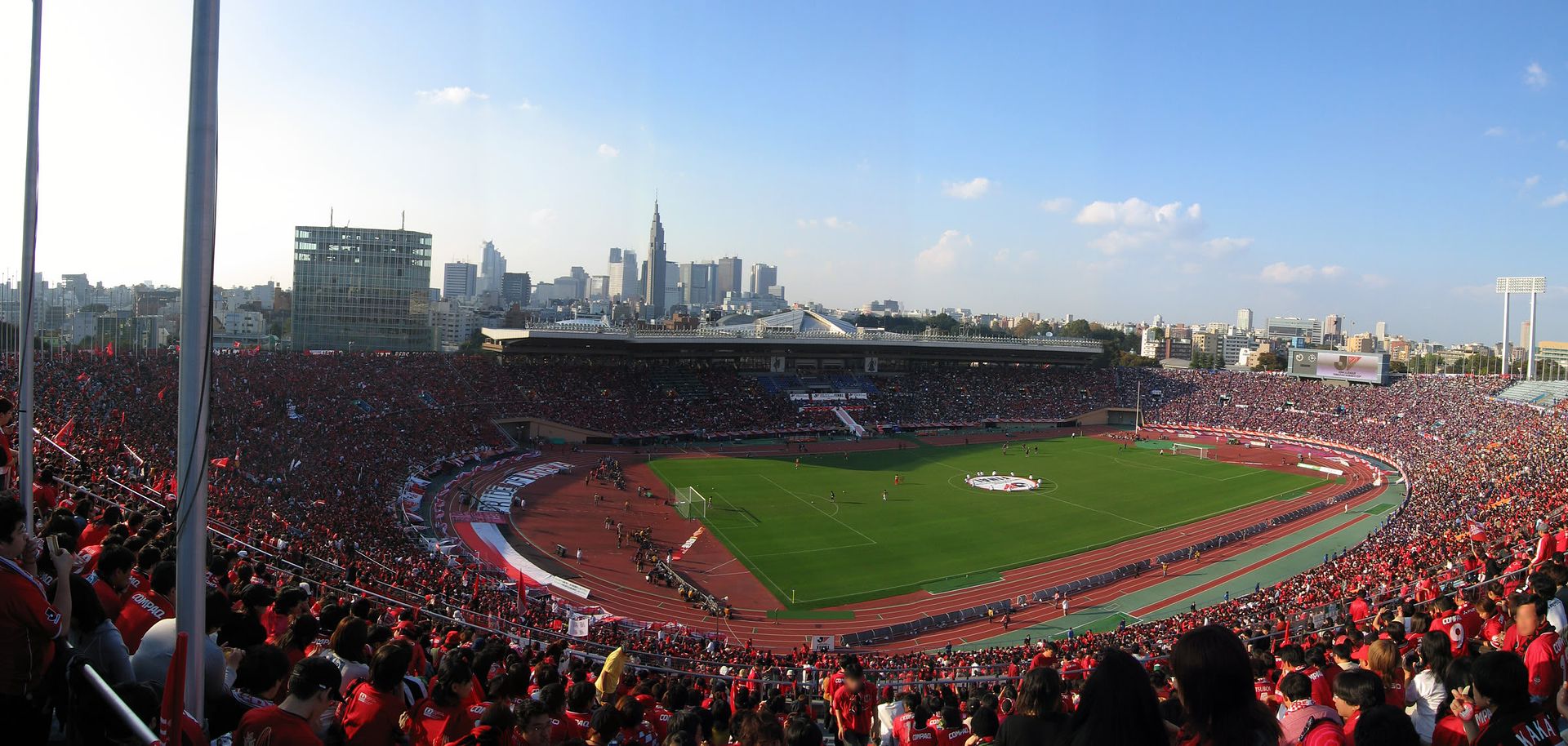
Tokyo National Stadium
The matches were hosted in rotation in Europe and South America. Since 1980 the match was held on neutral ground in Japan. From 1980 to 2001 in Tokyo National Stadium, in the last three years in the International Stadium in Yokohama. The Intercontinental Cup became then better known for it's head sponsor, the Toyota Cup.
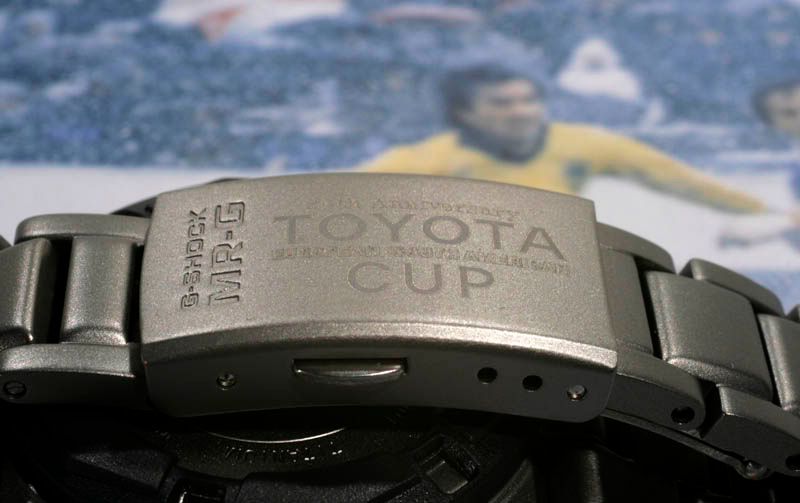
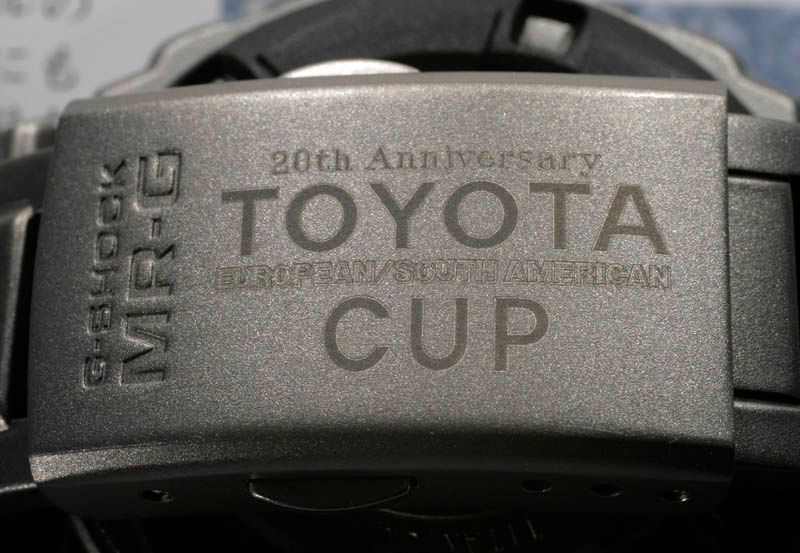
In 1990 the Toyota Cup was held for the 20th time. For this occasion a special MR-G model was made. I think someone made a small calculation mistake, because it was called the 20th Anniversary model for the Toyota Cup, but it was in 1999 actually the 19th Anniversary (you start counting from the first match, so the second match is at the first anniversary...). They meant the 20th Toyota Cup match.
I found this beautiful watch on eBay, not long after I had bought two other very special MR-G models. The title of the auction mentioned it was an MR-G and a Toyota Cupo model. Still I won this auction for a very good price. I think I paid around €100 for this model.
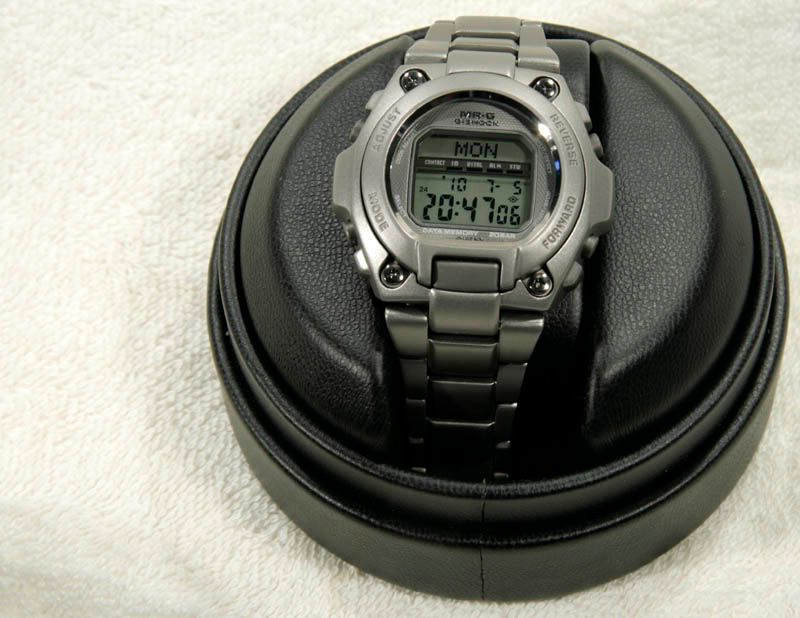
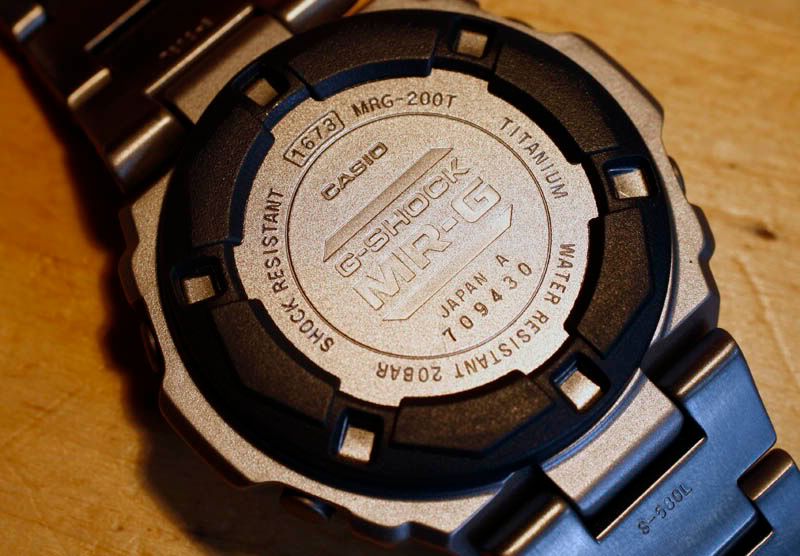
This special edition is based on the MRG-200T-8. If it was ever for sale, it should have cost between 57000 and 60000 yen. This model can't be found in the G-Shock Perfect Search. If you search for this model, you can probably only find my model. The text above the logo on the box "Many Thanks!" also suggest this watch was made as a gift. Since the MRG-200T was a high end G-Shock model, I guess this watch was given to staff members of the Toyota Cup.
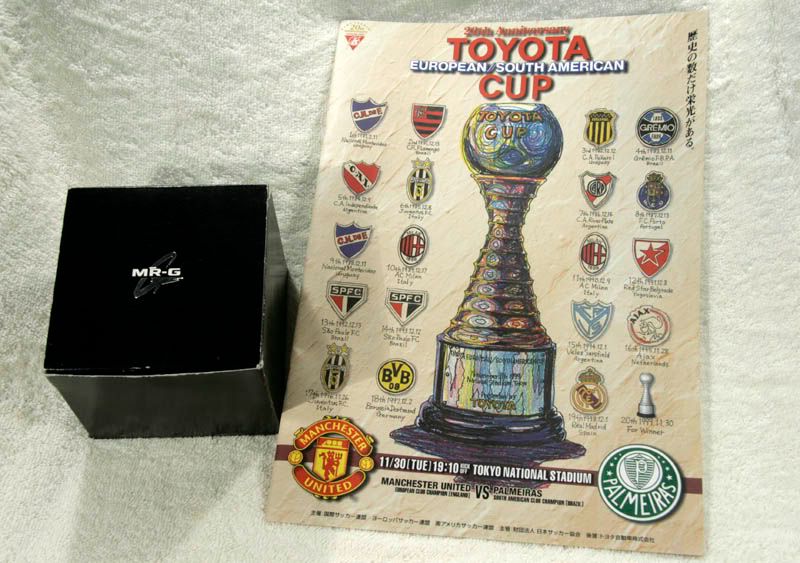
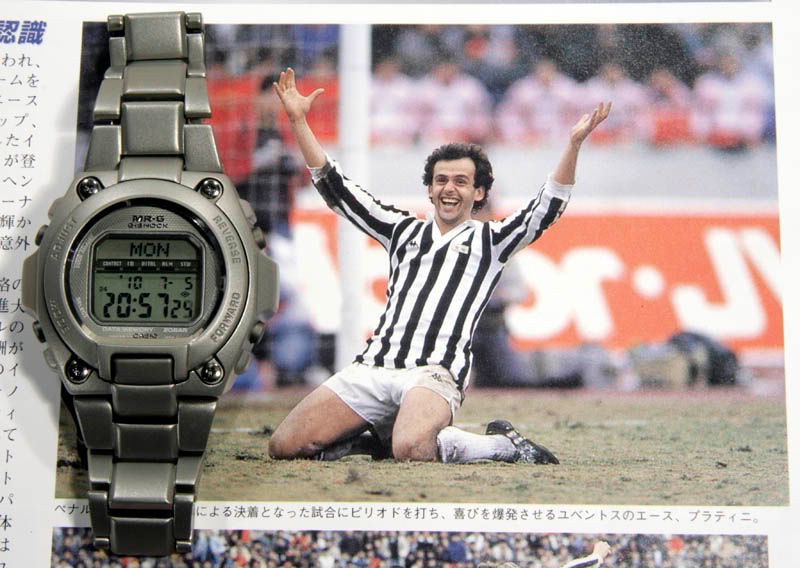
I was very happy when I got this model. The seller was also happy the watch went to a real G-Shock enthusiast. He included a program of the 20th Toyota Cup. All matches can be found on the cover. The 20th match was between Manchester United (England) and Palmeiras (Brazil). The Toyota Cup 1999 was won by Manchester United with 1-0.
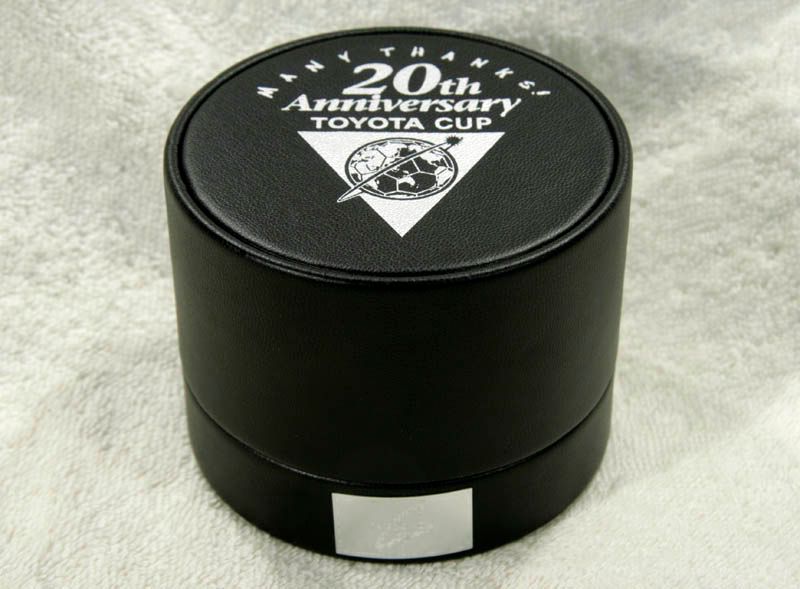
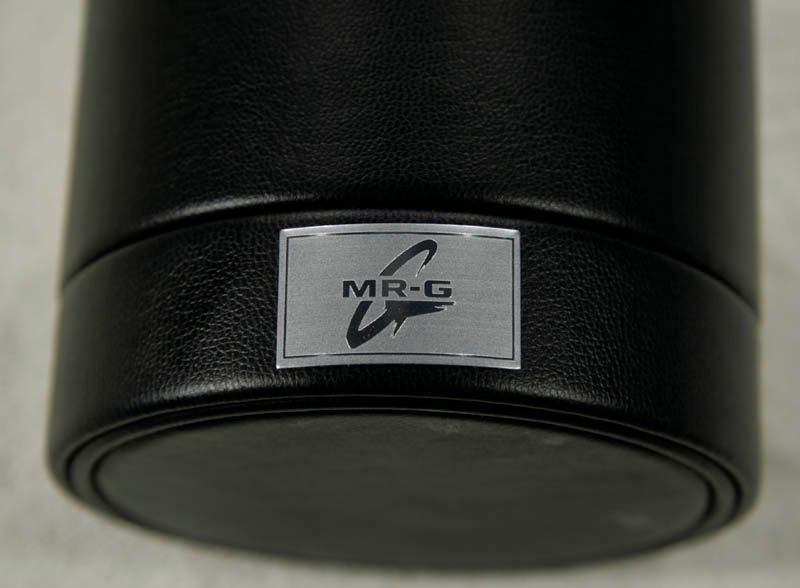
The classic metal MR-G models of the late 90's came in a beautiful leather covered box. On this box the logo of the 20th Anniversary Toyota Cup is printed on the cover. The MR-G logo is etched in a small metal plate at the bottom of the box.
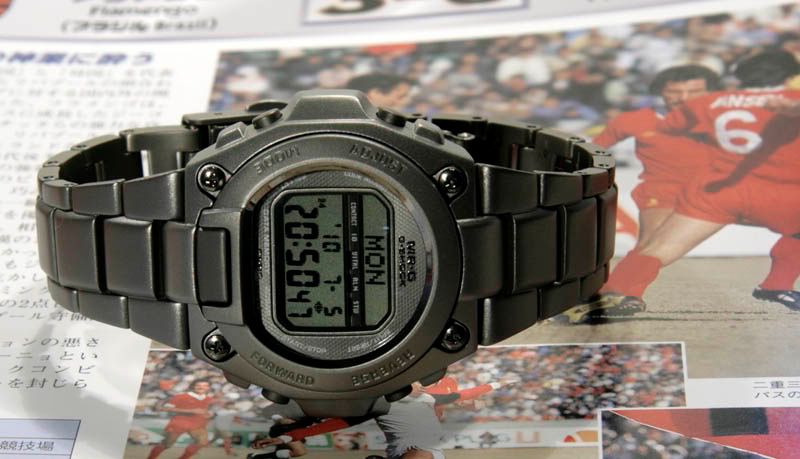
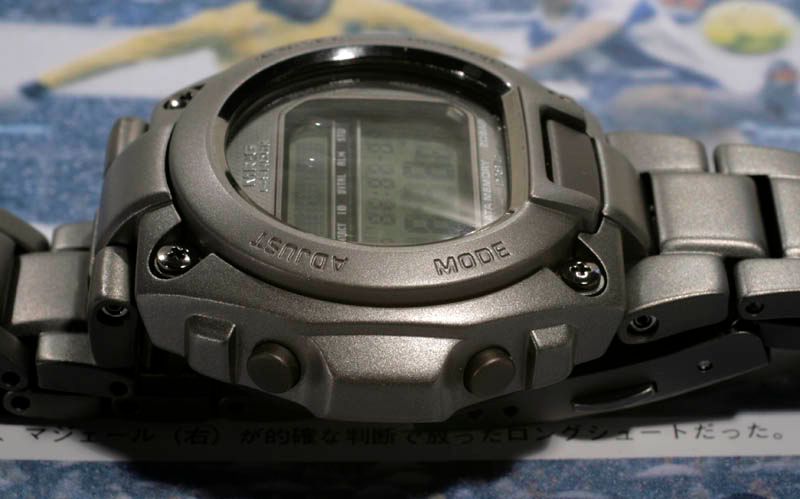
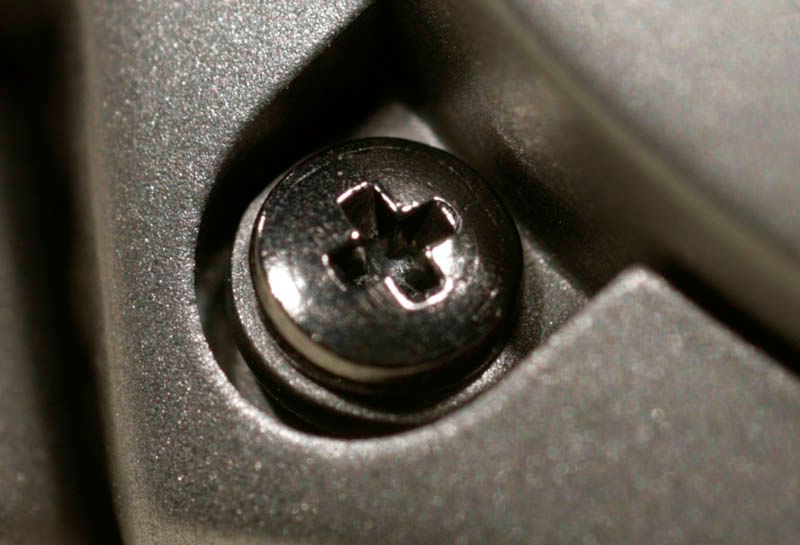
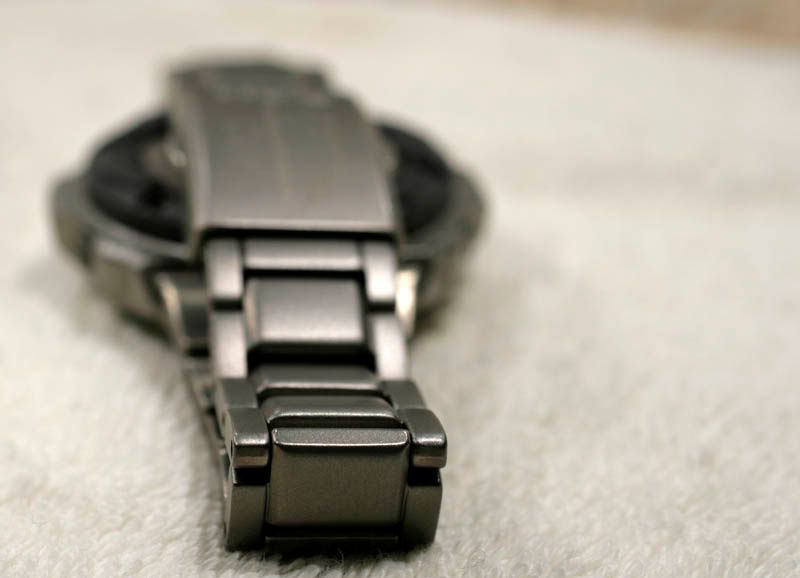
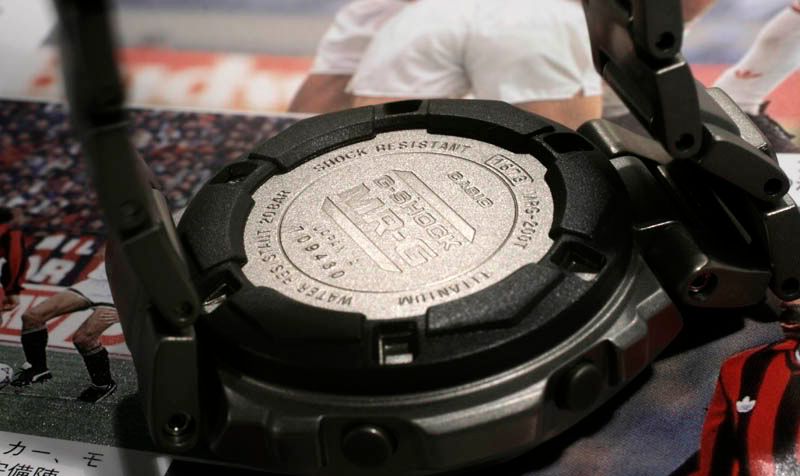
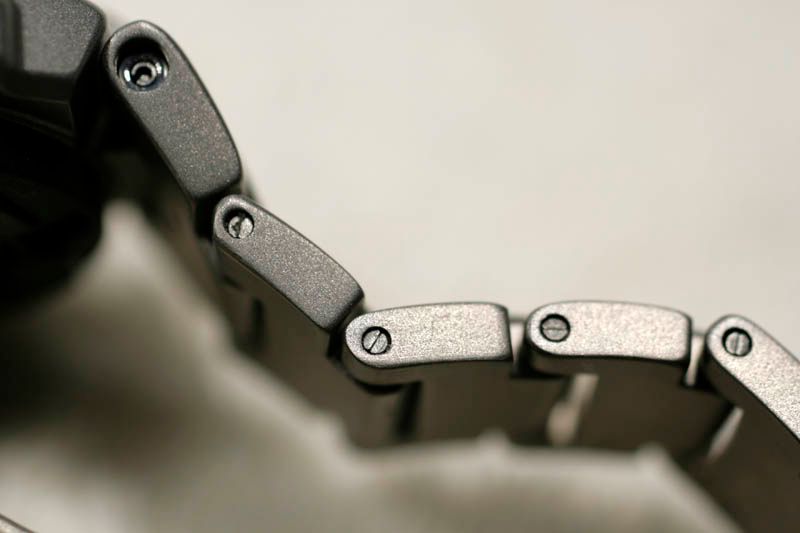
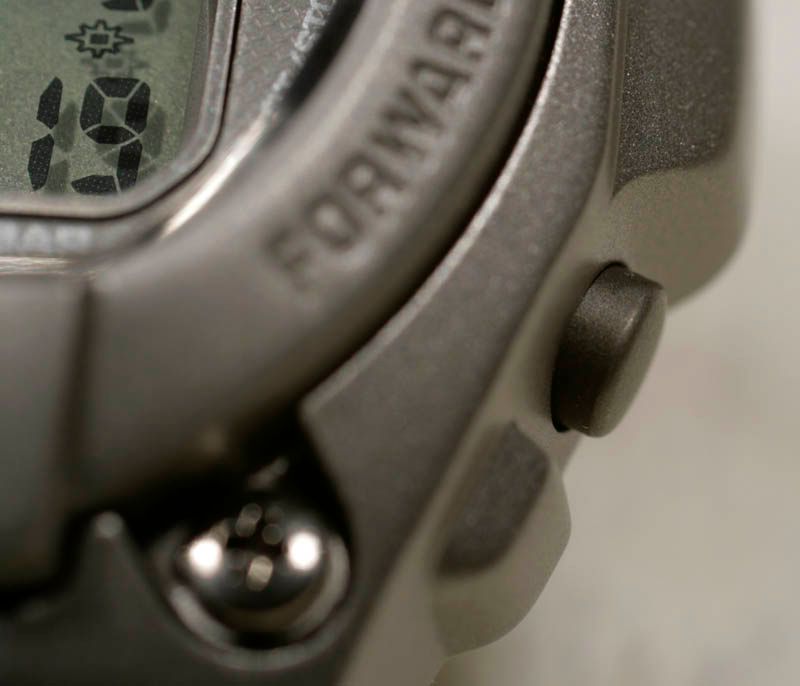
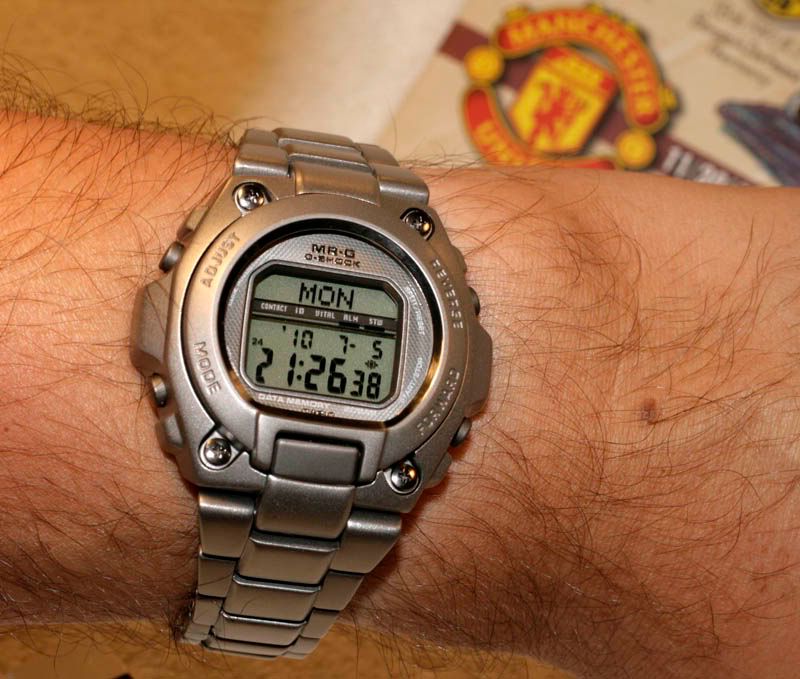
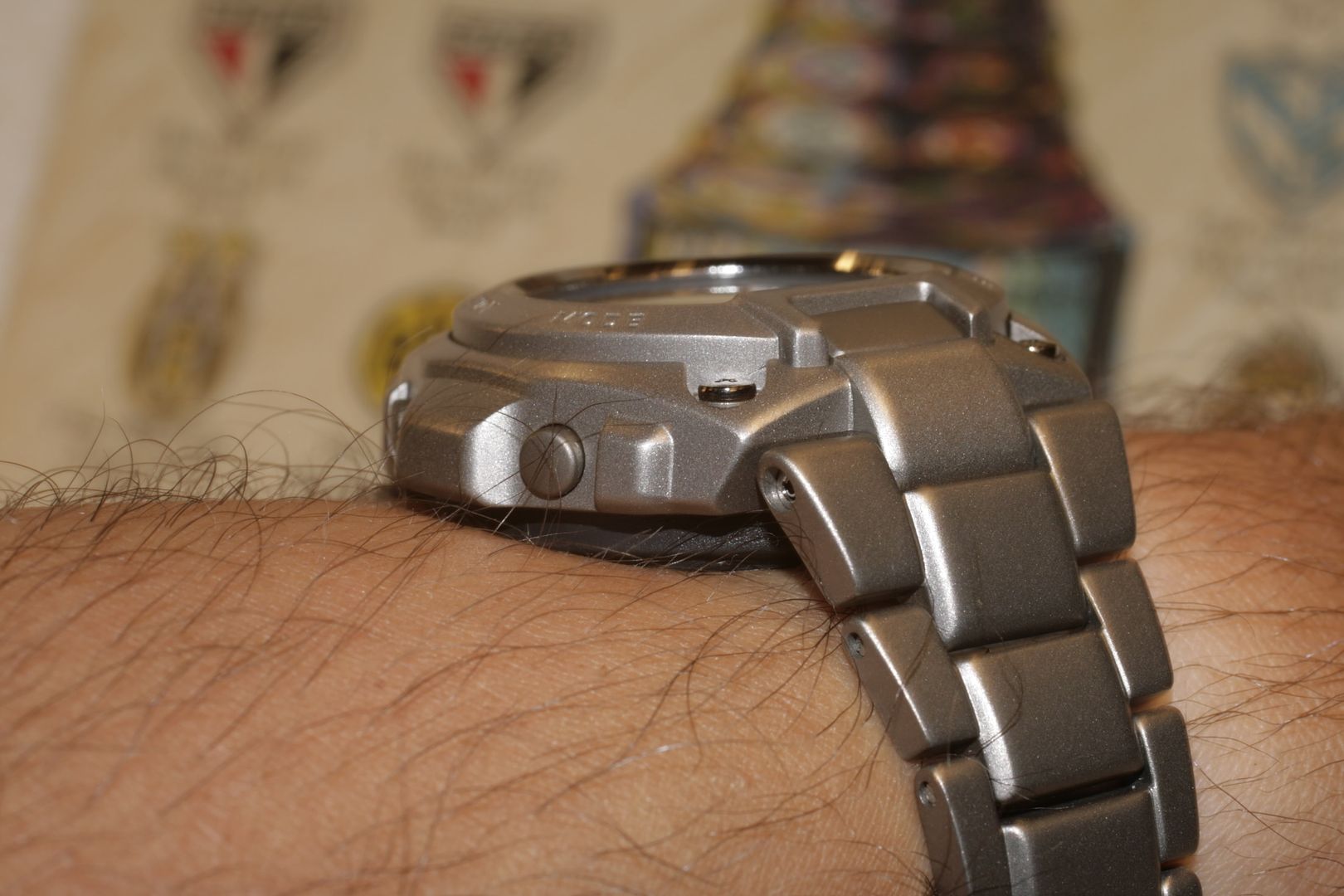
As the model number already suggests, the watch is made of Titanium. The bracelet seems to been made of solid links. It seems that the links are chained by screws, instead of springbars or split pins.If you have pretty big wrists, you still might fit this model. The bracelet can be adjusted pretty good, because you can adjust at 1/3 of a link. Most G-Shock can only be adjusted at 1/2 link. .
The titanium used on this watch is dark gray. Not very dark, but much darker than stainless steel. It seems not pure gray, I spot a little brown hue in it, very beautiful. The watch itself is quite light for a MR-G. It's maybe not very light, but a stainless steel MR-G is pretty heavy.
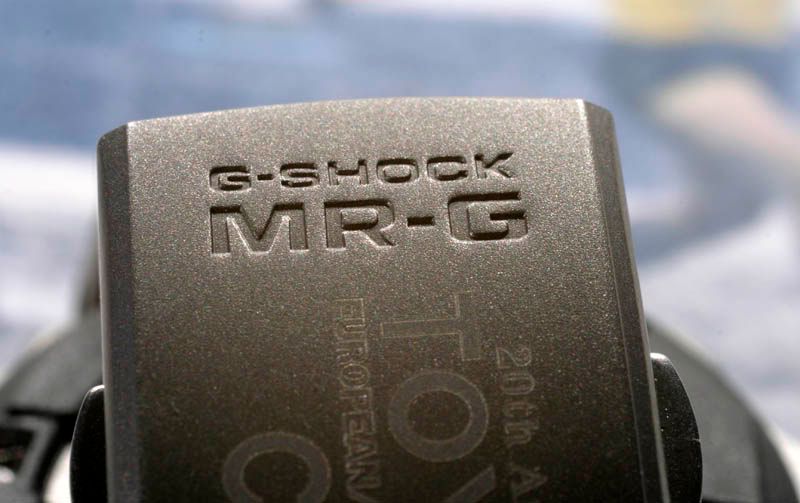
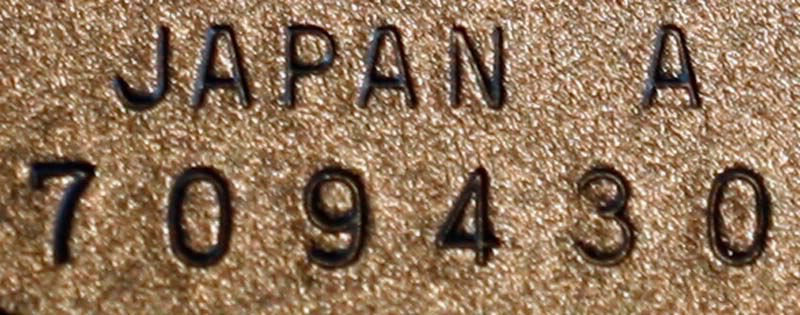
The MRG-200T dates from 1997. The serial number tells us the watch was assebled in October 1997. The normal titanium version cost back in 1997 55000 yen. The Toyota Cup model does only have a special box and a engraved clasp. I think Casio picked these MRG-200T models from their warehouse and engraved the clasp. That might explain the relative long time between assembly and release (October 1997 - Noveber 1999).
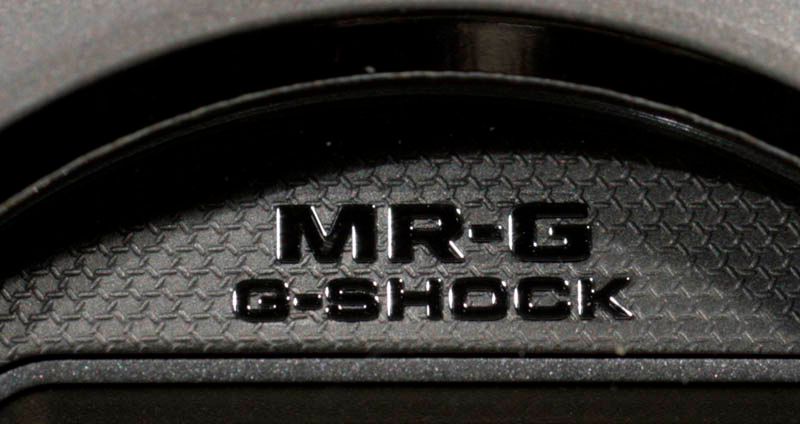
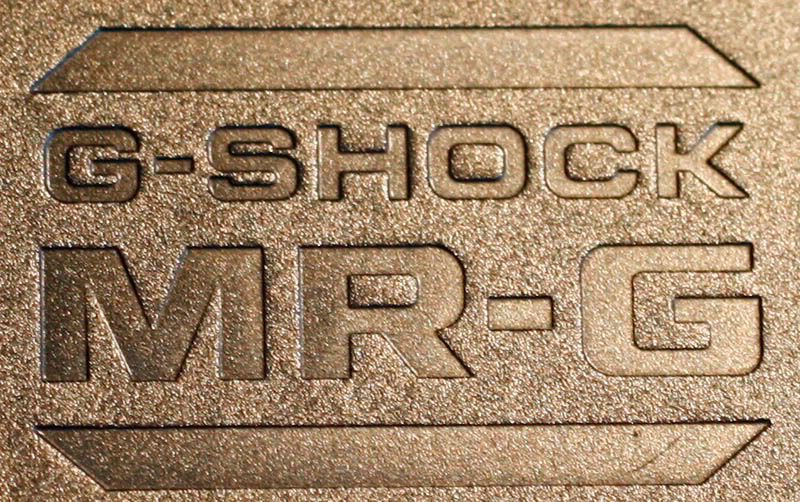
MR-G is the top line of G-Shock (it was in the 90's and it still is with the recent models). The late 90's models were completely made of metal and divide themselves with that from the other G-Shock models. Also the look is somewhat different, thought the raised rim around the display and the screws on the front give these models a tough and sturdy appearance.
The module (1673) has some different functions, than what you normally find on a G-Shock.
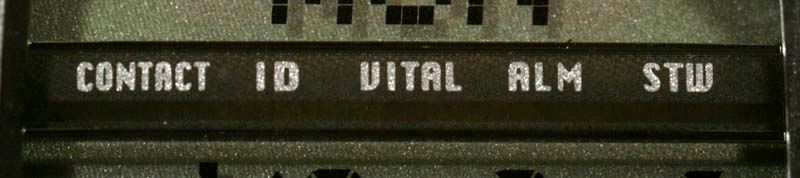
First mode is Contact Mode. Here you can store up to 20 data sets, like telephone numbers. It shares the memory Identification Mode. In Identification Mode you also can store up to 20 data sets. You can input here data like passport numbers, credit card numbers and licence numbrs. I somehow can't recommend you to store credit card numbers here. A funny detail, the 1673 module can input both alphanumeric characters as katakana characters (98 characters in total).
Next mode is Vital Statistics mode. In Vital Statistics you can input your name, blood type and birth date. It is always good to input this data. Unfortunately I do not think that medical people will check your watch in case of emergency. It won't be a bad thing if this mode would be a common function on many watches.
Further the watch has the casual Alarm function and a stopwatch on board. MR-G models do not have a loud alarm. This is probably caused by the thick metal case.
The watch has a beautiful EL backlight. The color is a kind of soft green. I always liked the clear look of the EL of the MR-G models.
If you really are looking for this specific model, I'm afraid it will be a hard search. A MRG-200T can probably easier be found, though it is not a model you see often. I found an old sales post for one sold at $100.-, which is a steal. I think a good price for this oldie would be around $150 - $200 for the basic 200T model. It is hard to give value this model, just because you don't see it often.
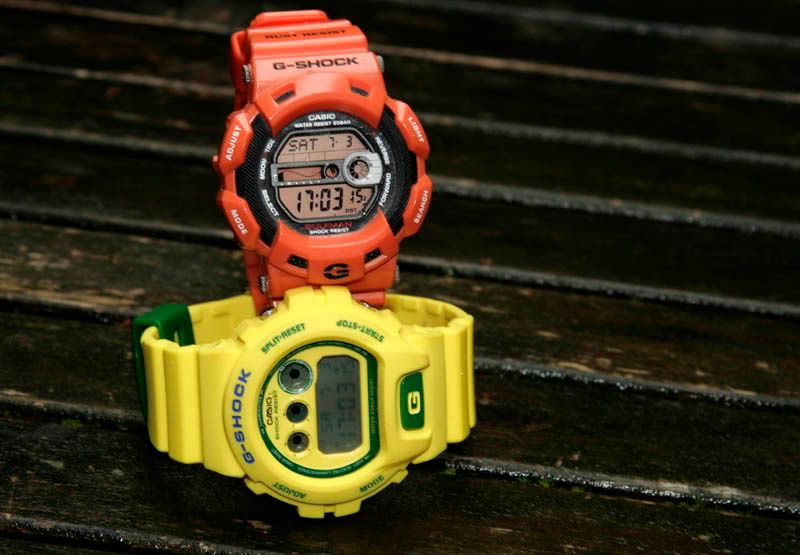
In 1998 it was the second time Casio released a bunch of G-Shocks for the FIFA World Cup. In 1994 not less than 9 different black models were released for the World Cup held in the USA. These were models from before the DW-6600, so no EL backlight, the logo and text were just printed big all over the watch. In 1998 Casio released 10 different models in a wide colorful range. There was a special set of three models in the colors of the Drapeau Tricolore. Also a series of DW-6900’s was released.
The first model of the DW-6900WF series was black. I am not sure if it is a very dark gray translucent version or a plain black. Also a gray translucent model was in this series, but the best looking models were jelly versions in bleu, blanc et rouge.
The colors of the Drapeau Tricolore stand for the motto of the Républic Française. Blue stands for Liberté, white for Egalité and red for Fraternité (Freedom, Equality and Fraternity). So, my red model featured in this article represents brotherhood. Ain’t that also a great motto for the G-Shock community.
10 years ago, when I bought my first G-Shock, I could not have known that there would be such a big G-Shock community now. When I started my G-Peopleland website in 2003, assuming I was the only collector outside Japan, now, 7 years later there are several G-Shock communities where people try to help their fellow G-Shock collectors. If that isn’t a nice example of fraternity.
Although I usually do not watch football, I remember the World Cup of 1998. In the first place, because we reached the semi-finals. The Orange team played in Marseilles against Brazil. A thrilling match ended in penalties in the favor of Brazil, who later lost from France in the Finale.
The second reason I remember the World Cup of 1998 was that I went on vacation in France that year. Well, that fact is certainly special, since we often go to France on holidays. The fun part was that an older song of a Dutch band was used in France to promote the World Cup of 1998.
While the Netherlands could dream the lyrics of “I will survive (La la la) by the Hermes House Band, indeed a cover from Gloria Gaynor, the song dated from 1994, it was rediscovered and played during the World Cup and the whole summer.
Picture this. We were riding in Southern France, probably somewhere in Aix en Provence. The sun is already getting low in the evening. The windows of the car open. In the distance I see an owl sitting on a pole. The radio is on. We love to listen NRG radio, as they play a lot of popular music (a lot of French radio stations broadcast talkshows, while my French is actually pretty poor. We hear the song “I will survive”, but we do not pay real attention. We were already traveling through France for a week, so we had not heard Dutch for some time. The suddenly the singer sings “En nog een keer!” (Dutch for “Let’s do it one more time”). This was strange, hearing Dutch words on the French radio.
Later we found out the song was played in high rotation. When we did our groceries in a supermarket, I checked out the CD section. I found the CD single of the Hermes House Band, which was promoted as “Le Song des Champions du monde 1998”. I immediately bought that CD single for the Discotheque I was working. We already had that song of course, but it was funny to have the French version too. I regret it a little, because I don’t have that single anymore. I did some searches on eBay France, but couldn’t find this single, unfortunately.
Also for Japan the World Cup Footbal 1998 was important. It was the first time Japan qualified for the tournament. With loosing all three group matches, it wasn't successful for Japan though. In 2002 and 2010 Japan reached the best 16. Unfortunately they did both times not win the 8th finals.
I very much like translucent G-Shocks. Unlike the GW-203K Frogman, the straps and bezel are not clear but have a matte finish. You can find in all manuals that resin parts can leave white powder residue, when stored for some time. I think this is my only G-Shock that has this white powdery substance visible on the strap. Before I took the photos, I have washed the watch and dried it with a soft cloth, to make the resin red translucent again.
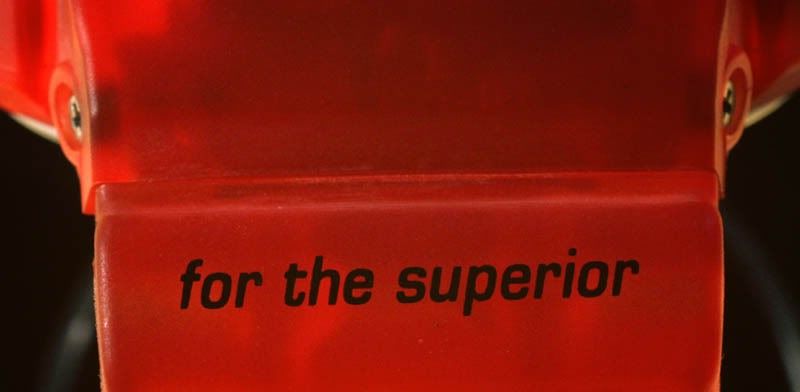
There are several texts on the straps. The long strap shows “Official Product of FIFA World Cup 1998”. Well, you can’t miss anymore that this is a WC ’98 model, but in order to convince you really, the France ’98 World Cup logo is also printed on the strap keeper. Near the case on the long strap there is the text: “For the Superior”, regarding to the next World Champion Football.
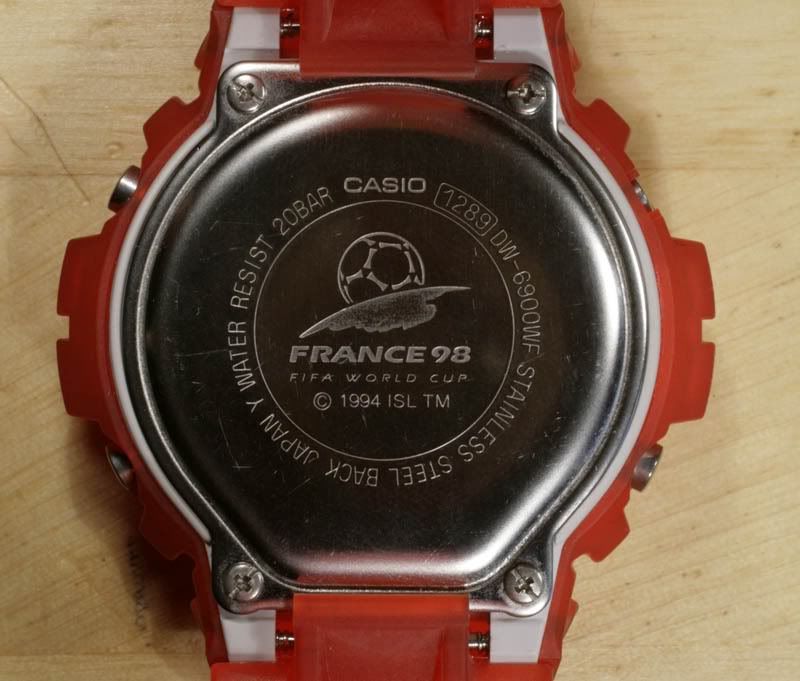
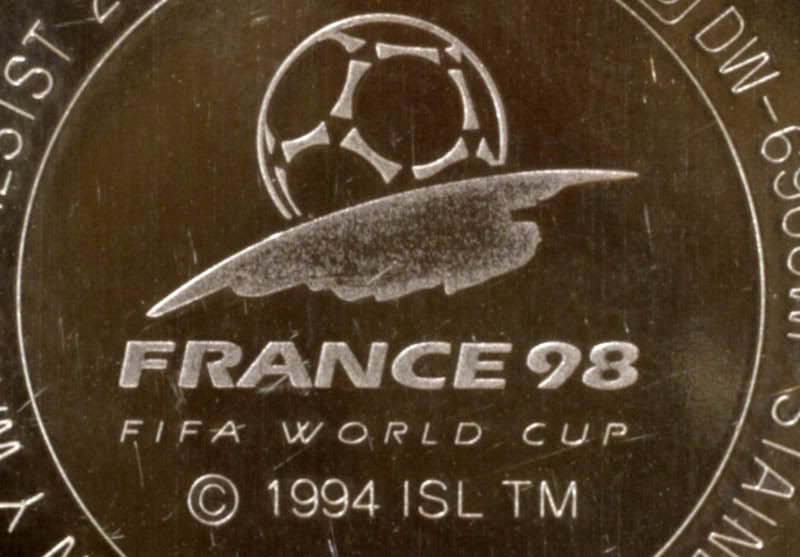
The logo France ’98 World Cup logo is also etched on the back of the watch. The back of the watch is unusually shiny. Normally a DW-6900 back is matte.
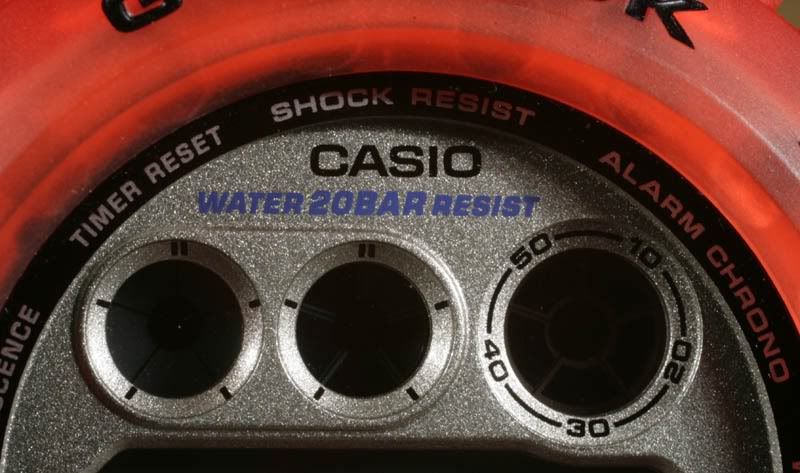
The silver gray face-plate looks great on these jelly models. The red jelly resin plays with the light, the silver plate makes sure you don’t overlook the most important place of the watch, the display.
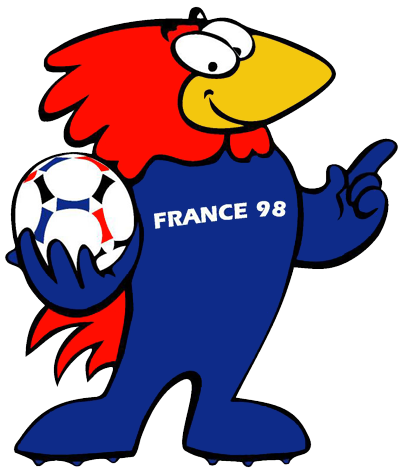
When you activate the EL backlight the mascot of the World Cup 1998 is shown. His name is Footix. He is a cockerel (young rooster). While he often is shown holding a football in his hand, in the EL backlight he is performing a “throw-in”.
All 5 variants of this DW-6900WF series have a different backlight, where Footix performs all kinds of football tricks. I think Footix is a funny mascot, which somehow remind me a bit to Woody Woodpecker. "Ha-ha-ha-HAA-ha!"
I am not sure where I bought this watch, but I think I found it in Germany. I probably haven’t paid much for it, although the watch is in almost new condition. I think I was a little amazed about that when I got the watch. It is probably a watch that is not easily found, but don’t expect to pay extravagant prices on these ones. I think a new one in box and papers might cost you around €60 - €80.-, which is lower than it’s suggested retail price in Japan, ¥16000. Mine didn’t come with box and papers. I think I paid around €40.- for it.
Not many people in my country believed it was possible. Everybody was behind our team. In the first half it looked like the Canaries would waltz over us, but the Orange team fought back. Unbelievable result. Netherlands - Brazil: 2 - 1. The Netherlands go further to the quarter finals.